Author Update


Well, the business side of things is pootling along quite nicely. Gradually, more people are reading and recommending my books, and I sell on average, 10 a week. This is enough  for me to continue (which is good, because I like being an author!) I have more or less given up on big bookshops, because the economics just don’t work. Although it’s lovely to know people can buy my book in Waterstones, they will only order books through a wholesaler. I have to post books, on demand (so singly) to the wholesaler. So, the postman wants to be paid, and the wholesaler wants to take a cut, and the bookshop wants a cut. Which means, in effect, I  make a loss on the basic cost of producing the book. Smaller bookshops are different, because they’ll take a few copies on sale or return, and although they take quite a big cut, I still cover my costs.

The best way, by far, is to sell books face to face. I’m managing to do this by booking a space at local fairs and markets, and having book-signings in local bookshops. This means I meet new people, and can tell them about my books. It’s a bit scary, because books don’t sell themselves, and I have to invest time describing them to potential buyers, but mostly people are polite, so it’s okay if exhausting. I long for the day when enough people buy my books with no effort from me (other than writing them) but that is unlikely to ever happen. I have a few more events booked for the winter, and am hoping people will buy books as Christmas gifts. (Now, have a think: who do you know who would like one of my books for Christmas….?!)

I have also been invited to speak at various groups. Sometimes these result in sales, sometimes they don’t. But I think they are a good use of my time, because if nothing else it keeps me in touch with what different people are reading and thinking. One thing I have learned is that if you want to sell books, you need to be aware of your audience. People like happy endings, older people don’t like swearing (even if that is how the character would speak in real life), some readers want ‘action’ and are disappointed by literary fiction (which is all about the characters and nothing really happens) so I need the cover and blurb to explain exactly what is inside the book.

Did I tell you that I wrote a new book, about having a brain tumour? I belong to several Facebook forums, and am often moved by  people’s stories, how they feel lost after the initial diagnosis, and find it very difficult to find information. The book is specifically for people with brain tumours, though also has a chapter about family, and dying, and living with stress – so actually would be helpful for people who are terminally ill too. I tried to be very honest, and to say the things that no one likes to say, the things that, when you have been diagnosed with something serious, you want to talk about. I advertised it on Facebook, and people kindly shared the link. As I published it directly through Amazon, people can buy it in any country that has Amazon, and I’ve sold copies in various countries. I was contacted by someone, whose brother had just been told he had three weeks, possibly a month, to live. They said the book had helped. It is a huge privilege to be able to write something for people in that situation.

As we go into Christmas, I need to market my books appropriately. I have therefore invested in some tissue paper and gift bags. (You have no idea how hard it is for me to spend money on marketing! I am struggling to cover my costs, to spend money on something which would make no difference to me, as a consumer, is very difficult; but son-who-knows- marketing says that I must.) Am hoping it will show people that books make good gifts. No idea if it will make any difference or not.

The main thing that all authors must do is read. Everyone says this, from Stephen King down. I have recently read Mindhunter by John Douglas. He was an FBI operative who interviewed lots of serial killers and started the idea of criminal profiling. The book is a bit clunky to read, more a diary of what he did than anything else (and he appears to be rather proud of his own achievements) but I was interested to read about what he discovered. I was also surprised by the number of authors who base novels on his work. Thomas Harris (Silence of the Lambs) has based several characters on John Douglas and the cases he discusses. Harris’s work is barely fiction, it so closely resembles the cases and methods described by Douglas. I recognise ideas and themes later used in books by Val McDermid, Jeffrey Deaver, and others. This is a bit surprising. Do most fiction writers base their stories and characters on real people? Perhaps they do. Sometimes the characters are so close to a real person, the author has done little more than change the name.

I have also recently read the following books, and have written a mini review of each one:
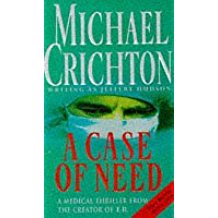
#A Case of Need by Michael Crichton – very interesting. The novel is very pro-abortion, which I found difficult, but it’s usually good to read viewpoints that differ to your own, because it helps you understand what others are thinking. Whilst I found Crichton’s very biased approach slightly annoying (he didn’t address the alternative views at all, other than to ridicule the extremist stance) the story was interesting enough for me to want to read to the end.
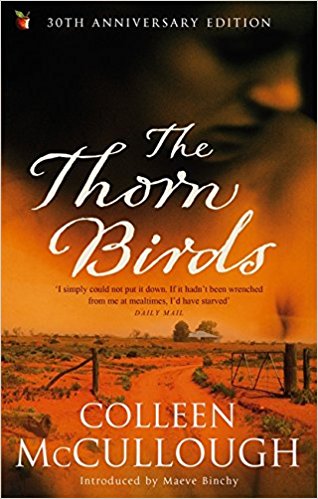
#The Thorn Birds by Colleen McCullough – well, this was surprising! I sort of remember the story from the 1970’s, when my parents banned us from watching it, and my sister and I used to sneak episodes when they were out! But I have never read it. McCullough writes in a very descriptive style, and she uses all the adverbs that Stephen King advises writers to avoid, but she certainly writes a good story. I was uneasy with the ages of the main characters – a priest in his twenties becomes besotted with a girl who is a child. Anyone who has ever does any child protection courses has the word ‘grooming’ looming at the back of their mind. I enjoyed the story though, it was compelling reading.

#The Death House by Sarah Pinborough – not as compulsive as ‘Behind Her Eyes’, but still a good story. I’m not sure if it was intended as a YA book, as it read like one (but there was nothing in the blurb to indicate it was). Some unnecessary sex scenes (perhaps that’s what YAs like to read), but an interesting story idea.


#Love Like Blood by Mark Billingham – I always enjoy Billingham’s books, and this one didn’t disappoint. A fun holiday read.
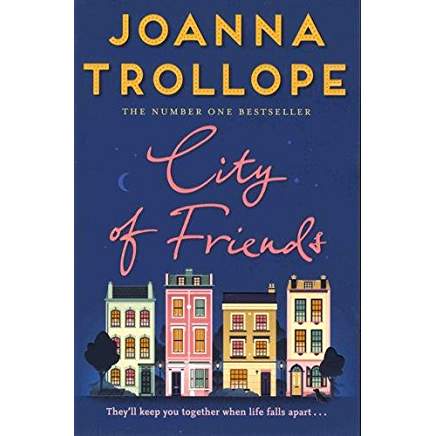


#City of Friends by Joanna Trollope – I usually enjoy Trollope’s books, but this one felt a bit forced, as if she hasn’t written anything for a while and felt she needed to produce a book whilst not actually having anything to say.


I hope you have a good week. Do remember to make time to read something. (And no, if you’re a student, text books don’t count!)

Take care,
Love, Anne x

xxx

Thank you for reading.
You can follow my blog at : anneethompson.com

October Days


  Hi, how was your week? Mine has pootled along, though I do feel like we’re hurtling towards Christmas horribly fast. Now is the time of shops revealing their Christmas displays, communities advertising their Christmas Fairs, and supermarkets suggesting we should do our Christmas orders. Hard to remember it’s still October (just) – it’s autumn, live in the moment and enjoy it.

I think perhaps older people are better at ‘living in the moment’. It’s one of the reasons I enjoy Lunch Club on Fridays. It’s a lot of work, but always a laugh. This week, one of them remarked,
“If you wake up in the morning, and nothing hurts, and nothing aches, you know you must’ve died during the night!”

October has been busy for me, and I’m tired now. I’ve had a couple of events in London (the fashion show, which I told you about, and a lunch. I was late for the lunch because I got my ‘Parks’ in a muddle when catching the tube and ended up in the wrong place!)

I’ve also had a couple of speaking engagements. Sometimes book groups or church groups invite me to do a short talk, either about my books, or how I decided to be an author. I get very nervous beforehand, but afterwards I’m always glad I accepted the invitation. The most recent one I did was at our local community cafe, for a new group that’s aimed at anyone who’s at a loose end on a Tuesday afternoon. There were a mix of attendees, some old, some young, some who came with carers. (I never know quite who to expect when I’m asked to speak, and sometimes have to radically change what I’d planned to say!) It was a nice group. I didn’t sell any books (well, only Invisible Jane, and all the profit goes to Tearfund, so that doesn’t count) but it felt like a good thing to do. I guess that’s my test of a day – if I get to the end and feel I have used the time well, I’m satisfied. Because like my old men say, you just never know if you’ll wake up or not tomorrow!

I still haven’t received Clara Oakes back from my editor, so it’s been a relaxed week writing wise. This means I ought to do some housework. I find that my eye-sight is pretty bad now, so as long as I don’t wear my glasses in the house, I can be very relaxed about housework. When I wear glasses I can see all the dust and muddles and dog hairs, and feel the need to clean. I hate cleaning.

I also hate ironing. I don’t do it very often, but my nephew had his son Christened, which involved wearing a dress, and afterwards it had to be washed and ironed. My iron is the one my brother gave me in 1988 when I got married. It works fine. I guess it hasn’t been used much.

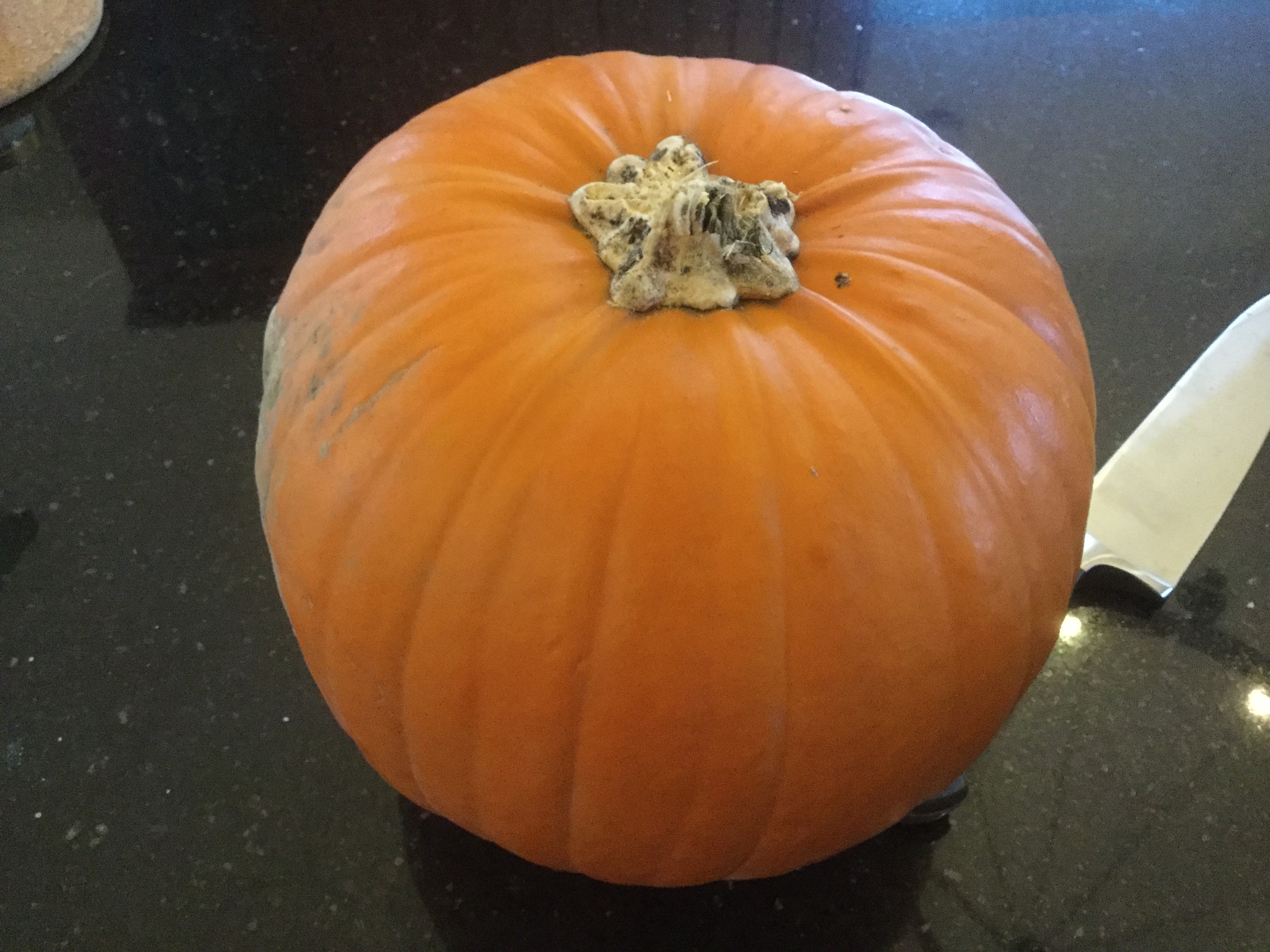
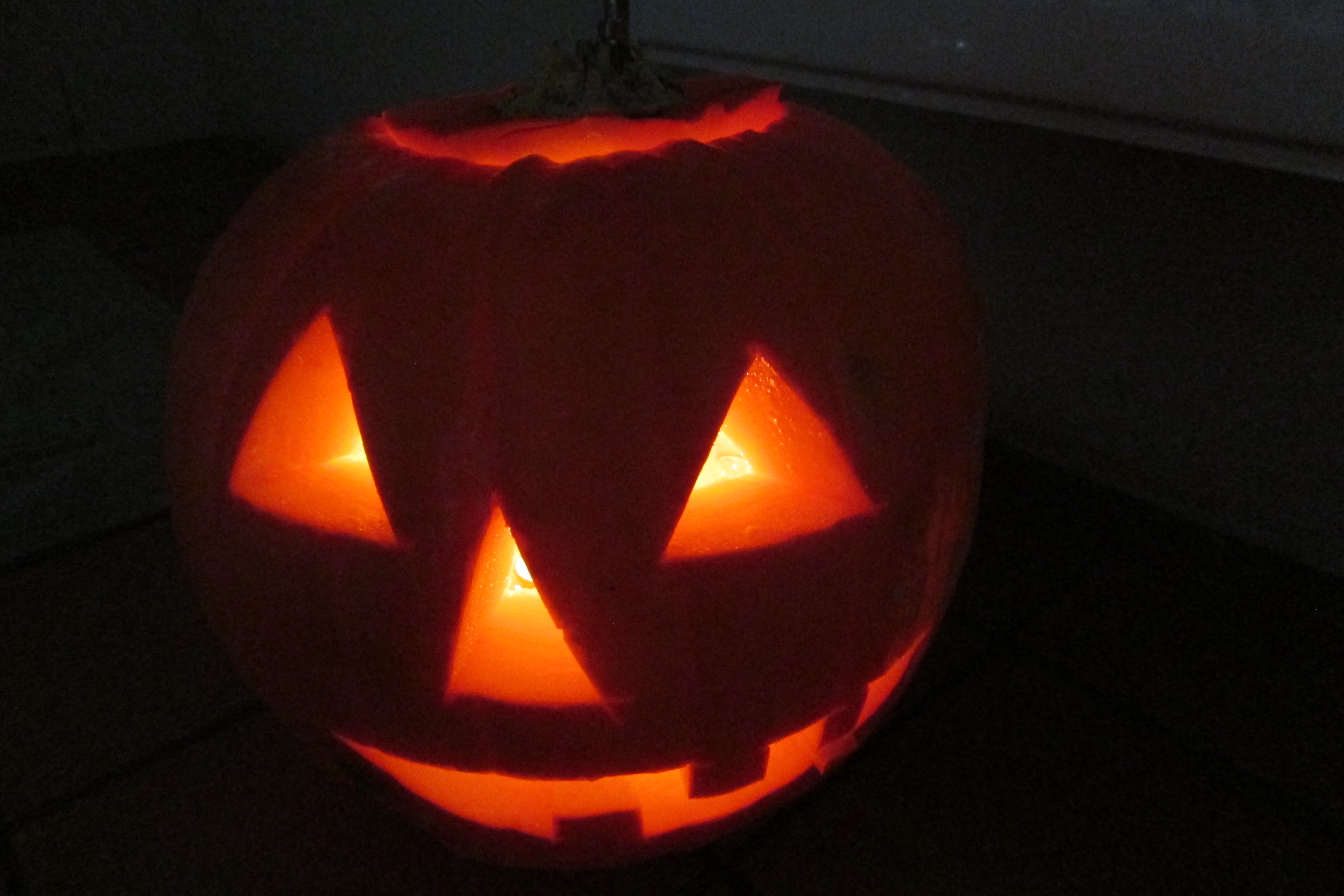
  Yesterday I told a story to the children at church. It’s a story about a pumpkin, which I told to my own children many years ago, and I sort of remember it, so modified it for church. It makes a comparison between a pumpkin and people (in some cases this is more evident than others….). Husband gave me lots of ideas for things I could add to the talk. None were suitable.

I was really nervous. I began the story by holding up a pumpkin seed, and my hands were trembling so much that I nearly dropped it. But it was okay, I got through it, and Husband said it was good. Often things are difficult aren’t they, but it’s a good feeling when it’s accomplished. I’ve put the story on my website, if you’re interested :

Pumpkin Story

Our church is also holding a Halloween Party – which isn’t called that – for the children in the village. I have offered to make the tea and coffee for the parents while they wait, and my mum is going to help me. Husband suggested we could dress up as witches. Although  it would be hugely funny, just to see the faces of the people organising the party, as it is the complete antipathy of what they’re hoping for, I will resist the temptation. Though actually, I think we would make rather good witches…..

Have a good week.
Take care,
Anne x

Crops and Cows


Hello and how was your week? Mine was a mix of disasters and interesting things.

It began nicely, with a walk to our local pub. Husband was working from home, but decided he could take a few hours off, so we walked for 45 minutes through the woods to our nearest pub, for lunch. It was warm, the trees had laid a path of autumn leaves, the dog was happy. All was going well until we arrived and realised we hadn’t actually brought any money with us. Embarrassing.

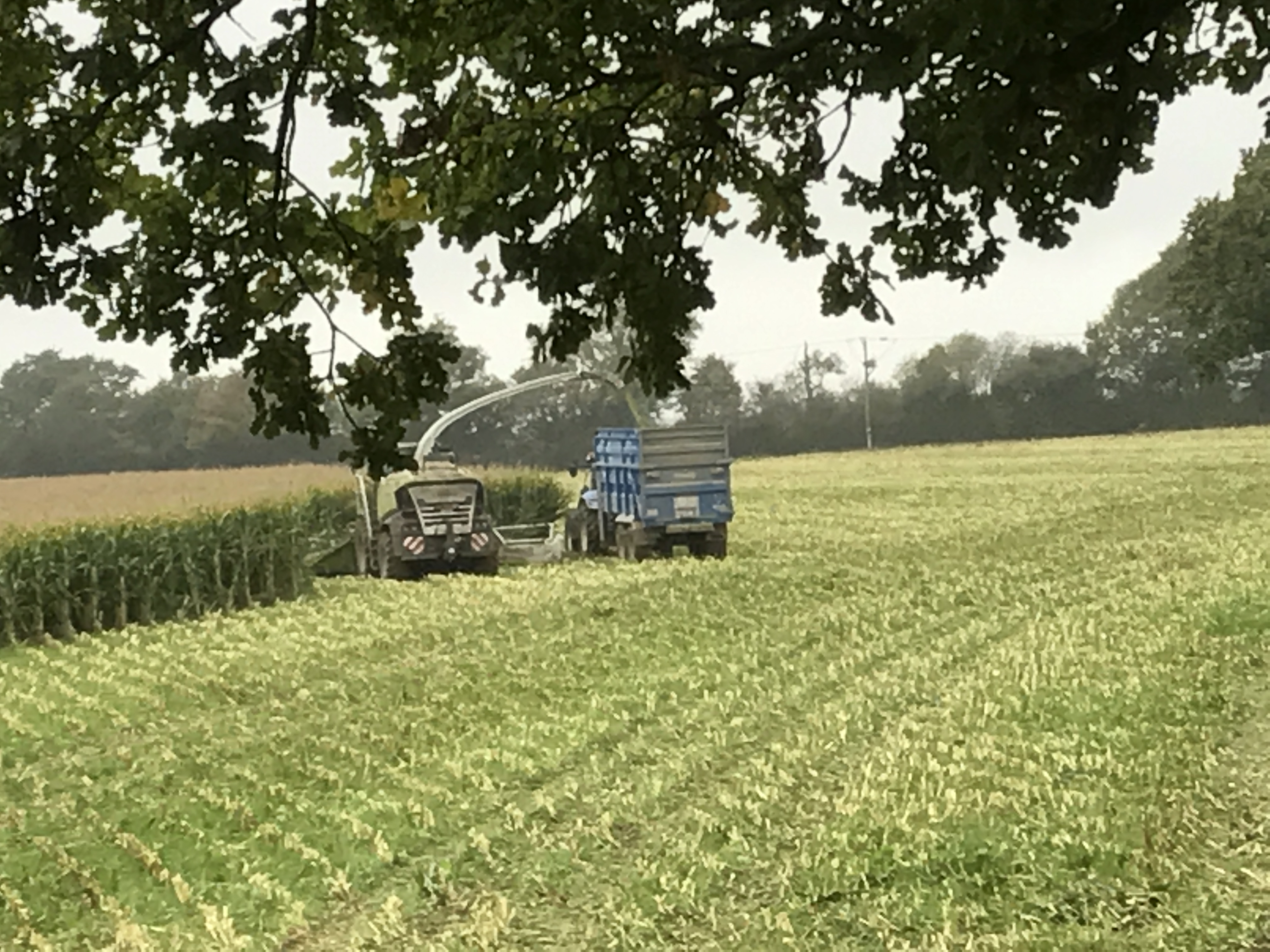
The sweetcorn crop next to the house was harvested. We saw them cutting it, and trailer loads of cut green stuff being carted away. But we never actually saw any of the corn cobs. We watched the tractor for ages, and decided it must be somehow removing the cobs before chipping the stalks. It was bit of a mystery.

Monday was also the day of the red sun – did you see it? If you live in England, you’ll have had a weird yellowy sky that was dusk at about 3pm, and the sun was red and hazy. Apparently it was due to sand being blown by Hurricane Oscar (which scientist son explained to me, but to be honest, I have no idea how it happened). We did wonder if it was the Apocalypse – Husband remarked that it was lucky I had never wasted time repairing his sweater, as the world was about to end anyway. A touch sarcastic, I felt.

I didn’t have time for sewing this week. Clara Oakes is ready for editing, so I sent that off, which is very exciting. The editing will take a few weeks, and then I can prepare the file for the typesetter. It’s a lot of work, but nice work. Then comes all the proofreading, which I hate doing, because it’s slow and boring, but it has to be done.

I have another book beginning to form in my mind. It’s based on a farm, and I know nothing about farming, so need to do some research. When I was at the flower arranging course a few weeks ago (remember? – I told you about it) I met someone who lives on a farm, so I asked her if I could visit. I went this week.

The farm house is exactly what you imagine a farmhouse should look like: big and double fronted and old. There were two dogs wandering around outside and lots of mud, and big barns full of machinery. I sat in the dining room, drinking tea, learning about what it’s like to live on a farm. (Are you jealous of my job? It’s brilliant!) I also went to see the new calves being fed. (I didn’t like to take photos, because I was trying to appear professional rather than touristy, so you’ll have to just imagine them.)

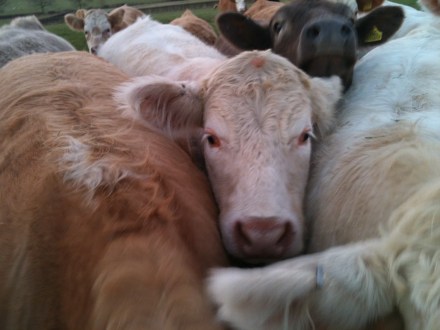
They have about 100 cows, all for beef. Each cow arrives with its own passport, which is a legal requirement, and goes with the cow and has to be updated whenever it’s sold or if it dies. It’s a bit like a car’s logbook. Each cow is identified by a number clipped to its ear (and if the number falls off, the farmer has to find the cow who’s missing one and replace it). They buy the cows through a sort of broker, who sources suitable calves. They told me lots about different breeds, but I couldn’t listen and make notes fast enough, so I’ve forgotten lots of it. But they tend to buy calves from Fresian cows (which are good for milk) and Aberdeen Angus bulls (which are big black cows, who have narrow shoulders, so they make the birthing process easier).

The calves arrive when they’re about a week old. They like to buy 33 from the same farm, as they will then all have the same immunity (due to the colostrum in the mother’s milk). Calves from different herds can infect each other, as they will have been exposed to different bacteria. The calves I saw were a couple of weeks old. They were in hay filled pens, and were jostling each other to get to the milk. I touched their hard black heads, and they put out long grey tongues to lick me. Cows have surprisingly long tongues.

The farmer mixes milk powder (special calf milk powder – I don’t suppose you could put it on your cereal) with hot water. Then he adds cold water, and tests the temperature. Hot milk will burn them, cold milk is harder to digest. They are just babies really, even though they are bigger than dogs and would break your toes if they stepped on them. The milk was poured into a bucket thing which the farmer had made, and it had holes with rubber teats. He hooked it onto the pen fence, and the calves sucked out the milk. Some farmers give milk in a bucket, and the calves learn to lap it up. But apparently it’s better for their digestion if their heads are at the angle they would be if feeding from their mothers, hence the device the farmer has made. They were very earnest while they ate. They’re fed twice a day.

Beef cattle might be male or female (I didn’t know that, I thought only males were used for beef). The females, or heifers, have never had calves, so their udders are tiny. The males, (called steers or bullocks) are all sterile, so they can share a field with the heifers. They are also ‘polled’ which means they don’t have horns. Some breeds just don’t grow horns, I didn’t know that either. The heifers get fatter faster, but the steers grow to a bigger size when full grown.

The cattle stays on the farm for two years, then when big enough they are sent to the abattoir. Again, there is a man who comes, assesses the size of the animals, and decides when they are big enough to go. I said I’d quite like to visit an abattoir, so I can write about the process properly. The farmer said the animals are killed quickly, so they don’t really know what’s coming, but the after death bit is grim and smelly. Whilst the animals aren’t pets, I got the impression they were cared about, the farmer did his best to ensure they didn’t suffer and were kept comfortable. They didn’t seem to want to talk about the killing part, even though it’s the point of the business. I guess you grow fond of any animal you raise, even if it’s a business.

They were really kind, explaining so much and showing me around the buildings. I saw all the feed stacked up for the winter. Cows are good at keeping warm, but the wet of our clay soil is bad for them, and they get pneumonia if left in the fields over the winter. They’ll be moved inside during November, and the farmer said I can visit again to see how the farm is different in a different season.

The farm also grows some crops – some to sell and some for animal feed. One crop is maize (sweetcorn). This is a strain for animals to eat. When it’s harvested, the whole lot – stalks, cobs, leaves – is shredded and then stored for the cows to eat during the winter, when the grass is too wet. Which explains why we didn’t see the sweetcorn cobs being separated when they cut the corn next to our house. Mystery solved!

Hope you have a good week.

Take care,
Anne x

xxx

Why not sign up to follow my blog?
anneethompson.com


Anne E. Thompson has written several novels and one non-fiction book. Her books can be found in bookshops and on Amazon.


King David and The Good Wife


Often, as I read the Bible, I come to a passage which makes no sense. Something happens, there is a reaction to it, and you are left wondering why. In the olden days (of not so long ago) people would have heavy tomes sitting on bowed bookshelves, and would pull down a version of their favourite commentary to investigate. Today we have Google.

However, the problem with Google, is that usually, you have no idea who has written something. Sometimes it’s difficult to know if someone is giving their own opinion, which is no more valid than your own, or if they are Biblical scholars and know what they’re talking about. And they write with so much authority!

Take a passage I read recently (as part of my task of reading through the whole Bible – which is taking me months). I read an account of King David, before he died, telling his minions to take a census of Israel and Judah, because he wanted to know how many people he ruled. (End of 2 Samuel.) This makes God angry, and there is a plague, which kills thousands of Israelites. Why? What is wrong with a census? I put the question into Google, and came up with dozens of results.

Several people said the problem was David’s reasons for taking the census, that it showed pride in his own achievements. Some people suggested that the problem was lack of trust, or wrong priorities – David was more concerned with how many people he ruled than what God wanted. All sounded very plausible, and were more or less what I’d decided myself.

Then I read another explanation, posted on a website called “gotquestions.org”. They came up with a different reason for the census being wrong. They said that in Exodus 30, God had clearly said that no one should take a census of Israel, because Israel belonged to God, and only he could instigate one (as he did when the book of Numbers was written). When the people were counted, they had to make sacrifices, showing that they belonged to God.

So, the reasons for the census (pride, wrong priorities, etc) weren’t the problem. Taking the census in the first place was.

There is also the issue of what prompted David to take the census. In 2 Samuel, it says God incited David to. But in 1 Chronicles (same story) it says Satan incited David to. So, which is correct?

Again, there were lots of answers online, people saying that actually it was God, who allowed Satan to incite David. Or saying that Satan was not a Hebrew word, and that is where the problem lies. However, scholars who actually know some Hebrew point out that actually, the verb ‘to incite’ has no subject in the original text. So it is better translated, “There was who moved David against them,” – which doesn’t make sense. So English translators added what they thought was best. Which means that to be definite in our interpretation of the English translation is foolish. There are, it seems, a lot of foolish people out there.

Which actually, is my point (I know, you were wondering if I had one!) The reason the title mentions The Good Wife, a series on Netflix which I very much enjoy, is there is a character, a judge, who insists that when the lawyers present their arguments, they should always say, “In my opinion.” I think this would be a good rule for people who expound the Bible, whether they do it online or teach, or preach. To give an opinion on part of the Bible, and to say this is absolute, when perhaps you are using a translation (eg, a version written in English) is dangerous. I would even go as far as to suggest it might be wrong. Yet people do it all the time.

My understanding of the ten commandments, is that the second commandment, is relevant here. It’s the one that says, “Do not take the name of the LORD your God in vain, for the LORD will not hold him guiltless who takes his name in vain.” (Exodus 20) I was taught that this does not mean casual ‘swearing’, using the name of God as a meaningless word, saying, “Oh God!” when we drop something (though that is also wrong, but for a different reason). It means, do not claim something is from God when it is not. Do not say, “God told me to…” if you’re actually not sure if it was God or your own mind. Do not claim something is God’s word – an absolute explanation of the Bible, if actually it is just your own opinion. Especially if it’s based on a translation.

People should not be so forceful when telling others what they believe, because they might be wrong. To say: “If you want to come to God, you must first say you are sorry, because that is what happened in the parable of the prodigal son,” would be wrong. ( I have explained this in my article on understanding stories : https://anneethompson.com/christian-tearfund-materials-and-poems/understanding-stories/) We can be sure of God, sure of our relationship with him, sure of his character. But when we are interpreting the Bible, we should show a little humility.

Perhaps those who take a particular stand on a subject, be it homosexuality, or the place of women, or euthanasia, need to be careful. Yes, we should pray about issues and ask God to guide us. Yes, we should stand up for what we believe is right. But we need to be ever aware that we are standing for what we believe. We do not speak for God. Sometimes we might be wrong. It worries me when I read Christians write about those who disagree with them, referring to them as, “Those who claim to be Christians,” clearly indicating that actually, their own view is correct, their own view is the true interpretation of the Bible, the others cannot possibly be right.

So please, next time you give your view about something, especially in a public forum, remember that it is your view, not God’s. Because, in my opinion, we can never be sure.

xxx


Anne E. Thompson is the author of several novels and a non-fiction book, How to Have a Brain Tumour.
Her books are available from bookshops and from Amazon.
You can follow her blog at: anneethompson.com
 

I’m the one with the wrinkles


Mingling with Stars

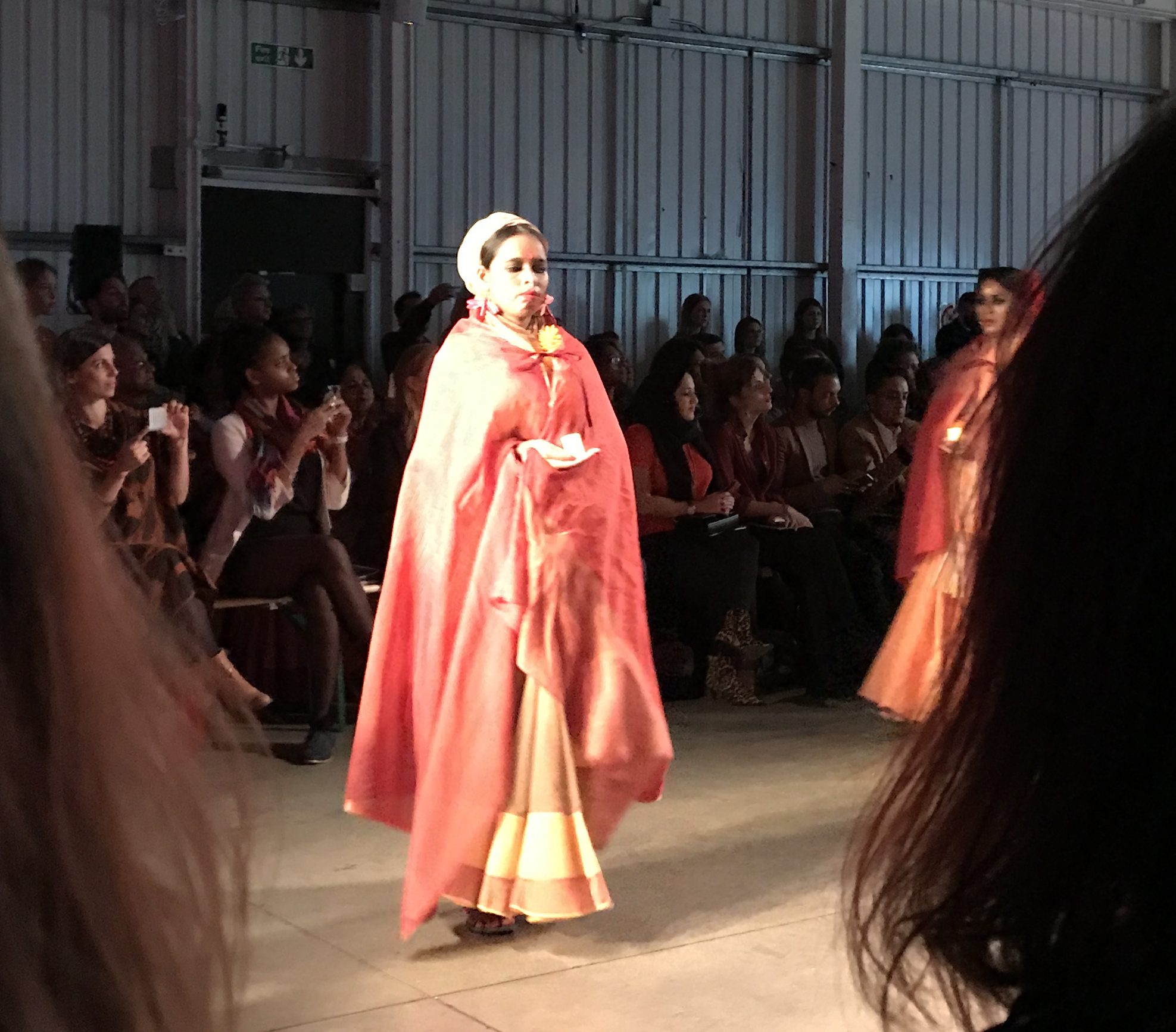
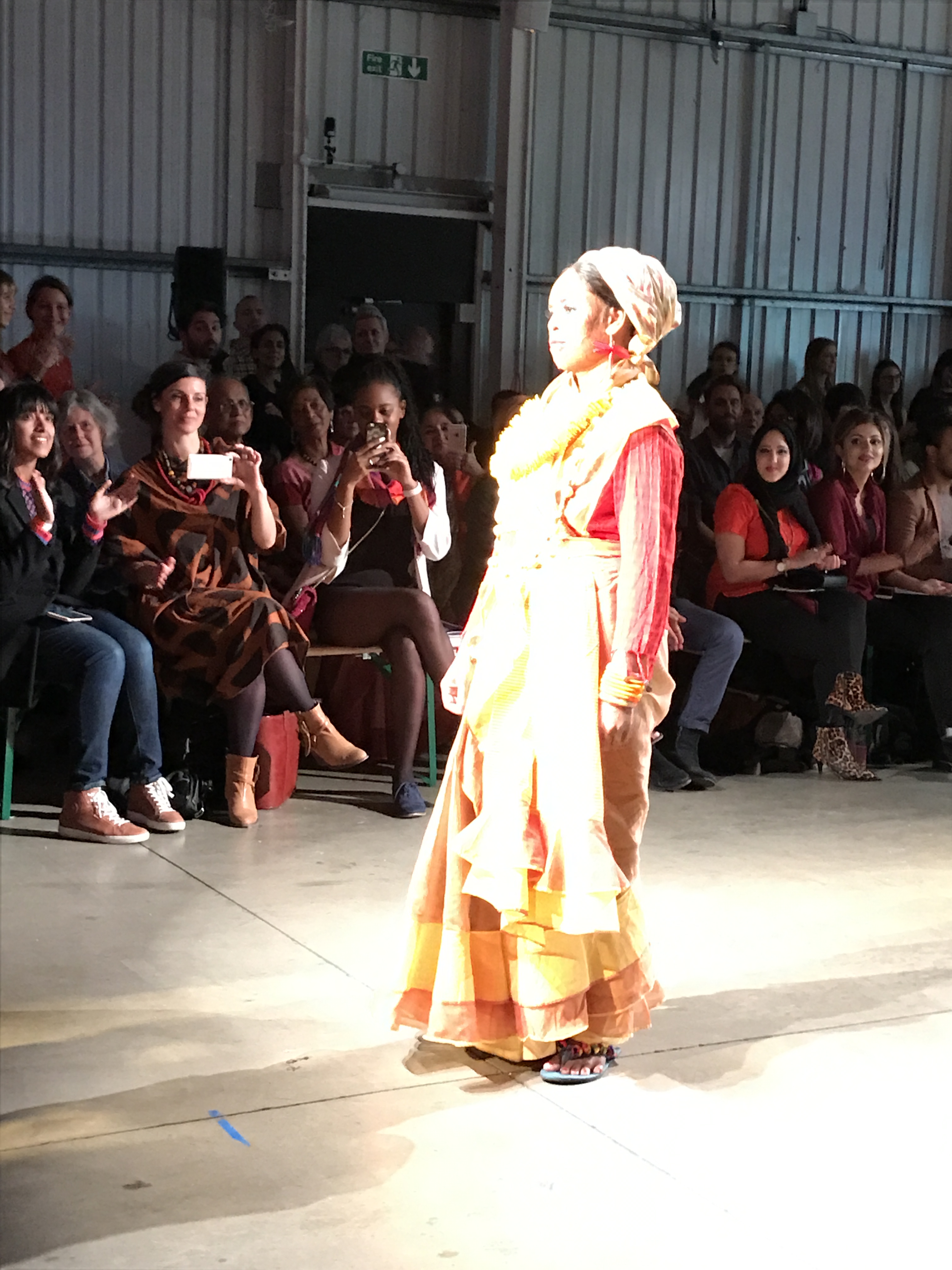
As I told you last week, on Tuesday I went to the ActionAid fashion show, ‘Beauty Redefined’. It was held in The Old Truman Brewery in Brick Lane, so getting there was quite an adventure (that place is in desperate need of some signage).

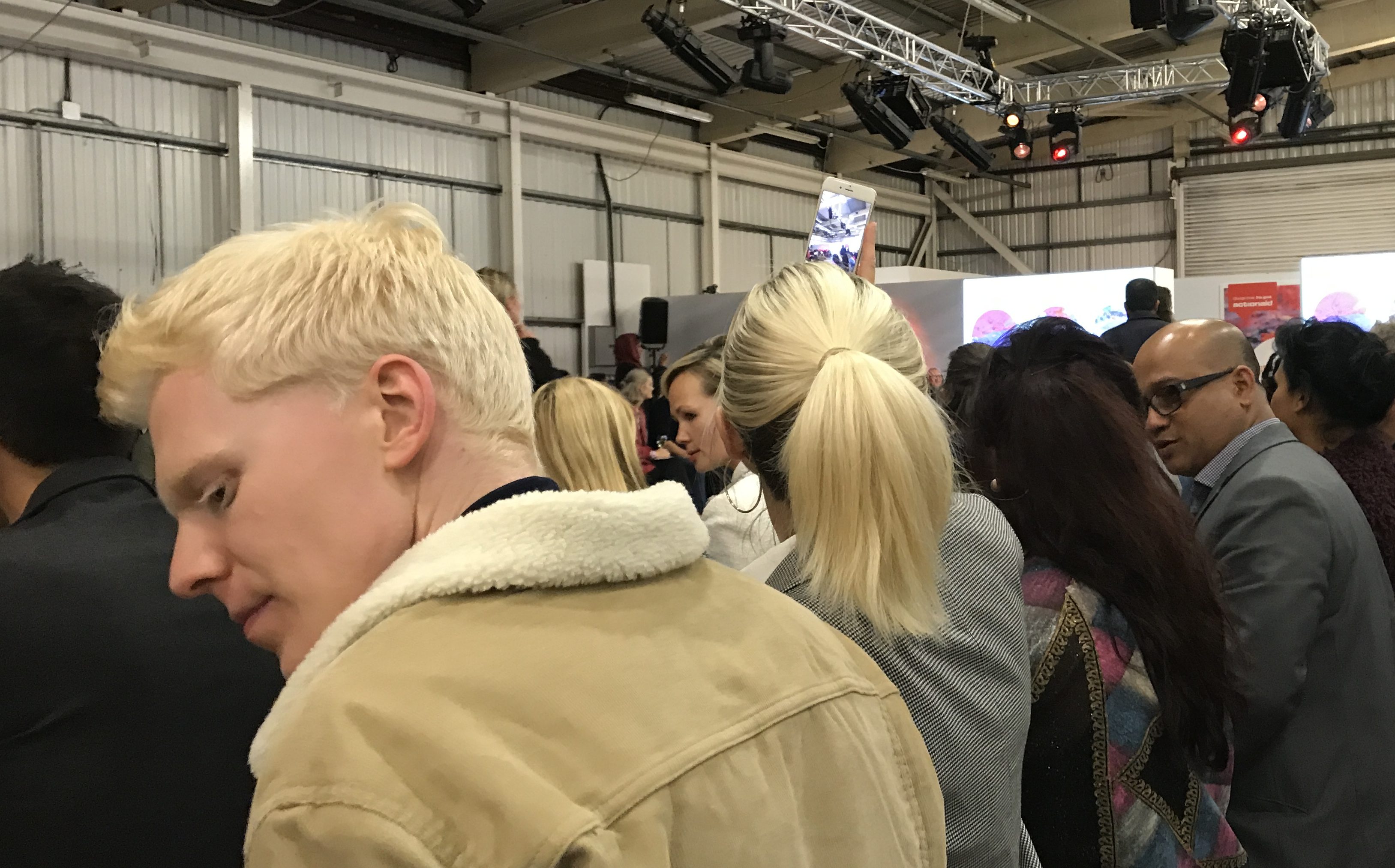
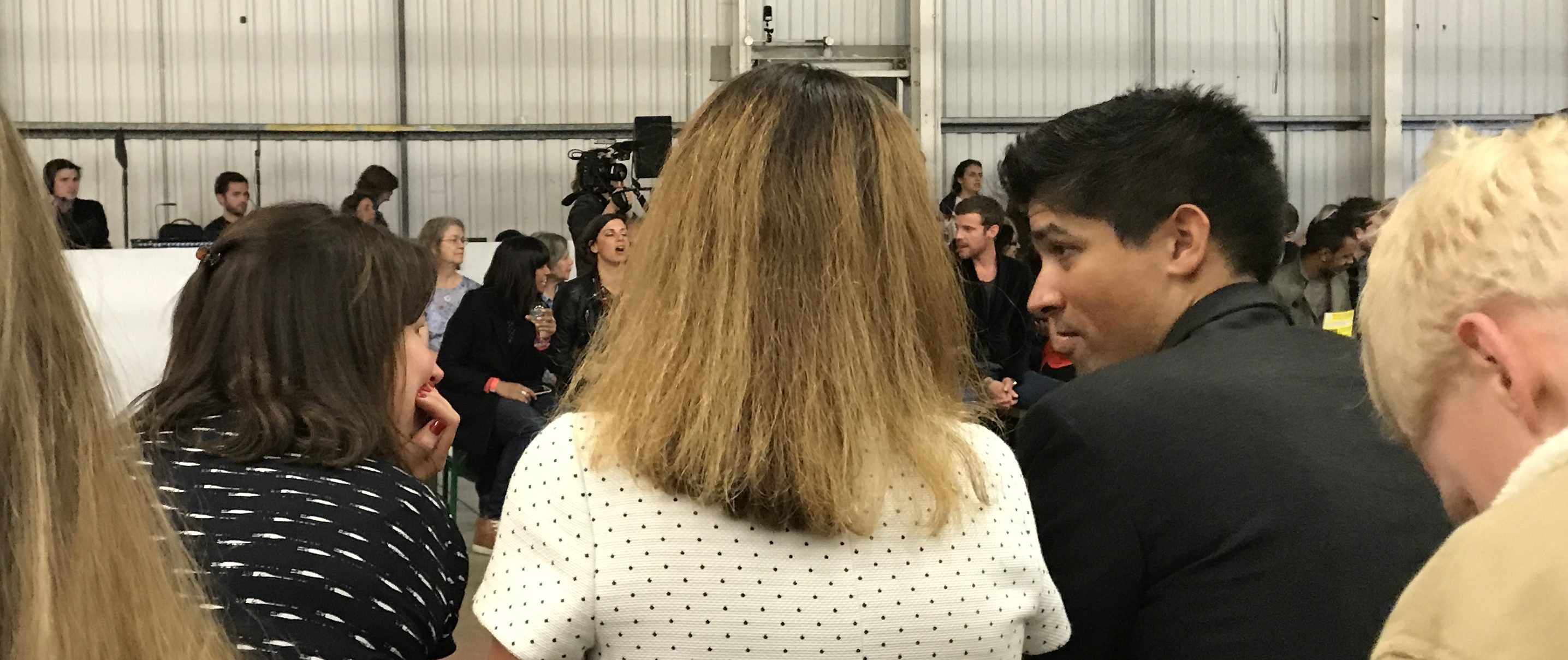
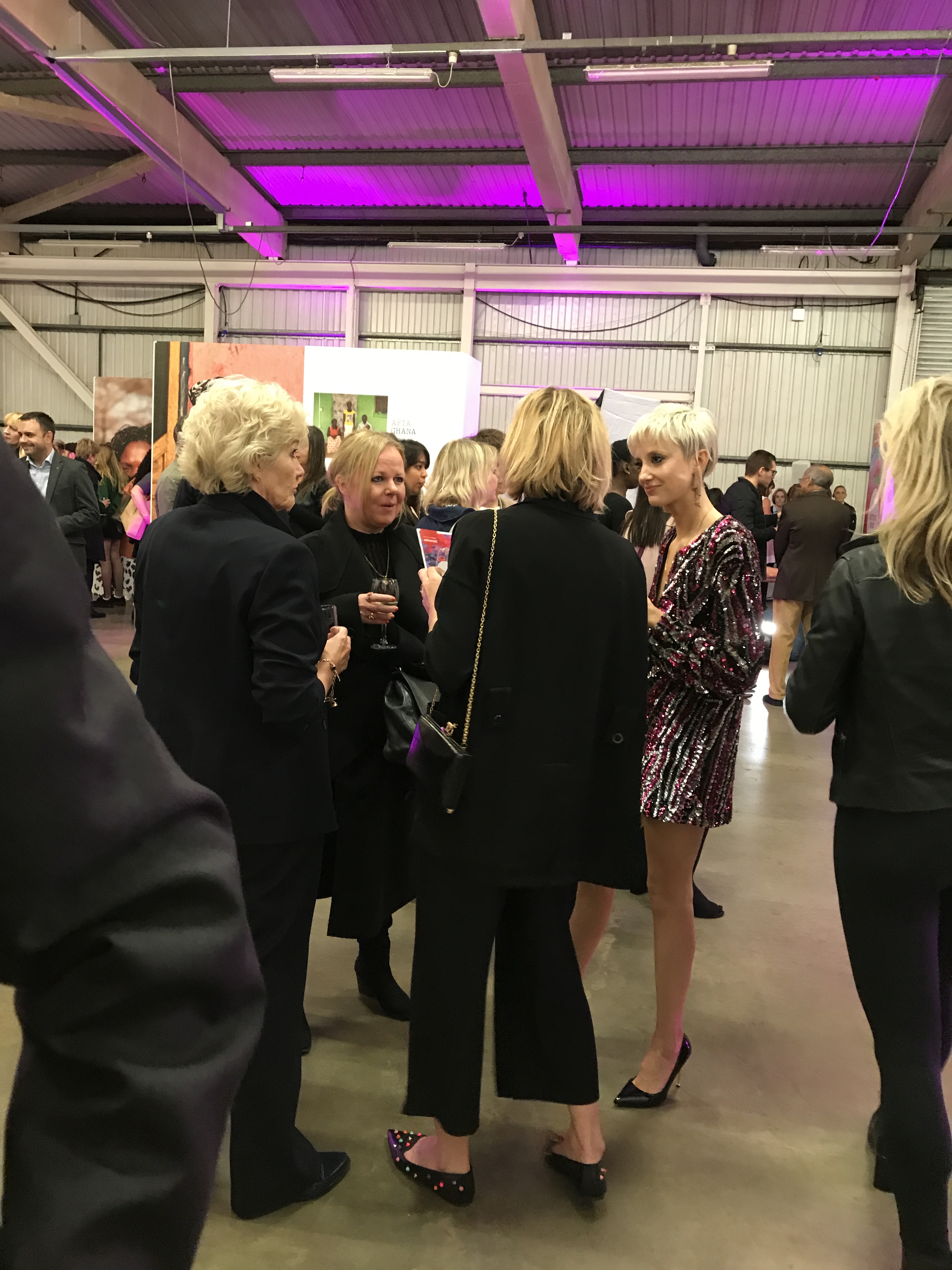
We arrived for a drinks reception. The venue was an old warehouse, so not glamorous, but there was a general air of excitement (in spite of the pigeons flying between the beams above our heads). Perhaps everyone was just happy that they had finally made it to the right place. Or perhaps it was the number of photographers and cameramen who were recording the event for the national press (it was covered by BBC News – did you see it?). Or perhaps it was the presence of several famous people.

Now, I don’t know about you, but I’m not very good at recognising famous people. I don’t watch much telly and I don’t read magazines. So although I could guess, by the high heels and sparkly dresses and amount of media attention, who was famous, I had no idea who they actually were. I took a few photos, so you might recognise people (though the only person who I did recognise was Hugh Dennis, and he was never near enough for a photograph). Someone told me the new Dr Who actor was there, so I went to ask if I could have her photo. She was a bit perturbed that I didn’t actually know who she was, but was incredibly gracious and friendly, and I took a selfie. Nice lady, should you ever meet her.

When later, I looked at the selfie, I was surprised by how many wrinkles I have. I never see them normally, when I look in the mirror, I sort of see the face I’m expecting to see, which I guess is an echo of the young me. But I’m not young, I’m 52, and I have lived a lot and laughed a lot, and my face has wrinkles. It is not a model’s face, it has not been airbrushed, but it’s mine. The wrinkles don’t matter. This is relevant when you consider that every model in the fashion show was the victim of an acid attack. They would probably have loved to have a few wrinkles on their faces, a few less scars.

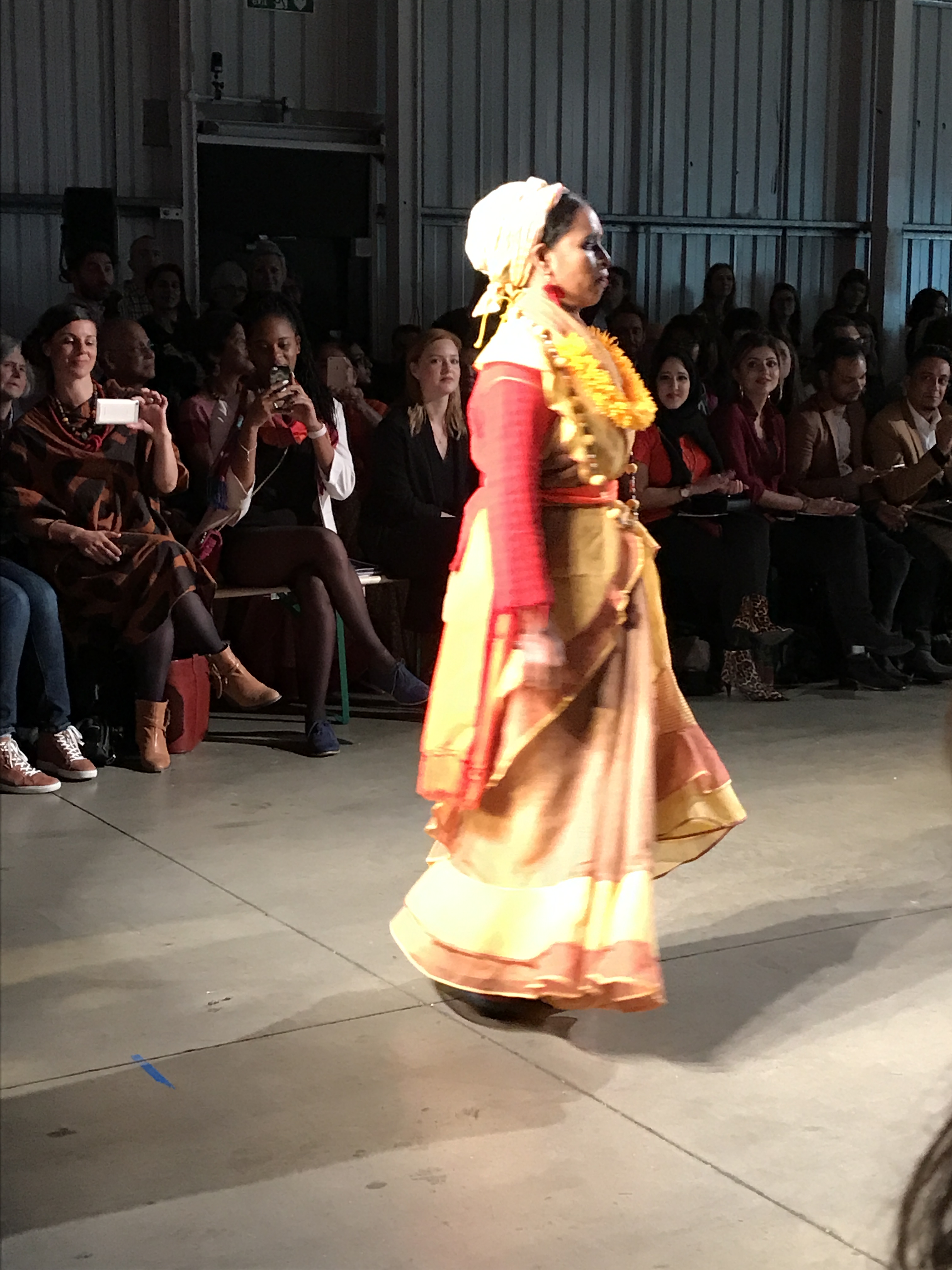
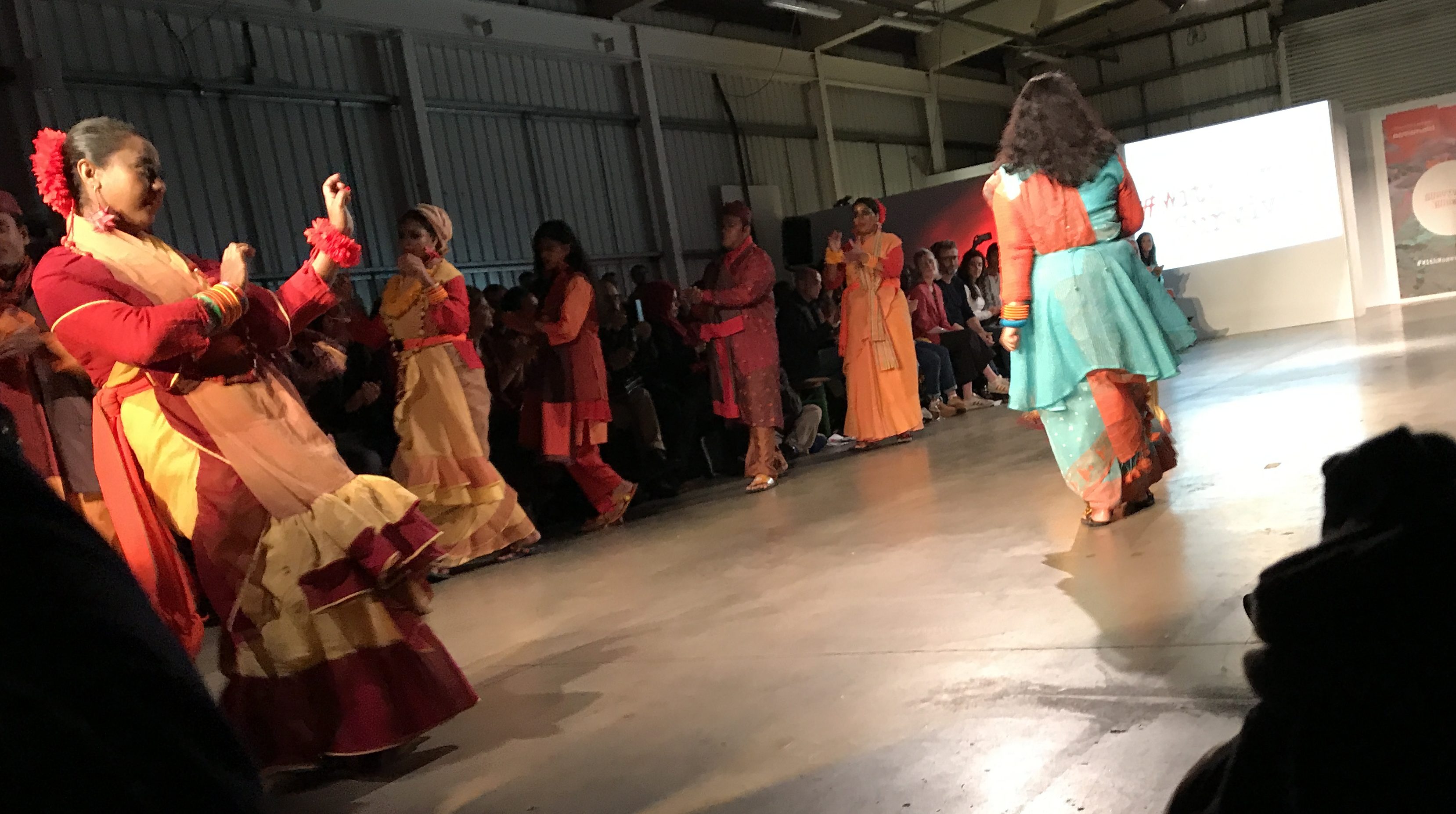
 Then we went in to watch the fashion show. To be honest, it wasn’t much of a fashion show, as there were very few changes of outfits, and because they were traditional Bangladeshi dress, they all looked much the same to me anyhow. But, all the models, due to the acid thrown at them, had scarred faces; the flesh burnt off by cruel chemicals. Melted flesh is not pretty. Some models seem to have trouble seeing, some appeared nervous. This was not a celebration of beauty. Except, it was. The fashion show was to increase awareness of these horrible attacks, which are usually inflicted by men on women. The show was to help the models spread their message, that they are not ashamed of their disfigurements, they have done nothing wrong, their beauty is internal, only the wrapper has been spoiled.

ActionAid are working with victims of acid attacks, giving them confidence to continue with their lives rather than hiding inside. They are lobbying for restrictions in the sale of acids, they are telling people that this is not okay. They are empowering women (in a country where women have very few rights). The show was to celebrate the success already achieved in Bangladesh: that acid attack victims are being supported and given confidence; and due to restrictions in the sale of acids, attacks are decreasing.

  I personally, found the evening difficult. The women we saw reminded me of the Bengali women I met in Delhi – the ones who showed me their homes, who held my hand so I didn’t fall into the open sewer, who sat and laughed with me, who hugged me when I left. Women who were the same as me, but with different lives. To see those poor faces, to know someone had deliberately hurt them, was horrible beyond words. There was an audio playing, telling of different types of abuse that women suffer: over land disputes, when resisting abduction, when a husband wants a new wife, when they don’t want to be married as a child. I couldn’t listen to it. I would have cried.

But as I watched those women, as they paraded, and danced, and smiled, I did admire them. We all have faces or bodies or brains that aren’t ‘perfect’. Things happen to us, sometimes horrible things. Those models were refusing to be defined by their appearance. Perhaps there is a lesson there for all of us. So whatever your wrinkles or scars or general imperfections, remember you are special.

But here’s the main point: Before I went to this event, I was concerned it would be patronising. It is too easy for benevolence to become an ego trip, a reminder of our power, our ‘superiority’. I didn’t want to see celebrities “being kind” to the “sweet little women with the scarred faces”. These women are strong, capable, intelligent people, living their lives in an incredibly tough place. Life would be brutal enough without a disfigurement that means they are treated as pariahs. They are refusing to be defeated, they are standing tall, forcing the world to accept that they matter. We should stand with them. Perhaps this event was enabling us to do that.

Have a good week,
Take care,
Anne x

xxx

 Anne E. Thompson is the author of several novels and one non-fiction book, How to Have a Brain Tumour. Her books are available from bookshops and Amazon. You can follow her blog at: anneethompson.com


Have you read JOANNA yet? Strong women in a gritty novel, seeing the world through the eyes of a psychopath. Available from bookshops and Amazon.


xxx

Flowers, Drains and Chickens


 I was invited to an event at Knights Garden Centre. I wasn’t quite sure what it entailed – something to do with autumn and I needed a ticket. As my life has been rather solitary lately (writing books is not a social activity) I was very glad to go out. It started at 7pm, and I was late. This wasn’t my fault, since my operation I often have weird lights in my eyes, like the aura before a migraine except I never get the migraine, but it means I can’t drive. So I had to wait for Husband to come home and drive me.

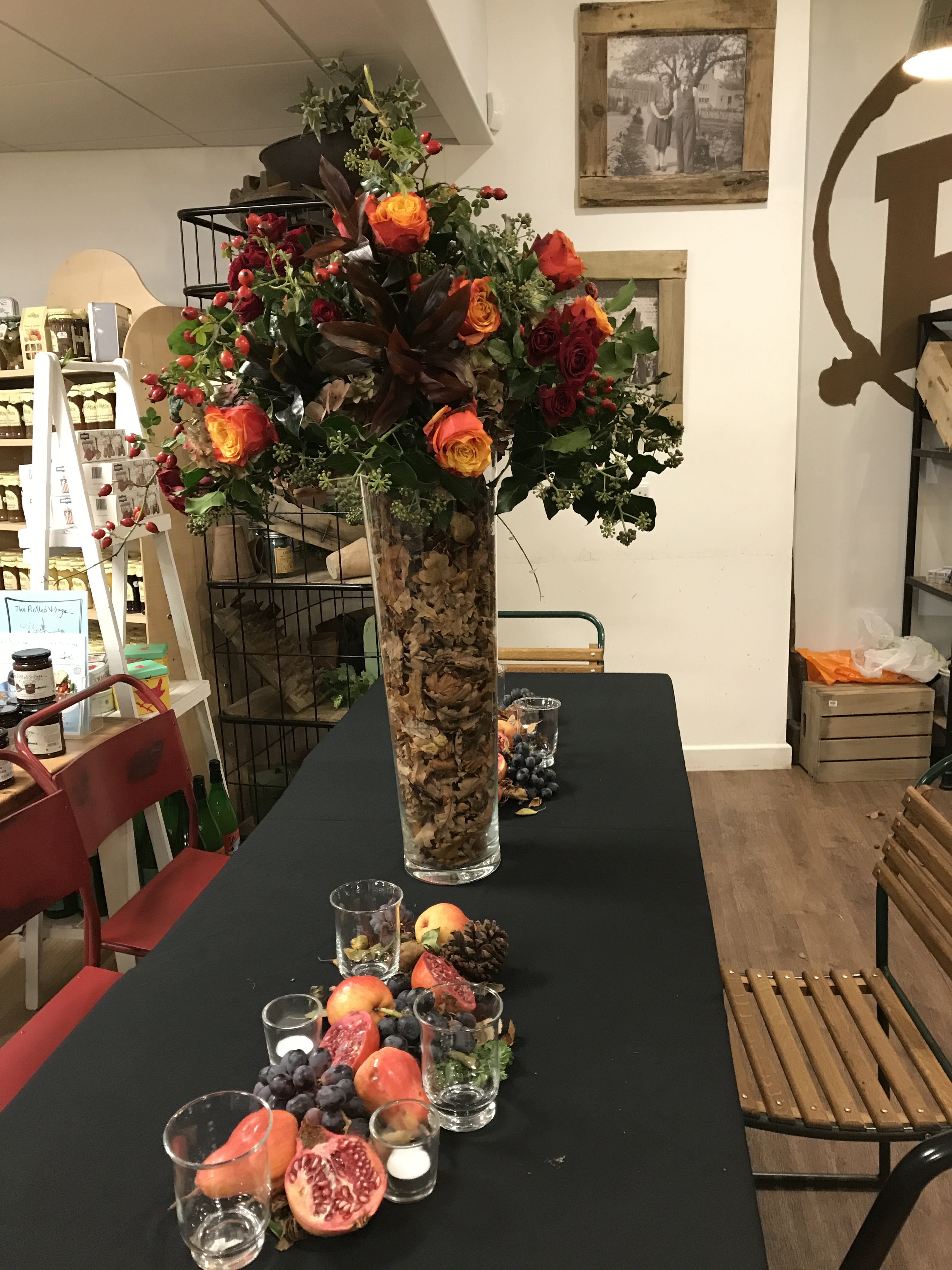
Anyway, I hurried to the right place, and found a group of people in the coffee shop, with a man at the front arranging flowers. He was rather clever, because he somehow managed to create a couple of fantastic autumn arrangements without really looking at what he was doing. He was very entertaining, and told us about arranging flowers at Prince Andrew’s wedding, and other major events. He then sort of threw some pears and grapes and pomegranates onto a table, and suddenly, there was a whole beautiful table setting.

We were given fancy snacks, and then the flower man (I can’t remember his name) called out ticket numbers and the chosen people were allowed to take home an arrangement. I won. Wow, I rarely win anything. I carried the huge arrangement out to where Husband was waiting, and told him that the evening had been a workshop, and this was my arrangement. He didn’t believe me – he has seen my attempts at arranging flowers before. My sister inherited all my mother’s clever flower arranging genes (the only time I ever arranged the flowers at church, my mother got there early and rearranged them before anyone saw).

*

As I write this, I have all the taps in the house turned on, and water gushing down pipes, in an attempt to clear them. Mr. Blocked-Drain-Clearer is here.

Whist trying to find out why the drains are blocked, I tried looking online. I discovered that coffee grounds can block drains. Did you know that? I didn’t. There is one person who disagrees, who wrote that coffee grounds act like sandpaper and actually clean out the drain. But that was offset by about three hundred people who said you shouldn’t tip coffee grounds down the sink, as they mix with fats and block drains, as effectively as concrete. This is annoying, as it’s very easy to sluice the grounds down the sink, and rather a bother to go and tip them on my roses (apparently roses like coffee – who knew?) Ugh, sometimes life is a hassle. But perhaps I will now grow beautiful roses to use in my flower arrangements.

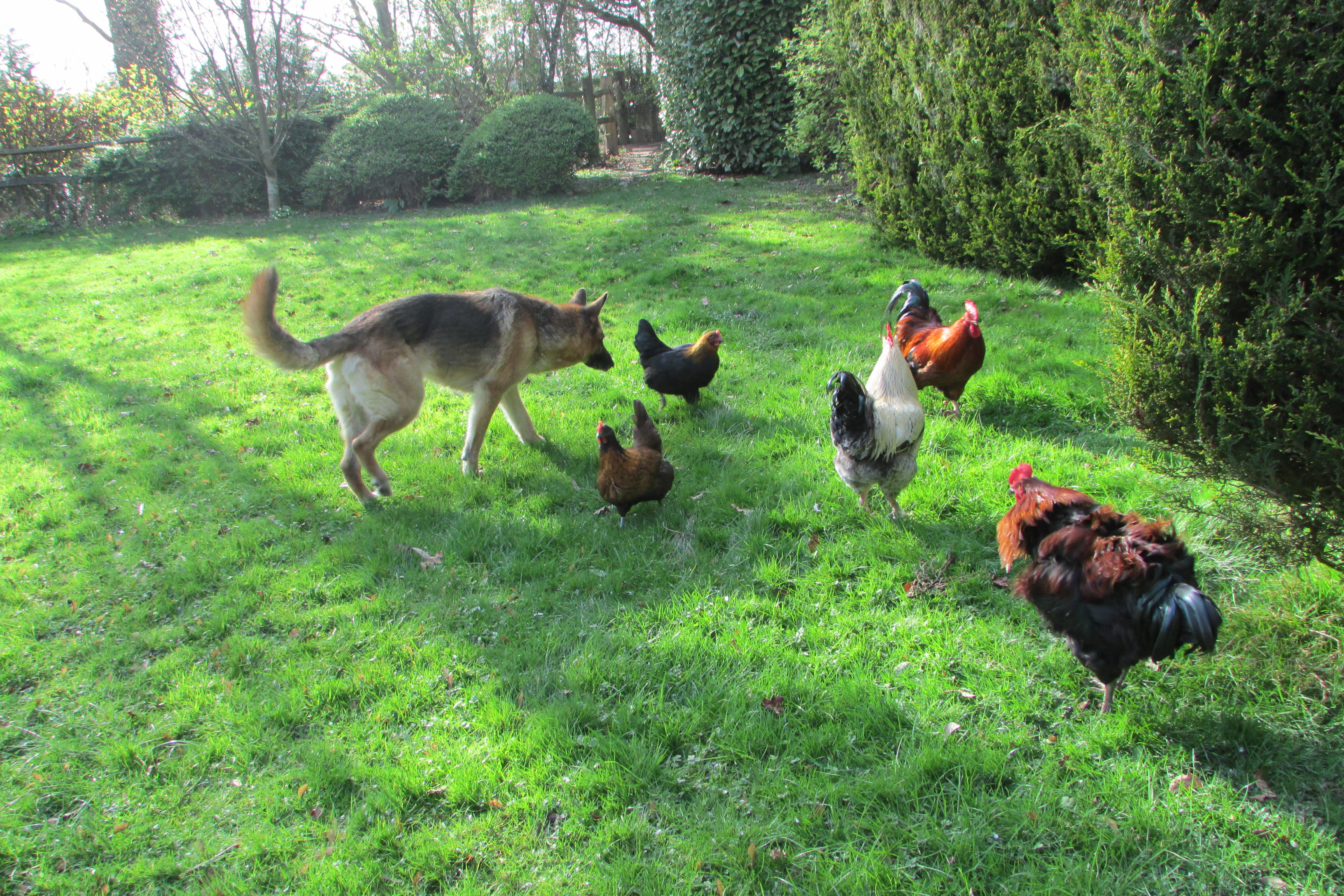
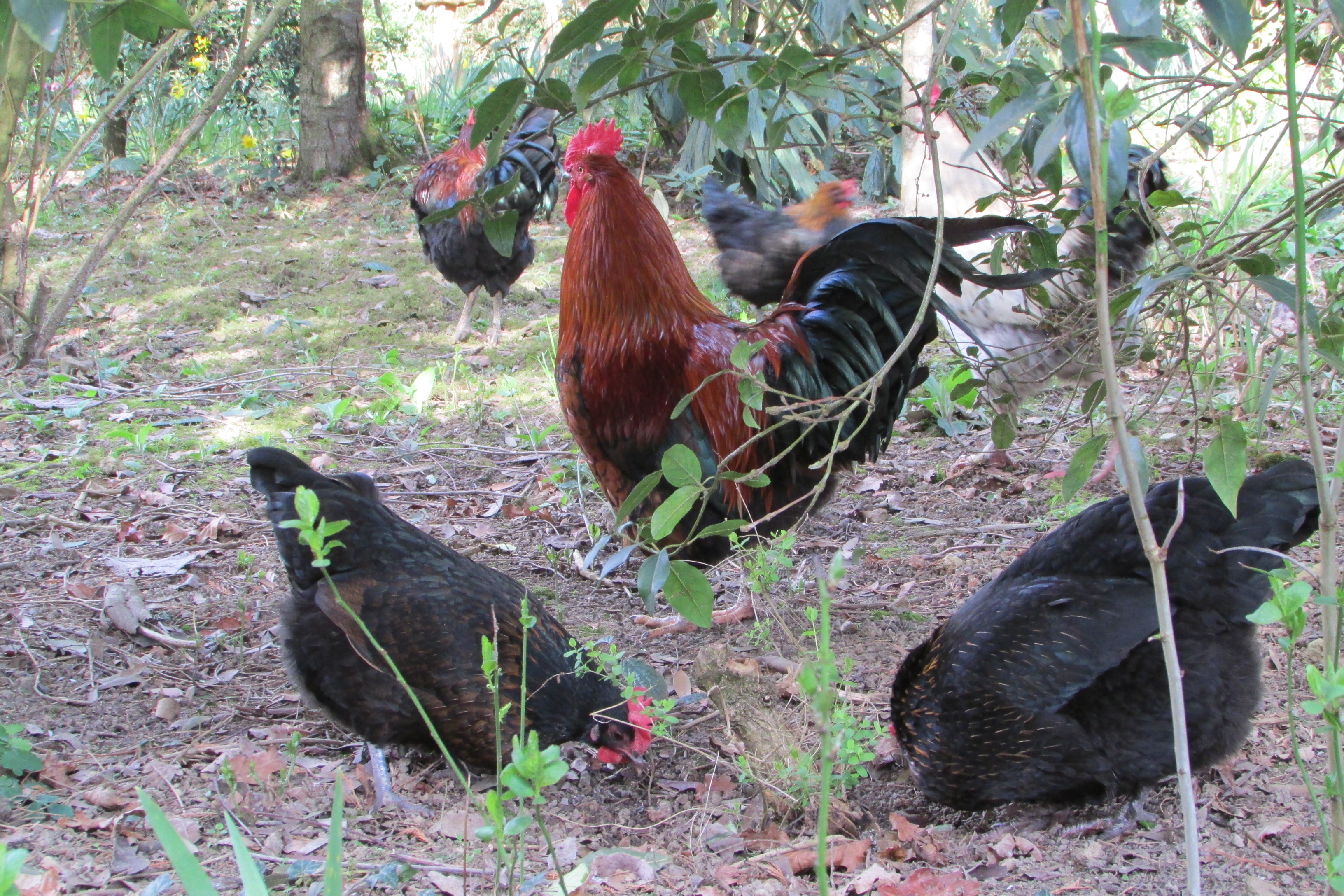
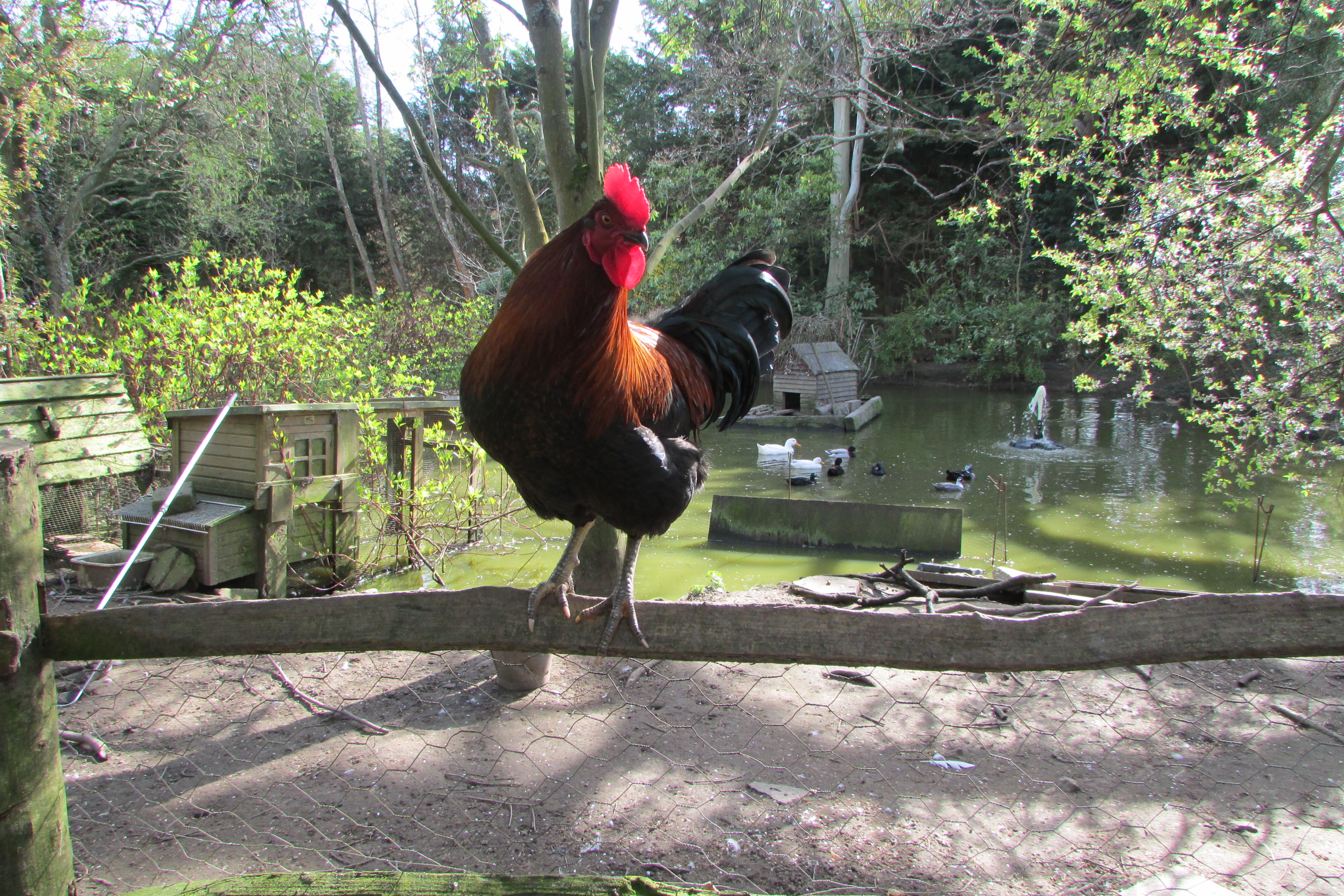
Another problem (though not stressful) is my chickens. Now, in case you don’t know, chickens put themselves to bed when it gets dark. So every morning, I open the door to their coop and out they run (I don’t like animals in cages). They spend the day happily digging up Husband’s plants and scratching the dirt under the trees looking for grubs. Then, when it starts to get dark, they go back to their coop, fly up onto their perch, and I shut the door so Mr. Fox can’t eat them during the night. The problem is that sometimes I want to go out before it’s properly dark, and I won’t be home until late. (I am always pleased when the clocks go back, because the chickens go to bed earlier!)

I thought I’d solved this, by training them to come when I whistle. I started giving them treats (grapes) and whistling, and gradually, when I whistled, they learned to come running to wherever I was. So do all the cats and the dog, but I can ignore them, and shut the chickens into their coop. Unfortunately, the silly birds now associate me with treats. So sometimes, after they have already put themselves to bed, I go up to shut the cage door, they hear me coming, and rush out of the cage hoping for a treat. I have tried explaining that actually, the treats are only when I whistle, and only given when they are actually IN their cage. But they won’t listen. Chickens are silly birds.

However really, I have no cause to complain about anything. Tomorrow I am going to a fashion show. All the models have been victims of acid attacks. They feel it is time to stop hiding their disfigurements, they want to show they are not ashamed of what they look like. I expect it will be a moving evening, and will help me to sort my own priorities a bit better. I’ll let you know next week what it was like, and who I meet – there are a few celebrities attending.

You can watch the show online :

https://www.actionaid.org.uk/get-involved/survivors-runway-fashion-show-facebook-live-acid-attacks-violence-against-women-and-girls?utm_source=facebook.com&utm_medium=social&utm_campaign=digital_survivorsrunway

Hope you have a problem-free week.

Take care,
Anne x

xxx

Families are the same, whatever the century. Counting Stars follows a family a hundred years from now.
Counting Stars by Anne E. Thompson – a thriller for the intelligent reader.
UK link below:

xxx

A Few Egg Facts…


How Long Can I Keep Eggs For?
(And do they need to be kept in a fridge?)


When hens lay eggs, they do not come with the neat red ‘use-by’ date stamped on them, so it can be difficult to know how long to keep them before they should be thrown away. I have done a little research.

There are four types of eggs – fresh ones, stale ones, bad ones, poisonous ones. You can eat the first two, and will be ill and possibly die if you eat the fourth choice. You would never eat the third choice – bad eggs – because they stink, so we can ignore those. We’ll start with the poisonous ones.

Poisons, or ‘pathogens’ in eggs are different bacteria. The worst of these seems to be salmonella, a rod shaped bacilli which causes salmonellosis (which can put you in hospital). Salmonella lives in the gut of animals, and seems to affect a lot of chickens (possibly because they have been farmed so badly). Salmonella affects other animals too, it is only chickens who get bad press. You should be careful around pets, especially reptiles, as they are well known carriers of salmonella (beware the cute turtles in the fish tank).

Salmonella is the reason your mother tells you to be sure to cook chicken thoroughly. A hen with salmonella can pass that into her eggs, mainly by her poop falling onto the shell. If you cook those eggs right through (no more runny yolks for breakfast) then, if the egg has been stored correctly, you will kill any traces of salmonella that might be present. However, I like runny yolks, and mayonnaise, and mousses made with raw egg – so there is another way.

Eggs in the UK and the US are treated differently. If you buy eggs in the US, they should be found in a chilled cabinet of less than 40ºF, and put straight into the fridge when you get home. If you buy eggs in the UK, they will just be on a shelf, not kept cool at all. Why?

This is because eggs are treated differently in the US. After they have been laid (within 30 days) they will be washed, with water at 110ºF and a detergent. This is to remove any bacteria from the shell, because the shell is porous – bacteria can get into the egg through the shell. (A hen with salmonella can infect the inside of the egg, but only if the bacteria is in her ovaries. Most eggs are infected via the shell.) However, washing eggs is not altogether good, as it also washes off the egg cuticle or ‘bloom’.

Ah, you might ask, what is that? Well, you can’t see it, but the outside of an egg has a protective coat, which keeps moisture in and bacteria (some bacteria) out. When an egg is washed, this cuticle can be damaged, which means more bacteria can get into the egg, so after washing, they should always be kept in a fridge (because bacteria doesn’t grow when it’s cold). This does not solve all the problems, as after an American shopper has bought the eggs, they need to take them home. If the journey home is warm, condensation can form on the cold eggs, which makes a nice moist surface for bacteria to start growing, and because the cuticle has been washed off, it can sneak into the eggs. So, if you’re American, and buy eggs, you should probably cook them properly.

In the UK, farmers treat the birds rather than the eggs. So hens are vaccinated against salmonella. This means they will not infect the eggs, and nor will their poop if it falls on the shell, so they’re not washed before they are sent to the supermarket. Which means the cuticle is intact, which means they don’t need to be kept cool. Eggs from vaccinated birds are stamped with a red lion mark.

However, I get my eggs from the chickens in my garden. I asked my vet if I should have them vaccinated against salmonellosis, and he asked if they appeared ill. I told him no, they are happy, if somewhat stupid, and seem perfectly healthy. He told me that a bird infected with salmonellosis would appear sick, so my birds are fine. I therefore eat runny yolks, and have never been ill. If I ever have more than 350 birds, or sell the eggs commercially, then there is a legal requirement to have them tested. But if I have more than 350 birds, my husband will leave and I’ll be homeless, so eggs will be a minor concern.

Should you wash eggs? I guess it depends how you do it. Cold water can make the egg absorb more bacteria, hot water can crack them. Detergent destroys the cuticle. If you plan to hatch, rather than eat, eggs, then you are not supposed to wash them. However, if the weather is wet, my hens bring lots of mud into the laying box, and I do tend to wash that off (and they still hatch). Some farmers replace the lost cuticle with other things – like oil, to try and make the eggs last longer. The trouble is, the egg absorbs some of this. (The shell is porous, remember?) Oil can stop egg whites whisking into peaks, so you can’t make meringues with them. You must also be eating traces of whatever they have coated the shell with, which is a bit worrying.

Duck eggs have more porous shells than chicken eggs. I always cook duck eggs thoroughly.

To return to the first question, how long can you keep eggs for? One guide is the US legal requirement: they must be processed within 30 days of laying, and then are considered safe to eat 5 weeks beyond the date they were packed. Which adds up to about 2 months. Storing eggs in a fridge, once they are at home, will help them last longer, as it slows the growth of any bacteria. A fresh egg has a nice clear white, and older eggs will have a yellowy white. As eggs age, they lose some of their moisture and elasticity, so become less good for baking, but they are still fine to eat. The older the egg, the more time bacteria will have to grow (and don’t forget, salmonellosis is only one kind). The older the egg, the better it should be cooked.

I guess that eggs which come from intensively farmed birds are more likely to have been pooped on, and therefore more likely to be covered in bacteria. Which is another reason for only ever buying free range chicken eggs. Please don’t support farmers who have unhappy birds.

Thank you for reading.

You can follow my blog at: anneethompson.com

Anne E. Thompson is the author of several novels, available from bookshops and Amazon. Why not read her latest novel today?

xxx

Marathons and Kites


Let me tell you about last Sunday. We had to take Son 2 back to uni, ready to start his Masters course, so there had been some discussion as to when that would be. I was keen to go on Saturday, because I don’t like missing church on Sundays and we seem to have missed a lot lately. Son and Husband were keen to go on Sunday. We went on Sunday.

However, they did compromise, and tell me they were willing to leave early in the morning, early enough for me to attend a church in Nottingham. Which was kind of them, as it meant we all had to get up ready to leave for 7am. We looked online for the postcode of Cornerstone Church in Nottingham, as it’s near to where Son lives, and we know a few people who’ve been there who are relatively normal, so we figured it would be a good one for me to attend. Their website claimed they are an ‘inclusive’ church – not quite sure what that means, but thought I’d find out.

7am arrived, off we set. Traffic on the motorways was good, and we looked as if we’d make it on time. Until we reached Nottingham. Then we ran into traffic, and I began to watch the time ticking past. You know that feeling, when the clock keeps moving, and you realise you’re going to not be early, then you’re going to be late, but still okay to arrive late. Then you start to decide just how late you can be before actually it’s a bit rude to disturb the service. I am used to churches – I have been around them my whole life, so I didn’t mind arriving late and asking to use the loo before going in whilst being assessed by strangers interested to know who I was and why I was there. But there is a limit. Eventually, I began to realise I wasn’t going to make it. Shame.

The problem, which perhaps Son could’ve known about beforehand (not saying anything, but…) was that Sunday was the day of the Nottingham Marathon. Son’s house, and the church, seem to be situated on a small island surrounded by roads that the marathon runs around. We tried several different routes, but it was pretty impossible to reach our destination by car (and I was too late to walk). So we abandoned the car and walked to the Beefeater for an early lunch.

As we walked, we passed lots of runners. I always find the marathon, any marathon, very moving. All those people giving time and effort for something so positive is wonderful, I think. There are the runners, raising money for charity after months of training, and their supporters, giving up a morning to cheer them on. It’s all excellent – if somewhat inconvenient for people wanting to drive on the roads. We even saw a man running whilst pushing another man in a wheelchair – that really made me blink back the tears!

I do wonder, though, who planned the date. I feel next year it would be good if they discussed dates with Nottingham University, and perhaps either the marathon, or the beginning of Fresher’s week could be on a different day. Just saying.

We had a nice lunch though. I like Beefeaters, and in the North, everyone is friendly, so you always get good service. The one in Nottingham is near a sort of marina. Only sort of, as most of the boats are on a car park, and the water is beyond sight. They do call it Beefeater Boathouse though.

Boats always remind me of my dad, because he owned a boat. His brother, Uncle John, used to live near a river, and if he saw a capsized boat, he’d buy it and then mend it. Dad bought one from him, and spent all his free time making it nice. I believe the lovely wooden cabinets in the galley were once church pews (perk of the job when you’re the minister perhaps).

My dad was good at making things, though they did tend to be big. And sometimes not pretty. We still have the solid wooden train station for the Playmobile trainset, which is way too big to fit into any cupboard. And we all remember his kites. I remember a holiday, in Cromer, when Mum and Dad had taken the children to fly kites, and me and my sister were sitting in Granny’s caravan. My sister looked out of the window, looking for Dad’s kite.

“I don’t think I can see their kite,” she said, “what does it look like? Oh wait. Oh no. Oh dear, I think I can….”

There were lots of kites flying in the field next to the caravan, and there, twice as high as all the others, was a big black bin bag kite. It was huge, and ugly, but it flew really well. I miss my dad.

Anyway, hope you have a good week and manage to get to where you want to go.

Take care,
Love, Anne x


Thank you for reading. You can follow my blog at anneethompson.com

Looking for a Story at the V and A


I wanted to visit the Victoria and Albert Museum, and as Husband had a day off, he suggested we go. Next time I’ll go on my own.

I have a few wisps of stories in my head at the moment, and one is set in the past. As my knowledge of anything historical is pretty much limited to slushy films and novels, this might prove something of a problem. I want to write about people living in another age, but have no idea what they wore, ate with, sat on, etc. So I thought the V and A might be a good place to start. I could look at a few artefacts and decide whether it was even plausible to set a story in a past century.

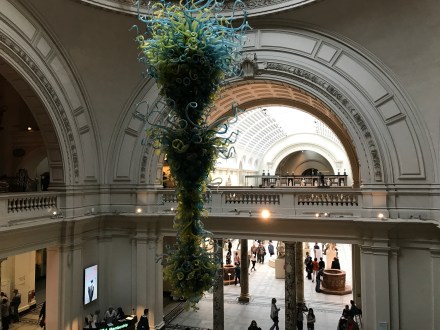
The V&A is walking distance from Victoria Station, so we had a nice walk, past interesting statues, very posh mansions and pretty mews. I love walking through London. Then it began to rain. If you plan to visit a London museum, do not go on a rainy day. It is full of people with umbrellas who are more interested in being dry than looking at the exhibits.


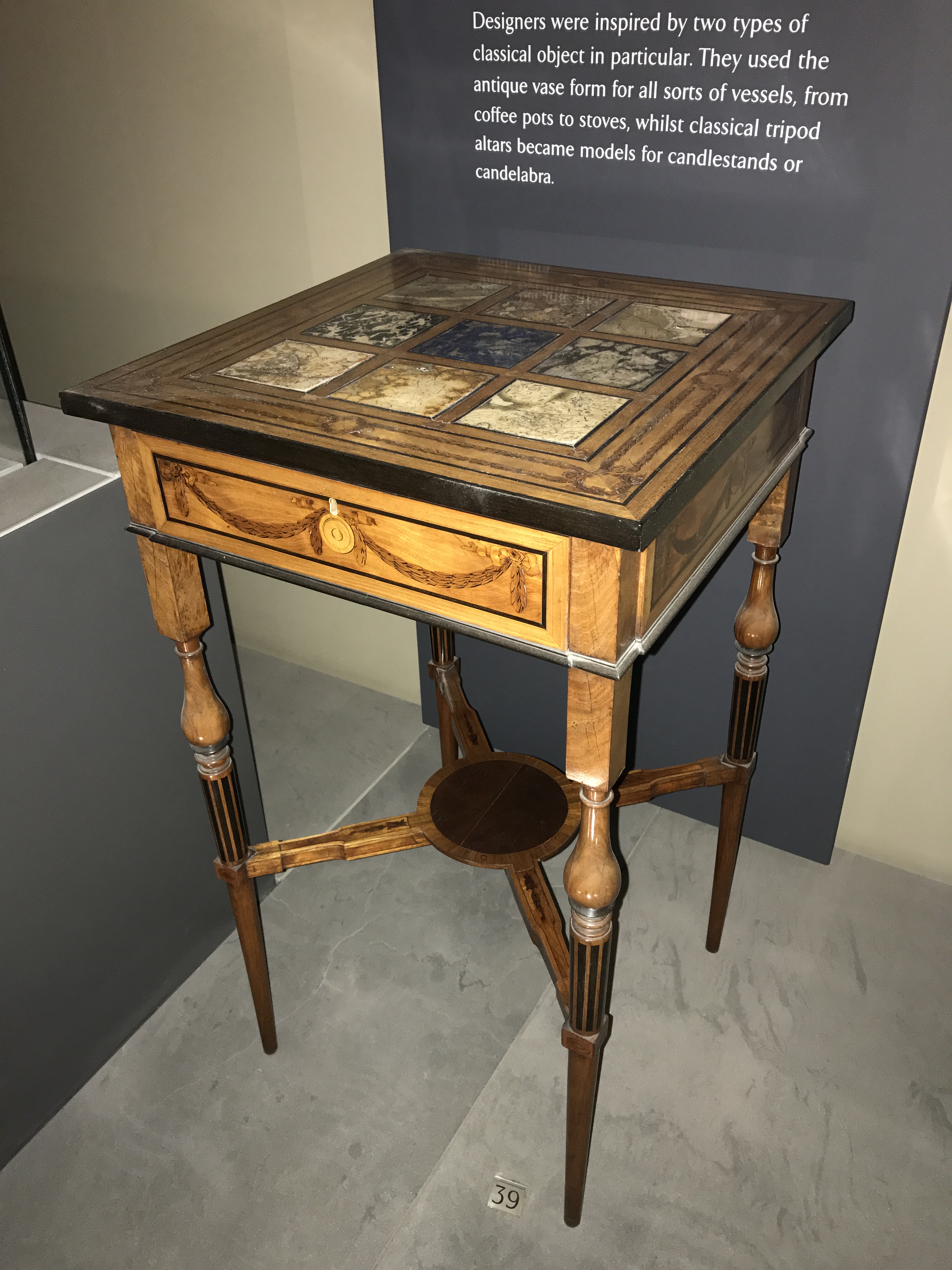
Husband needed to make a phone call, so I dumped him in a coffee shop and went up to the second floor. There was some lovely 1700s furniture. I was quite taken by a little table with spindly legs and inlaid wood. It had side panels, and one was a drawer, and I could see someone might hide something in there. The table would be in the corner of a room, partly hidden by swathes of curtains (did they have curtains in 1760?) and a young woman would hide something in the drawer and lock it.

There was also a cabinet, called a commode, patterned with scenes of a Chinese garden. Perhaps the girl would hide the key, dropping it into one of the Chinese urns before rustling away. (Did they wear clothes that rustle?)

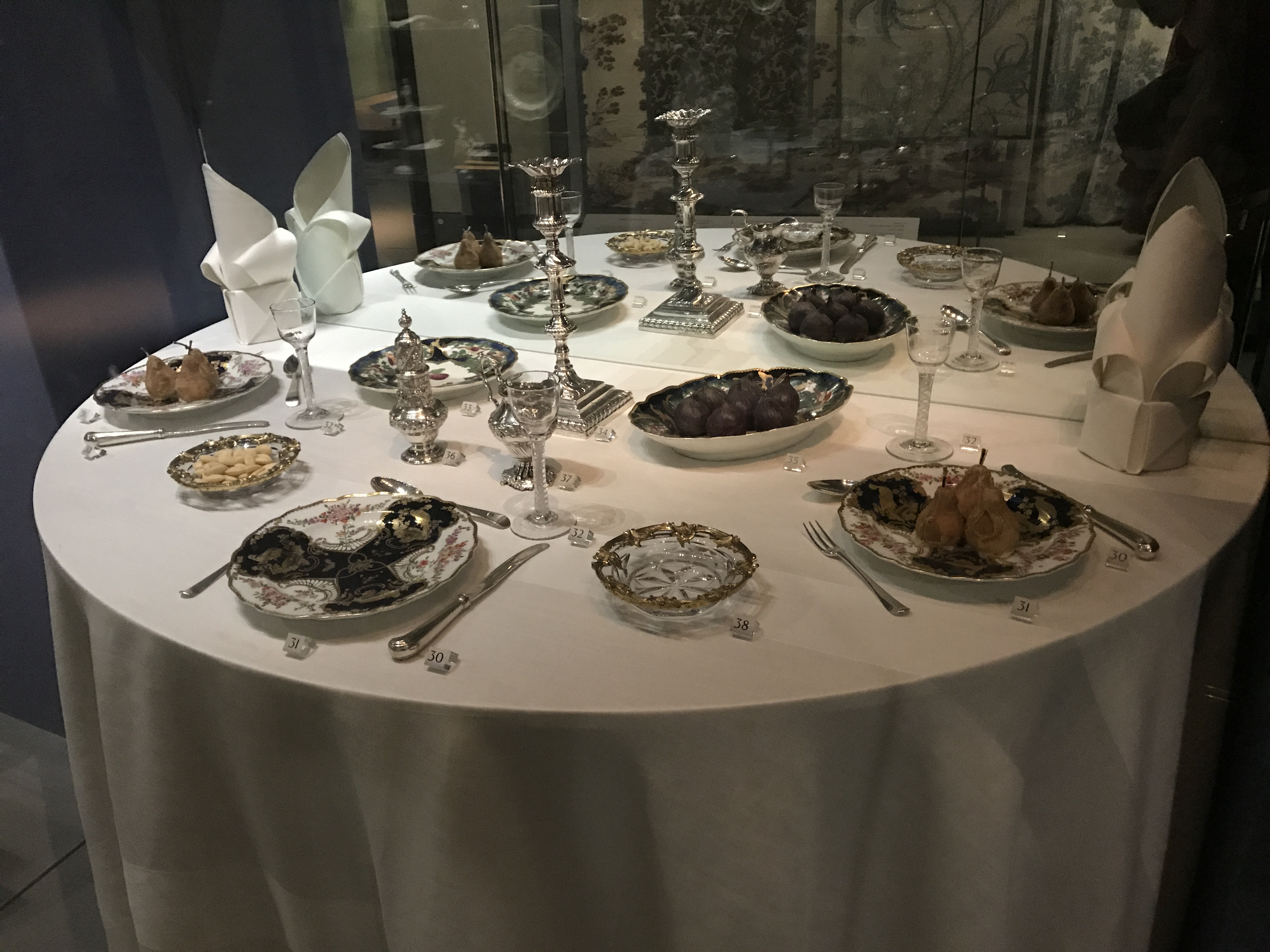
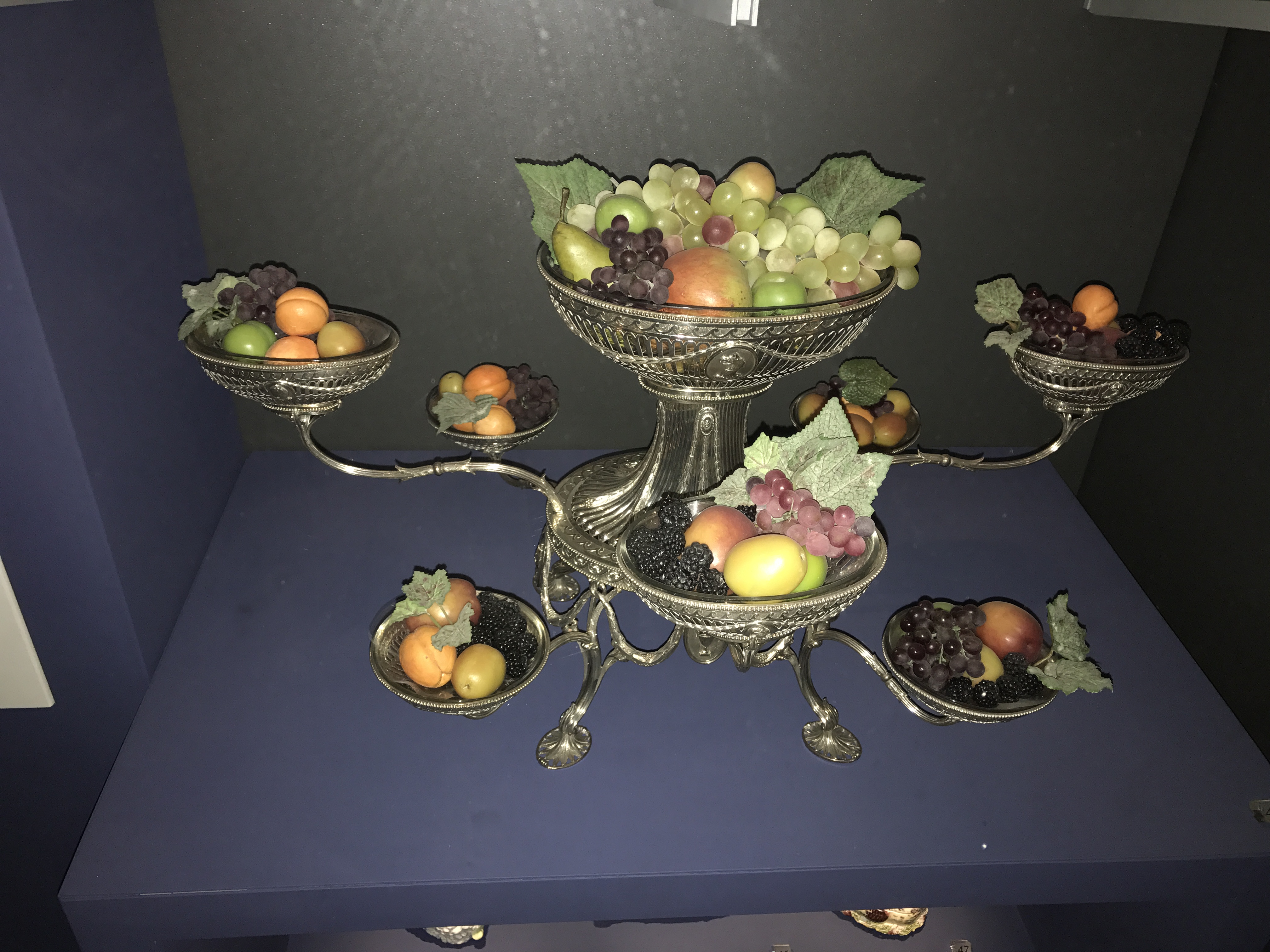
There were tables, set for dessert, showing food that was served in those days. People had just begun to buy cutlery, so guests didn’t have to bring their own; and food was served in courses. Desserts were fashionable, (the word is derived from the French ‘desservir’ meaning ‘unserve’ because the main food had been cleared away.)

I could see my young girl, glimpsing the complicated stand designed to hold sugared fruits, as she passed the dining room. (Did they have dining rooms?) The people would be drinking wine, having moved on from the traditional ale and now importing wine from abroad. She would be fascinated by the slender decanters, stored in the sideboard and produced only when there were guests of note. But who would be eating? Did men and women eat together? And were meals usually in the evening, or at midday?

Grumpy Husband joined me, and began to say (loudly) that, “the museum is actually just full of very expensive tat. It should be renamed ‘The Museum of Tat’. And how does someone get their stuff accepted by the museum? Everyone has stuff they don’t want to throw away, but they don’t really like – weird gifts and things collected on holidays. Clearly if you are Royal, you can simply shove it all in a museum and pretend it’s interesting.”

I suggested Husband sit in a chair and play a game on his phone, then I walked on.

There was some furniture designed by Thomas Chippendale (1718 – 1779). Perhaps my story house could have a couple of chairs, designed by Chippendale and chosen from his furniture catalogue. The grumpy husband of the house could moan, not liking that James Rannie, a Scottish man, backed Chippendale financially. In 1707, there was the Act of Union, which made Britain a single nation, joining England, Scotland and Wales under a single parliament and monarch. Grumpy Husband (in the story) could be cross about this, feeling it was a mistake, and therefore resentful when his wife suggested they buy furniture associated with a Scot.

Perhaps later generations of my story could live in 1870. Fruit from abroad was imported, and my character, an awkward young man, could agonise over how to eat it politely. When faced with an array of fruits, he always chose a banana, which he did not particularly like, simply because it was easy to peel with a knife and fork, and could be chopped into pieces and eaten delicately.

I could have the militant lady of the house, presiding over her tea-table. Millie the servant had laid a large tray of cups and saucers and silver pots, ready for the mistress. She removed the embroidered tea-cosy, and poured for her guests, offering milk or lemon. But did they serve tea with milk and lemon in those days? And who would be invited to tea? And did the maid stay, or leave when tea was served?

I clearly need to do lots more research before I write my story. Perhaps I will write it first as a serial on my blog, then I can write it as I learn snippets of information, like I did when writing Counting Stars (which I later rewrote as a complete book.) I will find some books and look online. I sort of have an outline for my story – am just not sure if I can learn enough facts to flesh it into something realistic.

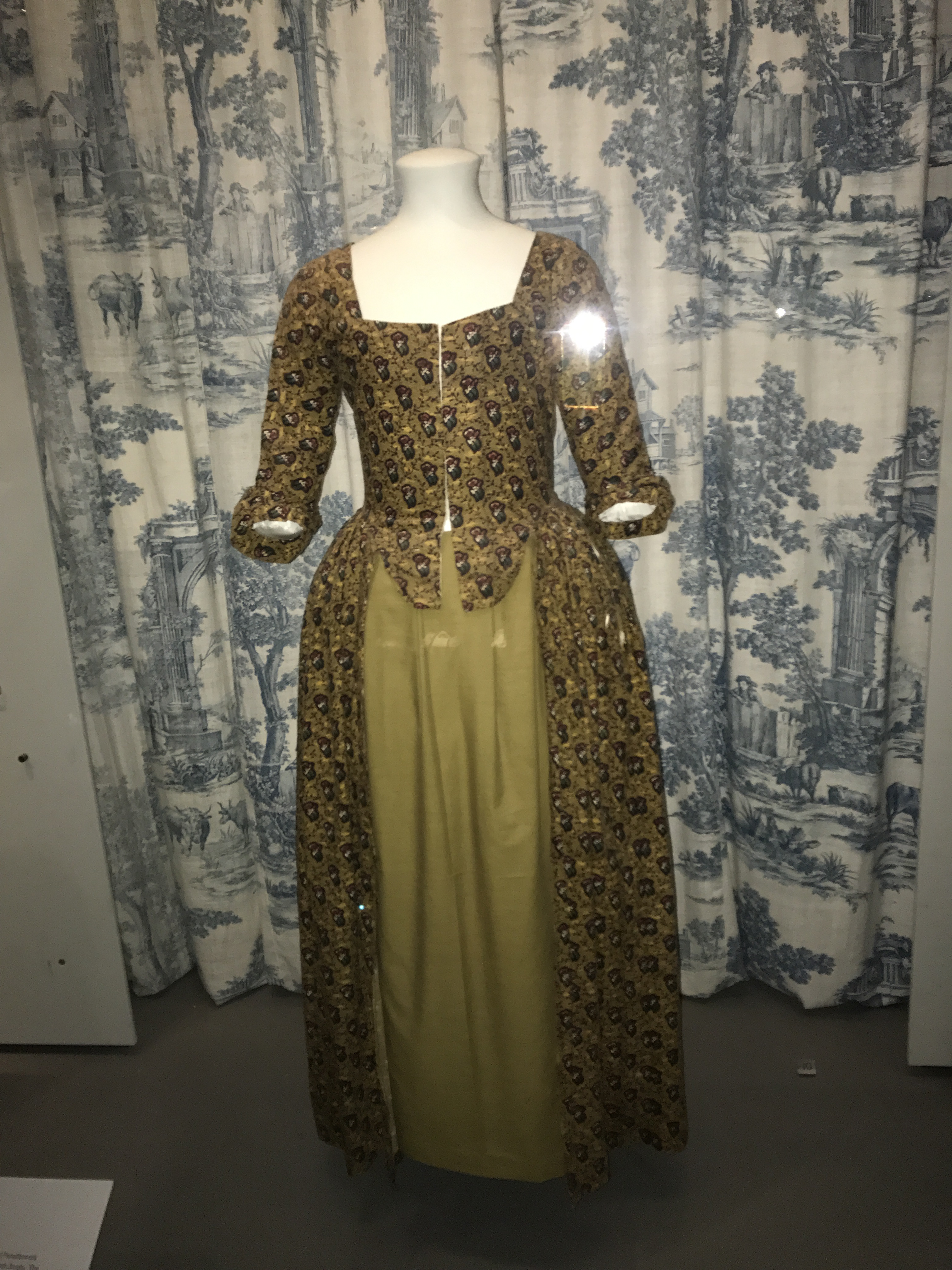
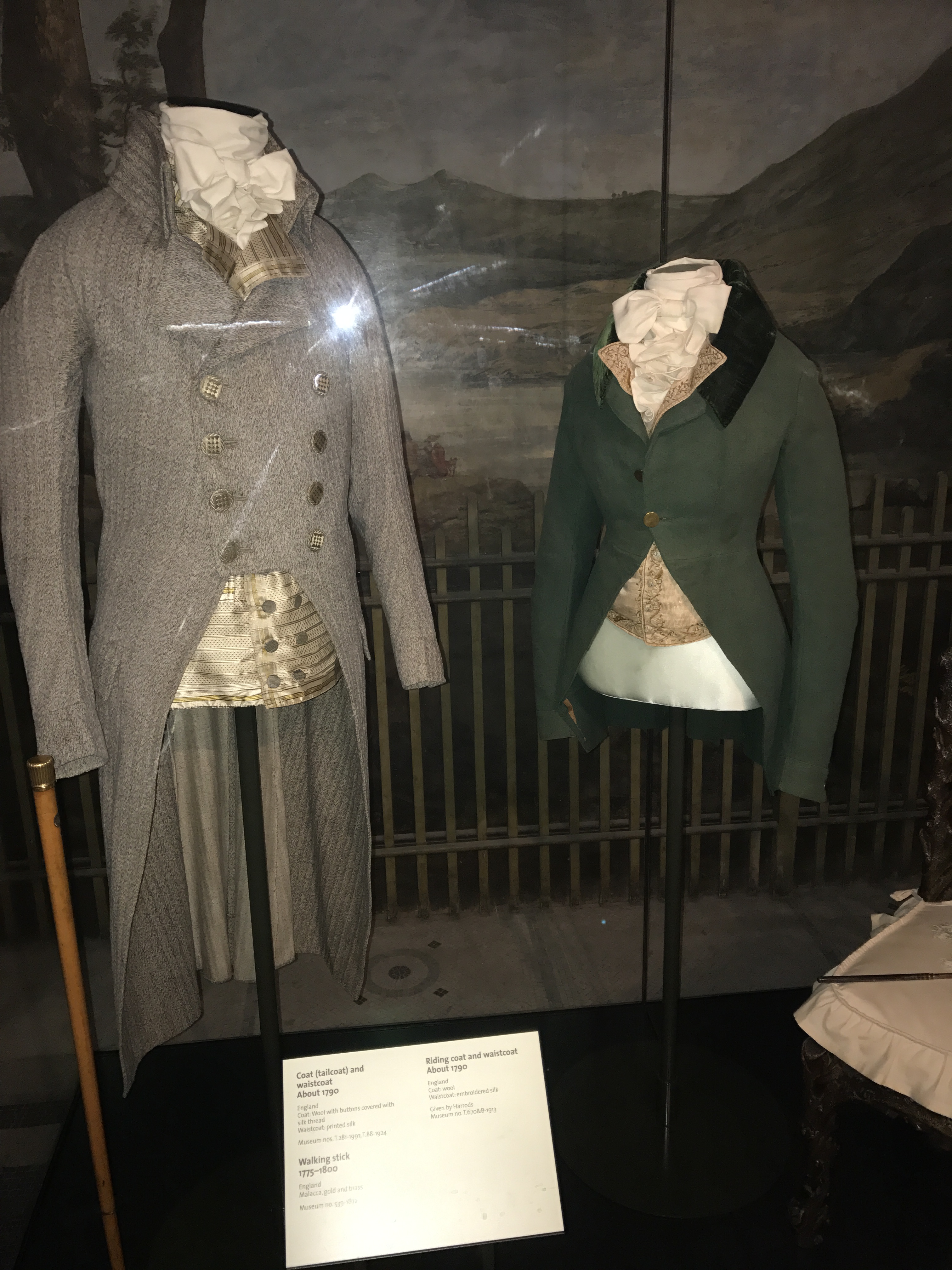
We had a quick look at the displays of clothes before we left. But there were too many people avoiding the rain for me to stand before a glass case and imagine how it would feel to actually wear those corsets and layers of cotton.


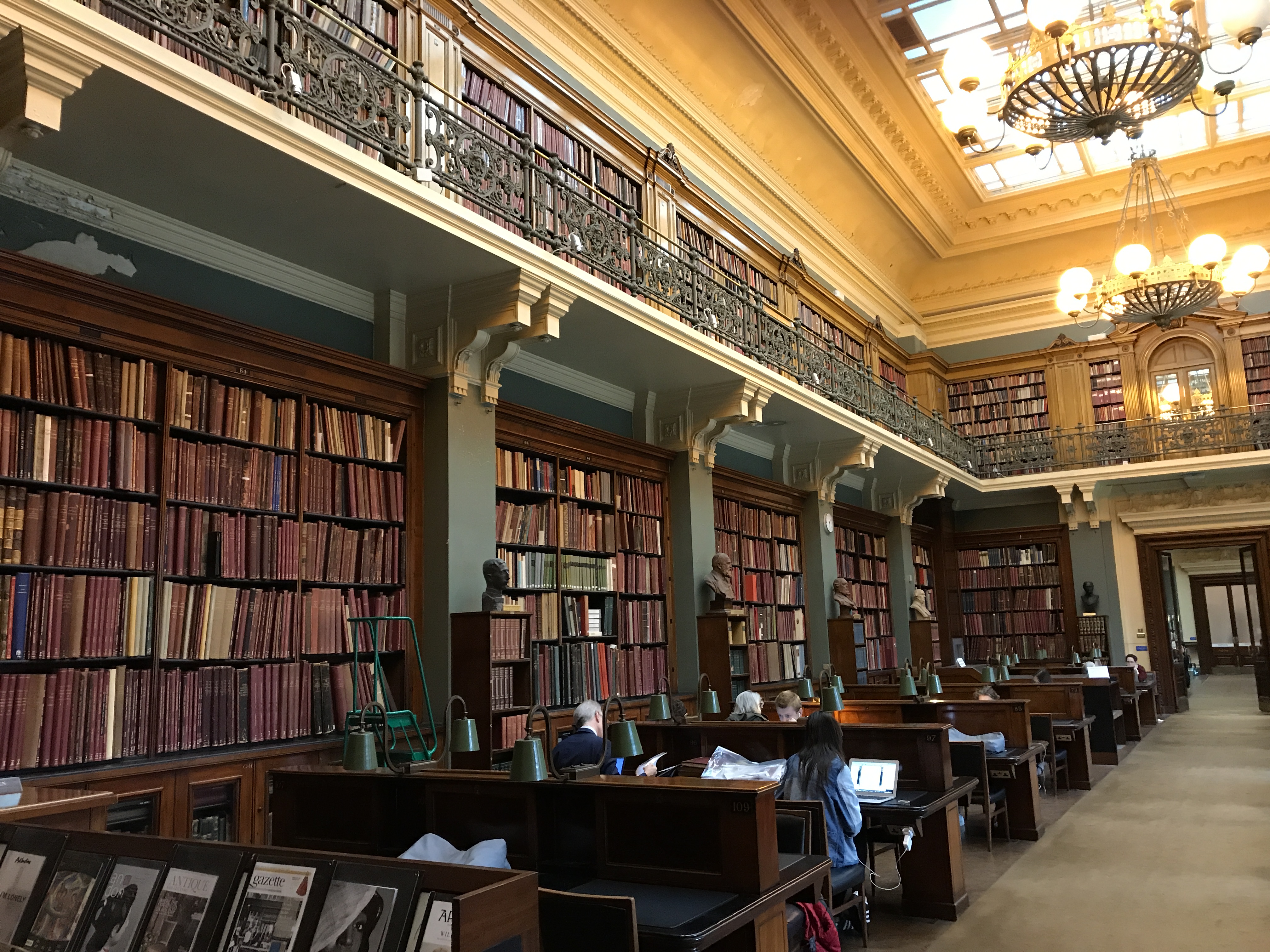
I rather like the V&A. Husband is sort of right – it is an eclectic mix of stuff, but it’s interesting. There is also a wonderful reading room, and a hall full of statues, and even a paddling pool for sunny days. I will definitely return. Perhaps after I have done some research so I know more of what I’m looking for, and I can use the exhibits to imagine how my characters would have lived; I can see textures and sizes and think about the comfort of things. I will go on my own….

Thank you for reading.

If you want to read the finished version of Counting Stars, my novel set in the future, the UK link is below (though you can buy it from whichever Amazon is local to you.)

xxx


This Week


Hello, how was your week?

Mine has been a nice mix of work and other stuff.

It started with the Men’s Annual Croquet Cup, which is held every year in our garden. Husband is very keen on croquet, and I absolutely refuse to ever play, because it’s a horrid nasty game involving hand-eye co-ordination (which I don’t posses) and an evil temperament (which I do posses, but try to keep under control). When, in the past, I did play, it was always my ball that Husband sent spinning off into the bushes. So now he has to organise a church event, and get lots of blokes round to play. I think it went okay, I just had to provide drinks and snacks and keep out the way. The prize is a big ugly rubber-glove mould, which Husband found in a shop in NY. No-one wants to win it, so it is a game of skill, as they all try to be good enough to reach the last post, but then fluff those final shots so someone else has to take home the ugly prize.

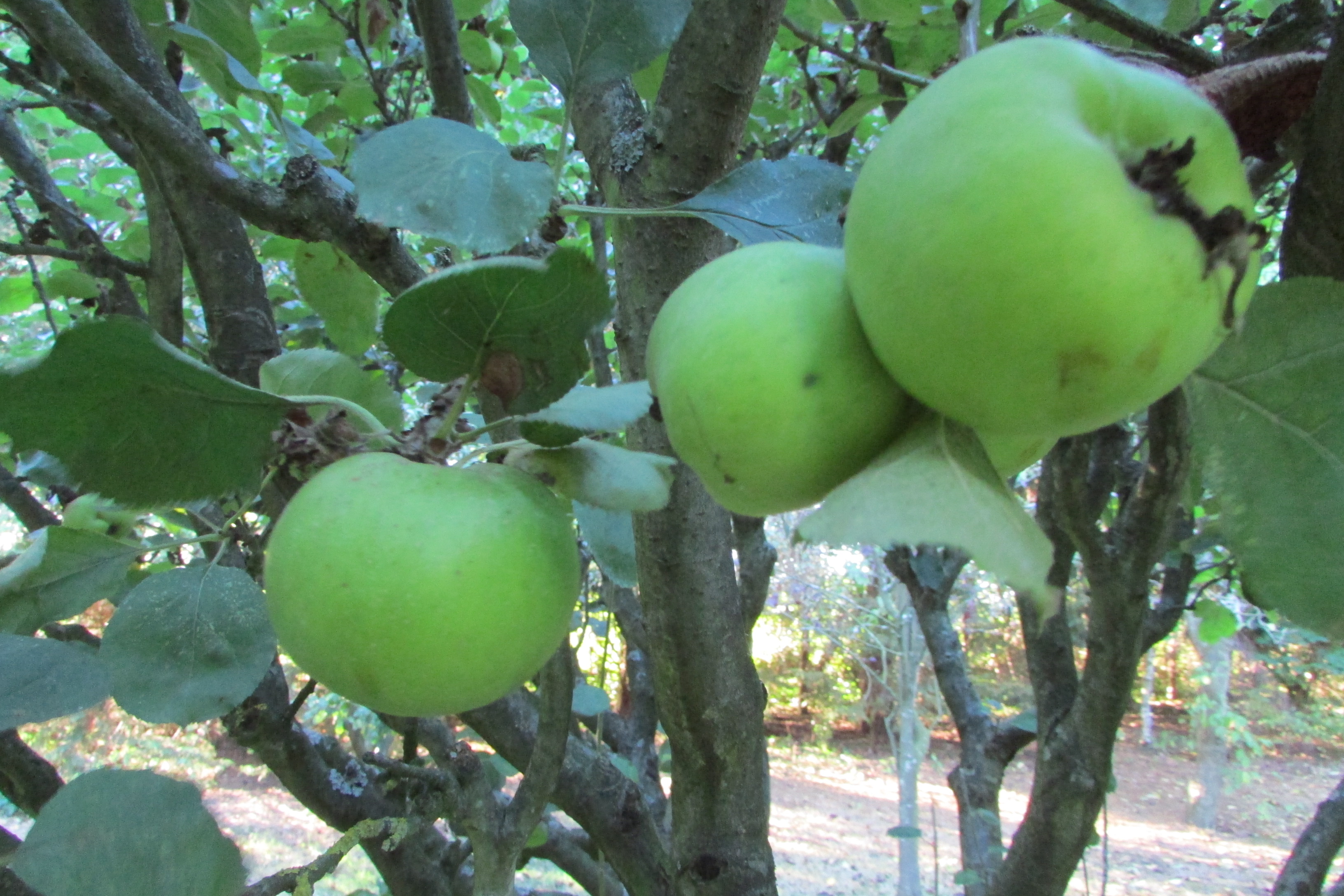
I’ve also spent lots of time cooking fruit. Harvest is an extravagant season, and I feel uncomfortable leaving plums and apples to rot on the trees, but they do all ripen at the same time. So it takes hours of picking, and sorting, and preparing fruit, ready for the freezer. My fingers are now stained brown, and I don’t want to see another plum.

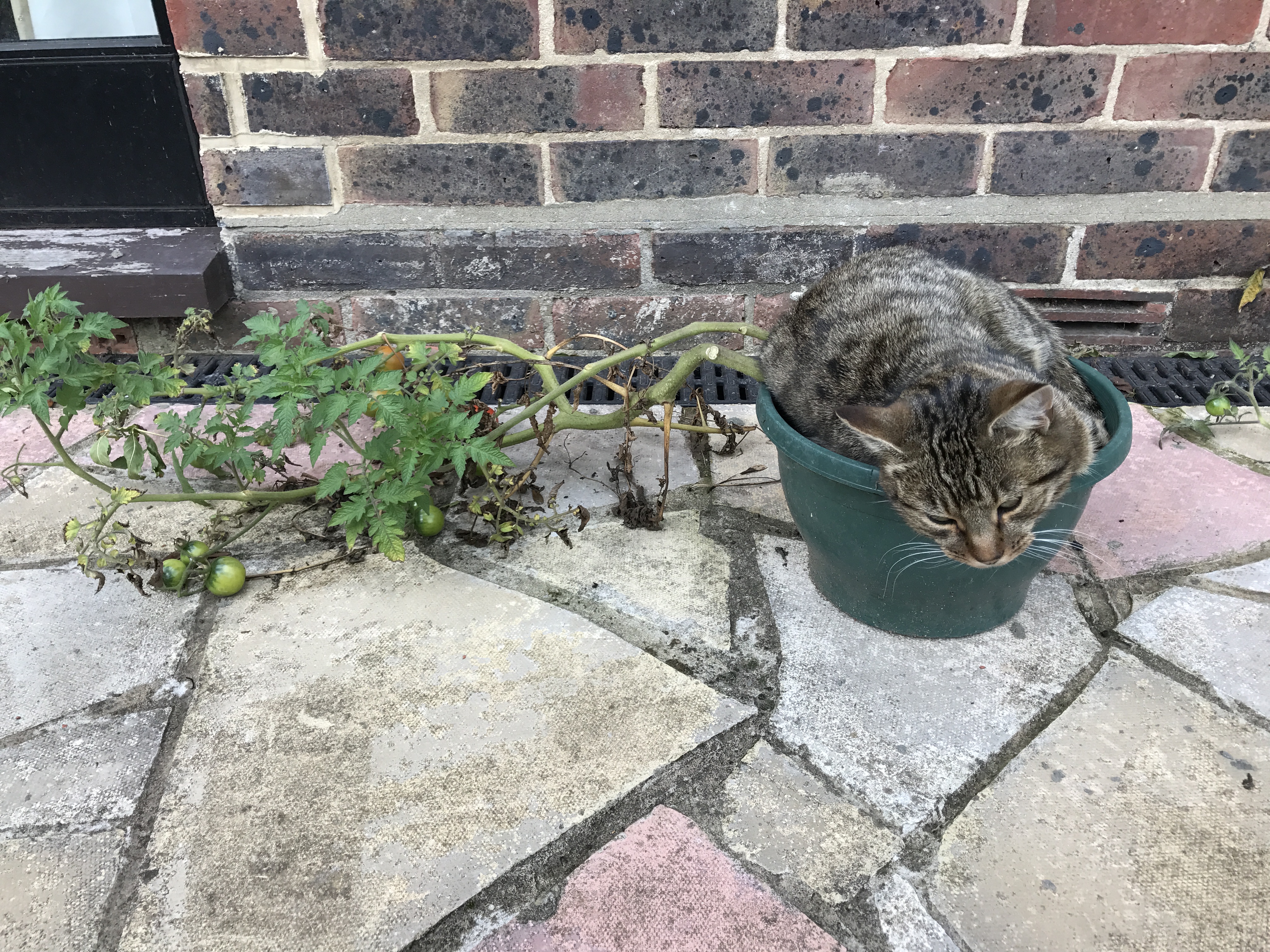
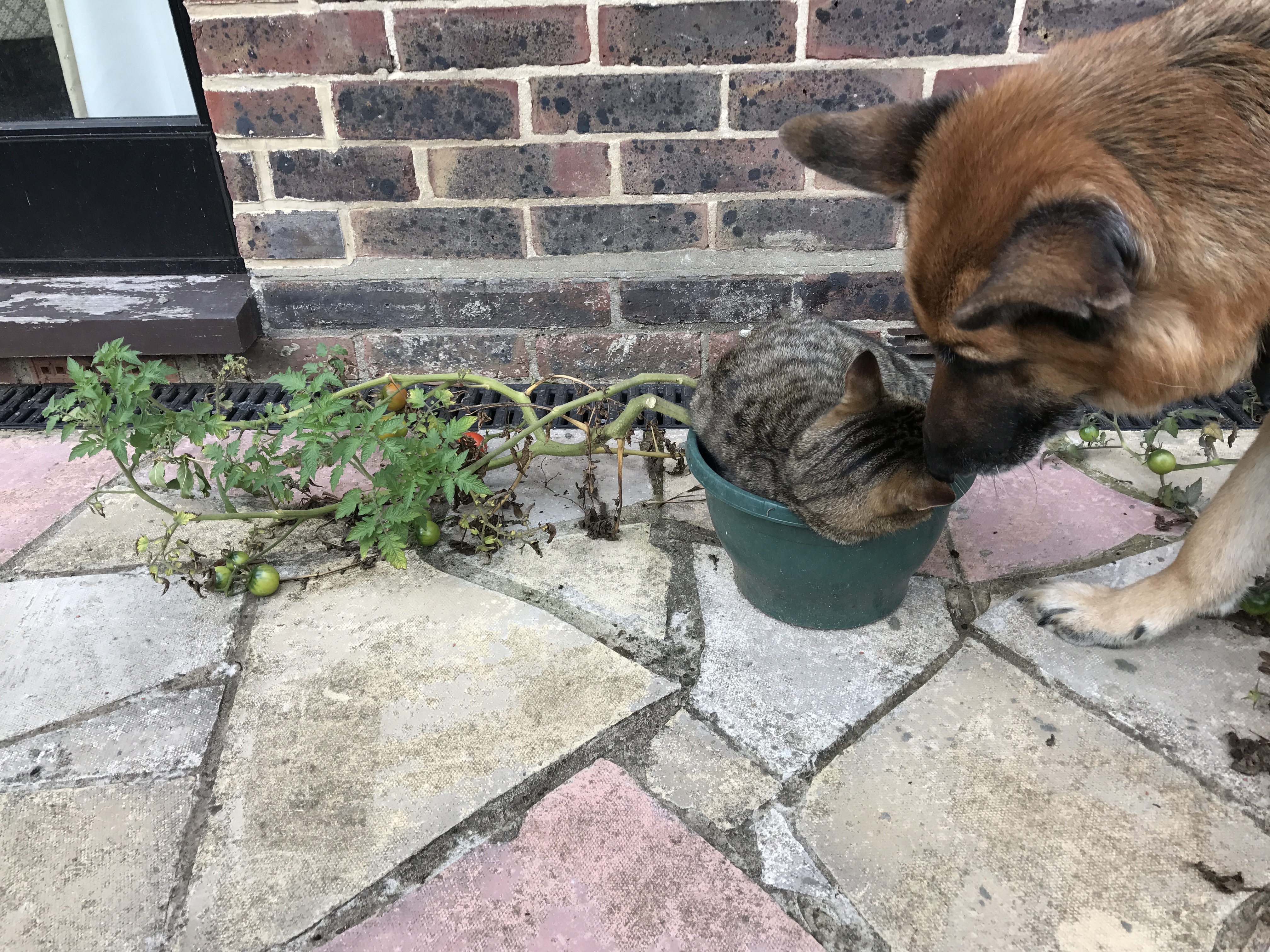
I’ve also had a few tomatoes, but my tomato plants haven’t done very well this year, because the cats like to sleep on them. (No idea why.)

I didn’t have my Chinese lesson this week, because we can’t find our teacher. Perhaps she’s done a runner to escape our terrible accents.

On Thursday I was invited to speak at the Cameo Club (an afternoon group run by one of the local churches for the over-sixties.) I wasn’t quite sure what to expect. It was held in their church, and I had assumed everyone would sit round in a circle (which is usually what I find when I speak to small groups or book-groups). But I arrived to find them in rows, facing a lectern and microphone. A bit scary.

I also wasn’t quite sure what to talk about (I have three talks really, one about books, one about the slums of India, and one about me having a brain tumour and becoming an author.) I chose the me/brain/author one, as I thought it shows that God can use us, however much our body has gone to pot, which might be appropriate for an older audience.

I never manage to actually say what I’ve planned to say when I do these talks. I pray beforehand, asking God for a ‘message’ to say. Then I plan a talk, and write a few notes (which I usually can’t find when I arrive). Today, I did manage to arrive, on time, with notes, but then at the end, I glanced at them and I hadn’t said anything I had planned to say. I think this shows I’m not very good at listening to God. The day I manage to actually give the talk I feel he wants me to say, I will know I have got better at listening. However, I do think, because I try to listen, he might use me anyway. Perhaps (hopefully) someone there heard something helpful. I did have some nice chats afterwards, anyway.

I did have bit of a ‘spooky’ God experience this week (which shows he listens to me, even if I am a bad listener – because on the way to Lunch Club I had been thinking that sometimes, it’s hard to believe in God when life is just ticking away nicely) Anyway, when I arrived in the kitchen, the oven had been set to ‘automatic’, which means it won’t heat up. (Not sure if this was due to a power-cut earlier in the day, due to said oven being cleaned during summer break, or if some annoying individual had fiddled with it.) No one could remember how to ‘unset’ the automatic setting. I fiddled with various buttons for about 10 minutes. Then DP- who can usually mend anything tried. Then I tried again. Then we gave up, and decided dinner would have to fit into the other two cookers. We always have a prayer time, so when the team had arrived, we left the kitchen, and prayed – during which I mentioned unhelpful cooker (not expecting anything to change). We went straight from prayer back to kitchen, I pressed the same buttons on the oven I’d already pressed and – tada – oven came on! I have no idea if it had warmed up and dried out, so now worked, or if it has an intermittent fault which corrected itself, or if we witnessed a miracle. The cooker worked. And given the timing, the me saying I was feeling a bit like I never ‘saw’ God anymore, for me it is a miracle anyway.

The rest of my week, has been spent rewriting Clara. I left it for a few months after writing the first draft, and now am rereading it, and deciding what I need to change. When I’ve done that I will send it off to my editor (who usually makes me rewrite even more). So far, it’s going well. I think it’s the best book I’ve written so far – certainly it’s the most powerful. But it’s hard to judge your own work, so we’ll see. You can tell me next year, when it’s finally published.

So, a nice ordinary week for me. Hope your week went well too.

Take care,
Anne x

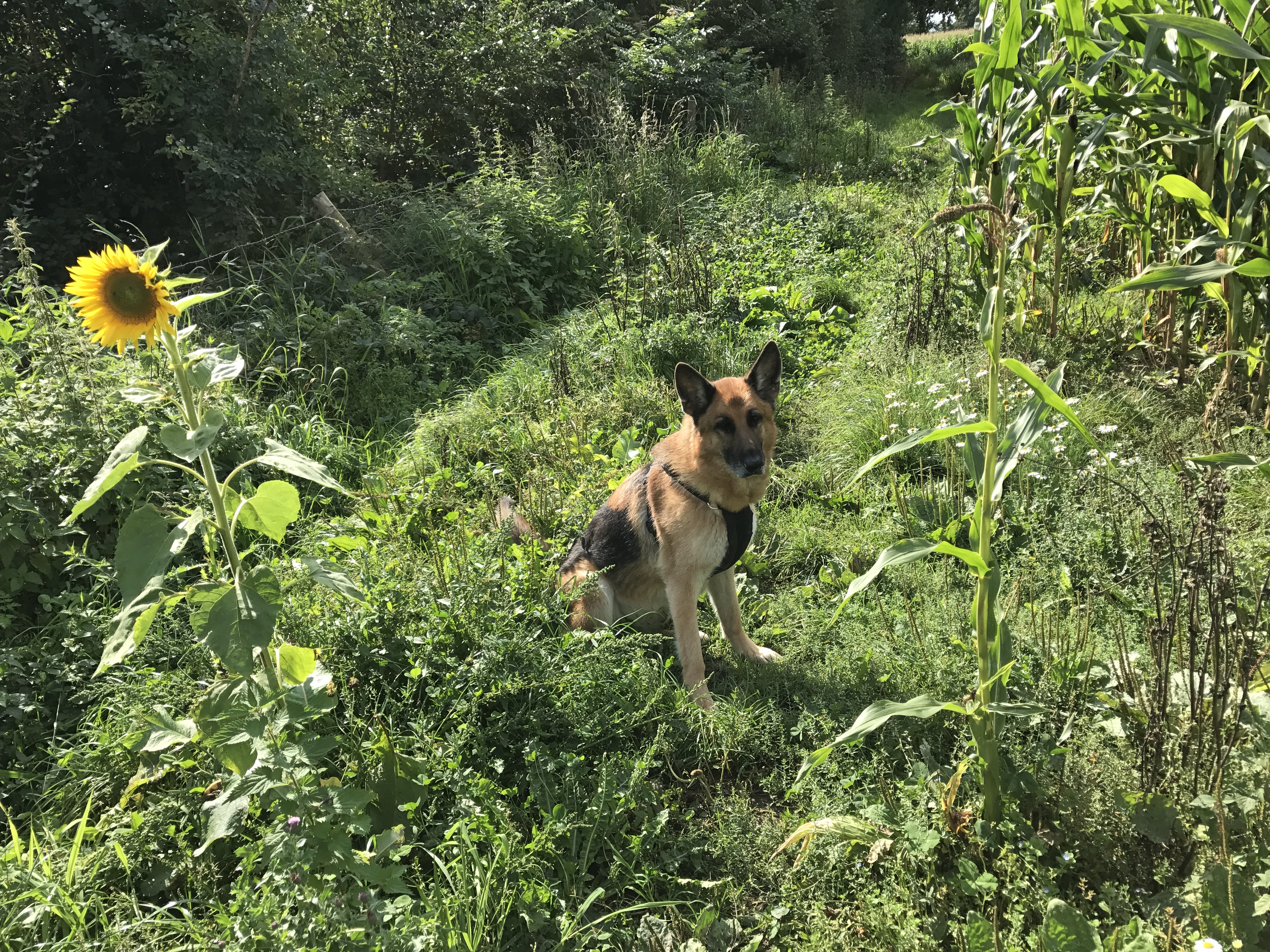
PS. I found another sunflower growing in the sweetcorn field.   

Thank you for reading. Why not sign up to follow my blog?

anneethompson.com
xxx