The Government Deficit

The Government Deficit

IMG_1908

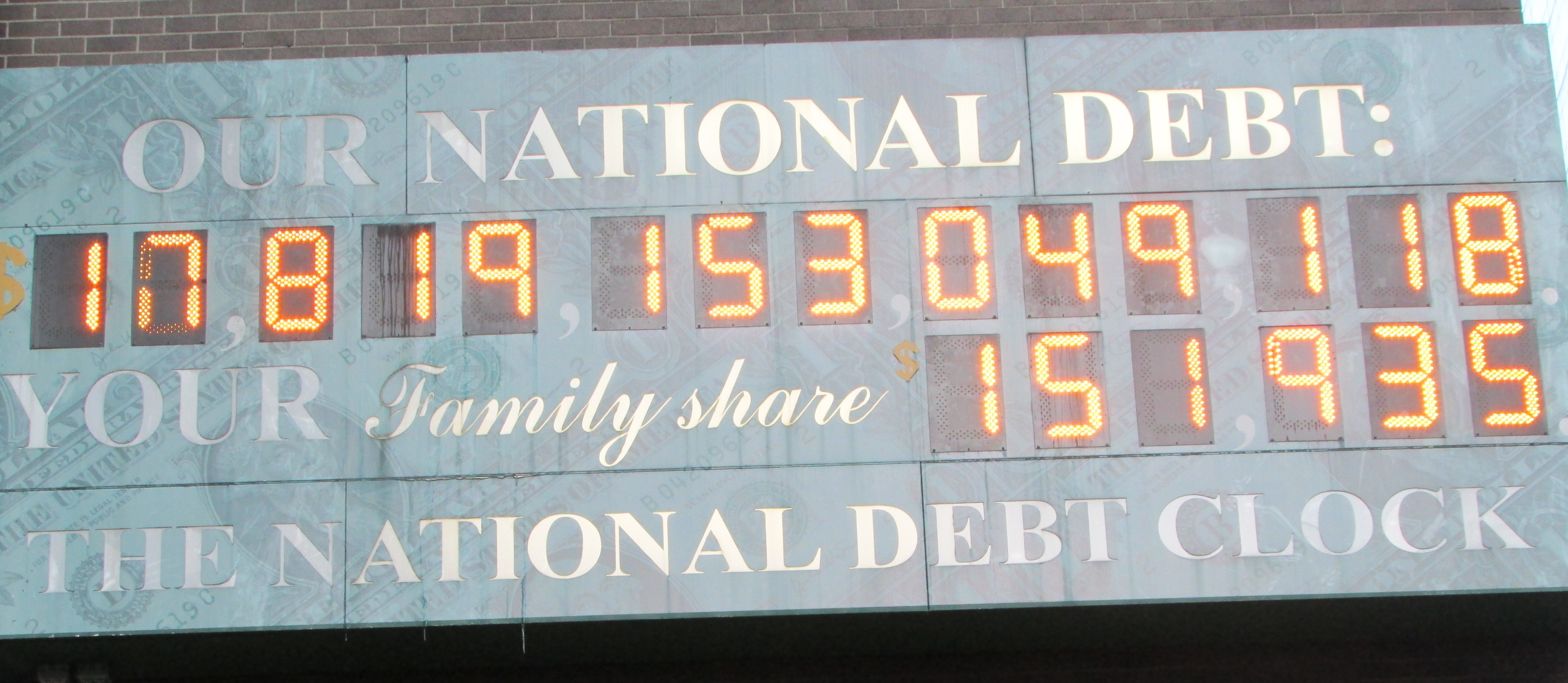
     We often hear politicians talk about “the deficit”. What is it? Why do they seem so keen to blame it on other people and to talk about reducing it? Does it actually matter? I want to explain it very simply to begin with, so here is a story (bear with me, it does have a point.):

Our story is set in Toytown, home to Noddy and Big Ears. Once upon a time, Noddy was put in charge of all of Toytown’s money. Every year he was given fifty gold coins and he could decide how he spent it. This worried Big Ears, could Noddy be sensible? He gave him a lecture about behaving responsibly, not having wild parties with the Barbie dolls when he needed the money to run the Toytown school and to pay the Toymaker to repair the broken toys and to make new ones. They all needed some new doll houses and some faster toy cars. Noddy nodded his head wildly in agreement, he was terribly excited.
All the gold was put into the money pot at the beginning of the year and every time Noddy needed to pay the Toymaker, or to build a new road, he took some out. For a while, all went smoothly. Then one day, Noddy had an idea. The summer was very hot and he wanted to build a swimming pool. All the toys could swim and enjoy the pool, it would be a place for toys to meet and chat and, best of all, he could invite all the Barbie dolls. But a swimming pool would use up all the money from the money pot and there would be nothing left to pay the Toymaker. He went to see Big Ears.
Big Ears listened to Noddy’s plan and thought about it. He agreed that all of Toytown would enjoy a swimming pool, it was not a bad idea. But they must continue to pay the Toymaker each year. He told Noddy that he could borrow the money to build the swimming pool. So, Noddy went to the Toytown bank. He explained that he wanted to build a swimming pool and needed the bank to give him some money. He would pay back the loan, giving the bank eight golden coins every year. The golden coins would come from the money pot. It would mean that for the next twenty years they would not be able to pay the Toymaker so much money, but all the toys would enjoy the pool, so they would not mind too much.
Noddy built the swimming pool and everyone was happy. For the next twenty years the toys had fewer new houses and fast cars but they did not mind. Everyone enjoyed swimming and watching the Barbie dolls. They all lived happily ever after.

This shows how borrowing arises. It is when a government has a deficit one year by spending more than it receives. If it spends the money on something everyone needs in the long term, no one minds that it means a bit less money for other things for a few years.
Now, our government does not have a pot of golden coins. It receives money through tax (boo, hiss, we all hate taxes.) That income goes up and down depending on the economy. When the economy is going well, there is more money and therefore more tax, so the government has more income. When there is a dip in the economy, people earn less money and pay less tax and so the government receives less income. Now, although their income goes up and down, we do not want everything they spend money on to reflect that. We do not want them to open a new school one year, when the economy is going well, then close it the following year when there is a dip, then reopen it the next year when things improve again. We like stability. This is another reason why governments might borrow money. The economy might be bad for a while but they know it is likely to improve, so they borrow money to keep things going.
We therefore work on the principle that government borrowing is allowed. A government can borrow money to spend now and they pay it back later. The problem is that governments are made up of people and people are not always wise. Politicians like to be popular. They therefore like to promise people lots of nice stuff. Nice stuff makes people happy. Happy people vote for politicians. If the government does not have the money to pay for nice stuff, they promise it anyway, figuring that the future generation can pay back the debt in about twenty years (when they are too old to be in government, so who cares?) This is how borrowing grows. And grows. And grows.
Where does the borrowed money come from? It is borrowed from institutions (banks) and individuals (for example National Savings Bonds) and from selling Government Bonds.
This is all a bit boring, so let’s have another story. This one is a true story.

Our story begins years and years ago, when Egypt was run by Pharaohs. One night, when most of the world was asleep, Pharaoh stood next to the river Nile. He watched the black water lapping against the bank and listened to the frogs chirrup peacefully. Suddenly, the water began to swirl. Pharaoh watched carefully, was a crocodile about to emerge? He watched the water part as a nose appeared. It was a pink nose.
     Feeling confused, Pharaoh leaned closer. The water was bubbling and swirling and the nose began to be joined by others. There were seven and they all began to emerge from the water. First there were nostrils, huffing and puffing droplets of water, then long furry faces with long lashed eyes. Then strong necks and heavy shoulders, then backs and tails and legs. They were cows! With much splashing and mooing, the cows fought their way to the bank. When their hooves were safely on dry land, calm descended and they began to graze, nosing amongst the reeds for food. Pharaoh watched in amazement. The cows were fat, with great pink udders bursting with milk. Their damp coats shone in the moonlight, their stocky legs bearing the weight of wide flanks as they wandered along the river bank.
      Then the water began to swirl once more, to bubble and boil. Seven more noses appeared, followed by snouts and eyes and bodies. Pharaoh watched as seven new cows heaved themselves onto land. But these cows were not lush and fat and brimming with health. They climbed weakly from the river, emitting only the thinnest of moo. They were skinny beasts, with shrunken udders and sharp bones protruding from their flesh.
     The thin cows approached the fat cows. At first, pharaoh thought that they too were going to eat the lush grass that grew beside the river. But, in horror, he watched as they opened their mouths, showing great pointed teeth and they bit into the flesh of the fat cows. The night filled with screams and wails as the thin cows crunched through bone and flesh, lapping blood and chewing muscle. Pharaoh dropped, sickened to his knees. The thin cows had completely consumed the fat cows, yet they looked just as gaunt as before.
     With a great heaving sigh, Pharaoh awoke. It had been a dream, disturbing and vivid. He got up from his bed, drank some wine and emptied his bladder. Then, feeling tiredness seeping back he sank back into the comfortable warmth of his bed. His mind began to wander.
     This time he dreamed not of cows, but of wheat. He stood in a cornfield, feeling the golden sun warm his back and he saw that one stalk had seven ears of corn. They were plump and good. Then seven thin ears grew next to them, straggly and full of blight. The thin ears swallowed up the fat ears.
     When Pharaoh awoke, he was very uneasy. His dreams had been vivid and he was unable to forget them. What could they mean? He was Pharaoh, a powerful man, so he began to tell everyone he knew about the dreams, asking what they might mean.
Eventually, one of his servants told him about a man who he had met years ago, when serving time in prison. The man was called Joseph and he could interpret dreams. Pharaoh had Joseph hauled from prison and told him his dreams.
     Joseph said that God would tell him the meaning. He told Pharaoh that both dreams had the same meaning. There would be seven good years, when the harvest would flourish and everyone would have plenty of food. This would be followed by seven bad years, when there would be a famine on the whole land. He said that God had sent the dreams, so that Pharaoh could appoint a wise man to organise the food. During the good years, they could put some of the extra food into storage, so that during the famine they had a supply of food to survive on. Pharaoh was very glad to know the meaning of his strange dreams, and being a wise leader, he appointed Joseph to be in charge of all the food.
     And that is the end of the story. (Actually, it isn’t – you can read more in Genesis 41!)

Let’s look at another true story. From 2002 to 2007, the British economy was doing well. Remember, this means more tax (income for the government.) So, were they wise like Pharaoh? Did they pay off some of their debt? Er, no. Actually, they increased the borrowing by having a deficit. They still spent more than they were earning.
Then, in 2008 there was a financial crisis. They had to borrow even more because they now were receiving less in tax plus they had to bail out some banks. Oh dear, sad story.

Now, what happens if this continues? “Does it matter?” I hear you ask, “What happens if a government goes bust?” Well, we can look at countries where exactly that has happened to find out the answer. Greece is one example. Other countries stepped in to help. They decided that some of the debt could be ignored and never paid back (so institutions and individuals who were owed money would never be paid back.) They also loaned them some money (from the International Monetary Fund.) They gave the loan in chunks, with lots of conditions, refusing to pay the next installment if Greece did not conform. They set tough conditions on how Greece was to be run.
Now, because Greece was part of the European community, it was saved from the worst consequences of going bust. If we look at Russia and Brazil, we can see how awful life could become. One of the first things to change is the exchange rate (how much your currency is worth compared to other countries currencies.) This makes all imported goods very expensive. Too expensive to buy. So, if you were Russian, you could only afford Russian cars, Russian petrol, even (horrors) Russian chocolate. Anything that is imported becomes way too expensive to buy. This would not be good for Britain….

At the moment, all politicians are discussing “deficit reduction”. It should be noted that what they mean is that at some point in the future, they will stop spending more than they earn. No one is suggesting that they should only spend what they earn now. The borrowing continues to grow……..


More articles at:https://anneethompson.com/the-mystery-of-money/

Sliding Back


The Christian
by Anne E Thompson

She did call to God,
And He did answer,
In bubbles of joy
That swelled to fill,
Before bursting.
And He did answer,
In waves of peace,
That calmed her soul,
Before seeping away
With the light of dawn.
And He did answer
In a tide of compassion,
So she forgave all wrongs
Until they did it again.
And she grew tired
Of calling,
Trying to respond
By offering her life.
So she grew instead
A heart of stone.

Paris


Image 5  Paris

     For many years, despite many many hints, I never went to Paris. My husband informed me that it was to be the epitaph on my gravestone: She never went to Paris.
Finally, in 2009, I stopped waiting for romantic husband to take me and decided to go with my daughter. For the record, I have been three times since (once with romantic husband, who clearly felt left out.) Not being a great traveller, we decided to go by train. My organised (if not romantic) husband booked the tickets for us and a night in a hotel.
We left home in good time and travelled up to St Pancreas with loads of time to spare. We found it rather funny that husband had taken us to station so early and spent an hour wandering around shops and having lunch in a cafe. We then dawdled to the platform entrance about ten minutes before train was due to leave. I then discovered that unlike a ‘normal’ train, you have to have your luggage checked and go through passport control when catching a train abroad. Everyone was very stressed by how late we were and we were whisked through security and boarded train just as it was leaving.
Train was easy and comfy and we had a meal as we travelled. After a while we went through a big tunnel. As we emerged on the other side we remarked on how short the tunnel had been and how the French countryside looked exactly like England.
We then drew into Ebbsfleet station and realised that we weren’t actually in France yet! When we did finally arrive in Paris, it was all very easy. We left the station and followed signs for the taxi rank. The trip was supposed to be to improve my daughter’s French before her GCSE. I realised how important this was when she declared, “Oh, I can see the French word for ‘taxi’. Look, it’s written on all their cars. It’s ‘Parisian'”

Image 4

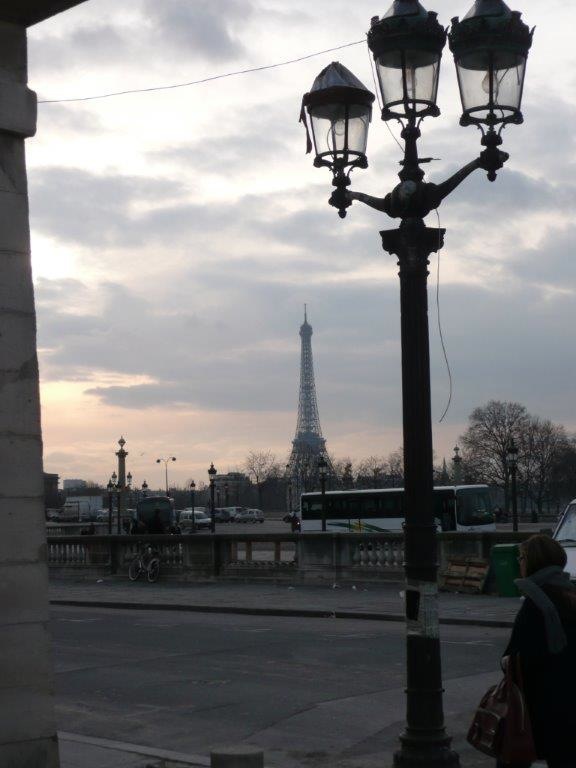
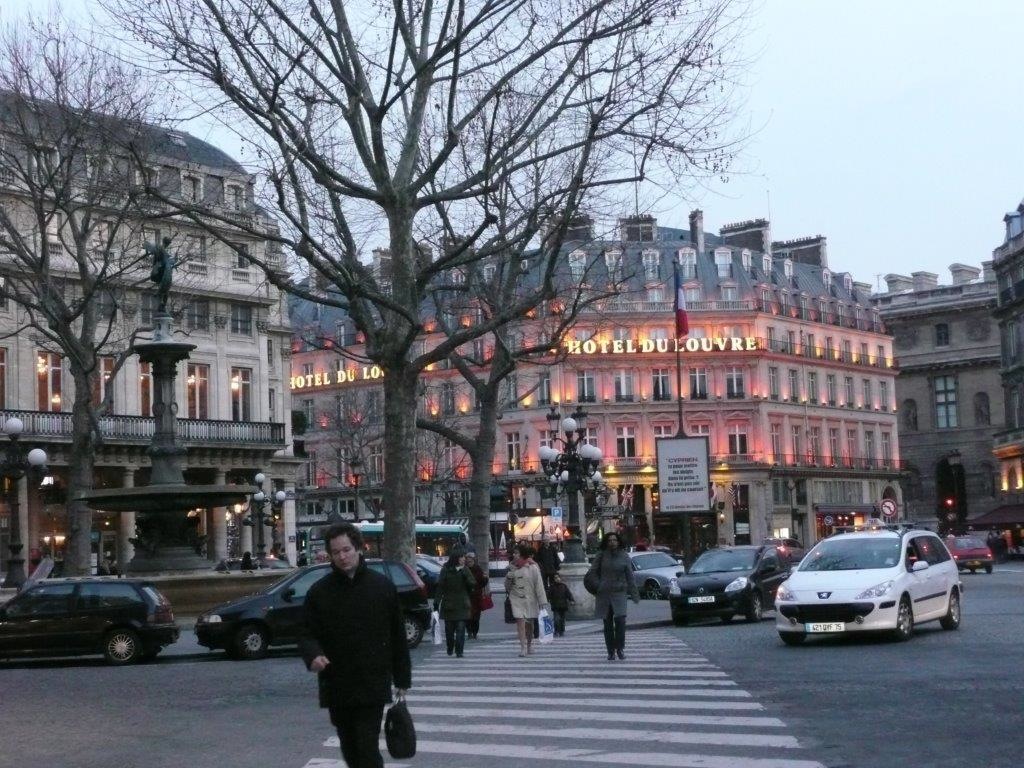
     We stayed in Hotel du Louvre and I would highly recommend it. If you are not a confident traveller, it is near enough to walk to the Louvre, the opera house and along the river to the Eiffel tower. The staff were friendly, it was clean and they have a wonderful restaurant. Just beware if you have hot chocolate in the bar, it is unexpectedly expensive (much cheaper to order it on room service.)

     Checked in and walked around. No guide book, so passed lots of buildings that were clearly ‘something’ but no idea what. Took lots of photos. Bought a very French cake in a very French patisserie.

Image 6

      Went to the Louvre. Finding the Louvre was easy (it was next to our hotel.) Finding the entrance was more of a challenge. We spent a long time trying various doors. Eventually realised that the pyramid in the centre of the courtyard was in fact, the entrance. Felt rather silly. Saw Mona Lisa (and other stuff.)

P1040583

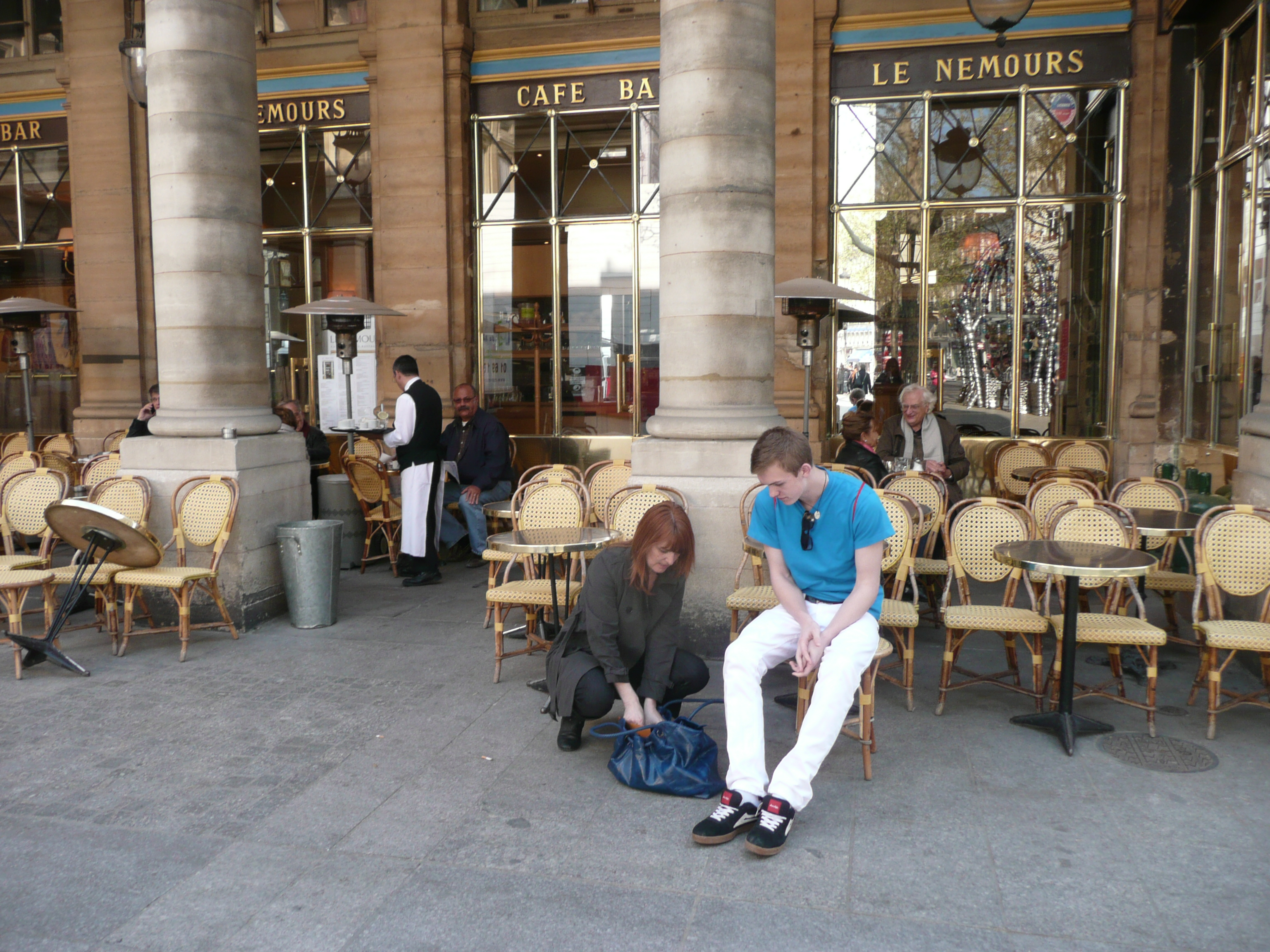
     Went to Le Nemours cafe. It happens to be right next to our hotel (you may be noticing a theme here) but it is also a perfect French cafe. It seems to appear in ALL films set in Paris. It has the wicker backed chairs, the round tables outside, the half curtained windows, etc etc. It is also (for Paris) quite cheap.

Image 1 Image

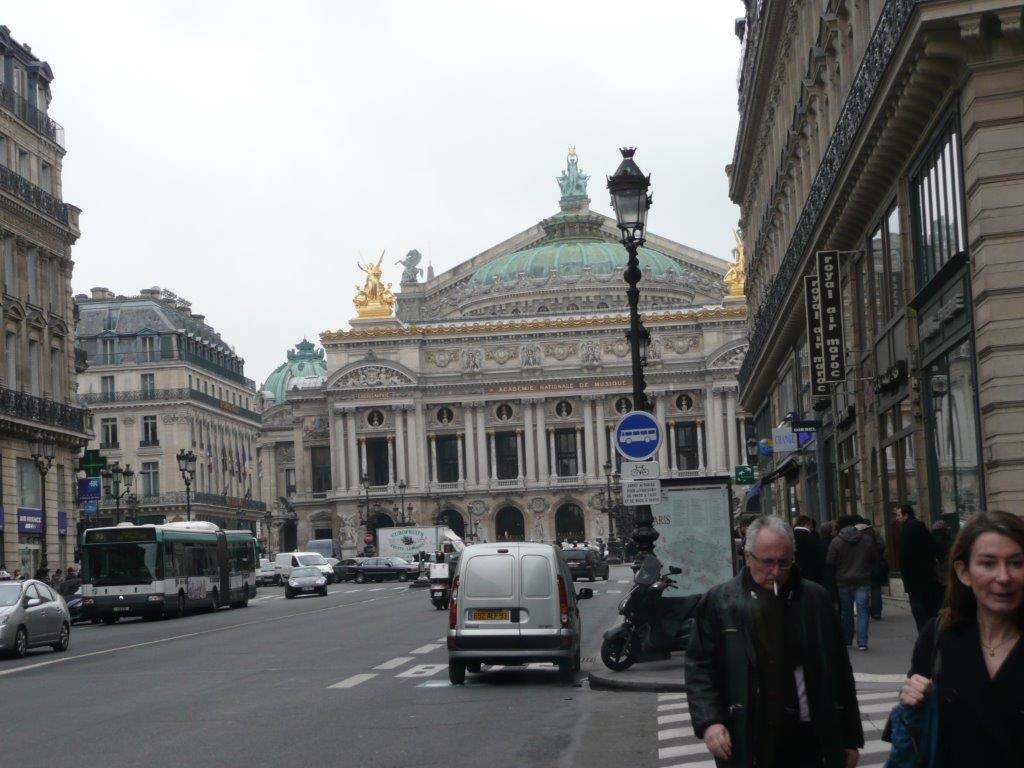
      Walked to Opera house. Fancy. Went to Lafayette – a shop which is more fancy than the opera house. I do not like shopping but this one is worth a visit, if only to see the domed glass ceiling and all the balconies.

      Walked along river to Notre Dame. Happened to be inside when choir was practicing, which was pretty perfect.

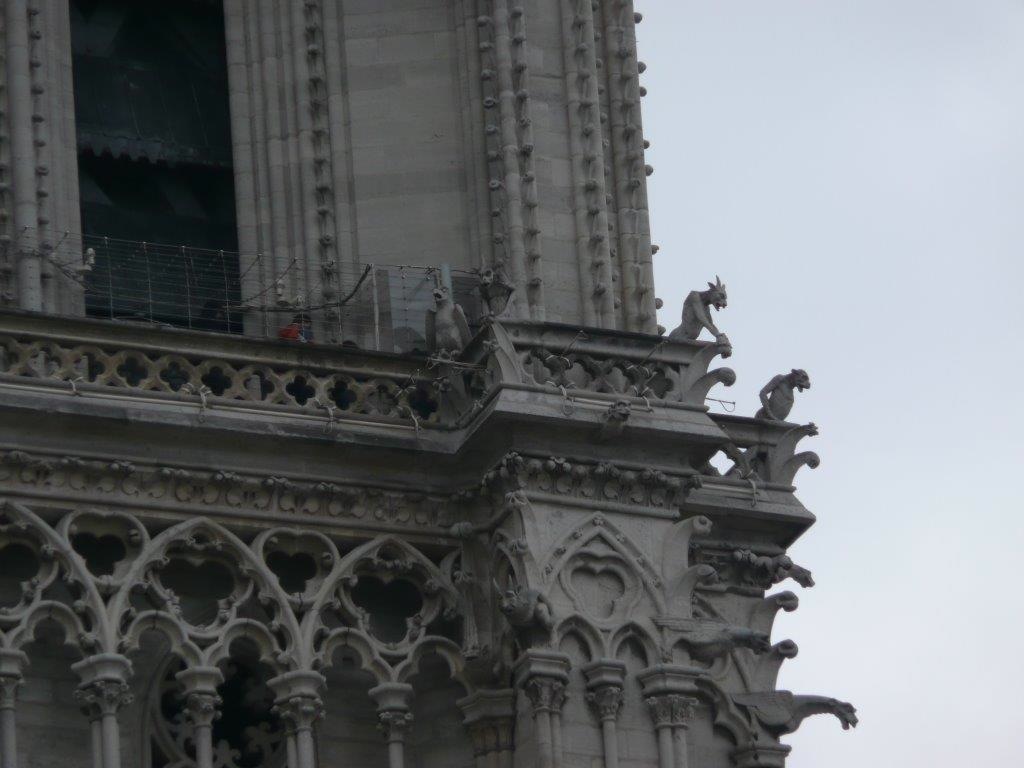
       Saw gargoyles and stained glass windows.Image 2Image 3

      Got taxi back to station and train home. Taxi driver charged us an extra euro because we put bags in the boot. Not sure if that was normal but my French was not good enough to argue.
Arrived home and husband told us the name of all the buildings we had photographed and suggested we took a guide book next time.

      Next visit was in 2011, when I repeated the trip with son who was about to do his GCSE. This time we drove to Ebbsfleet and parked there. Much easier if you live in the South.

      On the train, I suggested that he should work out how to say, “We realise it is too early to check in but please could we leave our bags while we look around Paris,” ready for when we arrived at the hotel. Son told me that GCSE French does not cover that sort of thing. I informed him he had over an hour on the train to learn how, as my French is almost non existent. He wrote copious notes. When we arrived at hotel (same one as before. It’s nice) he read out his sentence. They did not completely understand but spent a long time explaining to him what he should have written. They then showed us around the hotel, explaining everything to my son in very simple French. Please note: My main suggestion for anyone visiting France is learn a little French. I found that if we spoke bad (in my case, very very bad) French, then everyone was really helpful and did their best to help us, often answering us in English so that we understood. People who just ask in English seem to have a much less friendly reception.

      We did much the same things as when I visited with my daughter, though not the shop and not the hour trying to find the entrance to the Louvre.

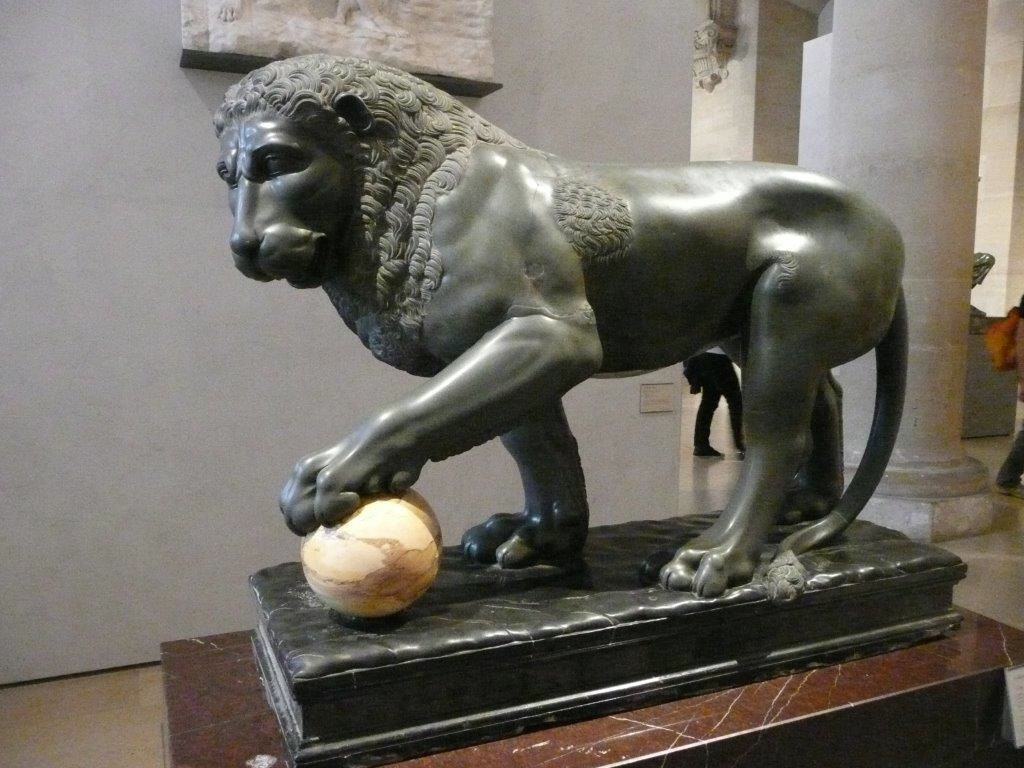
Image 8Cool statue of lion playing football in Louvre.

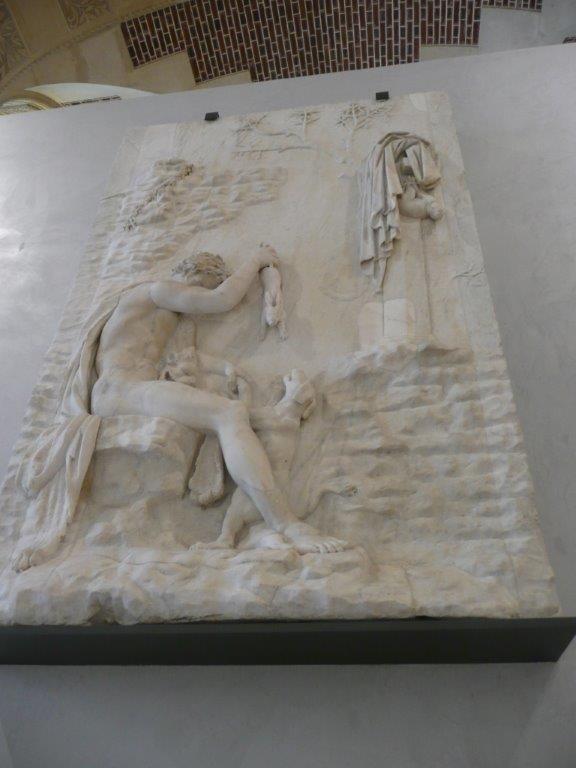
Image 7 Man feeding rabbit to his dog. Am not sure why he is naked but he is being very careful where dog puts           his paws!

      We also discovered the water taxi/bus which goes up and down the Seine. It was easy to buy tickets and you can get on and off where you want.

     We also went to a cafe right outside Notre Dame cathedral, overlooking the river. We ordered drinks and the friendly(!) waiter offered me a slice of gatueau. He then asked if I would like cream with it. When the bill arrived, I realised it was the most expensive cake I have ever eaten. I think the cream alone was about 6€. I told myself I was paying for the view and swore son to secrecy. Please note: Always worth checking prices!

     Paris is lovely. You can wander around the streets, walk next to the river and eat in little cafes. Everyone is friendly (as long as you speak French, even bad French) and there is lots to see. One day I might even venture further than a mile from the Louvre……

P1040593

If you enjoyed this, you will love my new book: The Sarcastic Mother’s Holiday Diary.
I have always written a diary on holiday, so last Christmas, I decided to find all my old diaries and blogs, and make a book for my children. However, several other people also asked for a copy, so I have written a public version – it’s available on Amazon and has been described as “The Durrells meet Bill Bryson”!

Why not buy a copy today? I think it will make you laugh.

The US link is here:

https://www.amazon.com/Sarcastic-Mothers-Holiday-Diary-ebook/dp/B07N95281F/ref=sr_1_1?ie=UTF8&qid=1549015525&sr=8-1&keywords=the+sarcastic+mothers+holiday+diary

The India link is here:

https://www.amazon.in/Sarcastic-Mothers-Holiday-Diary-ebook/dp/B07N95281F/ref=sr_1_1?ie=UTF8&qid=1549015429&sr=8-1&keywords=the+sarcastic+mothers+holiday+diary

The UK link is here:

https://www.amazon.co.uk/Sarcastic-Mothers-Holiday-Diary-ebook/dp/B07N95281F/ref=sr_1_2?ie=UTF8&qid=1549014970&sr=8-2&keywords=the+sarcastic+mothers+holiday+diary


The New Tax……


101 Tax (Yuk)

IMG_2168

       Here is a first very simple guide to tax in the UK. Due to the proximity of the next election and the possibility of a new mansion tax, I will explain what that might mean.
However, please note that I am definitely NOT promoting any particular party. Tax is just one issue amongst many.

     At the moment, there are three main types of tax. This will possibly increase to four types if Labour win the election. No one enjoys paying tax but probably it is worth understanding the different types so you can have a view about which are essential and which are unfair.

Tax on Earnings
This is tax on anything that you earn, including your salary, capital gains (if you sell something and it makes a profit), interest on your savings.
In some ways it seems a fair tax. The amount you pay goes up depending on how much you earn and most people pay it.
However, it can be unfair because some people manage to avoid it, to cheat the system (which means the rest of us have to pay more, because those people still use the roads, NHS, police, etc.) If you are an employee, then you have no options at all, the tax is removed at source – in other words, your employer kindly (!) removes it from your pay packet before you are given your salary. So, someone who works in a shop will be given their monthly pay minus the income tax. Someone who is self employed has more opportunity to be clever and cheat the system. The nice old builder who says, “Pay me cash, it’ll be cheaper for you,” is possibly not declaring those earnings and therefore not paying tax on them. Wealthy people with clever accountants can also avoid paying by hiding their investments in offshore accounts. The government doesn’t see them and so does not remove tax from the interest.

Inheritance Tax
This is a one-off tax on everything you own at the time you die.
Again, this seems reasonably fair. If Bob works hard his whole life and is a jolly clever chap, why shouldn’t he enjoy a nice amount of cash? However, we might not feel that Bob’s son also deserves to have an easy life just because his Dad was talented, so the government can take a slice of the wealth and use it for the rest of us.
However, it does feel rather a personal tax, especially if you are the person who was related to dear old Bob. Plus, if Bob worked hard and wants to leave a valuable painting to his son, is it fair that the son has to sell it just so he can pay the inheritance tax? Should people be allowed to keep heirlooms within their family or should they be sold to pay tax? There is also the point that it does not seem to actually generate much cash for society. It certainly used to be the case that the admin costs involved in collecting inheritance tax were pretty much equal to the amount of tax collected. So actually, no one benefits. It is interesting that UKIP plan to abolish this tax if they come to power.

Consumption Tax
This is a tax on everything that you buy. It includes VAT (currently 17½%) and stamp duty (tax when you buy a house.)
This seems quite a good tax. Everyone pays (apart from a few dodgy builders who tell you there is no VAT if you pay cash) and no one can cheat. It is easy to collect and everyone pays.
The unfairness comes in when you consider that everyone pays the same amount. So the poor old lady and Bob the millionaire, both pay the same amount of VAT when they buy a washing machine.

     So, there we have the three main types of tax that are currently in use. The are a pain to pay but are mostly fair. We all hate paying them but we all know that if we want roads, police, schools, health service, etc, the money has to come from somewhere. Now we come to the new tax that Labour are proposing:

Mansion Tax
This is a tax on an asset, something you already own. The proposal is that every year, if you own a house above a certain value, you will have to pay an extra tax on it. You will still pay the normal taxes when you buy it and when you sell it, this is a tax for just owning it.
Firstly, this will probably be popular. It will initially only affect very rich people (who we are all a bit jealous of) and most of us will only benefit from the extra revenue.

      However, is it fair? It only targets one type of asset:houses. You can be wealthy and own other things, like jewelry, paintings, land, even pensions (I’ll come back to that one) and you will not have to pay the tax. There are other assets which cannot possibly be taxed, like being beautiful or healthy or living in a fantastic location and unless they generate income, you will not be taxed on them.

      Let’s come back to pensions. (If you haven’t read my article on pensions, read it now.) Now, government workers all receive defined benefit pensions. This is a HUGE asset. When they start to receive the pension they will pay income tax, just like when someone sells their mansion they will pay tax, but in the meantime it is a highly valuable asset which they own. Just like a house. Strangely, no politicians are suggesting that anyone should be taxed just for owning this hugely valuable asset of a valuable pension. Even though some other people (those not on defined benefits pensions) have invested in their home, expecting that when they are older they will sell it and use the money as part of their pension.

     The new tax will cause house prices to be distorted (because who will want to buy a house that is just inside the amount where they have to start paying the tax? Remember, it is every year, not when the house is purchased.)
It is also unfair. No one is suggesting that other assets should be taxed, that if you own a valuable painting you should have to pay tax every year while you own it. Sometimes, things that are unfair are worth fighting against, even if we are not affected.

      Once the new tax has been introduced, it will not be difficult for governments to lower the threshold when they do the budget. At the moment, the house price they are suggesting is huge, way above what most of us could afford. However, what will stop that from creeping downwards? How long before most people in senior positions, our doctors, head teachers, managers, who have worked hard and invested their savings in a house, will start to lose those savings? It is called a ‘mansion tax’ but if someone lives in London it might actually be an ‘apartment’ tax.
We do not know if there will be a cap on the tax or if someone who lives for many years in these houses could eventually end up owing more than the house is actually worth.

       Personally, I am very unlikely to ever be able to afford a house that will be charged the mansion tax. However, I do not like the thought that a tax could be introduced which is blatantly unfair. It is just not very British……

Easter?


Easter?

IMG_1188 IMG_1163

by Anne E Thompson

The festival was for Eastre,
Goddess of fertility
But they swept it away
With a cross of humility.
They took over the sunrise
Coloured eggs were hidden,
They introduced religion
And pagans were forbidden.

Then the bunnies
Hopped back,
With the chicks
And the eggs.
Spring flowers
In bright posies
Feast times with friends
And fun with families.

But beneath it all
Well hidden within,
Was a story of death
And the blackness of sin.
The anguish of God
Turning his back.
A story of tears
When the world went black.
That tragic tale,
Which wont go away,
Has a promise of peace
That we long for today.
And the torture and pain
And despair of that day,
Is why God turns and listens
When we kneel and pray.

I wanted to show that originally at this time of year, there was a pagan festival for Eastre (sometimes spelt with an ‘O’) who was the goddess of fertility. That is where the sunrise, eggs, bunnies and chicks come from. Then the Christians arrived and took over the festival to celebrate the death and resurrection of Jesus. But all those pagan symbols still keep coming back! However, under it all, the message of what happened in the Bible story still remains true.

An Easter Story


The Sword Pierced Soul

by Anne E Thompson

     “I watched my son die today. My beautiful boy, beaten, battered and left to die. And my heart broke. I held my cloak close and I remembered the weight of him as a babe, like a boulder on my hip, wriggling to be free, to run and jump and climb. Those legs will run no more.
Those limbs, I was so proud when they grew. I remember when he grew as tall as me, then taller even than Joseph. I remember watching him, stretched out as he ate, those long limbs seemed to go on forever. “I grew him,” I used to think with pride. Those limbs will not sprawl relaxed in my home ever again.
I watched his hands, the hands that used to pat me cheekily on the head when he’d grown tall. Those strong hands which laboured with wood, which helped me carry heavy loads, which lifted young children playfully. They are no longer strong. I saw them bang nails through the flesh, felt that I heard the sound of bone shattering over the thump of the hammer, heard his ragged breath as they forced the cross upright. And I wondered if I too might die. But I watched. I am his mother and I would not leave him alone. When they tried to take me home, when they told me to shield my eyes, avert my gaze, I did not. For he was my son. I would never leave him alone, not at such an anguished hour of need.
Others watched. Some women were there, terrified and hanging back. Not me, I am his mother. I stood with John, where he could see me. What could they do to me that was worse than this?
Some watched who hated him. They mocked and spat and called abuse. It could not hurt him now, I thought, let them shout.
“He trusts in God,” they called, “Let God save him now,” and they laughed, even as he died they laughed.
Yet even God deserted him by the end and that was hardest to bear. He called out with a loud shout, asking why God had turned from him.
“My God,” he called in anguish, “why have you forsaken me?”
But I was there. I did not leave. I saw them crucify him, naked upon a cross. No mother wants to see her grown son naked, but still I did not look away. I was there at the beginning, I would stay with him until the end.
The soldiers took his clothes, for fabric is costly and even that of a criminal should not go to waste. Most they tore and shared between them but not his tunic. They cast lots for that, not wanting to spoil something precious. Yet my son was precious and they destroyed him.

        It began last night. They woke me from my sleep and warned me there was trouble. He had been arrested, taken from a meal with his friends and questioned by the temple authorities. They feared the invaders, so he was then referred to a court of Godless law, a place that feared no God.
They told me that he was scourged, beaten with whips that removed chunks of flesh as they struck. He was mocked and abused, then brought to this place.
I came, stumbling through streets full of people, full of noise and smells and fear and hatred. I came to this place, this Godforsaken hill beyond the city wall and I saw my son, my boy, diminished, shrunken somehow. I saw that what they had told me was true, smelt the repugnant stink of excrement mingle with the metallic stench of blood. I heard the shouts of abuse, the curses of the guards, the screams from the prisoners, the wails from friends. And him, like an oasis of calm amidst the turmoil, suffering but at peace.
And he saw me. Those dark eyes that as a baby had watched me intently when he fed. Those eyes that twinkled merrily when he teased me and became serious when he wanted to explain something important. Those eyes, red rimmed with exhaustion now, turned to me. Even hanging there, with parched mouth and dried lips, he spoke to me. His voice was hoarse, for he had refused the wine they offered, but I heard him well. A mother knows her child’s voice. I stood with John and my son told me that this was to be my son now and he was to care for me as a mother. Even in his torment he cared for me, fulfilled his duty as my son.
Still I would not leave. Then it ended. The sky had turned as black as my world and he drew his last breath. It was finished.
Those who had mocked became silent, some cried, some beat their breasts in despair. The blackness of the sky frightened them and many fled, wondering at what they had done.
Then I left, I let them lead me away. My soul was broken and my heart beat even though I bid it stop. My boy was gone, my firstborn, special baby, was no more. I carried that knowledge like a rock within me, I would have rather died in his place. How can I live, continue with my life knowing he is gone? There would be no more sunshine or laughter, nothing matters now. The core of me was gone. I could not even cry.
Afterwards, I could not rest and I heard strange stories. They said the soldiers pierced his side, to check there was no life in him. His blood had separated so they took him down, a solid corpse that had no life. A man came and took the body, they said they followed and knew where he lay, in a tomb that was guarded. They told me of strange things, of the temple curtain torn in two, of dead men walking and boulders breaking open. I do not know. I only know my boy is gone. That is all that matters.
It should not have been like this. It was so recently that people praised his name, sang and danced before him, treated him like a king. It should not have ended like this.
And yet, I recall a song, it comes persistently to mind, sung often in the synagogue. It speaks of one forsaken by God in his time of need, scorned by many. He belonged to God from before he was born, then suffered at the hands of many. They sung of bones poured out like water, a heart of melted wax, that is how my boy would have felt. They sung of hands and feet pierced like his and enemies gloating over him. They sang of lots being cast for clothing and of God’s ultimate victory. They sung of remembering him for ever, not just now but families of every nation, even those presently unborn. For he has done it.
Is this my son’s song? Were the words written for him?
He spoke of his death often, he tried to warn me that he would die. But not like this, not before my own time has come. No mother should bury her child, it goes against what is natural and right. Though, he showed no fear, he knew what his end would be. And he told me there was more.
As I turn now to sleep, I wonder at his words. Will he truly return somehow and will I know? Has he finished what he was sent to do?”

xxxxxxxxxxxxxxxxxxxxxxxxxxxxxxxxxxxxxxxxxxxxx

        If Mary was a young teenager when she learned she was pregnant (which would fit with the age girl’s became betrothed in those days) then when Jesus died aged thirty-three, she would have been about forty-seven. How does a woman of that age cope with the things she was forced to witness and how much would she have understood at the time?
        I am about her age, I have sons, contemplating their dying is too horrible for words. I am sure she loved her boy as much as we love ours.

           Crucifixion was a ghastly way to die. We learn in the Bible that Jesus, who never sinned, who never did anything wrong, died to save the world. What does that mean? You can learn more at:https://anneethompson.com/how-to/378-2/

           However, many people were crucified, some probably unjustly accused. So is it the death that was important or was it that God became separate? I think that this is the key issue here, the part of Jesus that was God left him. That was more terrible than crucifixion. That is what each of us deserves and what we do not have to suffer if we choose to come to God. If we want to know God, we can, even if that means changing our minds. You may not believe in God but God believes in you.

       The song which Mary recalled in the story was Psalm 22. It has some striking similarities to the account of Jesus’ crucifixion. It was written about one thousand years before the event. (wow)
       It begins: “My God, my God, why have you forsaken me?”
       It finishes: “…..future generations will be told about the Lord. They will proclaim his righteousness to a people yet unborn- for he has done it.”

xxxxxxxxxxxxxxxxxxxxxxx

 More stories, articles and poems at: http://www.anneethompson.com

The Mysteries of Insurance


PPI and the Mysteries of Insurance

     I was recently in a mobile phone shop. In front of me in the queue was a teenaged boy, about the same age as my sons. He had just chosen a very smart new phone and was in the process of paying. It was too hot in the shop and I was bored and wanting to leave, daydreaming and not really concentrating. Then I heard the salesman offer him insurance and I began to tune in. The salesman had a great patter, all about how annoying it would be if the boy lost his phone, how he was spending £200 on a new phone and if it was stolen on his way home, that was it, no phone, no £200. However, for a small amount each month, he would only need to pay the first £50 and then the shop would replace his phone, with a brand new one, for free. Was he prepared to risk having nothing, or would he like to take out insurance and be sure that his phone would be replaced?

     “No,” I shouted, “Don’t do it! The amount you will pay over two years plus the £50 excess is more than enough to buy a much better phone. And how likely is it to be stolen anyway? Quick, run away.”
Actually, I didn’t. Not out loud anyway. My children have spent many years teaching me what is socially acceptable and even I knew it would be inappropriate to shout at a complete stranger. However, in my head I was. Hence the purpose of this article.

      Do you understand insurance? Now, in the UK, ripping off teenagers is not illegal, as long as you explain everything to them first. Even if they are slightly dim, even if your patter is exceptionally impressive and biased, that is not against the law. We have a basic principle in our law that states “buyer beware“. That means, the responsibility for checking and understanding is with the buyer. Anyone can sell you anything and if they correctly explain (even very briefly or with a strong bias) what is involved, that is not against the law. It is up to the buyer to be wise.
When someone tries to sell you insurance, listen carefully. Use the calculator on your mobile if necessary or tell them you will think about it and come back tomorrow. Be sure that financially, it will actually benefit you. Do not trust them. Especially on mobile phones.
There is a rumour that mobile phone companies make more profit on selling insurance than they do on selling phones. Is it your money they are taking?

     In the last five years however, the government has subtly changed this for banks. For big banks, the principle seems to be “seller beware”. This means, the responsibility for being sure the correct product is being sold, that it really will benefit the customer, is now increasingly with the bank, not the person buying.
So, if you recently bought a product at a bank, like an ISA or insurance and you now feel that actually, it was not the best product for you, go back. If the bank does not refund your money, you can write to the ombudsman and they probably will. The government has not changed the law (which is still “buyer beware”) but it has forced banks to behave differently. This is due mostly to PPI.

     PPI has been huge. It has caused those annoying phone calls that always arrive when you are in a rush or in the bathroom. It is why we get those irritating texts when you think someone must love you after all but no, it is an irritating claims management company (read “shark”) hassling you. It has also had a huge impact in the last five years on the car industry because of all the reclaimed money increasing their new car sales! So what exactly is it?

     PPI was Payment Protection Insurance. It was always a rubbish product. If you had a loan, you could take out an insurance so that if you lost your job and couldn’t manage your monthly repayments, the insurance would pay them for you. But it only paid for a short time and the insurance itself was quite expensive. Banks did things like add it onto the end of the loan, so you paid them back for longer but you didn’t really notice. Banks were also bad because they sold it to everyone. Even little old ladies or unemployed people who did not have a job to lose were sold PPI (boo, hiss, we all hate the banks….) They did what the mobile phone shops do, they explained it quickly and with bias so people agreed to pay without really thinking about whether it was good for them.
The government decided that banks should pay out. They wanted this for three reasons:
Firstly, banks had been bad so they needed to put it right. A punishment really.
Secondly, people like being given money. It makes them feel happy. People vote for governments they like….. or perhaps I am just being cynical.
Thirdly, the government wanted to shift the responsibility for selling the right products to the banks, away from the buyer.

      So the regulator (this is the bank police) have made new rules. Some of these were even back dated, so banks could be blamed for not doing things before the regulations were even written.If one of those annoying claims persons (aka shark) persuades you to write to your bank and say you were wrongly sold PPI, the rules are so tough that it is easier for the banks to just pay out without doing proper checks. Even people who never bought PPI in the first place are making claims. Which actually, is stealing. The claims management companies know this and decided that they want a share too (imagine sharks circling.)

      Okay, so PPI was a bad product and banks behaved badly when they sold it to little old ladies. But what do you think about what has happened since? One of the greatest things about the UK is the fairness of our legal system. Compared to most of the rest of the world, our legal system is fair and we trust it. It makes the UK a good place to live and do business with. Is it okay for them to be unfair to banks and ignore other companies? Do we want our banks to go bust?

     Should the same rules be applied everywhere? What this unfairness has done is make banks be “seller beware.” This safeguards people like us, who perhaps don’t really understand the financial products we are buying. Maybe the same principle should extend to mobile phone companies………

xxxxxxxxxxxxxxxxxxxxxxx

Every week a current financial issue is explained clearly at: http://www.anneethompson.com under “mystery of money”

Mummy Secrets


Mummy Secrets

       These have been learned over time and are the result of much experience in the mummy department. I now impart them to all young mother’s in the hope it will enable you to have a slightly easier time.

1.Boys (of all ages) never look in the back of drawers. This is true. They open the drawer about half way, have a quick look and then tell you that what they are seeking is not in there. This can be used to your advantage if, as in my house, they frequently a) misplace their own scissors and b) borrow yours and don’t replace them. Seriously, I have pairs of scissors with death threats written in permanent marker pen on the handles (slightly embarrassing when I took them to use for church sunday school, but I got over it.) It made no difference, they would still use my scissors and not return them. However, if I keep them at the back of the drawer, even the drawer where they have always been kept, then they don’t find them. Things at the back are safe. Worth remembering.

2.When they ask which child you love best, pick one. I spent years trying to explain that I loved them all equally, that I could never choose which one I loved best, etc etc – they just kept asking. So one day I picked one and gave an outrageous reason:”Rebecca, because girls are better than boys,” “James because he’s the nicest,” “Mark, because he’s clever,” They still asked occasionally (and I did try to switch which one I chose) but it put them off for a long time and always ended the conversation pretty fast. Maybe they just needed to be the one that was chosen.

3.When your children argue with their siblings, always be the most unreasonable. I always wanted my children to be friends with each other, not least because one day I wont be here to care for them and I want them to look out for each other. All children argue with their siblings, that cannot be avoided. However, when there was no clear reason for the dispute, I would try to be much more unreasonable than any of them. Comments like, “Right, that is no television ever again” or “I am banning all chocolate” would so outrage my children that they would mutter darkly about me – together – and forget all about whatever they had been arguing about. After an hour or so they would ‘persuade’ me to modify my punishment to a more sensible one.

4.Forcing your child to eat something will not make them less fussy eaters. I am an adult now, all grown up, but I still feel sick when I smell rhubarb or gooseberries cooking and I am sure it is because I was forced to eat them as a child. I did initially try the same parenting technique with my own children (most of us copy our parents to some extent) but I abandoned it when I found peas thrown out of the window and half a piece of steak blocking the toilet. If my children did not like something, they were not forced to eat it. They did have to taste it every so often, in case their tastebuds had changed, but they were happy to do that because they knew they could choose not eat it if they didn’t want to. They are all adults now and they all have a varied diet. One of them was very fussy and I do believe he could taste things that I could not taste as he was even picky over treats like chocolate or vanilla ice cream. He still dislikes a lot of food but he will eat a whole variety of food and if under pressure (like at his girlfriend’s parents house) he can force himself to eat pretty much anything. You do of course need to ensure that they have a balanced diet. However, if your child does not eat vegetables, fruit is just as healthy.

I would like to have a short rant here. I am increasingly concerned by how fat some children are in today’s society. Please have an honest look at your child. If they are over weight, you are not doing them any favours by allowing them to over eat. It is not cute. Sugar is not an essential part of life. It will not kill your child if they tell you they are hungry sometimes – offer them a baked potato or some toast – if they are not hungry enough for that, then they can wait until the next meal. They will not get enough exercise at school – that is your responsibility as a mother, not the teachers. If they are not having enough exercise, drop them off further from the school so they have to walk for a few minutes everyday. Exercise does not need to be expensive or time consuming. Also, occasionally check the ingredients of what your child is eating. If the list is full of stuff you are more likely to find in a chemistry lab than a supermarket, do you really want to feed it to your child?

5.You cannot reason with an angry boy. When girls are angry, the adrenaline stimulates the speech part of their brain and they want to talk. Sometimes for many hours non stop. The opposite happens with a boy. When they are angry, the speech part of their brain shuts down and they are more likely to hit out than discuss. Something to do with testosterone. I don’t understand the biology but I do know that it is true because I have seen it many many times with my sons and my pupils. So, if a boy is angry, do not bother explaining anything until he has calmed down. If he is small, pick him up and put him somewhere safe. If he is big, put yourself somewhere safe (the washroom is a good place. Even an angry boy will not want to risk seeing his mother using the toilet and there is usually a lock on the door.) When he is calm, then you can explain to him why he was wrong, why you behaved as you did, what is an appropriate punishment, etc.

6.You cannot raise a child on your own. We all need help, mothers especially. In an ideal world, a child is raised by two parents and four grandparents and a whole world of friends, teachers, neighbours. Ours is not an ideal world, but whatever your situation, recognise that you have limitations and get help when you need it. Lots has been written about this, about “it takes a whole village to raise a child”, or even films like “About a Boy”. It is true. When you get to the absolute limit of what you can cope with, get help. I am a sometimes praised for how nice my children are and was a successful teacher, but sometimes I couldn’t cope. I recall one evening when I phoned my brother and told him I could not cope with my teenage son. He talked to him for a while (I think they just agreed that women can be very irrational at times! But it didn’t matter, it broke a cycle that I wasn’t coping with.) Don’t let things get beyond what you can cope with, that’s when horrible things happen. If you need help, get help. It is the wise thing to do.

7.When they bring home a crap picture, tell them its crap. If you always praise them they will a) never trust you to be honest and b) always feel the need to do brilliantly. I firmly believe that if you teach your children how to fail well, then they will do well in life. One of my proudest parenting moments was when my daughter lost a race in the school sports event. She was last by a considerable margin and ran the last lap with the hugest grin to huge cheers from the crowd. She was not a sporty child, she knew she was not good at running and that was fine. In other areas she excelled and she knew that my praise was genuine. If I say something is good, they can trust that it is.

8.Treat your children differently. You can treat them equally without having to do exactly the same thing for each child. For example, I can never understand the parents who buy a gift for the other child on a siblings birthday. Letting someone else have a turn at the treat is a good learning point, this is life, they will not always be the one who gets the promotion/job/top mark etc. This is relatively easy if they are different genders – when they complain that one is allowed to go to a party or something you can explain that they are all different but equal and offer to treat them equally – if your son wants a pink tutu, to learn ballet, grow hair long enough for ribbons, etc, that would be fine with you. They will soon see the logic in being treated differently. This is the same when choosing a school, clubs etc – see them as individuals especially if they have different talents.

9.Don’t be fooled when your child tells you that you are either the best or the worst mother in the world. You are not. When they are about five and they tell you that you are the best mummy ever, that is very nice. Write it down and hold on to that memory. It wont be too long before they tell you that “all the other mother’s let their children do/have/go whatever” and they will reliably inform you that you are the worst mother ever. Brace yourself and ride the storm, taking regular peeks at the diary entry when they told you how wonderful you are and remembering that ALL good mothers are told this at some point. You are their mother, not their friend. They don’t have to like you all the time. You have to make decisions for what is best for them, not what they will necessarily want. Be brave, it is not easy. But you are the best mother that they have, so they will have to get over it. I regularly told my children, “I am not like other mothers.”

10.Do go with your gut feeling and monitor how long your child plays computer games or watches television. They can stunt creativity and the ability to communicate and keep track of real life. It wont kill your child to be bored sometimes. Or even (horrors) read a book. Decide what works for you. I found that most games, whilst addictive, also needed a certain amount of time for them to be played satisfactorily. So in our house we had ‘computer weeks’. For one week, they could play computer games for as long as they liked (not including homework times, meal times and bed times, which were rigid unless they were ill.) Then, the next week, there was no computer at all. After a couple of days, they adjusted to the lack of life support and actually managed to enjoy something like cooking or reading or playing in the garden.

11.When your child is a teenager, have difficult discussions in public. This was one of the best things that I discovered. So, if I wanted to discuss with my fifteen year old his bed time, the amount of time spent on homework or any other ‘tricky issue’ I would take him out for lunch or even a to nice coffee shop. Somewhere public. Somewhere that having a meltdown would be embarrassing for him. The social pressure helped him keep a lid on whatever anger he would like to vent and we managed to have a few very sane conversations. It was well worth the price tag.

     It should perhaps be noted, that when I began writing this article I asked my daughter if she could remember any of my parenting strategies. She informed me that:
I regularly told her she was adopted and suggested she could go and find her real parents (she looks EXACTLY like me, so this was never a problem for her.)
If something hurt, I told her it would probably fall off.
I wanted to burn down her primary school.
I made her move traffic cones that were blocking the road when I wanted to drive down it.
I also always told them that even if they did things that were rubbish, I would love them anyway (they liked that one.)

       On reflection, I may have been a slightly rubbish mother. However, all my children have grown up to be happy sane and good company. Maybe being rubbish doesn’t matter too much. God chose you to raise your child, He has confidence that you can do it. I remember reading once, you don’t have to be a perfect mother, you only have to be good enough. There is hope for us all…….