A Facebook Scam?


Does Facebook limit which friends’ posts we see? Have they recently changed their algorithm so that now you only see posts from a tiny section of your friends? And will pasting the below statement on your Facebook account change who can see your posts?

Well…no. Recently, several of my Facebook friends have copied the following statement onto their page:

“Thank you for telling me how to do the bypass. This is good to know: It’s ridiculous to have over 400 friends and only some are allowed to see my post.
I ignored this post earlier, but It WORKS!! I have a whole new news feed. I’m seeing posts from people I haven’t seen in years. Here’s how to bypass the system FB now has in place that limits posts on your news feed.
Their new algorithm chooses the same few people – about 25 – who will read your posts. Therefore, hold down your finger down anywhere in this post and “copy” will pop up. Click “copy”. Then go your page, start a new post and put your finger anywhere in the blank field. “Paste” will pop up and click paste.
This will bypass the system.”

So, I asked Son-who-understands-IT if this was true. He assured me that yes, Facebook DO use an algorithm to decide how individual posts are shared – so even if I put a post (like this one) on my Fb page, the number of people who will see it varies, it is not automatically sent to all my Fb friends. Depending on how often my posts are shared/liked/read, will determine how widely they are shared. Which doesn’t seem a bad system. However, posting the above message will make no difference at all – apart from the fact that other people might like or share it, which means they are interacting with it, which means that Fb will then share it more widely. But the contents of the message makes no difference at all. A photo of a cute kitten would have the same result.

Now, I was disappointed to learn that there are not Evil Facebook Elves, who read all the posts and who decide which ones should be shared. Therefore all those messages about “Facebook have decided that this photo is inappropriate, so let’s all share it so everyone sees it” are, in fact, just cleverly marketed spam. It isn’t the Evil Facebook Elves who are deciding that there should be no photos of the Nativity shared at Christmas, for example, it’s a simple (well, okay, a complicated) algorithm, set by the computer, and it has no personal views at all.

Now, I ask, does this matter? Well, I have no idea who wrote the original “Share This” post, but they must, I assume, have a reason. Maybe they are lonely and they get a kick out of seeing it a million times on Facebook. Or perhaps they simply enjoy deceiving people. But it matters because it is becoming increasingly hard to know who to trust. Can we trust politicians, when we discover they will lie to win campaigns? Can we trust the newspapers, when the headlines are often destructive and bear no resemblance to truth? Can we trust the BBC? Social media? Our mothers? (Actually, I think we probably can trust our mothers.)
You get my point? There has been a horrible rise in misinformation recently (I am refusing to use the fashionable phrase for this, as I rather mistrust the person who has made it fashionable – you will know who I mean.)

So please, let’s stand up for things that are true. Let’s find people/reporters/leaders who are trustworthy – and let’s fight to stop this horrible tide of misinformation that seems to be growing.
If you like this post – please share it!

Anne E. Thompson has written several novels. They are available from bookshops and Amazon.
You can follow her blog at:
anneethompson.com
Why not sign up to follow today?

Spoons and Art


I had another rather nice treat (another of my: “you’re too difficult to buy for so we’re giving you vouchers for Christmas”).
I had a voucher for ‘Lunch in a Spoons followed by a trip to a gallery’, a gift from one of my sons.

Off we set. The travel was somewhat more exciting than anticipated, as neither myself nor the son who gave me the voucher are great at time-keeping, so catching the train involved a rather panicked abandoning of the house, a fast drive to the station, and a run onto the platform. But we made it. I then sat on the train worrying whether I’d remembered to get the dog in from the garden, and son checked his phone for directions to the gallery.

We arrived at Victoria, and walked to the pub for lunch. I was expecting the pub to be called ‘Spoons’ because that is what my son talks about (rather more often than you might expect) but it’s actually called ‘Wetherspoons’ – which I suspect you and the rest of the world, already knew. I was also expecting a rather greasy, uncomfortable lunch, but the pub was not dissimilar to a Beefeater, and the lunch was very nice. (Of course, I am a mother, so the nicest part was simply that I was having lunch with one of my children!)

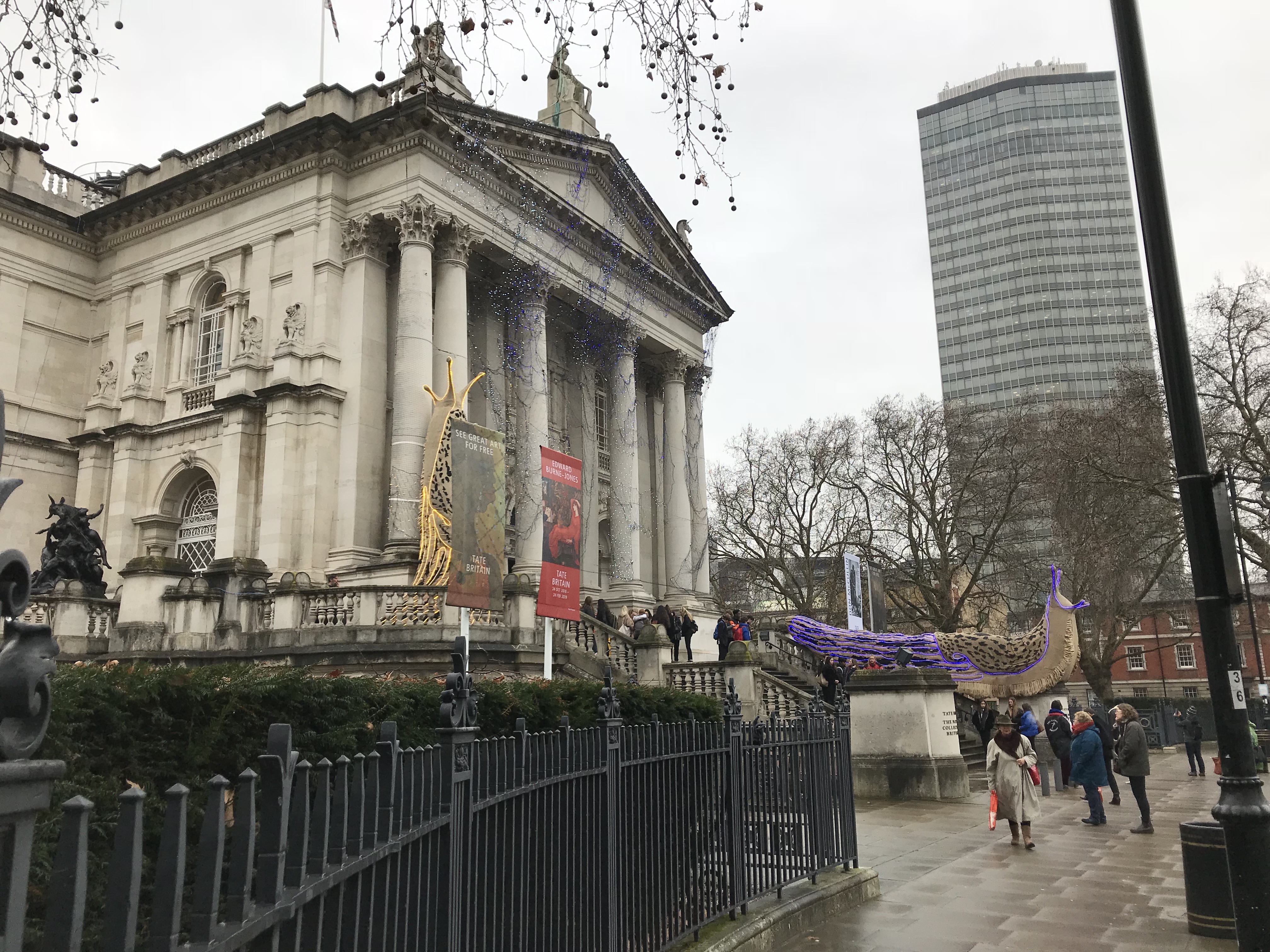
The Tate Britain – complete with giant slugs outside!

We then walked down to the river, and along to the Tate Britain. I’ve never been before, and wasn’t sure what to expect. As we approached, and I saw giant slugs outside, with slime-trails of fairy lights, I knew I was going to like it.

We wandered round for a couple of hours, and still didn’t see everything. I’m not keen on some modern art (I like things that are better than something I could produce) so any halls that at a glance could have been either building works or art installations, we avoided.

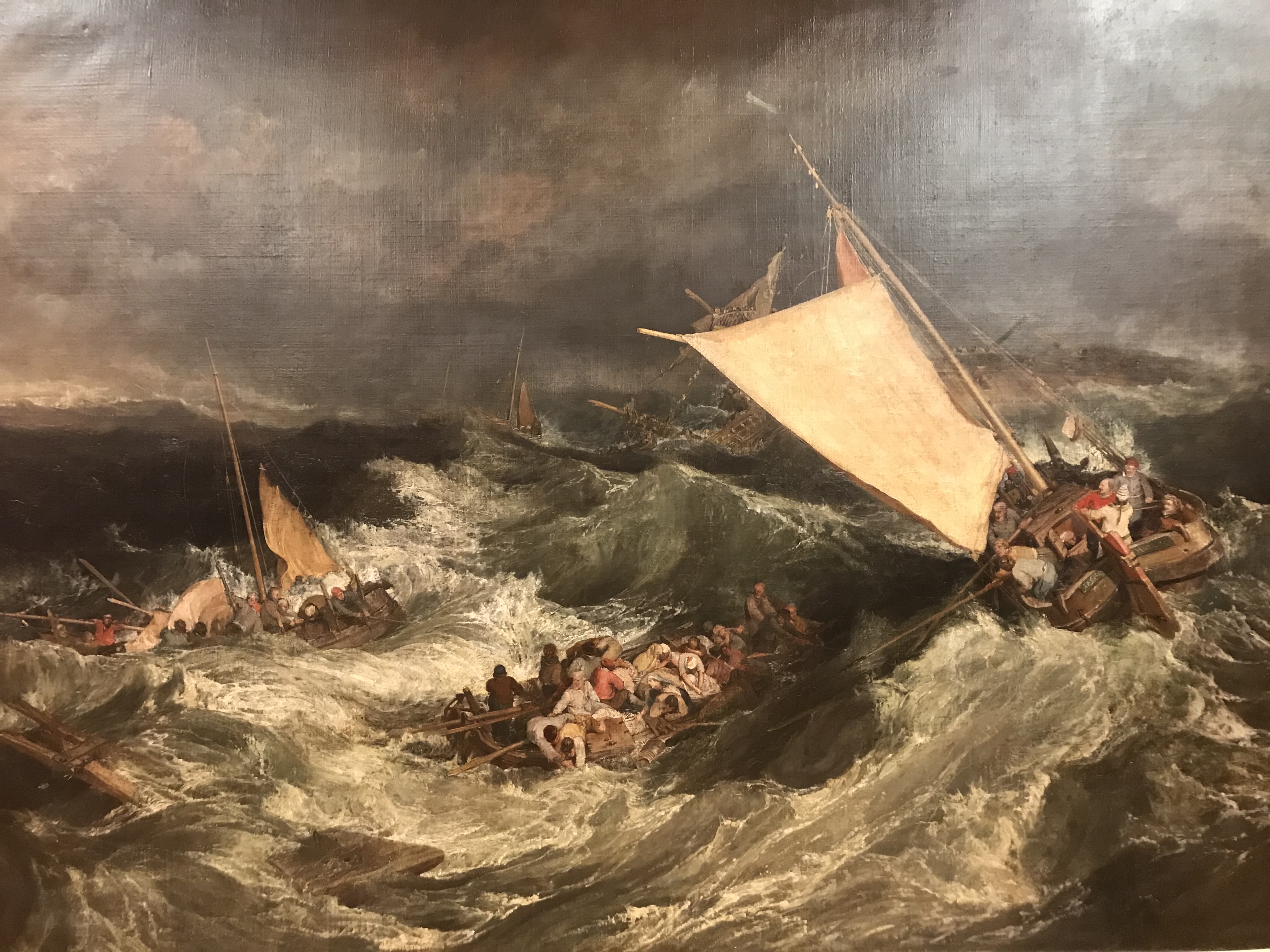
The Shipwreck
By Joseph Turner
(One of my favourite paintings.)

Painting by Lowry


There was an excellent exhibition of Turner’s work, and a Lowry (who I am rather fond of due to the song that was popular in the 70’s about ‘matchstick men and matchstick cats and dogs’).

We briefly popped into a room displaying work by William Blake – who I thought was the chap who did flower etchings that are often used for wallpaper – but I was wrong! He did etchings, but of characters from Chaucer and things that don’t much appeal to me.

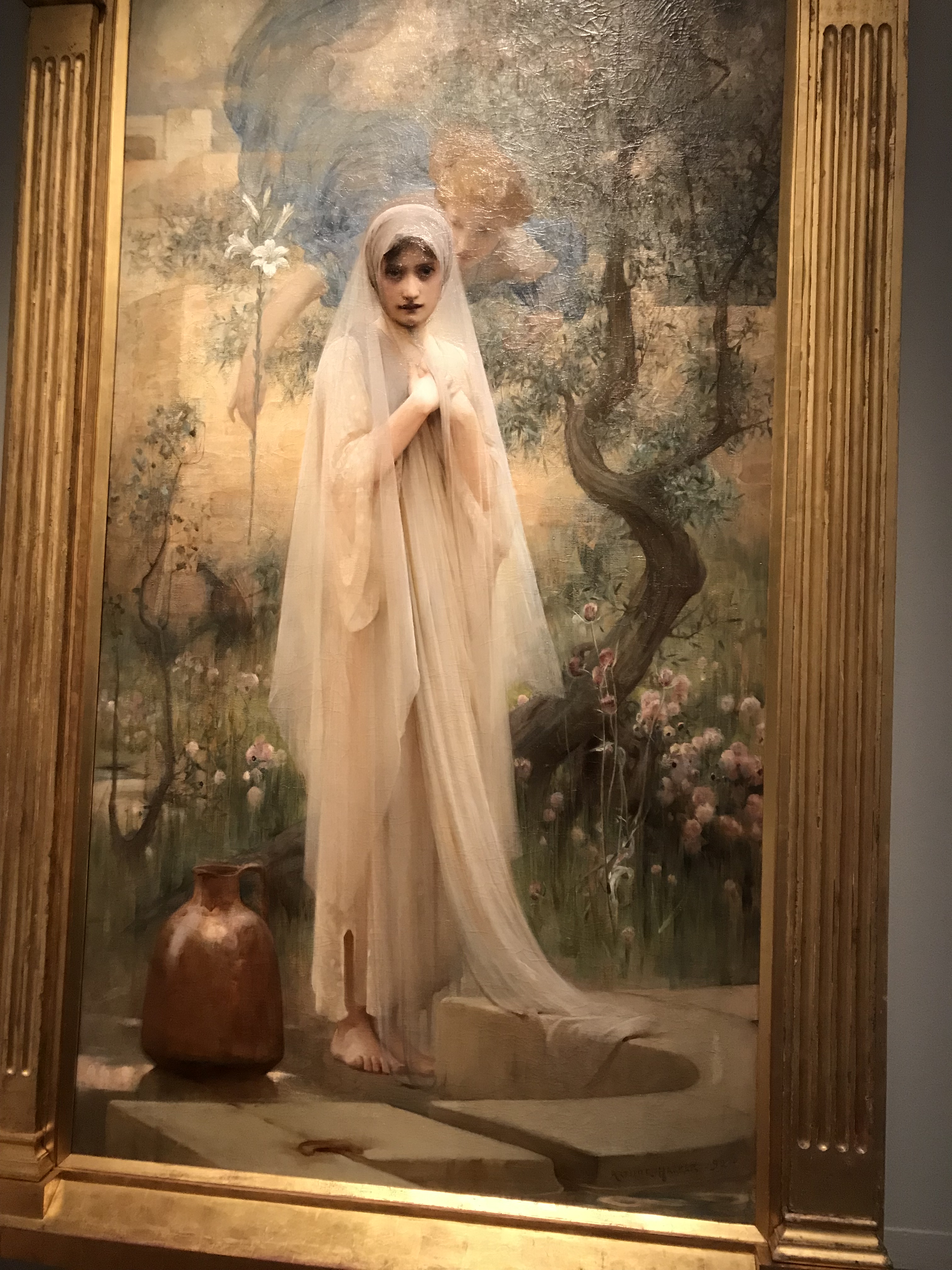
There was a rather spooky painting of a girl, whose eyes followed us round the hall, and an excellent painting of a boat in a storm.

I found it was better to enjoy the paintings without reading the explanations: there was one of a graveyard, and people climbing out of the graves. There was a man, trying to push his wife back, and a family of children all struggling to get out first, and an unmarked grave with lots of black people (who I guessed were slaves). But when we read the card next to it, the painting was meant to be symbolic, and all about the resurrection when Jesus returns – which was much less fun!

After a couple of hours, we’d both seen enough art. We walked out, past the Star Wars sculpture, and back into the wintery sunshine. It was a lovely treat, and we got home tired and happy – and yes, the dog was safely in the kitchen.

Hope you see some good things this week. Take care.
Love,
Anne x

A spooky girl – her eyes follow you when you move…

If you enjoyed this, you will love my new book: The Sarcastic Mother’s Holiday Diary.
I have always written a diary on holiday, so last Christmas, I decided to find all my old diaries and blogs, and make a book for my children. However, several other people also asked for a copy, so I have written a public version – it’s available on Amazon and has been described as “The Durrells meet Bill Bryson”!

The paperback version is currently available for £9.99, but as I will need to buy copies for book fairs, I will need to cover my postage costs, so this price is for a very limited time (I think it will be around £12 in the future, but I wanted to let you, my blog readers, know that they can buy it for the cheaper price, until March). It is also available as a Kindle book.

Why not buy a copy today? I think it will make you laugh.

The US link is here:

https://www.amazon.com/Sarcastic-Mothers-Holiday-Diary-ebook/dp/B07N95281F/ref=sr_1_1?ie=UTF8&qid=1549015525&sr=8-1&keywords=the+sarcastic+mothers+holiday+diary

The India link is here:

https://www.amazon.in/Sarcastic-Mothers-Holiday-Diary-ebook/dp/B07N95281F/ref=sr_1_1?ie=UTF8&qid=1549015429&sr=8-1&keywords=the+sarcastic+mothers+holiday+diary

The UK link is here:

https://www.amazon.co.uk/Sarcastic-Mothers-Holiday-Diary-ebook/dp/B07N95281F/ref=sr_1_2?ie=UTF8&qid=1549014970&sr=8-2&keywords=the+sarcastic+mothers+holiday+diary

Carved in Stone, Thrown to the Lions, and Defaced…


I told you in my last last blog all about how the ancient Egyptians thought that if something was carved in stone, it was true forever, and how therefore if they didn’t like part of history, they simply never recorded it – because then it never happened. They also applied this to statues, so if they didn’t like someone they chipped the face off (hence ‘defaced’).

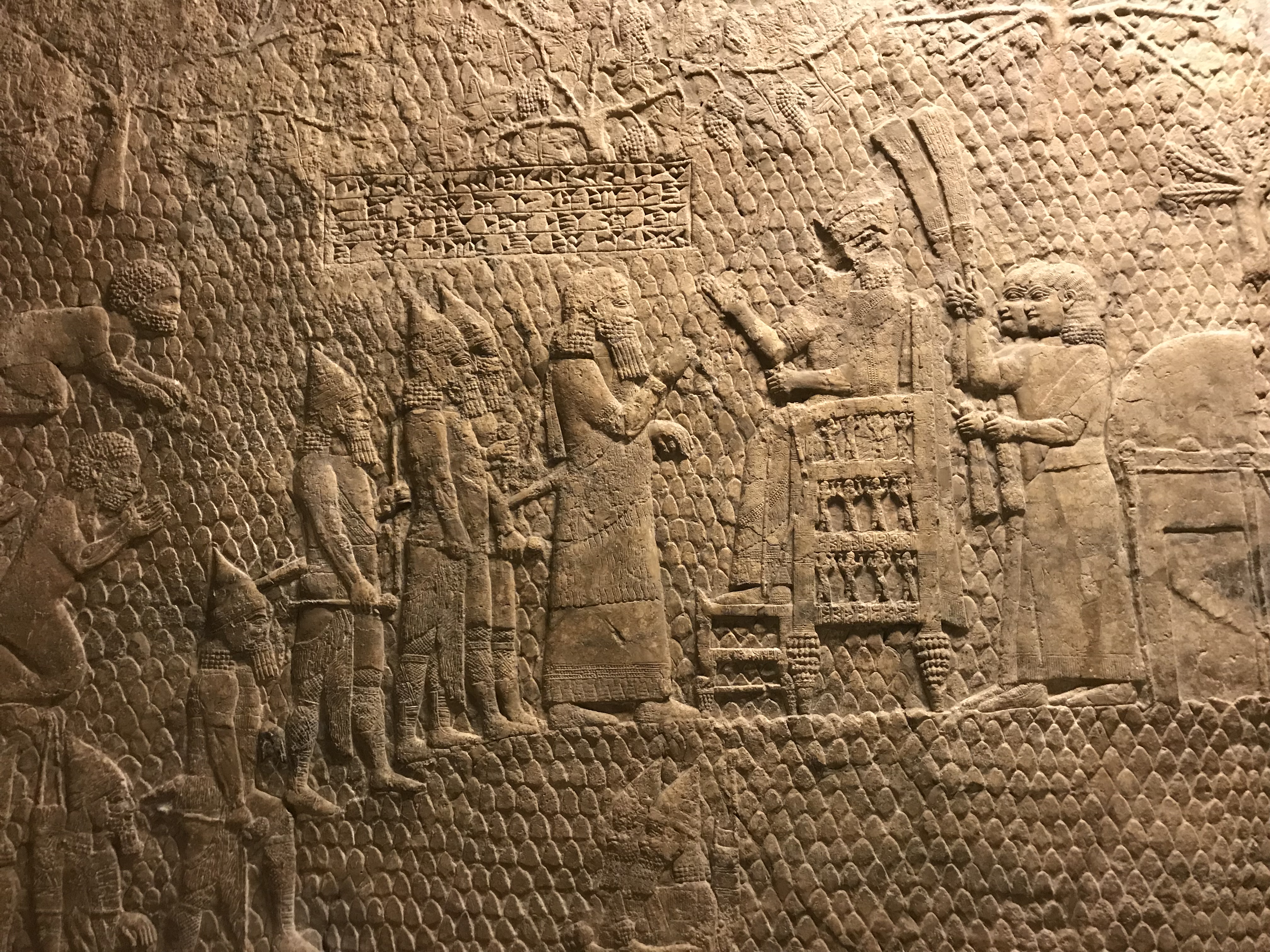
Scenes on walls, in the city of Nineveh – found when the ruins of the city were discovered.

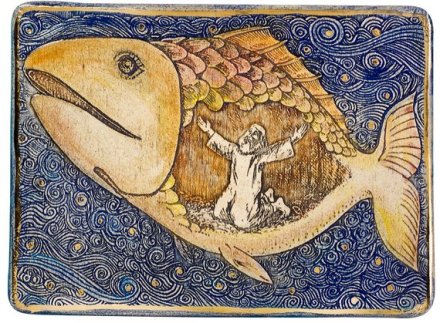
There was lots of stuff in the British Museum which at first glance (to me) looked completely boring, but when I listened to the explanation of what I was looking at, was very interesting. We saw things like the wall tiles from the city of Nineveh (of Jonah in the whale fame).

An interesting story was the defeat of Lachish, by a chap called Sennacharib. Sennacharib was a great warrier, and there were walls of carved stone, showing the triumphal defeat of Lachish, people being taken as slaves, the king bowing down to Sennacharib – a huge ego stroke, in other words. Except, Lachish was a small, weak, city. Conquering it was not such a big deal for someone as powerful as Sennacharib – so what wasn’t he saying? What was missing from the engarvings on the palace walls? Well, this is the time that Sennacharib was holding the city of Jerusalem in seige, and in fact, one panel lists all the plunder taken from the temple. After the defeat of Lachish, the plan was to return to Jerusalem, finish the job, and lead away King Hezekiah in chains.

But in the Old Testament, we read that God sent an angel, who went to where the army was camped outside of Jerusalem, and killed 185,000 men. When the people of Jerusalem woke up and looked out, there were thousands of dead bodies. However, although we have the Assyrian records – which show that Sennacharib sent an army of 200,000 men as the advance army to Jerusalem – there is nothing else recorded. Nothing. He simply reminded everyone of his triumph at Lachish, and had it carved in stone. Because if nothing was ever carved about Jerusalem, it never happened…(You can read the story in Isaiah 37.)

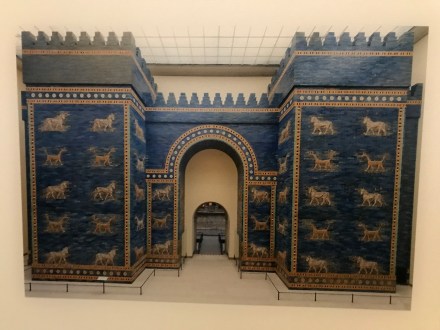
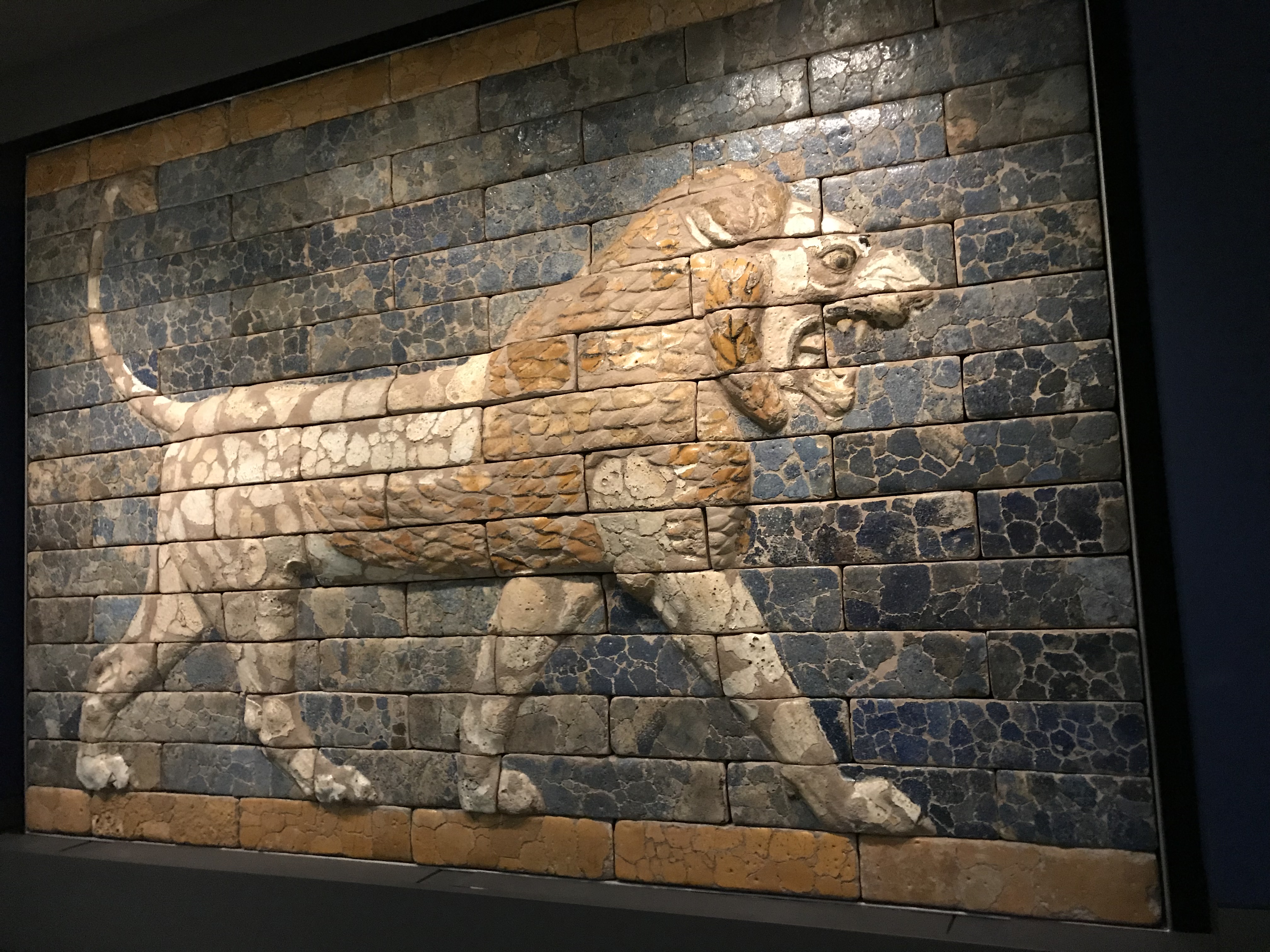
Lions were a symbol of strength in Babylon.
The tiles would be baked in furnaces, so the colour remains even today.

My favourite part of the tour was the stuff relating to Daniel and King Nebuchadnezzar. Now, in the early part of Daniel, we read that his friends were put into a fiery furnace, as a punishment. When we looked at the artefacts from the time, this made perfect sense, because Nebuchadnezzar was keen on coloured clay wall tiles – and these would all need to be fired in furnaces – so they would be readily available for the odd execution when needed! Many of those tiles depicted lions, and we learned that lions were a big deal to those Babylonians, and represented great strength. They would certainly have captured them, and kept them for viewing, so again, Daniel being thrown into a den of lions makes perfect sense!

There was lots more that we saw and heard, too much really to take in. I need to do a second tour – or buy the book from the museum bookshop and walk round by myself. It really was, hugely interesting.

Thank you for reading. Hope you have an interesting week.
Take care.
Love, Anne

anneethompson.com

PS. I have always written a diary on holiday, so last Christmas, I decided to find all my old diaries and blogs, and make a book for my children. However, several other people also asked for a copy, so I have written a public version – it’s available on Amazon and has been described as “The Durrells meet Bill Bryson!”

The paperback version is currently available for £9.99, but as I will need to buy copies for book fairs, I will need to cover my postage costs, so this price is for a very limited time (I think it will be around £12 in the future, but I wanted to let you, my blog readers, know that they can buy it for the cheaper price, until March). It is also available as a Kindle book.

Why not buy a copy today? I think it will make you laugh.

The US link is here:

https://www.amazon.com/Sarcastic-Mothers-Holiday-Diary-ebook/dp/B07N95281F/ref=sr_1_1?ie=UTF8&qid=1549015525&sr=8-1&keywords=the+sarcastic+mothers+holiday+diary

The India link is here:

https://www.amazon.in/Sarcastic-Mothers-Holiday-Diary-ebook/dp/B07N95281F/ref=sr_1_1?ie=UTF8&qid=1549015429&sr=8-1&keywords=the+sarcastic+mothers+holiday+diary

The UK link is here:

https://www.amazon.co.uk/Sarcastic-Mothers-Holiday-Diary-ebook/dp/B07N95281F/ref=sr_1_2?ie=UTF8&qid=1549014970&sr=8-2&keywords=the+sarcastic+mothers+holiday+diary

Deleting the Family Tree…


A Tour of The British Museum

Is there evidence that Joseph was a real person?

Who is the Pharaoh of the Plagues?

We began our tour in a large room full of Egyptian stuff. I didn’t know much about the Egyptians, and wasn’t sure how much I wanted to know about the Egyptians – but actually it turned out to be very interesting.

We were on a Bible Tour at the British Museum, and although I wasn’t completely sure what that meant, I figured I might learn something useful. We met our guide next to the stairs, picked up a folding chair (which I was later very grateful for, as the tour involved a lot of standing for those people who didn’t have chairs) and off we set – to the Egyptian room.

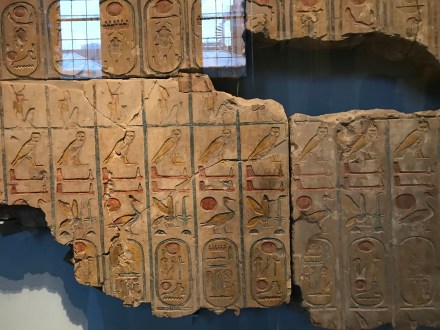
The ‘Family Tree’ of Ramesses – with all embarrassing relations deleted!

Before we could begin our tour, we needed to learn a fundamental truth about Egyptian psychology, which was that “If it isn’t carved in stone, it didn’t happen” and therefore anything unpleasant or embarrassing about their history, they simply deleted. So, when we looked at the Egyptian equivalent of a family tree for Ramesses (that well-known Pharaoh) there were lots of names missing. They weren’t missing because he didn’t know who his ancestors were, they were missing because those ancestors were embarrassing. (Now, wouldn’t we all like to do that!) As I said, anything ‘carved in stone’ was thought to be eternal, therefore anything not there, could be ignored, as if it never happened.

Having learnt this snippet of Egyptian psychology, we then began the tour proper – which was to look for evidence, beyond the writing in the Bible, that would support the events described. So, as the whole ‘Israelite slaves being saved by a God who sent plagues so that Pharaoh is defeated and those slaves can leave’ would be somewhat embarrassing to the Egypyians of the day, we were never going to find evidence, carved in stone, that would remind them of that piece of history. However, there were other clues, circumstantial evidence, that supported the Bible claims.

Senwosret was probably the Pharaoh who put Joseph in charge of all the agriculture.

In about 1875BC, Joseph was sold as a slave to Egypt, and while he was there, he told the pharaoh what his dreams meant, and was then put in charge of all the food. So, when there were 7years of plenty, they saved food, and when this was followed by 7years of famine, they could eat the stored grain. Now, we know that the pharaoh of the day was deemed to be responsible for everything, he was almost a god, and therefore a famine, of any length, would be his fault. This would make the pharaoh of the dreams very worried when Joseph told him the meaning of his dreams, and he would want to act.

Egyptian records, show that Senwosret took complete control of all the agriculture during his reign as pharaoh, which was a strange and significant thing to do. We also know that when he was buried, he shared his tomb with his vizier (the ancient Egyptian equivalent of a prime minister). There is a carving, which states this vizier was “ruler of all the world” – which is exactly what Pharaoh described Joseph as, in the Bible account. Pretty interesting, huh? You can see statues of Senwosret in the British Museum today (he wasn’t a looker).

The oppression of the Israelites, when they were treated as slaves, probably began during the reign of Ahmose. After him, came Thutmose, and he had a very powerful daughter (very unusual in those days) who even ruled for a while and had statues made in her image, in the form of a pharaoh. It would make sense if she was the “daughter of Pharaoh” who fished the baby Moses out of the river, and then raised him in the palace.

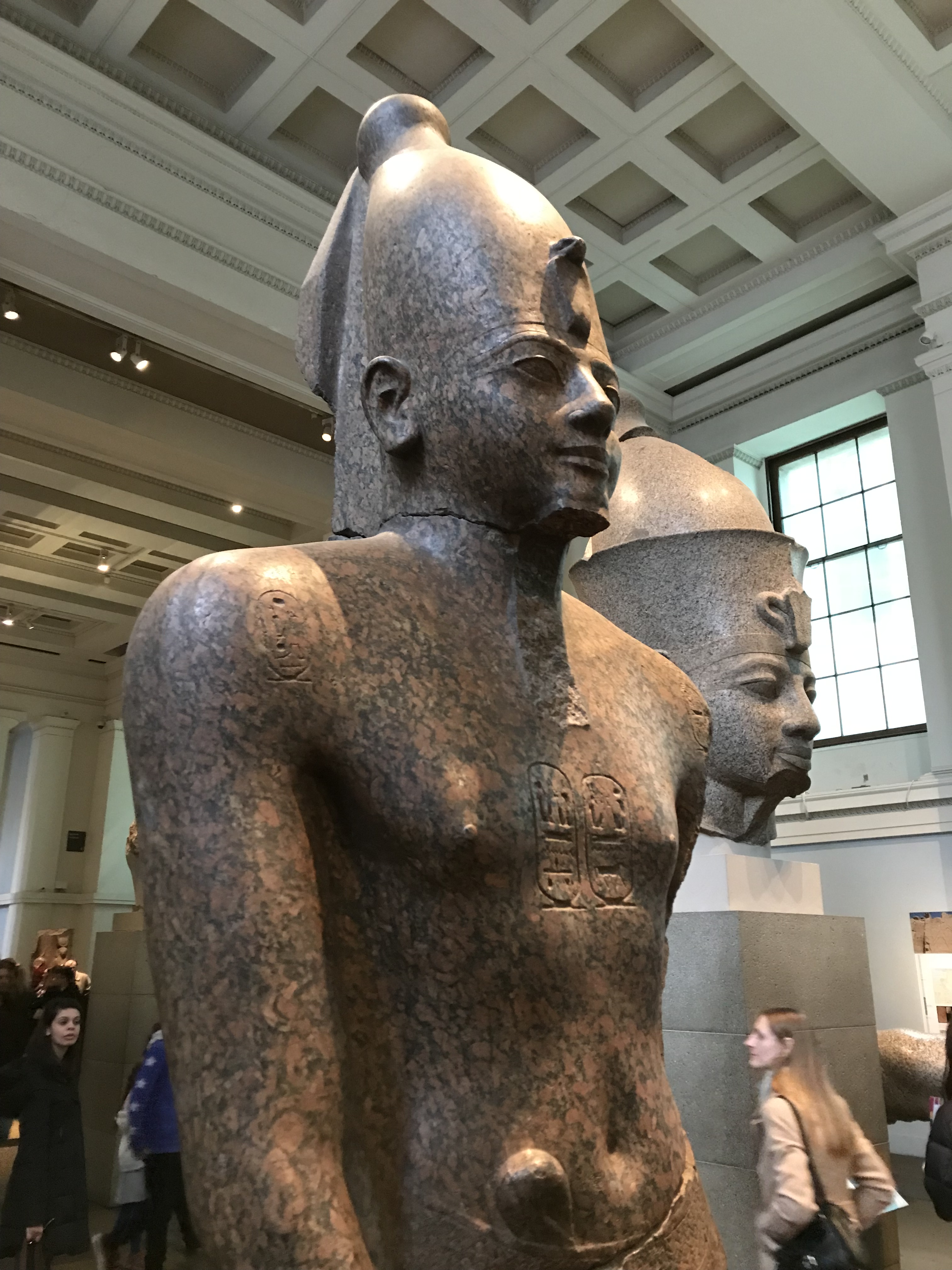
Thutmose III
Who was probably the Pharaoh during the Exodus, when all the Israelites left Egypt.


Later, there was a very powerful pharaoh, called Thutmose III. He ruled during the high point of Egyptian history, was well known for his building projects and so on. We know that Moses was over 80 when he started negotiating with Pharaoh to let the Israelites leave, so the timing fits. Then, half way through Thutmose III’s reign, everything begins to go wrong. We don’t know why (because there is nothing ‘carved in stone’ about it) but we do know that the next pharaoh was not his son, that all his power seemed to stop half way through his reign, and, even more significant, the pharaoh after him made it a priority to go and conquer other nations so they could capture new slaves. Sounds convincing to me, I reckon Thutmose III was probably the Pharaoh from Exodus (even if Hollywood thinks it was Ramesses!) You can see his statue in the museum, but someone has bashed away his belt (which was how the statue of a pharaoh was identified) and added the cartouche (the oval that contains the pharaoh’s symbols) of Ramesses on his chest. Because if it’s ‘carved in stone’, it must be true…

There is loads more to tell you about the museum, especially the ‘evidence’ for angels killing whole armies – but I’m out of space. I’ll tell you next week.

Bye for now,
Anne x


Anne E. Thompson

Thank you for reading
anneethompson.com
Why not sign up to follow my blog?

Look on your device for this icon (it’s probably right at the bottom of the screen if you scroll down). Follow the link to follow my blog!

****

All Quiet On The Chicken Front…


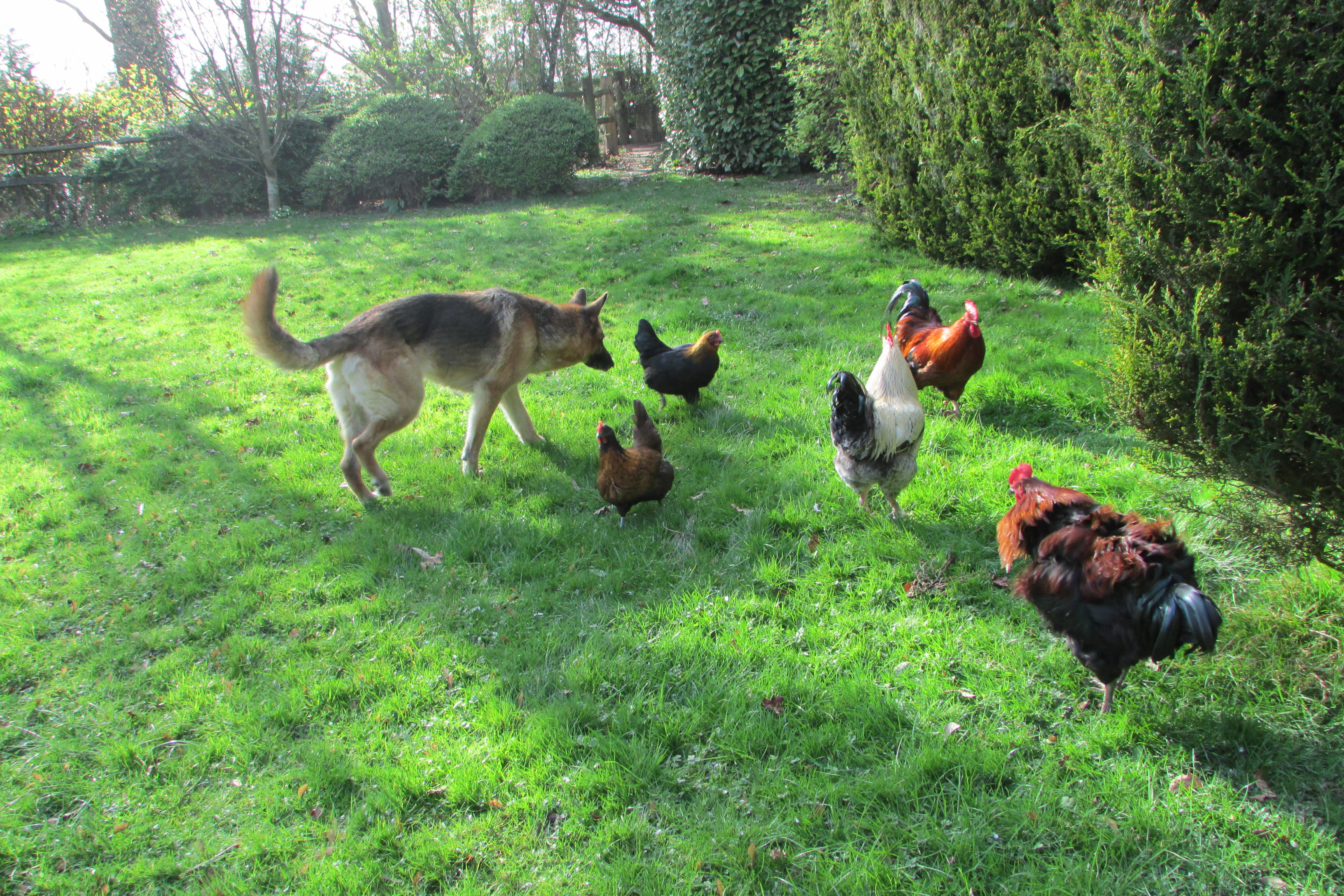
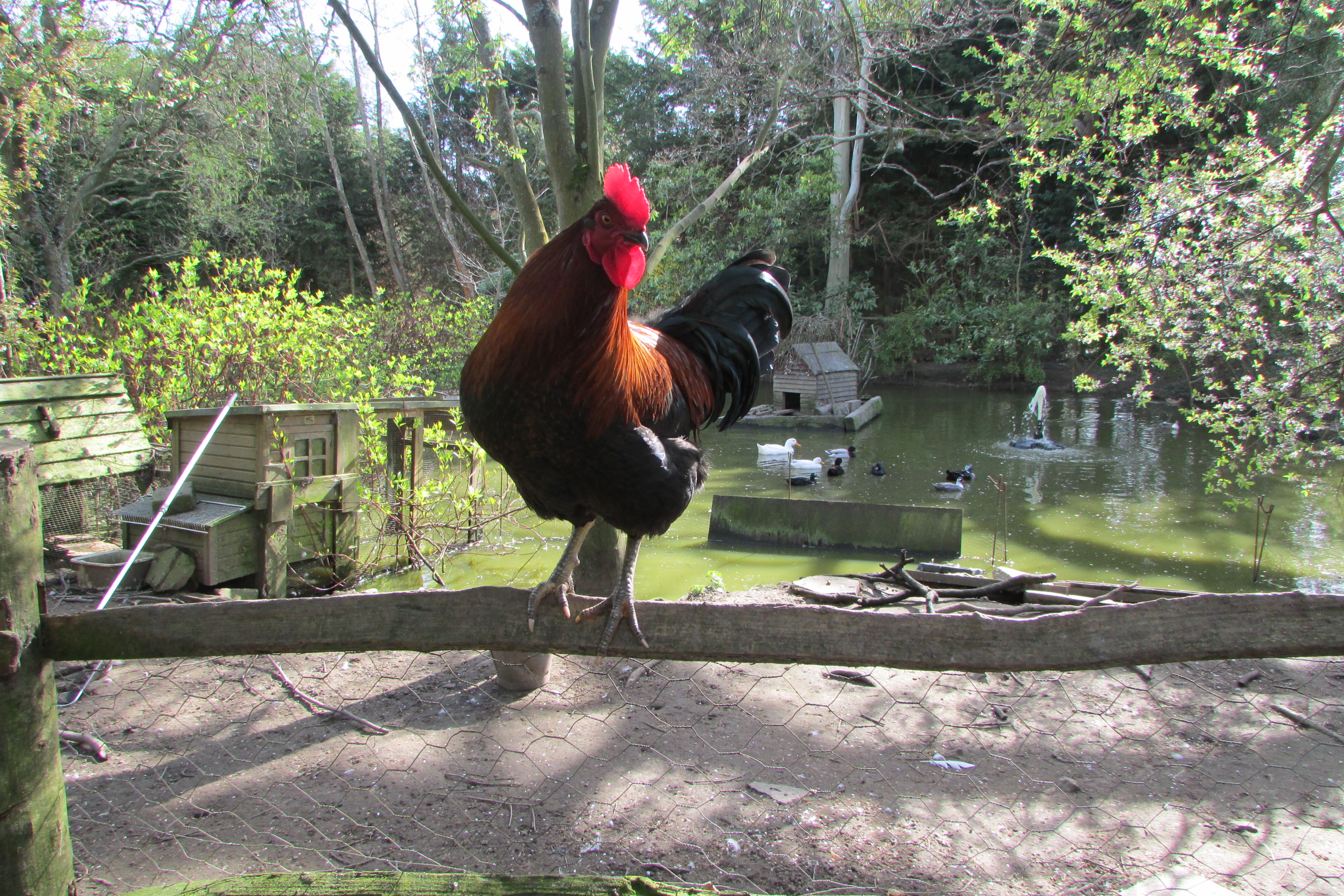
I thought I would give you a quick update on my news. First, the family of cockerels. As you may remember, I was fortunate (!) enough for five of the six hatchlings to be male. Now, contrary to popular belief, it IS possible to have a flock with more than one cockerel and not have open warfare. I know this because I had two cockerels who lived very peacefully alongside each other for a couple of years (until a fox ate them). However, five young cockerels, plus their father, seems like a lot.

As the hatchlings grew, and were allowed to roam freely around the garden, the flock separated. The parents and the female wander around the garden together, and the young cockerels form a separate flock. A few weeks ago, they started ‘facing off’ to each other. None of them has spurs yet (the deadly sharp talons on the back of their legs) so I figured they were unlikely to kill each other, and were probably simply sorting out the pecking order. I left them to it. The dog takes a keen interest in this, and has taken upon herself the role of peace-keeper. If they start to fight, she stamps on them – which is remarkably effective.

When we went to Devon for a week, I was worried about leaving them all in the same cage, so I split them up. I waited until evening, when they were all roosting on the perch, and then went to move the young cocks into a separate cage. I have to say, it takes an amount of courage to approach a cockerel, which is staring you in the eye, at head-height, with an elongated neck and fluffed up feathers. But I managed to pick them all up, ignored all the squawking, and carried them, one by one, to a new cage; and I survived without getting my eyes pecked out (which would have made Husband cross).

When I returned home after Devon, I opened both cages, to see what would happen. For a couple of days, the father and both hens roosted in one cage, the five young cockerels in the other. Gradually, as they have established a pecking order, two of the weaker cockerels have started to join the parents. I now have ‘the elite team’ of cockerels in one cage, and the rest in the other. For now, we are at an uneasy truce. If any of them become very aggressive, they will have to go (don’t ask me how – but I am not vegetarian, and neither is the local fox, so I figure I have a couple of options…unless you would like a pet cockerel? Do let me know.)

My other news, which is sort of vaguely related, is my new book, which is set on a farm. The first draft is finished, and I began to send it out to publishers. One publisher sent back a detailed editorial report, saying they didn’t want to publish it as it was, but would reconsider if I rewrote it. I am therefore in the process of rewriting it. This is taking much longer than I expected – longer in fact than writing the first draft, because as I change things, I lose the rhythm of the story, so have to rewrite increasingly large sections. It feels like work, and is not much fun. But I do feel the book is improving, so it’s worth the effort. When finished, I will resubmit to the publisher, and see what happens. I would like it to be released in the summer, but it may take longer than that. I will let you know.

A late Christmas gift was a trip to the British Museum and having a tour of the artefacts that relate to various stories in the Bible. Do you know why it was historically appropriate for Daniel to be put in a lions den? Or the name of the Pharaoh who put Joseph (of the coloured coat) in charge of all the agriculture? Or the Pharaoh who suffered the plagues at the time of the Exodus (because it probably wasn’t Ramesses!) I’ll tell you all about it in next week’s blog.

That’s all for now. I hope you have a good week.

Take care,
Love, Anne x

Anne E. Thompson has written several novels. They are available from bookshops and Amazon.
You can follow her blog at:
anneethompson.com
Why not sign up to follow today?
A Treat in January


Instow Holiday Diary January 2019
Saturday 5th January:
Walked along the Tarka Trail from Instow. This stretch is along a disused railway line, so I liked it because it was easy walking; Husband complained that we were walking along a tarmac path; Kia was just happy to be walking anywhere. The trail crossed bridges, wound near the coast, and went through cuttings of ferns and grasses. It was peaceful and pleasant, and although we had to be aware of the occasional bike that whizzed past, it was very pleasant.

At one point we passed a couple of big old boats, which appeared to be inhabited. I’m not sure what living on a boat would be like – very like camping I imagine. No idea what they do for water or sewage, as the river wouldn’t be any use for either. Instow is on the estuary, where the rivers Taw and Torridge meet the sea (well, they actually meet the sea at Appledore, which is the other side of the river, but you can see the waves on the horizon from Instow.

We turned around when we arrived in Bideford. We checked the ferry to Lundy Island, but it only runs March – October. I didn’t buy a fridge magnet, as they all looked a bit naff.

Walked back to Instow and had coffee at John’s Cafe, which is the best cafe in the whole world (except that it has rather uncomfortable seats, and is a little pricey). Kia lay under the table while we had coffee, and then waited outside while Husband bought some juice. They didn’t have any orange juice (too posh) and the apple juice was all proper, locally produced apple juice, which was rather bewildering for Husband, as he had to choose which variety of apply he wanted. He chose cox’s apple juice, which is pretty horrid unless you like cox apples (which I don’t).

When we got back to the cottage, I checked my clever iPhone app, to see how far we’d walked (it felt like a long way). It was 10.6km, so perhaps not so very far. We had ham sandwiches for lunch (which didn’t fit very well with my sort of vague decision to eat only vegetarian food in January), with apple juice (see above) and ginger biscuits I’d brought from home (left over from Christmas, but still nice).

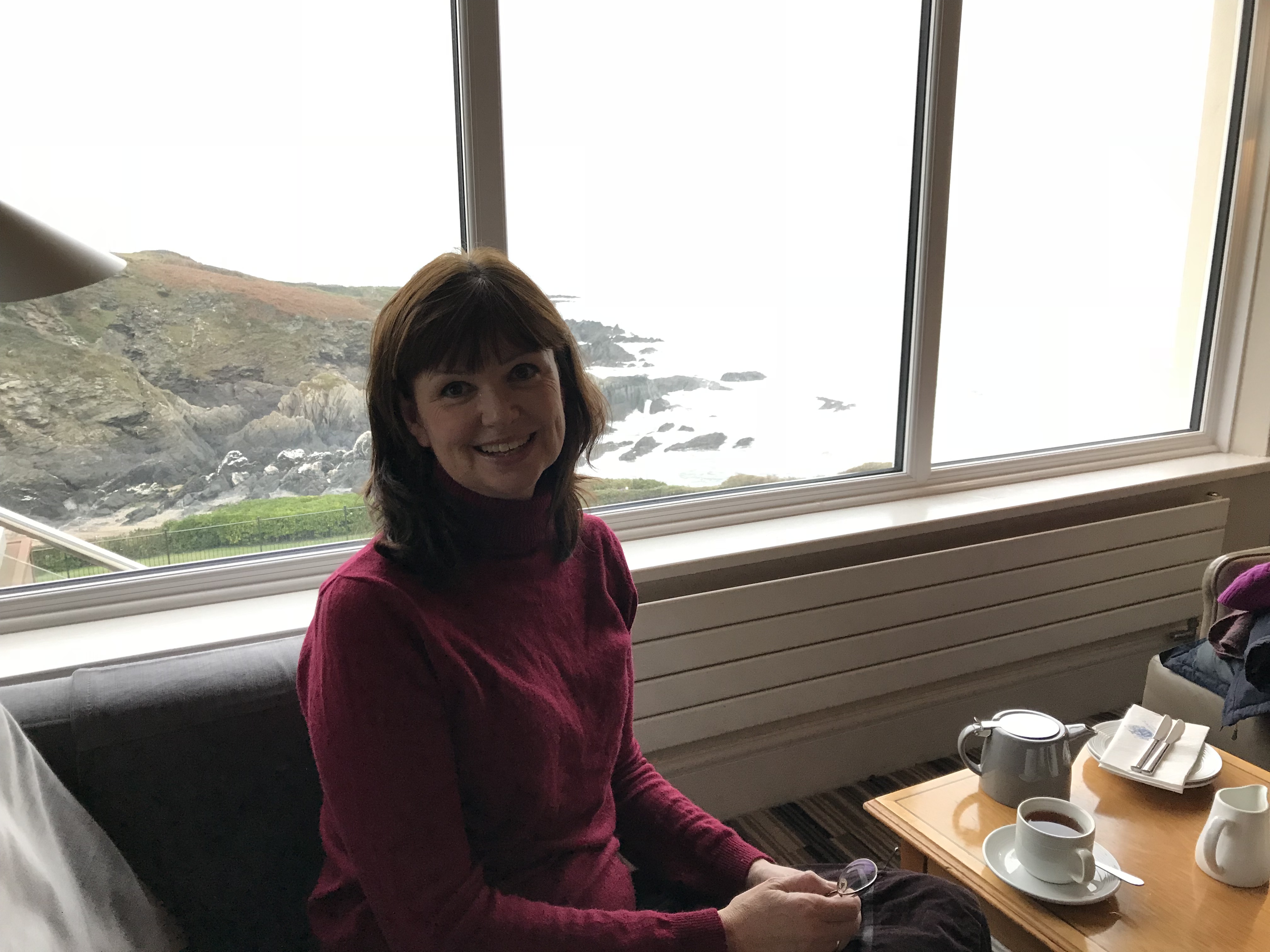
At 3:30pm, we had afternoon tea at Watersmeet Hotel near Woolacombe. This was a Christmas gift from Husband, and as a great lover of cakes and sandwiches, I was rather looking forward to it. I had been given a voucher, showing a dining room, but we were taken to a lounge area for the tea. (It turns out Husband had made the voucher himself, and downloaded photos from the hotel’s website, but tea is not served in the dining area!) The hotel is on the cliff edge, looking down into a bay, and we sat and watched waves crashing over the rocks.

We spent a few minutes taking selfies, as you do—most with my thumb in one corner, and then the tea arrived. There was loads, enough for four people, so we could’ve shared one. It was all so pretty, with cakes on the top tier, a huge scone in the middle, and sandwiches at the bottom. Everything was delicious, and I wrapped up the scone to eat later, and then ate most of the rest. (Not the Battenberg cake though, as I’m not keen on that.) It was all very lovely.

I hope you have some treats this week.

Take care.
Love, Anne x

Thank you for reading.

anneethompson.com

If you enjoyed this, you will love my new book: The Sarcastic Mother’s Holiday Diary.
I have always written a diary on holiday, so last Christmas, I decided to find all my old diaries and blogs, and make a book for my children. However, several other people also asked for a copy, so I have written a public version – it’s available on Amazon and has been described as “The Durrells meet Bill Bryson”!

The paperback version is currently available for £9.99, but as I will need to buy copies for book fairs, I will need to cover my postage costs, so this price is for a very limited time (I think it will be around £12 in the future, but I wanted to let you, my blog readers, know that they can buy it for the cheaper price, until March). It is also available as a Kindle book.

Why not buy a copy today? I think it will make you laugh.

The US link is here:

https://www.amazon.com/Sarcastic-Mothers-Holiday-Diary-ebook/dp/B07N95281F/ref=sr_1_1?ie=UTF8&qid=1549015525&sr=8-1&keywords=the+sarcastic+mothers+holiday+diary

The India link is here:

https://www.amazon.in/Sarcastic-Mothers-Holiday-Diary-ebook/dp/B07N95281F/ref=sr_1_1?ie=UTF8&qid=1549015429&sr=8-1&keywords=the+sarcastic+mothers+holiday+diary

The UK link is here:

https://www.amazon.co.uk/Sarcastic-Mothers-Holiday-Diary-ebook/dp/B07N95281F/ref=sr_1_2?ie=UTF8&qid=1549014970&sr=8-2&keywords=the+sarcastic+mothers+holiday+diary

Micah – A New Year’s Resolution


Did you make a new year’s resolution for 2019? Do you plan/hope to improve something? It’s good to pause and take stock sometimes, to check how we’re living is how we want to live.

Micah is a book which I have often heard quoted, though have never read from start to finish before. It was written about the same time as 1 Kings, which is a history book, whereas this is a prophecy. It tells the people what will happen – that they will be taken into captivity – though it doesn’t say when. They were later taken captive by the Babylonians, and remained captives for much longer than they expected. There is also a snippet in Chapter 5, which foretells the birth of Jesus, and is often quoted (fairly randomly and out of context in my opinion!) at Christmas carol services.

However, for me, the most beautiful part of the book is chapter 6 and verse 8. This tells the people – and us – what God requires. Being a Christian, deciding to follow God, is not about rules or religion or rituals. Micah writes:

“He has told you, O man, what is good; and what does the LORD require of you but to do justice and to love kindness, and to walk humbly with your God?”

This should be our code of conduct. Not grabbing what we can from the world, but being fair; not judging other people, but being kind; not declaring that we understand the Bible and other people are wrong, but being humble and following where God leads us. I think this is a good principle to try and live by this year, as we take stock and look forwards. It reminds me of something my cousin recently shared on Facebook, which I felt says it all, really. I will share it with you (I don’t know who originally wrote it, so I can’t credit them).

If you are kind, people may accuse you of selfish, ulterior motive.
Be kind anyway,
If you are successful, you will win some unfaithful friends and some genuine enemies.
Succeed anyway.
If you are honest and sincere, people may deceive you.
Be honest and sincere anyway.
What you spend years creating, others could destroy overnight.
Create anyway.
If you find serenity and happiness, some may be jealous.
Be happy anyway.
The good you do today, will often be forgotten.
Do good anyway.
Give the best and it will never be enough.
Give your best anyway.
In the final analysis, it is between you and God.
It was never between you and them anyway.

I hope your new year is happy, and that you live it well.

Take care,
Love, Anne x

Anne E. Thompson has written several novels and non-fiction books. You can find her work in bookshops and Amazon.
Why not sign up to follow her blog today?
anneethompson.com

Bible Blog – Jonah


Reading through the Bible is taking way longer than expected! This is partly because there is more there than I realised, and partly because I often don’t understand what I’m reading, and have to spend time doing a little research. There are stories which I knew well, others which I’m sure I’ve never read, and some which leave me with this huge “What???” feeling.

The book of Jonah, however, is one which I felt I knew well. When I was a child, aged about 12, a man called Mr Goss did a series of five sermons on Jonah at our church. They are the first sermons I ever really listened to, and I still remember some of the things he said. (On a different note, I heard recently that Mr Goss’s life went wrong after this, he made some bad decisions, ended up in prison, and died young. I hope the people who knew him remember that he was also a gifted preacher, and some of what he did with his life was good and worthwhile. This is an especially poignant thought when reading Jonah, which is all about people making good and bad decisions – because we all do both. Yet God is bigger than our mistakes.)

The book of Jonah was written about the same time as 2 Kings (a history book) and Nahum (another prophet) so roughly 615BC. Both Jonah and Nahum are about Nineveh, a city which was part of the Assyrian empire (and today would be part of Mosul, in Iraq). You probably know the story:

Jonah is told by God to go to Nineveh, to tell them they are evil and God is going to destroy them. Jonah decides to run away, and goes on a boat in the opposite direction, towards Tarshish. There is a big storm, Jonah is thrown overboard, and swallowed by a big fish. The fish vomits him out on dry land, and Jonah goes to Nineveh. The people repent, God doesn’t destroy them, Jonah is angry.

I have a few thoughts about the story. Firstly, why did Jonah try to run away? Did he fear the people of Nineveh, or was he frightened he would look silly? I can relate to both of those feelings. Then later, when he’s in the belly of the fish, and life is looking hopeless, he cries out to God. This still happens today; very often people wait until everything is going wrong, there is no hope, before they cry out to God. He is often our last resort.

The book of Jonah is all about second chances. Jonah tries to run away from what he knows God wants him to do, and yet later, after the fish vomits him out, we read that God spoke to him a second time, telling him to go to Nineveh – he gets another chance to do what he should have done in the first place. Later, the people of Nineveh, after they have listened to Jonah, turn back to God and God doesn’t destroy them – he gives them another chance. I think this reflects so much of what I have read in the other books of the Bible, about a God who always sees the wrong that people are doing, and yet he gives them another chance. God wants people to change and come to him, he doesn’t want to destroy them.

I find the character of Jonah to be very interesting. He was clearly a very passionate man, someone who acted on impulse, very hot-headed. Even so, God chose to use him. Perhaps it was that passion, that depth of feeling, which made him an excellent speaker (because whatever it was that he said to the people of Nineveh, it was enough to change a whole city including the King). Being passionate was both Jonah’s greatest strength and his biggest weakness. We all have weaknesses (some more than others). If we let God help us, he can turn those weaknesses into strengths, which is pretty amazing really.

Caster Oil Plant
This is probably the plant which Jonah sat under.

The book of Jonah doesn’t really finish (in my opinion) it just sort of stops. After the city is saved, Jonah goes off in a sulk, and builds a shelter, which a plant grows over, shading him from the sun. Then the plant dies, and Jonah is livid. God says that Jonah has no right to be angry about the plant, which Jonah did nothing to create, and compares it to the whole city of souls which God wanted to save. Then it stops. We have no idea if Jonah realised he was wrong, or simply stomped home again. I have never really understood the bit about the plant – it just shows that Jonah was a pretty awful person (in my opinion). But perhaps he changed.

I will continue reading through the rest of the Old Testament – near the end now.

Thank you for reading.

Have a good week.
Take care,
Love, Anne

The “Non-Party”


The Non-Party

For as many years as I can remember (well, not really, but a lot!) we have hosted a party on New Year’s Eve. They are, if I’m honest, more Husband’s thing than mine, as I am basically a pretty unsociable person who likes to go to bed early; but marriage is all about give and take, and a fair helping of compromise, and these are my compromise.

Year after year, I have watched my house being rearranged, he has forced/encouraged our friends and family to dress in a variety of costumes, and then everyone has arrived, people have drunk and snacked and danced and generally had a happy time. Usually our children – now all grown up – have joined us and, as they seem to have more than an even proportion of Husband’s genes, they’ve helped and encouraged and been party to the party, year after year, and so have their friends. We have all dressed in pink, been toys, or sixties icons. And it has, I am forced to admit, been mainly fun.

However, last year, we realised that most of the ‘younger’ generation would probably not be attending (because they have all moved out) and the rest of us were dwindling in party enthusiasm (not Husband, it should be noted) so Husband announced that last year would be our last party.

Then, as 2018 progressed, the mood began to change. We began to discuss what we should do instead. I suggested that something small and low effort, like a meal with our friends in a pub would be nice. This evolved into a meal at Husband’s favourite Indian (aptly named Bollywood) followed by everyone coming home for drinks and cigars until midnight. There were a few tense conversations (which my son calls arguments) when we discussed (argued) about whether the “small group of friends meeting for dinner and then coming back afterwards” (my idea) was the same as “a dinner with lots of people at Bollywood, followed by a party at our house” (Husband’s idea) were the same thing. It became named the “non-party”, although I had a sinking feeling that actually, it was a party by another name.

Christmas came and went, and unlike previous years, I did not order masses of food ready for new year’s eve, because we weren’t having a party. Then the day itself arrived, and the mood changed. I began to see furniture moving around (something I hate) and lights being installed. All for our “non-party”. Then Husband asked me what I thought of his ‘disco lighting’ in the dining room, in case people wanted to dance, and I wondered how to tell him that I thought it would trigger epileptic fits.

I went to the fridge, to find all the contents removed, and replaced with bottles of drink, and lemons, and the flavours for cocktails – even though we weren’t having a party. A variety of ‘mood lights’ had been set up (so I put torches in strategic places for our friends who find it difficult to see unless the light is bright). All the candles in the house were placed on window sills, and the dog bed was moved into the utility room, with the dog and the cat, and all the muddy boots.

Eventually, it was time to leave. We met in Bollywood (Indian restaurant—remember?) and ate and chatted and laughed; and then we came home, for our non-party, and chatted and laughed some more. And it was lovely, and eventually I will find all the items that Husband moved to make the house tidy, and no one had an epileptic fit, and I might decide to keep the fridge stocked with alcohol rather than food.

So, all that remains is for me to wish you a very happy 2019, and to thank you, so very much, for continuing to read my blog.

Take care.
Love, Anne x

Anne E. Thompson writes a weekly blog. You can sign up to follow it at:
anneethompson.com
Anne has written several novels, which you can find in bookshops and online.
Thank you for reading.

“Oh, you shouldn’t have…”


“You shouldn’t have…”

I have been watching people receive gifts recently (we all have, I suspect) and I have noticed that some people are exceptionally good at receiving gifts—and others aren’t. There are those people, who simply make you feel that what you have given them is the best thing ever, and has made their day. They seem to smile with their whole face, and look genuinely delighted with those slippers or that mug or those earrings. Other people (and I’m afraid that I might be one of these) struggle to appear pleased, even if they are. I am always aware that I’m being watched, that my reaction matters, and so it all goes to pot and even when I am excited by the gift, I’m not sure that I show it very well.

The thing is, I think that receiving is very important, and there are lots of us who find it difficult. This Christmas, I have heard lots of people say things like: “Oh, you shouldn’t have,” and they mean it. They absolutely do not really want to be given anything. They don’t want gifts, and (perhaps even more) they don’t want help. If they need to be driven somewhere, they would rather pay for a taxi than accept the offer of a lift from a friend. They will grind themselves into the ground with exhaustion rather than let someone help them.

Of course, this isn’t true of everyone, and there are a few people who ONLY ever take from others. They will stand by and let others do all the work, ask for favours but never do any in return, and generally are a drain on those around them—but I’m not talking about those people. I want to consider the others, the people who dislike accepting, because I think it’s important.

We talk sometimes about relationships being “Give and Take” and yet we are so loathe to “take”. This makes relationships unbalanced. I find I feel much closer to those people who will let me help them, who are not completely self-sufficient.

If you believe the Bible, there is lots there to show we should accept help. Right back in Genesis, Man was created to need a helper, so Woman was created. Man didn’t say,”Oh, no thanks, I can manage on my own.” Man needed Woman. And later, the absolute example has to be God himself, who came as a completely vulnerable human baby in order to reach us. Many times during Jesus’ life, from the very first time he needed to be fed by Mary, to the times he asked for a drink of water, or for other people to organise things or find things, or provide things, he asked for help. And his needs were genuine—when he asked a woman at a well for a drink, he really was thirsty and needed a drink and didn’t have a pot to collect water.

This is a lesson that I learnt painfully, when I had brain surgery. I changed from an independent person who didn’t need (or want) much help, to someone who suddenly needed lots. It was a tough lesson to learn.

So please, think about it this week. If people offer to help, perhaps you will deepen your relationship with them if you accept. It’s probably good for us, makes us humble, to realise that we all need other people, we can’t manage to do it all on our own. We were created like that.

Thanks for reading, have a good week.

Take care,
Love, Anne x

Anne E. Thompson has written several novels and non-fiction books. You can find her work in bookshops and Amazon.
Why not sign up to follow her blog today?

anneethompson.com