Portugal


Family Holiday 2018—Portugal

We had planned a family holiday for the last two weeks of August. As the date grew nearer, the whole of Europe was gripped in a heatwave. We watched as temperatures in Portugal went over 40, and saw wild fires on the news. All rather a worry.

Saturday

We met R at the airport. J had been helpfully sending her updates on our progress (wrong airport, earlier flight, left already) but we managed to meet her at the bag drop.

All good with the flight. I sat next to M/factoid boy, and therefore knew lots of facts about Portugal by the time we arrived. Some of these were interesting, for example, did you know that the Romans called the region known as France and Spain ‘Gaul’ and we were going to the area that was the main port, hence ‘Port-o-Gaul’? Or that, an exploring nation, the Portuguese discovered Newfoundland? However, after trying to establish a colony there they left, saying there was ‘nothing there’—hence name ‘Ca nada’.

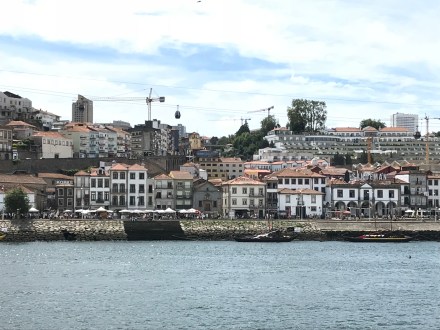
We collected a car (smaller than expected) and drove to Sheraton Hotel in Porto. The hotel has a glass lift. It was quite noisy when my family went up in it.

We walked to the metro. Buying tickets was slightly more complicated than we first thought, as ‘number of tickets’ means number of journeys on a single ticket, not number of tickets. Once we had sussed that, it was very easy, though I’m not sure my family was the fastest user of the automatic ticket machines. We caught a train to the old part of Porto.

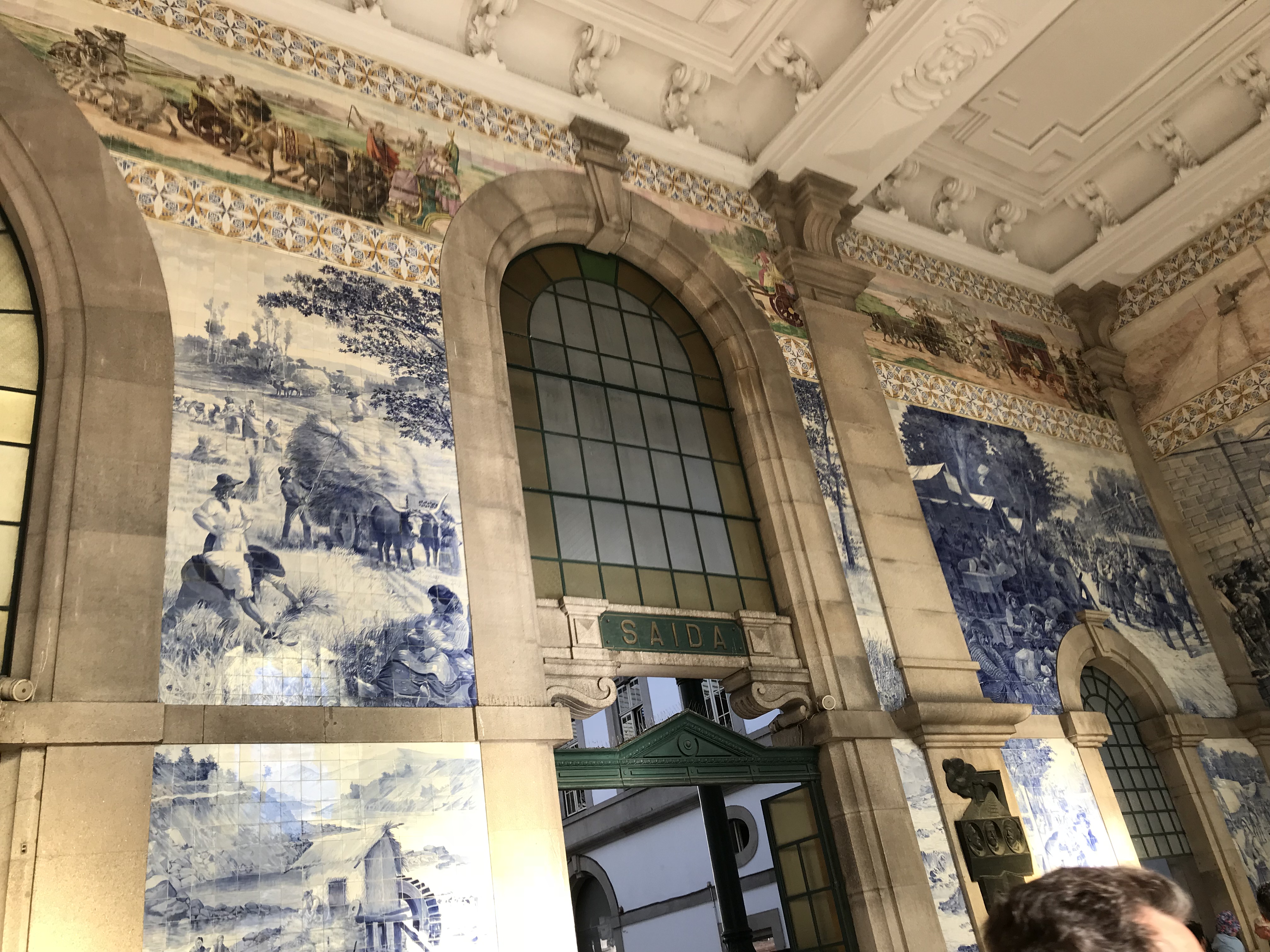
We ate ice-creams in Freedom Square. Factoid Boy ate custard tart, as this is apparently a traditional food in Portugal. We then wandered around, taking in the atmosphere. There were lots of cool designs done in tiles, especially the railway station (Sao Bento Station). It was built in 1916 (most of Europe was too busy that year to build fancy stations with tiled patterns).

Family spent 6 hours looking on Trip Advisor for a nice restaurant for dinner. R didn’t feel the ‘Traditional Steakhouse’ that J recommended would necessarily cater well for vegetarians.

Finally ate at A Despensa—a lovely Italian restaurant. It had a great atmosphere, and we all like Italian food. The only problem was the washrooms, which were gender specific but only inside the door.

Metro back to the hotel. Rather tense discussion about what time we would meet for breakfast. Went to bed, slept well. Holiday going well so far.


Thank you for reading. I’ll post another instalment of our family holiday diary soon. Why not sign up to follow my blog so you don’t miss it?

anneethompson.com

Thank you for reading. You can follow my blog at:
anneethompson.com
Anne E. Thompson has written several novels and one non-fiction book. You can find her work in book shops and Amazon. Why not buy one today?
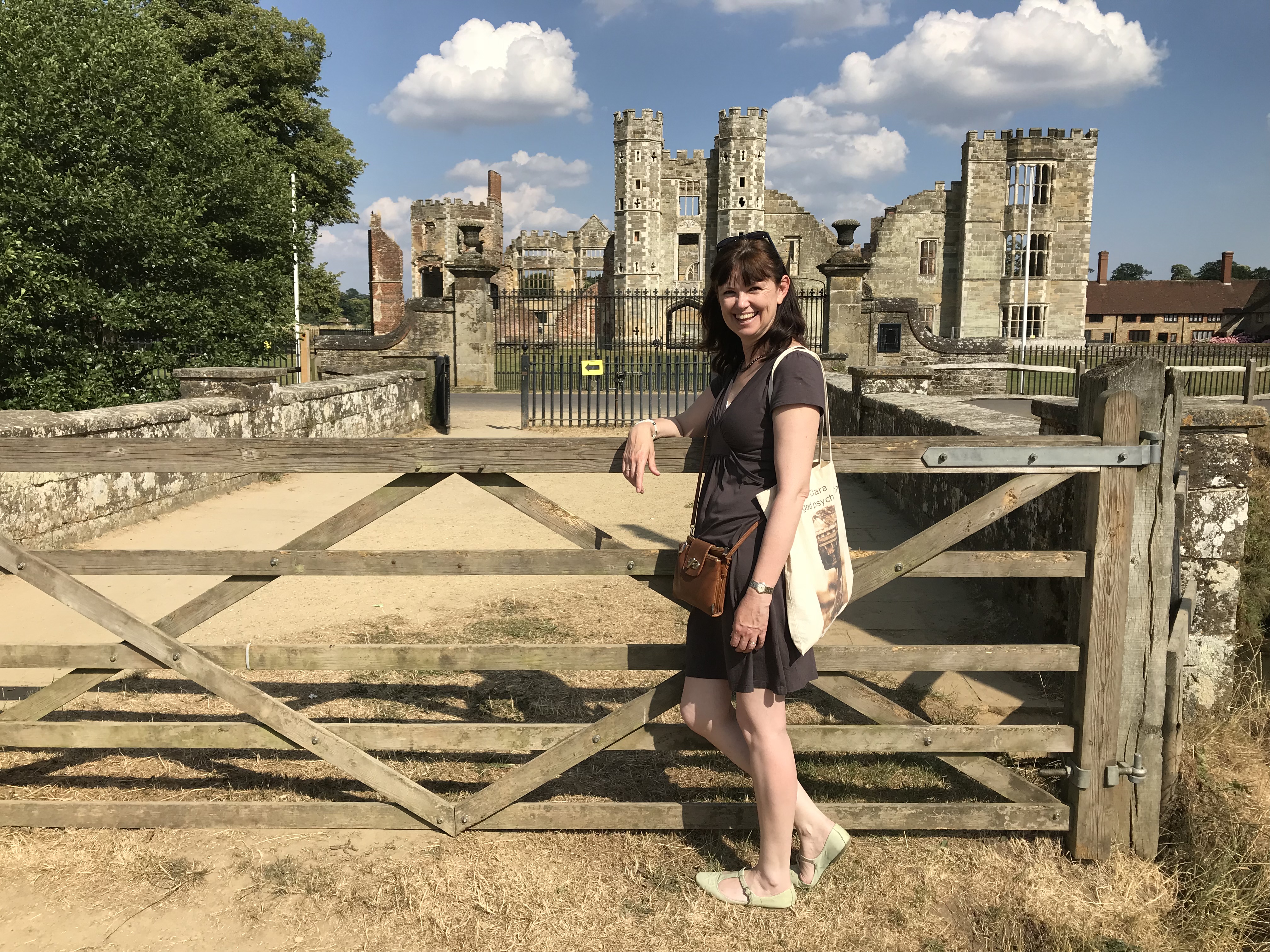
(I think the best one is CLARA – A Good Psychopath? which shows how someone very bad, can achieve something amazing…

The Tale of a Portmeirion Mug


I found a packet of microwave salted caramel pudding in James’ bedroom. Becky gave it to him, and I have absolutely no idea why his bedroom was an ideal place to keep it, so I moved it to the kitchen. It sat there, in the cupboard, tempting me to eat it, while I waited several weeks for him to return from uni.

When James eventually came home, I mentioned the pudding, and asked what his plan was. He said he’d forgotten all about it, but as I’d reminded him, perhaps I would like to share it. This seemed an excellent idea, so we read the instructions, and found it could all be made in a mug, it simply needed us to add some melted butter. I have some very nice mugs, bought ages ago, with flowers on, so we used those and followed the instructions. It wasn’t particularly difficult, and within moments I had a mug of delicious salted caramel pudding.

However, when James lifted his own pudding from the microwave, the mug was full of cracks on the outside of the glaze. The pudding was fine, but the mug was ruined.

Now, the mug was a Portmeirion mug, so not cheap, and rather a favourite. It clearly said on the bottom that it was suitable for use in a microwave, so I felt a bit miffed. I considered returning it to a shop that sells Portmerion stuff, as I figured they would simply return it to the supplier who would replace it. However, as I bought it a couple of years ago, and had no receipt, it felt a bit dishonest. I decided to contact Portmerion directly, via their website.

I sent an email, admitting I had bought the mug a long time ago, and explaining the situation. I expected them to reply that it was past the date they guarantee crockery, and possibly, if I was lucky, send me some money-off vouchers.

However, the following day, I received an email asking me to send photos of the mug. Luckily I hadn’t thrown it away, so took some pictures on my ipad. They weren’t very good, and you could barely see the cracks, but I sent them anyway. The customer services rep said the photos were fine, and she would send a replacement.

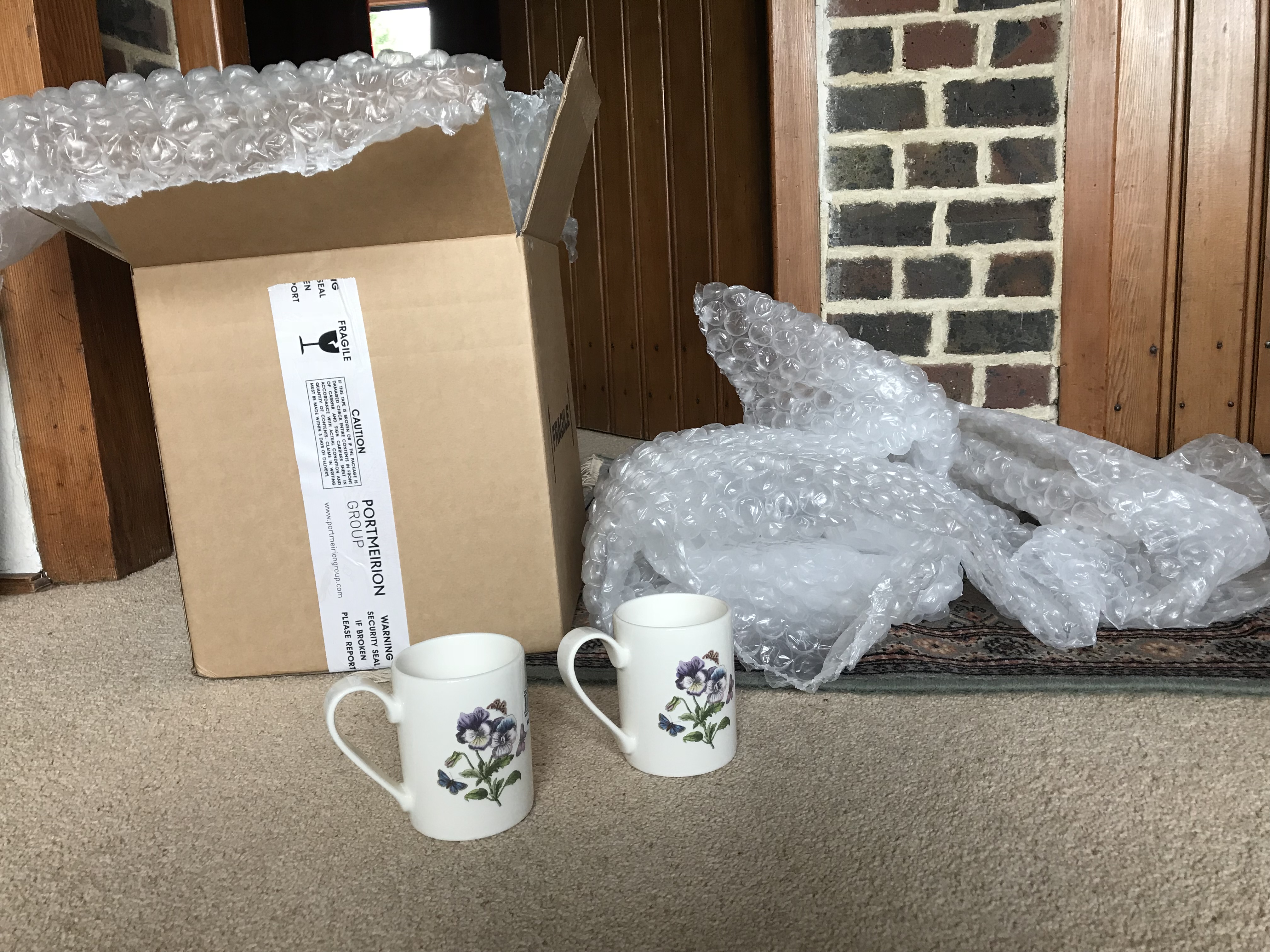
A week later, a big box full of bubblewrap arrived, and there were two mugs, exactly the same as the one that had been ruined. Wasn’t that nice?

Too often in life, we feel that people are rude, that big corporations don’t care, that things are unfair. Which is why I wanted to tell you my story, because sometimes people behave well. Sometimes companies do honour their guarantees.

When I decided to write this, I was also going to tell you the story of my tumble-dryer, which has been nothing but an expensive nuisance. But I think I won’t, I will leave this as a positive article. Have you ever received excellent customer service?

I hope you have a satisfying week.

Love,

Anne x

*****

Anne E. Thompson is an author of several novels and one non-fiction book. You can find her work in bookshops and on Amazon.
Thank you for reading.
anneethompson.com


Being Bitten in the Garden


Just a quick post to let you know how things are progressing in the garden – because things are all changing fast!

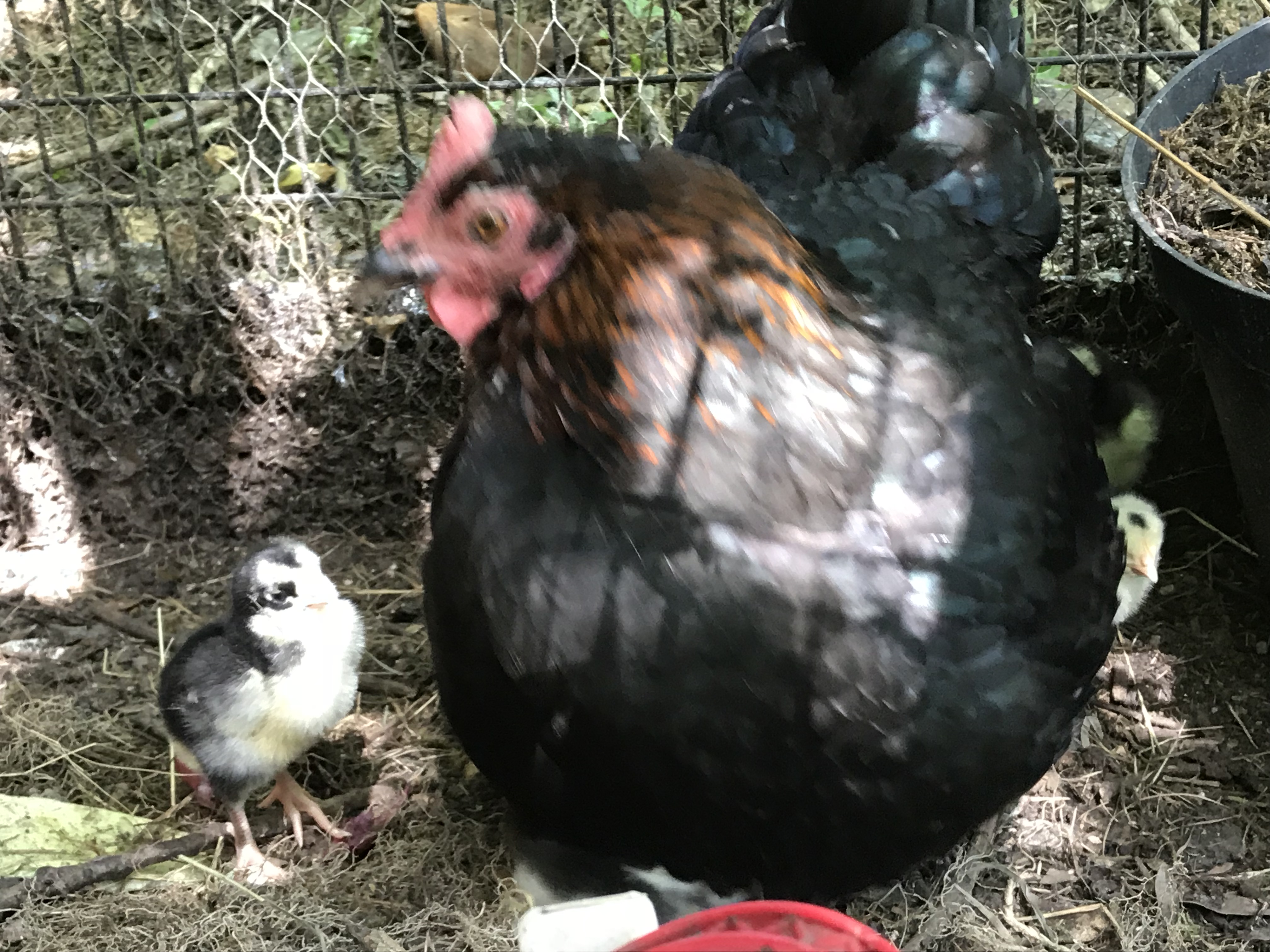
The six outside chicks are all doing well, and spend their days digging in the mud with mother hen, and snuggled underneath her in the nesting box at night. They regularly kick mud over their food and water, so it’s impossible to keep them clean. Whenever I go into the cage, the mother becomes very scary, and runs at me with her feathers all fluffed up, so cleaning out the water several times a day is less attractive than you might think. When I don’t back off, she gathers them all underneath her, and sits there, glaring at me. The chicks are unaffected, and like to come and see what I’m doing. I do hope they are not all cockerels.

The chick I helped to hatch didn’t survive. He lasted a few days, and we called him Gerald. The second day he was quite perky, and cheeped very loudly, but he never learnt to eat independently. Then I didn’t put the heat lamp on one night, because I thought it was warm enough, and in the morning he was very weak and very cold. I felt so guilty. He died a few hours later. That’s the trouble with animals—you don’t get many chances if you mess up.

The pond is looking pretty already, though needs some border plants to grow. The floating plant I bought, which I think is called a ‘water lettuce’ is doing well, and sending out shoots. The ducks are still caged (I’ll let them out soon, when I think the fox cabs have grown up and left) so the plants are all growing and not being eaten. Not sure how many will survive the ducks (none, I am guessing).

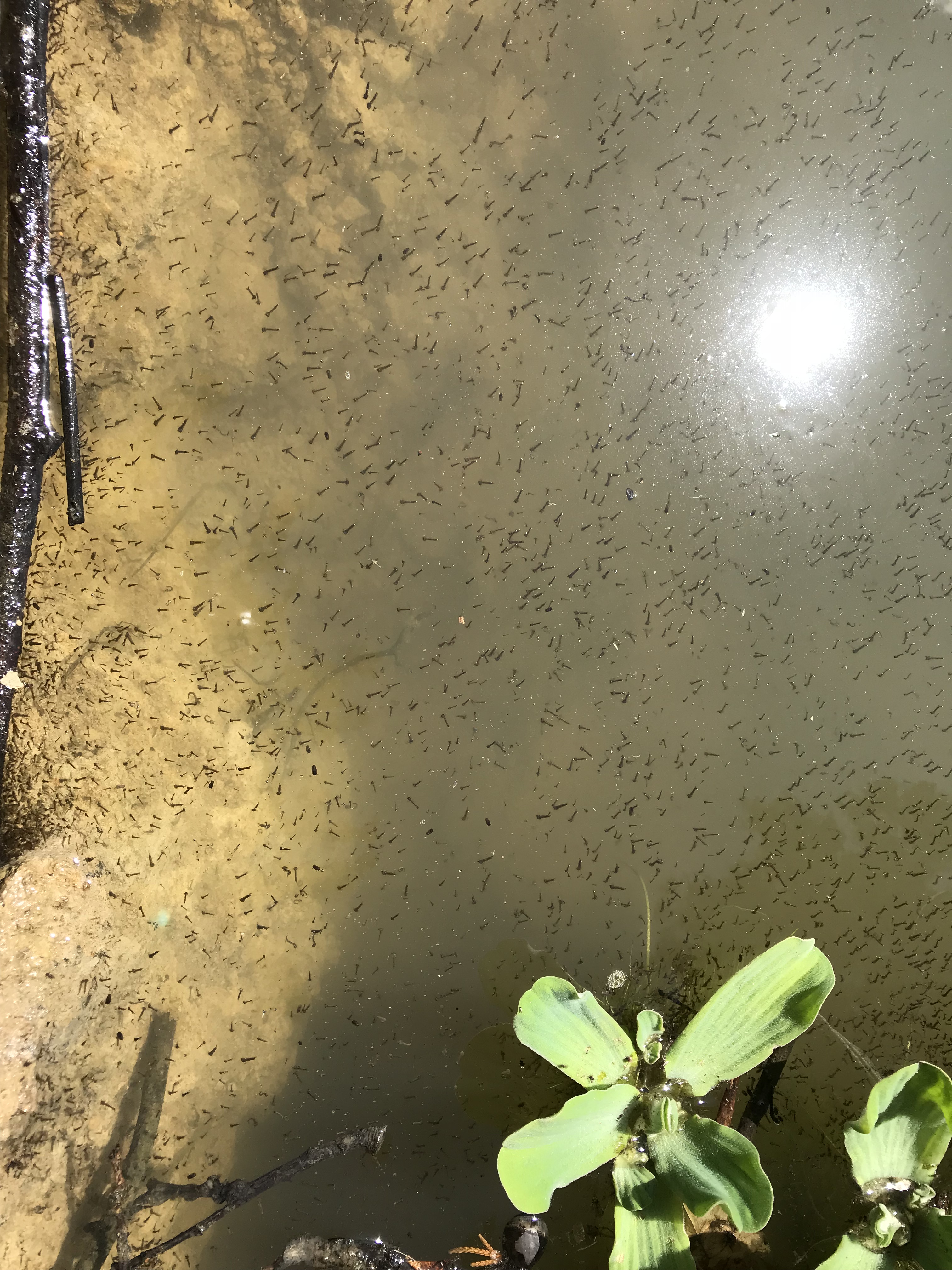
However, one thing that’s also growing well without the ducks to eat it, is mosquito larvae. The pond is crawling with them. Completely awful. I think every mosquito within a mile has been looking for water to lay in, and a nice new pond with no ducks seemed like a great place. We needed to get rid of them quickly, as once they develop into mosquitoes, they will be a right nuisance, and I don’t think we have enough bats in the nearby trees to eat them all.

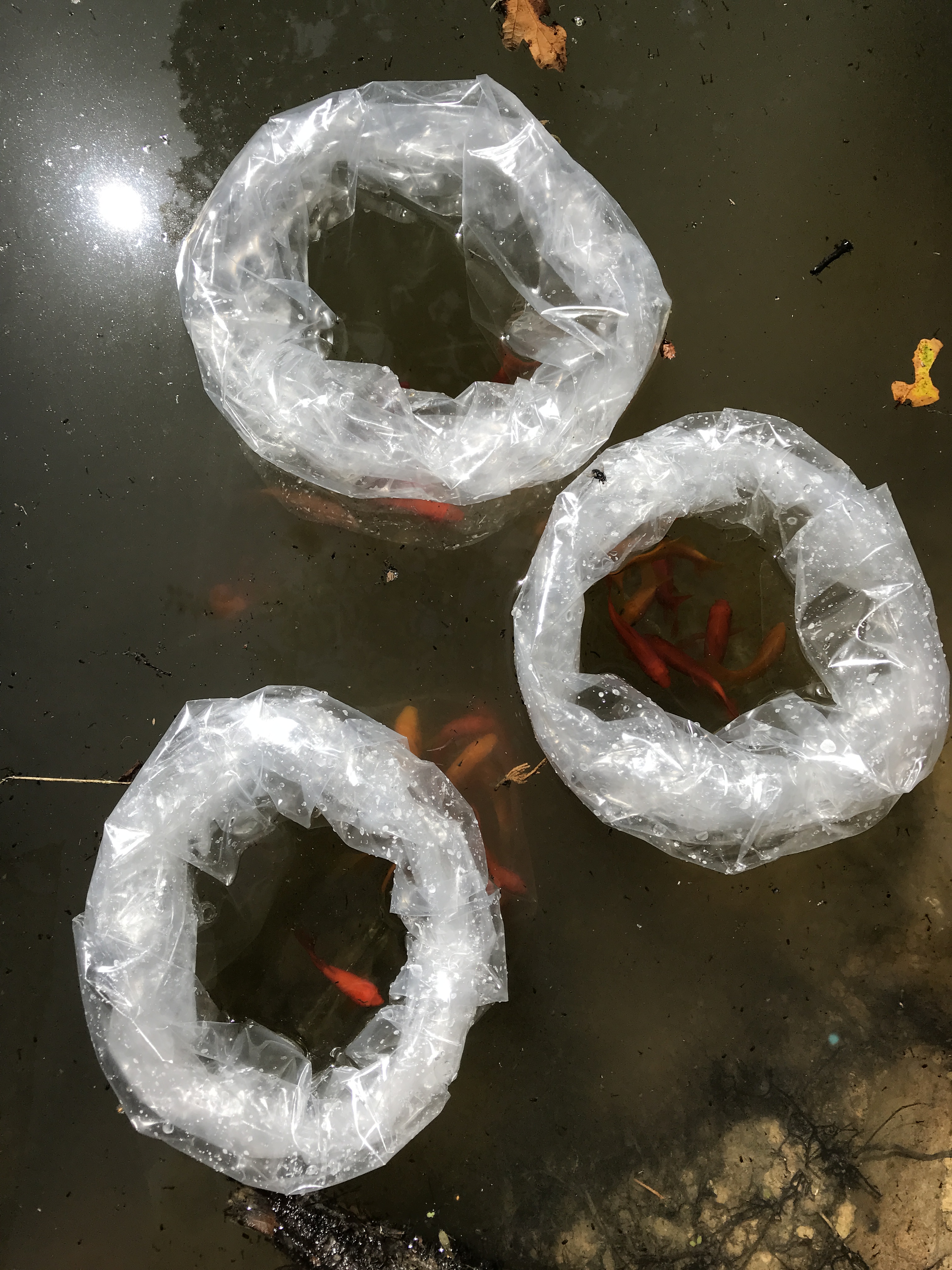
We looked online for possible solutions, but they all seemed to be either chemicals that would hurt the ducks, or available only in the US, so wouldn’t arrive before the larvae develop. We decided to buy some fish. I am pretty sure the ducks will eat them, though the man in the shop assured us: “Ducks won’t touch them”. We shall see. At least they will eat lots of larvae before the ducks are released. It would be rather lovely if they do survive. We bought fairly small ones because (they were cheap) the bigger ones are more sensitive. This family doesn’t do very well with ‘sensitive’.

Thanks for reading. I’ll let you know how things develop.

Take care, and don’t get bitten.
Love,
Anne x

Thank you for reading:
anneethompson.com
Why not sign up to follow my blog?

Exciting News!


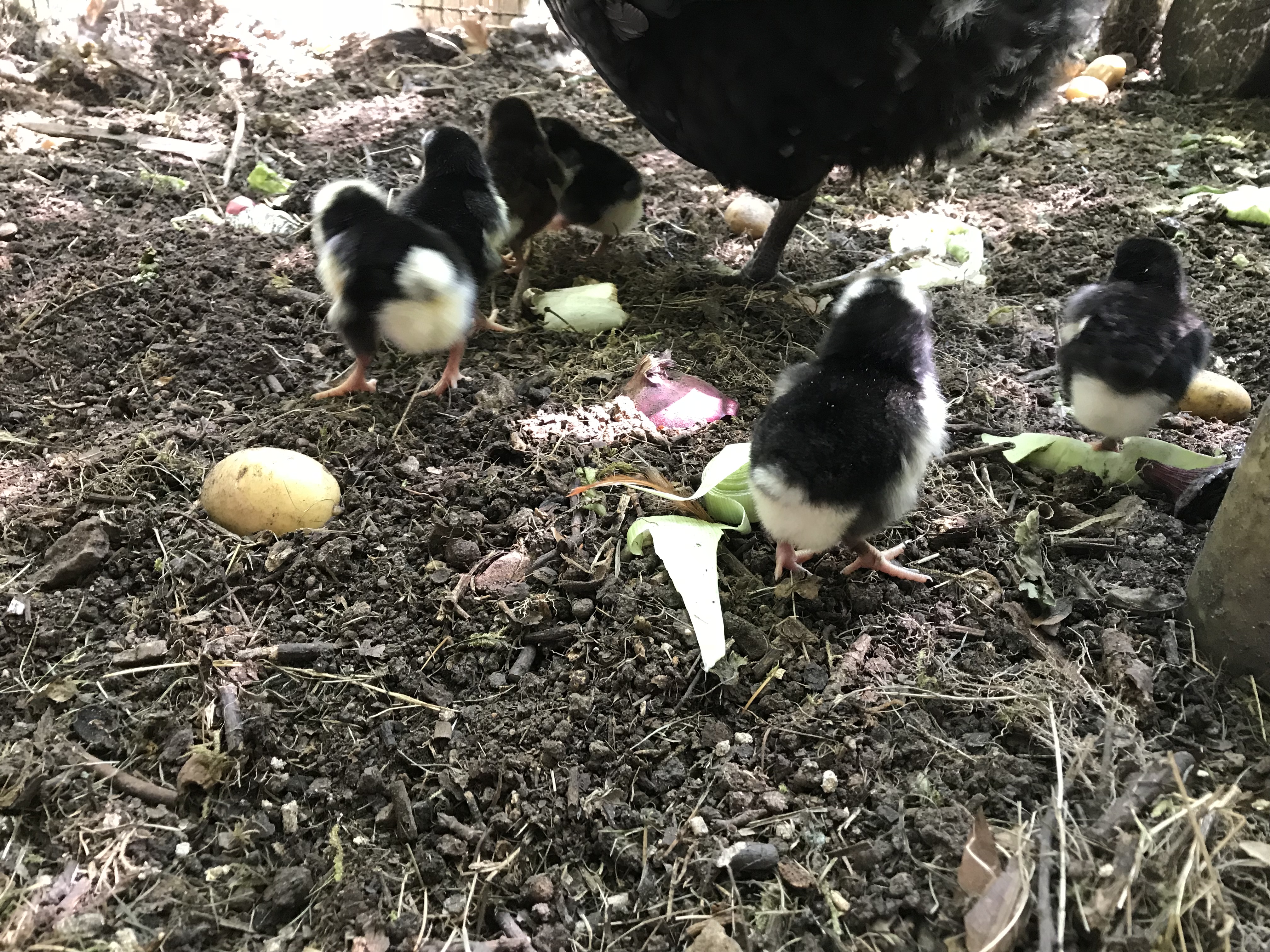
Well, when I went to feed the birds this morning, there, wandering around the aviary was mother hen with six chicks. They are so cute, at that fluffy, long-legged stage. They look like the fluffy chicks we made from winding wool around donut-shaped cardboard when we were children—did you ever do that? You know, the pom-poms that your mum tells you to make when you’re 8 years old and bored because it’s rained for twenty days in a row.

Anyway, they all look very healthy. I tried to take photos for you, but the sun is too bright, so they’re fairly hard to see.

Chicks won’t manage to eat the pellets I feed to the full-grown birds, so I went to get some chick crumb. As soon as I put it in the cage, on a little plastic saucer, the mum kicked it everywhere. The chicks then scurried around, picking each crumb from the dirt. I got them some water, because the big water pot will be dangerous (they could drown in it) and is now up on a log, so only the big birds can reach it.

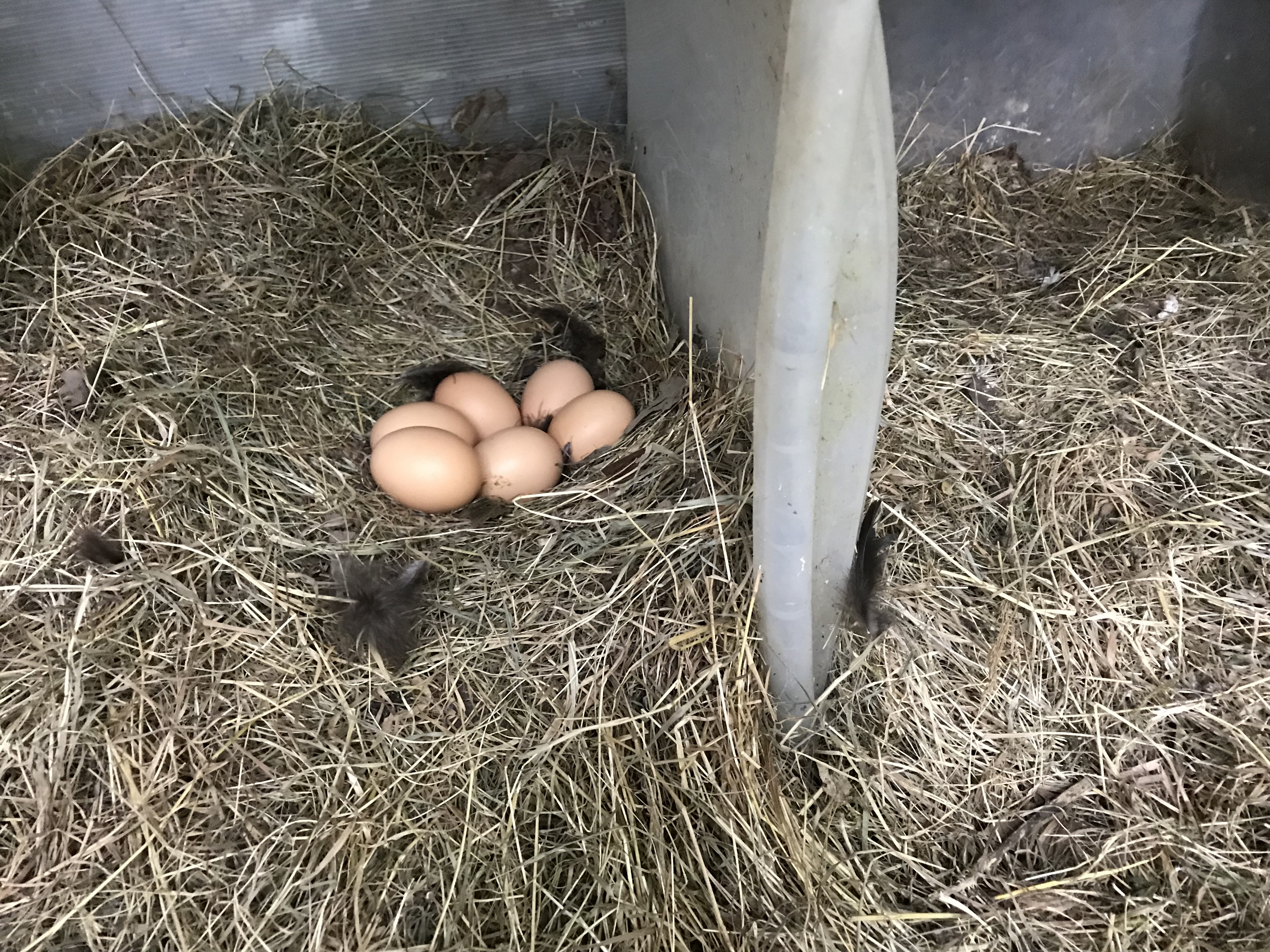
Then I started to clean out the nest. Once a hen has left the nest, she won’t go back in there while there is dirty hay or egg shells. There were two unhatched eggs. One had a chip in it, so I unpicked a bit more, and it started to cheep. I pulled off some of the shell, to reveal the unhatched chick, which was wriggling and cheeping. I guess it was just a late hatchling, and the others were ready to move off the nest, so the mother abandoned it. It seemed a shame to not give it a chance. It is a warm day, I covered it with hay in the hope it wouldn’t dehydrate too much, and have left it. It has two chances. I’ll let you know on Monday if it’s still alive. 

(My daughter told me this was a revolting photo, so look away now if you’re squeamish!)

I gave the cockerel some corn, as a treat, finished cleaning the cage, then left them to it. The mother had sat in a sunny spot, and all the chicks were under her. I do hope they survive. (I also hope—though I know it’s unlikely—that none of them are cockerels!)

I will post another blog on Monday.
Take care,
Anne x

(By the way, the egg-shaped things that look like potatoes in the photos are…potatoes. Don’t ask.)


Why not sign up to follow my blog?
anneethompson.com

Animal Update


Things are getting exciting in the garden! The broody hen is still sitting, and her eggs could hatch any time now, though are due in a few days. (I’m not sure if the warm weather we’re having will speed things up, or if it takes 3 weeks to hatch a chick, whatever the weather.) The cockerel is very bored, and tries to escape every time I go up to see them. I’m trying to give him cabbages and pots of mud to play with. But he’s still bored. Poor chap. He’ll have to stay caged at least until September, because the fox is still visiting.

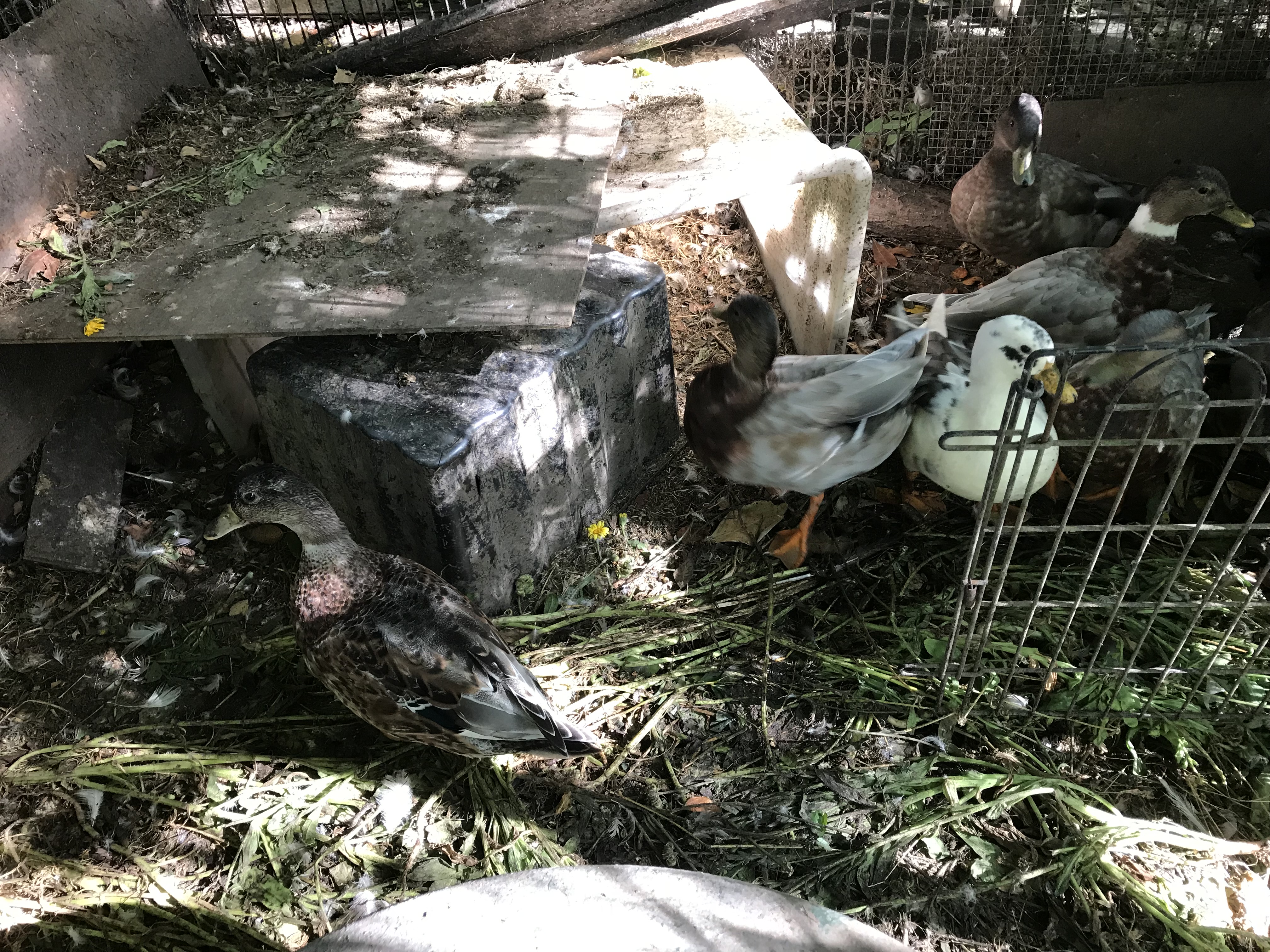
The ducks are less bored, as there are more of them, though I don’t think they’re very keen on being caged. The ‘duckling which hen hatched’ is now fully integrated as a duck, and although s/he hangs back a bit, is definitely part of the flock. They are quite hard work, as their main pastime is to fill the water bowls with mud. They need to do this to some extent, as the mud then dissolves, and when they drink the water they also absorb grit, which they need for their egg shells. Except, all my ducks are male, so they don’t lay eggs, which means it is mostly just annoying. They splash the water everywhere, and it’s fun to watch happy ducks playing, but it does mean that their cage is a mess, covered in wet mud at all times. I cannot imagine how much worse keeping a pig must be.

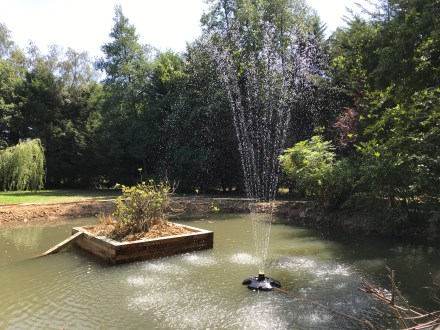
The pond is almost ready for them. It was rather scary when it was first done, as we were basically left with this big, clay lined hole. As we have never lived here during such a long dry season, we didn’t know how low the old pond would have been (it’s a water-table pond, so tends to fill and empty with the weather). However, looking at this huge dry hole was a worry. Then the storms came, and the pond began to fill, and—more importantly—stay full. Phew! We went and bought some plants in our excitement. This was a bit daft, as I know when the ducks are put in, they will eat them all, but I couldn’t resist. My favourite (which unfortunately also looks rather tasty) is a floating plant. It has roots which dangle under the surface, and the plant drifts across the pond. It will be killed as soon as we have a frost (unless I bring it in, I guess; perhaps we’ll have a bowl of water in a shed and try to keep it alive). But I am pretty sure the ducks will eat it. Ducks eat everything. Except, they did not eat the water irises that Grandpa gave us last year. They were yellow, and I rather fell in love with the purple and white water irises we saw in Japan; so I bought some when I saw them in the shop. They are tiny, and were quite expensive, so I have one of each colour. Am hoping they will spread.

The ‘outside cats’ are now free, as all the diggers have gone. They had fun exploring the pond before it filled. The old grumpy cat is now confined to the house, as every summer she gets an allergy, which makes her scratch her fur out. I didn’t catch it in time this year, as it started early (I guess due to the warm weather) so by the time I trapped her inside, she was already very itchy. She then began sleeping in her dirt tray; and using her dirt tray; which was completely revolting. I could not bring myself to stroke her (not that I do much anyway, because she bites me). I looked online, in case I needed to take her to the vets, and learned that cats will sleep in their dirt tray if they are distressed. I guessed being itchy was distressing her, so we waited, I tried to bath her (have the torn skin on my arms to prove it) and we tried to be kind to her. After a few days, she started to sleep in her bed. Happy days! It’s remarkable how low your animal-contentment levels can go.

I feel bad that she’s stuck in a single room, it feels like a prison (but she’s old and will poop in my house if I let her roam free). I therefore put the dog and Milly (one of the outside cats) in with her every so often, as she will tolerate both of them. (I cannot say she ‘likes’ them, as I don’t believe she likes any of us.) The dog takes her gifts. She is unappreciative.

Hope you have a good week.

Love,
Anne

Anne E. Thompson is an author of several novels and one non-fiction book. You can find her work in bookshops and on Amazon.
Thank you for reading.
anneethompson.com

*****

Nobody told me—or perhaps I wasn’t listening—that size matters


Nobody told me—or perhaps I wasn’t listening—that size matters

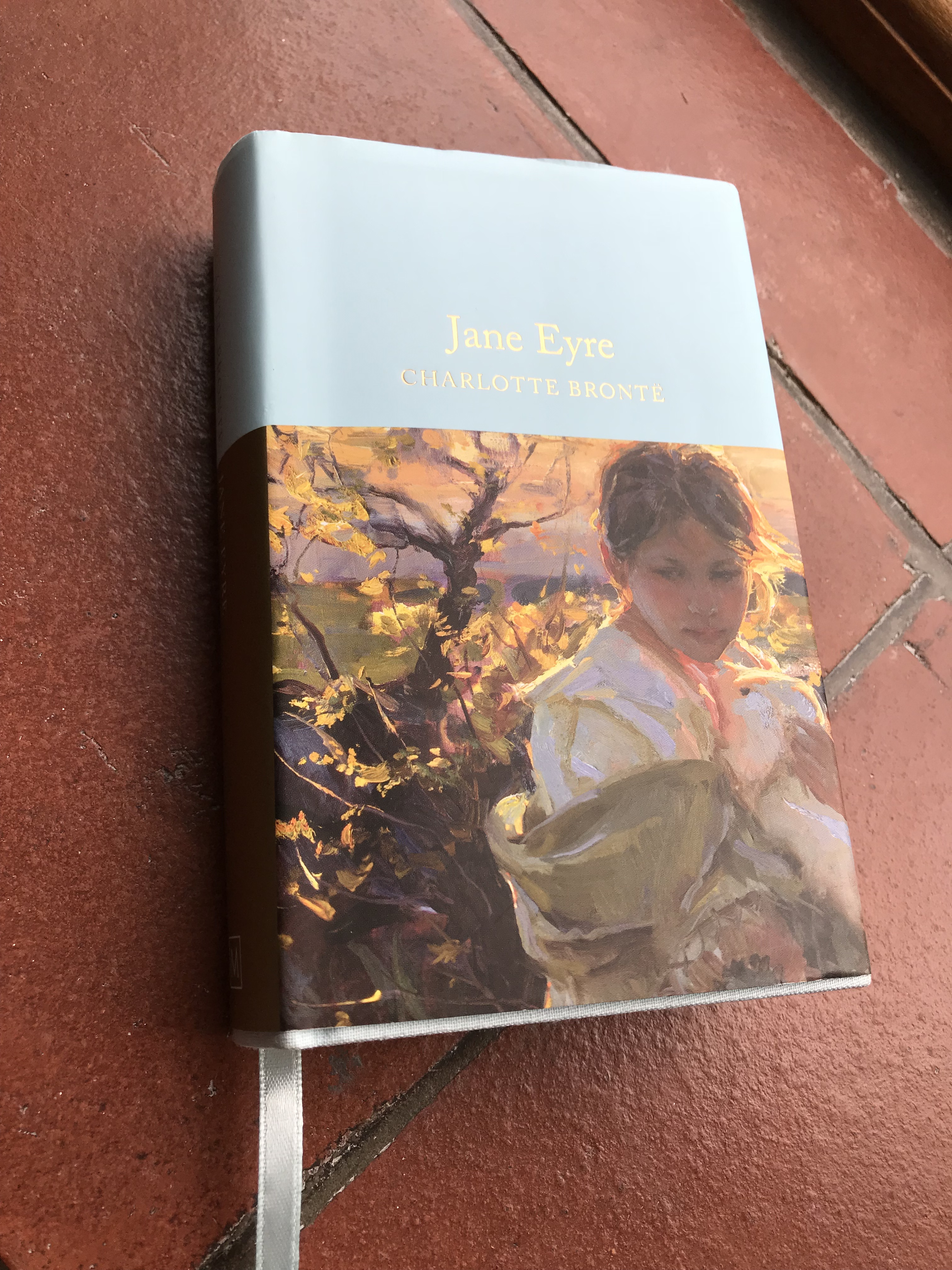
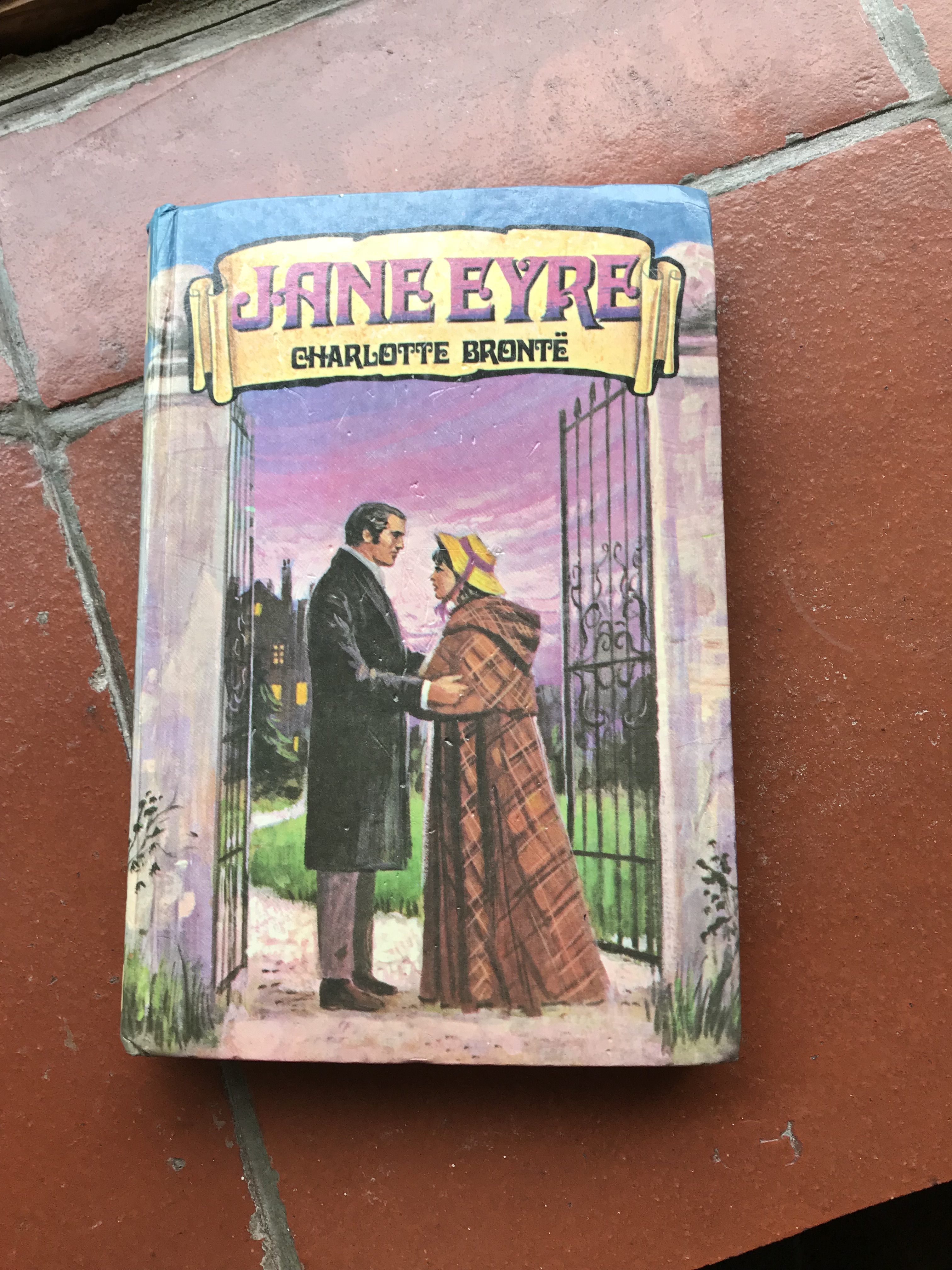
When I was 9 years old, my favourite book was Jane Eyre, by Charlotte Bronte. I had a hard-backed abridged edition, bought from a jumble sale at the end, when they were reducing all the books to a few pence each. That is how we acquired all our books in those days. I still have it. I used to read it late at night by torch light, while hidden under the covers, and I loved it. I don’t know, now I’m all grown up, how much I understood at the time, but something about the language, the passionate exchanges and the romance of a plain girl being loved by a strong rich man, intrigued me.

It remained my favourite book, until I was 17, and studied it for A level. Being forced to learn passages, to discuss the use of gothic imagery, and all the other awful things that English teachers encourage their pupils to do, completely killed the romance of the book, and I put it away, never to be read again. Until now. Because recently, I was thinking about how long it has been since I was completely engrossed in a book, and I remembered Jane Eyre, and my love for it. I decided to give it another read.

I bought another hardback copy, because I fancied reading it the old-fashioned way, rather than on my Kindle, and I began to read. Yet again, I was captivated by the story, mesmerised by the characters; and although I didn’t need to read it under the covers, I did find I was putting off things I ought to be doing, so I could read another chapter. It is a completely brilliant story, full of deep emotion, and passion, and despair. Really, if you haven’t read it recently, buy a copy and set aside a long weekend to forget about reality and fall in love with the dark figure of Mr. Rochester.

However, as I read, I was reading with ‘writers eyes’. This is bit of a hazard when you become an author, as every so often, something about the style of writing, or the placing of punctuation, catches your eye and whips you out of the story, and instead you analyse how the author has created a particular scene or atmosphere. (And oh, do I wish, I could create an atmosphere like Charlotte Bronte did.) Much of the punctuation, the placing of exclamation marks mid-sentence, for example, is very different to the standardised punctuation we use today. There are also lots of dashes—which leads us to the title of this article.

In an attempt to find out when punctuation was standardised, and whether Bronte’s punctuating would be acceptable today, I stumbled on some articles about dashes and their uses. Now, maybe everyone else in the world knows that there are three different types of dash, all different lengths, and all used differently. But I didn’t. Even though my manuscripts are returned by my editor with every dash changed, it has never occurred to me to wonder why. Now I know. Finding out how to type the dashes took a little longer, as I work on an old MacBook Pro (good old Apple!) and it’s not always easy to discover some hidden punctuation. Just in case you too have missed this interesting piece of English grammar, I will explain.

The first dash, used to hyphenate words, is found at the top of the keyboard, with the numbers. It is used, without spaces, to link words, like well-adjusted.

The next dash, slightly longer, is called an en dash (because it’s the length of a capital N). It is used to denote ‘until’ or ‘to’ such as in a list of dates: 1st July–3rd July, or a list of numbers: 22–32. On a MacBook, you press ‘alt’ and the hyphen key.

The last dash is one I use all the time when writing, but have always wrongly used a hyphen with a space either side. It is called an em dash (because it’s the width of a capital M). It denotes a break in thought, or instead of brackets. I used them—to make an interesting example—in the title. They don’t need spaces between the dash and the word, and on a MacBook, you press the capitals arrow, the alt key, and the hyphen key, all at the same time.

I now need to go and change all the wrongly written em dashes in my new book. But maybe I’ll read another chapter of Jane Eyre first…

Thank you for reading.

Love,
Anne x

***

You can follow my blog at anneethompson.com

*****

When you are useless…


Do you ever feel that everyone else is more capable than you are? They seem to have more friends, more purpose, to achieve more—and you feel as if you’re playing ‘catch-up’ the whole time? I think we’ve all felt like that at some time. The trouble is, we tend to evaluate ourselves in comparison to everyone else, we see what they’re achieving, and we feel less able, less capable; a bit useless really. In 2014, I really was, utterly useless. Let me explain.

In 2009, I was a working Mum, teaching in the local school, preaching occasionally in local churches. We had returned from a few years in New Jersey, the husband’s career was developing nicely, and all seemed good. It wasn’t, but it seemed good.

But then things started to unravel for me. I started waking each morning with headaches that lasted all day. I was forgetting things, and I felt, very slightly, as if I wasn’t quite coping. Teaching seemed more about politics and pleasing parents, and less about the pupils. Preaching felt more ‘head-knowledge’ than true. The family and house and animals all seemed slightly too much. I put all this down to stress, cut down on teaching, stopped preaching, and tried to get the home bit right.

Then one day, while emptying the tumble-dryer, I came up under the work-surface and knocked myself out (as you do). The next day I had an awful headache, so went to Casualty, where they did a CT scan. They told me that I had a small benign tumour, right in the centre of my brain. When I got home, I did some online research, and found this was very rare, often undetected, and sometimes caused “sudden instant death”. So not hugely reassuring.

I then started a whole era of brain surgeons, MRI scans, and frequent migraines. For five years, I lived in this rather tense bubble, because the medics said removing the tumour would damage the brain, so it was better left where it was and monitored. My migraines meant I was too unreliable to teach or preach, so I felt a bit useless. Except, God still had a plan for me. Because however incapable we might feel, God can use us, and life can be good and full of meaning (which is the point of this article).

Being ill is mainly boring—so I decided to learn Mandarin. I practised by teaching English in the local Take-Away restaurants, and I made some very special friends amongst the Chinese community. I often hurt too much to talk, but I learnt to listen.

In 2014, the tumour changed and became dangerous, so my surgeon took it out via a craniotomy. He cut through the right side of my brain, right to the middle, and patched me up with bits of metal. There I was, a middle-aged woman, with half my head shaved, an impressive scar, and a terrible memory. Pretty useless really. Plus, as they cut through the part of the brain that controls anxiety, I also became anxious about really daft things—like leaving the house to have coffee with my mum. (And although my mum’s coffee is pretty awful, it’s not something normal people become anxious over.) My rather dodgy maths became even worse, so counting or having any awareness of time became very hard. As the brain was having to make new, less efficient pathways, I grew tired very easily, and found too much stimulation (noise, lights) exhausting.

As a scarred brain doesn’t really heal, it just finds new ways of doing things, all those things, to some extent, are still true today.

However, the left side of my brain was undamaged, and my language was intact, and this became very important. Gradually, I grew more confident. I found that people didn’t mind the over-emotional woman with the terrible memory—in fact, some people preferred her. Leaving the house is still a bit scary, but I have learnt to force myself, to pray very hard (and to carry Immodium at all times!) The more I do, the more God enables me to do, the more I realise that I can trust him. It started with tiny steps, the “Please God can I have coffee with my mum without having a panic-attack” sort of prayer.

Since then, I have travelled the world, in fact last year I was walking through the slums of India talking to people, researching a book. Because now, I write books. When I was at the “leaving the house is too scary” stage, I started to write a blog. This developed into longer articles, and finally books. All the stories I have always had in my head, are now forming themselves into words, and I find I can write them down. Excitingly, people are buying my books, and liking them enough to buy the next one. Gosh!

So the next time you feel useless, are tempted to think that everyone else is doing rather better than you, remember this: You were created for a reason, and whatever happens, however weak, and dependent, and incapable you may become, if you lean on the God who created you, you will never be useless. Because there is a plan. We simply have to learn how to follow it.

xxx

These are my books. They’re available from book shops and Amazon. Please will you buy one to read this summer?

Following my diagnosis, I began to learn about how the brain works, and am fascinated by how controlled we are by our brains. I then began to explore other illnesses and disorders, focussing on psychopathy. Psychopathy is a mental disorder, not an illness, and it causes certain personality traits – most psychopaths are not violent, or ever convicted of any crime – but the way their brains function mean they have certain behavioural characteristics. As I studied psychopathy, reading books by neurologists, listening to psychopaths as they talked, and even finding two mothers of psychopaths who were prepared to talk to me about raising a psychopathic child, I realised that most people have no idea how a psychopath thinks, why they behave as they do. In response to this, I wrote two novels: JOANNA and CLARA. Both show how people are affected by the way their brain processes information—and the impact on people around them. (When selling these books, I am often asked by people if any US Presidents are psychopaths. I think if people read CLARA, they will be able to decide for themselves!)

Thank you for reading.
Anne E. Thompson


The latest, and best book (in my opinion). An exciting novel written in the first person, which shows how a psychopath views the world. The story encompasses the world of women trafficked in India, and shows how someone very bad, can be used to achieve something amazing.
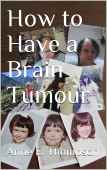
This tells all the things I wish I had known when first diagnosed. A helpful book for anyone with a potentially terminal illness. It shows how to find a surgeon, how to cope with other people’s fears, how to not be defined by an illness. It also has a few funny anecdotes – because even when you’re ill, it’s good to laugh.
Available from Amazon (you can get it free if you have a Kindle).
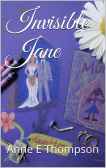
A hilarious romance for when you want to relax.
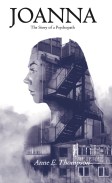
A gritty thriller, which shows what it means to be a psychopath, and how it would feel if someone in your family did something awful. (Because every psychopath has a mother.)

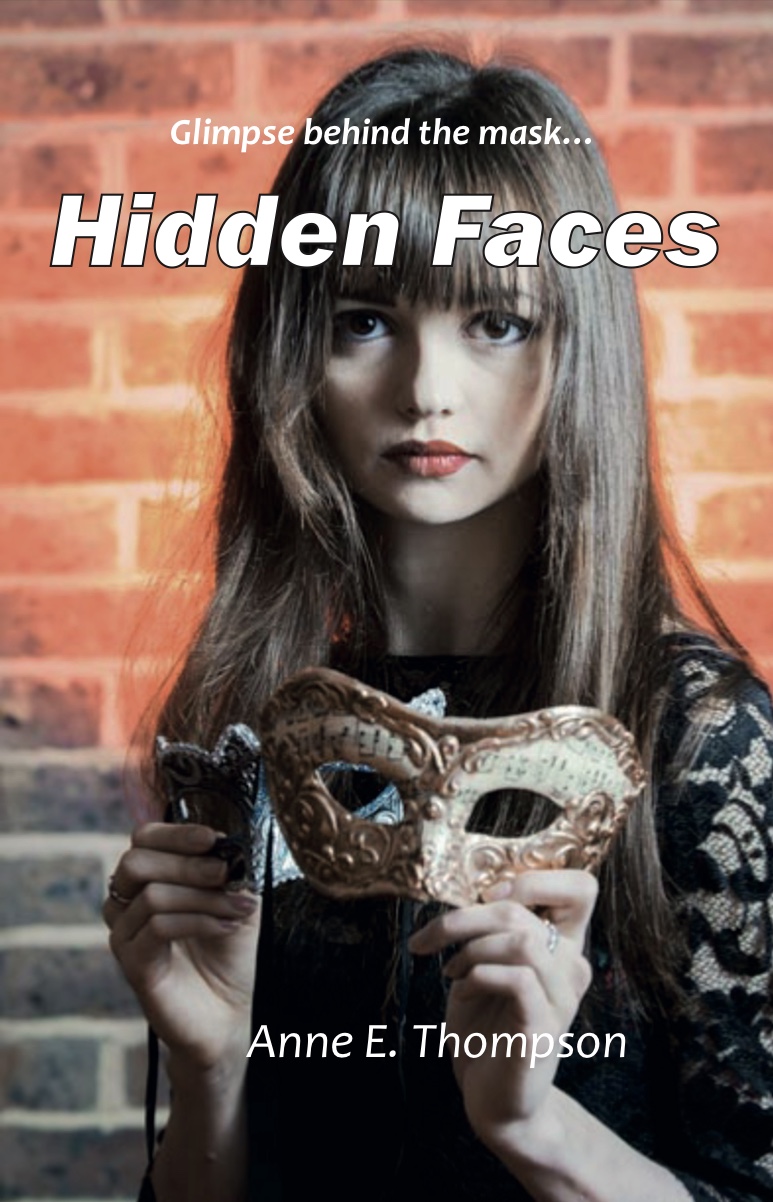
Hidden Faces by Anne E. Thompson.
An easy read, feel good novel, set in an infant school. An ideal gift, this is a book to make you smile.

An exciting novel, set in the near future. One family shows how they cope with driverless cars, new laws, and schools run by computers.
I missed the ambulance when it arrived.


I missed the ambulance when it arrived, sirens blaring, lights flashing, roaring up my driveway. I wasn’t there, I was at Lunch Club, serving fish and chips because the week was too busy to cook, so I had cheated, and ordered take-out food. But it meant I missed the ambulance, when it came.

I didn’t know there’d been an accident, until I arrived home, and was met in the driveway by one of the men working on the pond. He asked if I’d been told, if someone had phoned to tell me what had happened. I instantly assumed that one of the cats, who I’d been unable to shut away that morning, had been run over. The workmen were using a digger, and a tip-up truck, to move the soil where the pond will be, and I thought one of the cats must have run in front of a vehicle. I hid behind my sunglasses, and waited for him to tell me, not sure that I was going to react very well. So when he told me that someone had been injured by the bucket on the digger, and they’d called an ambulance as they thought his leg might be broken, I tried hard to not say:
“Oh good, I thought you’d killed one of my cats!” Instead I managed to look concerned (which I was, after I recovered from the relief of not having lost a cat) and asked how he was.

Apparently, whilst changing the bucket on the digger, it had bashed into his leg. He had managed to crawl up onto the lawn, and call one of the other workers, who phoned for an ambulance. I thought about the amount of silt that had been there a couple of days before, and how falling over in that quicksand would have been so much more horrible.

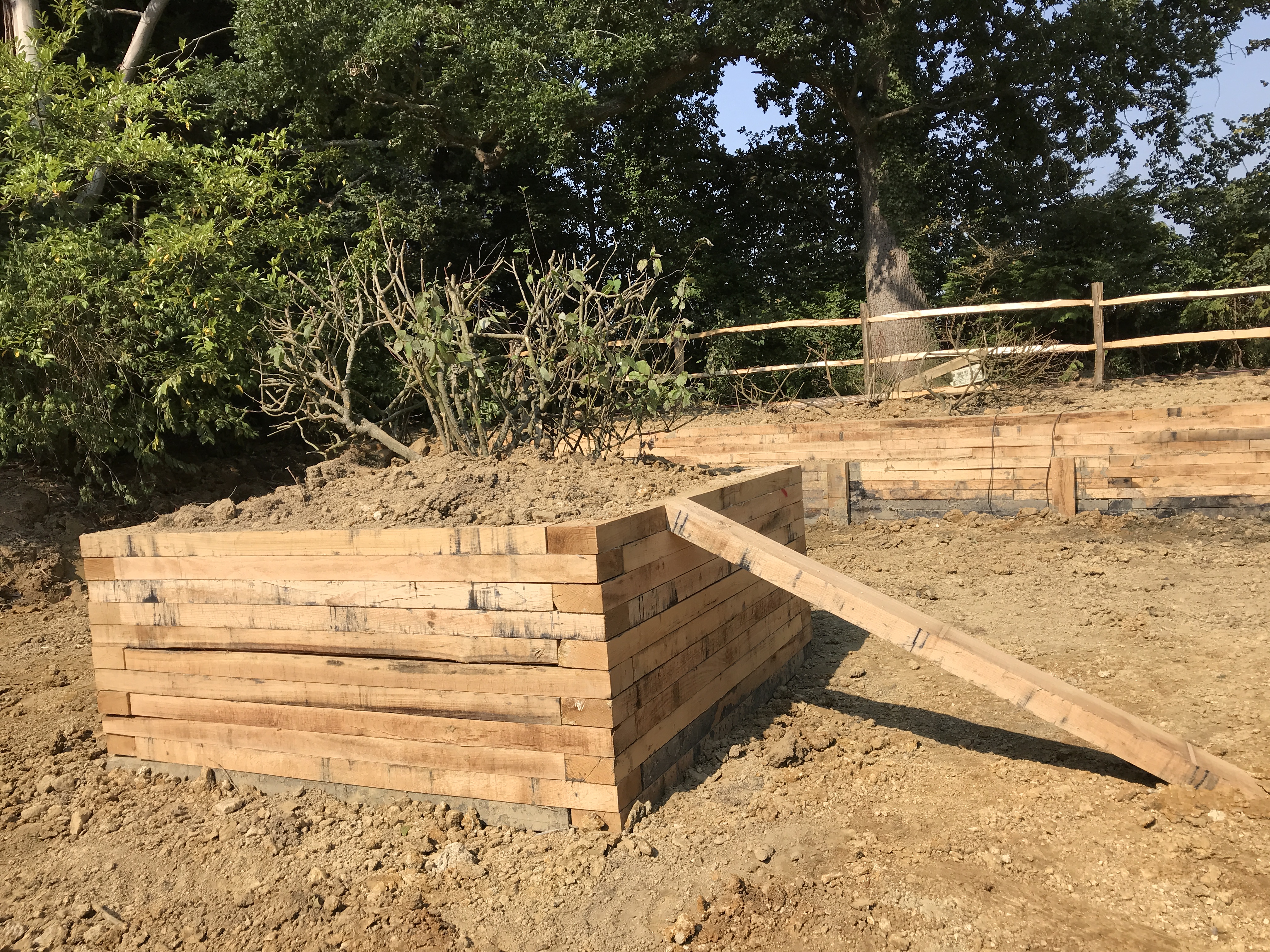
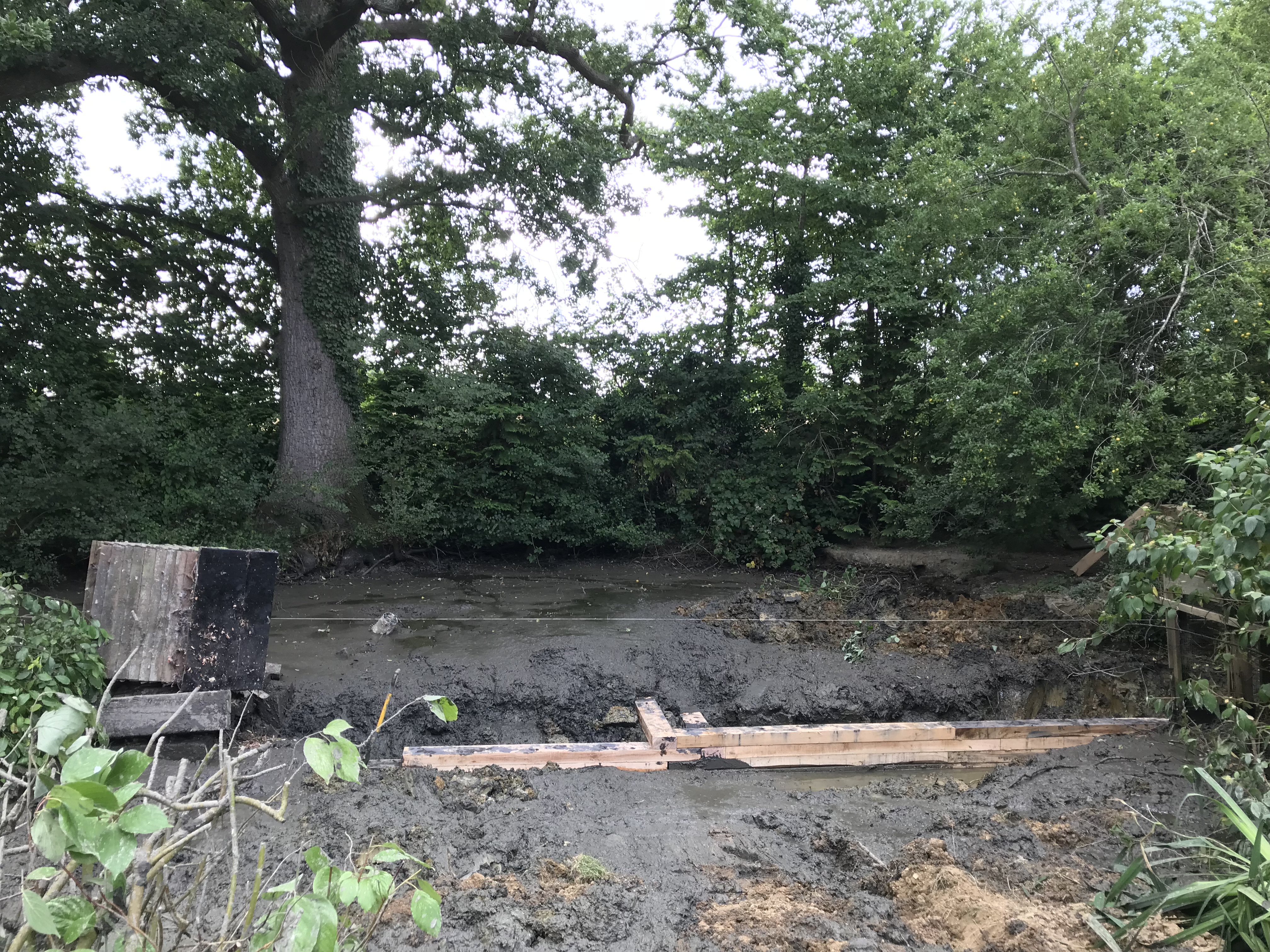
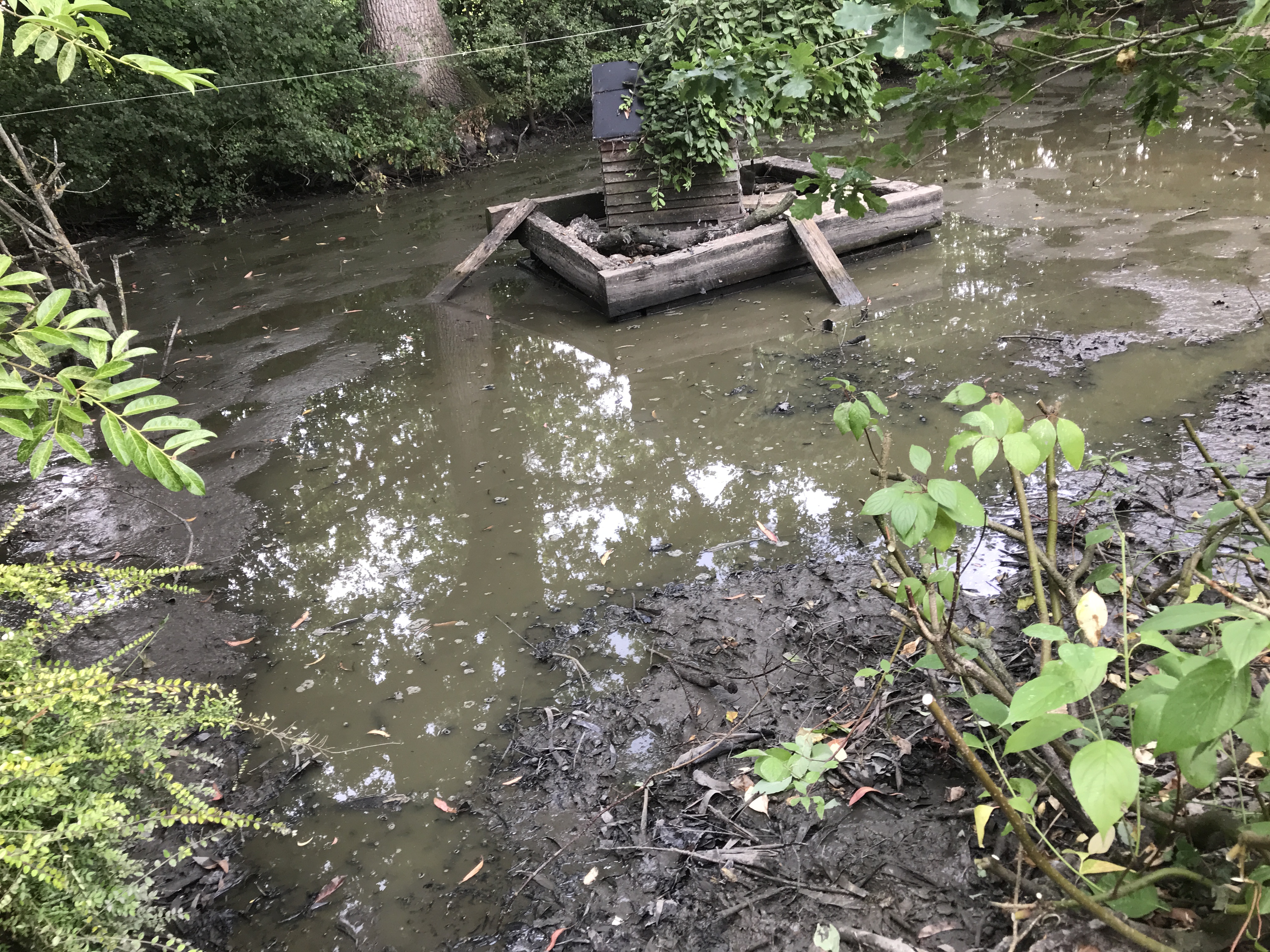
Other than injuries, the pond seems to be pretty much on track. They pumped out the water, and dug out the silt – which was several feet deep and an evil grey colour. Then they began to build the new wall with sleepers, backing them up with clay so they don’t leak. Next they will dig down, to where the water-table is (the pond is fed by the water table, which is very high just there, and tends to flood that lawn after lots of rain).
The island is a rectangle of earth that they left – if you dig around earth that is already compacted, it makes a much better island than one that is constructed with sleepers and then filled in. They will taper the edges, so the ducks can clamber out when the water level drops. One of the problems with a water table pond is that it’s very full after a lot of rain, and very shallow in dry months; so it’s hard to grow aquatic plants as they’re either submerged or dry. But ducks tend to eat absolutely everything anyway, so plants aren’t really possible unless you fence them.
At the moment, it’s all rather scary, as the lawn looks like a building site and the pond is empty. I do hope the new pond is okay, and it will be easier to stop it silting up as it’s further from the trees.

The ducks are complaining about being in a cage, and I’m constantly refilling their water bowls, as their main activity is splashing the water all over the sides. The chickens are desperate to be free, and try to escape every time I go up to see them. Thankfully, the hen has now gone broody and is sitting on her eggs. They should hatch in a couple more weeks. As the cockerel is half bantam, I’m not sure if the chicks will be small. It’s a time of waiting. I will let you know how things turn out.

Oh, and in case you were wondering, the leg wasn’t broken, but was seriously bruised, so needs a few days of rest. But my cats are fine…

Thank you for reading. Have a safe week.

Love,
Anne x

*****

anneethompson.com

The Royal Academy Summer Exhibition


Have you visited the Summer Exhibition this year? There are worse things you could do. The annual exhibition at The Royal Academy of Art is always an eclectic mix, as it has an open submission, so the great and famous are displayed next to Aunty Mabel—assuming Aunty Mabel has caught the eye of whoever is this year’s coordinator. This year, Grayson Perry was in charge (he’s the man who resembles a pantomime dame) and, like his dress sense, the exhibition is flamboyant and unexpected. With over a thousand works of art on show, it’s impossible to even notice them individually, never mind trying to assess each one. They range from the completely brilliant, to the absolute rubbish (in my opinion). But overall, the impression is one of colour and fun and strong political statement. This year’s show feels very contemporary, and I for one enjoyed it.

Much of the art, I really do not understand. When I got home, I tried to find online reviews of individual pieces, or at least explanations, but there weren’t any. Perhaps there are too many for the critics to cope with. I will therefore share with you my own highlights and lowlights of the exhibition. I am not an artist, so I expect I missed the point on some of them. However, as art is subjective, I will go ahead and give you my brutally honest review.

 When you first arrive, you’re greeted by this stupendous piece of haberdashery. It is huge, and for anyone who has ever sewn anything and agonised over straight seams, it epitomises skill. It is knitted and sewn and embroidered. I have absolutely no idea what it is meant to signify, or what will happen to it after the exhibition (it will be a nightmare to dust) but I loved it.


 The next gallery is painted bright yellow. This made the room very exciting, even if you didn’t like the art. In fact, I would say that this year, all the galleries could be viewed as a whole—you walked in, and thought “brilliant” or “terrible”, without needing to examine the individual works. Some were displayed so high that you couldn’t see them anyway (unless you happen to have a stepladder in your handbag).

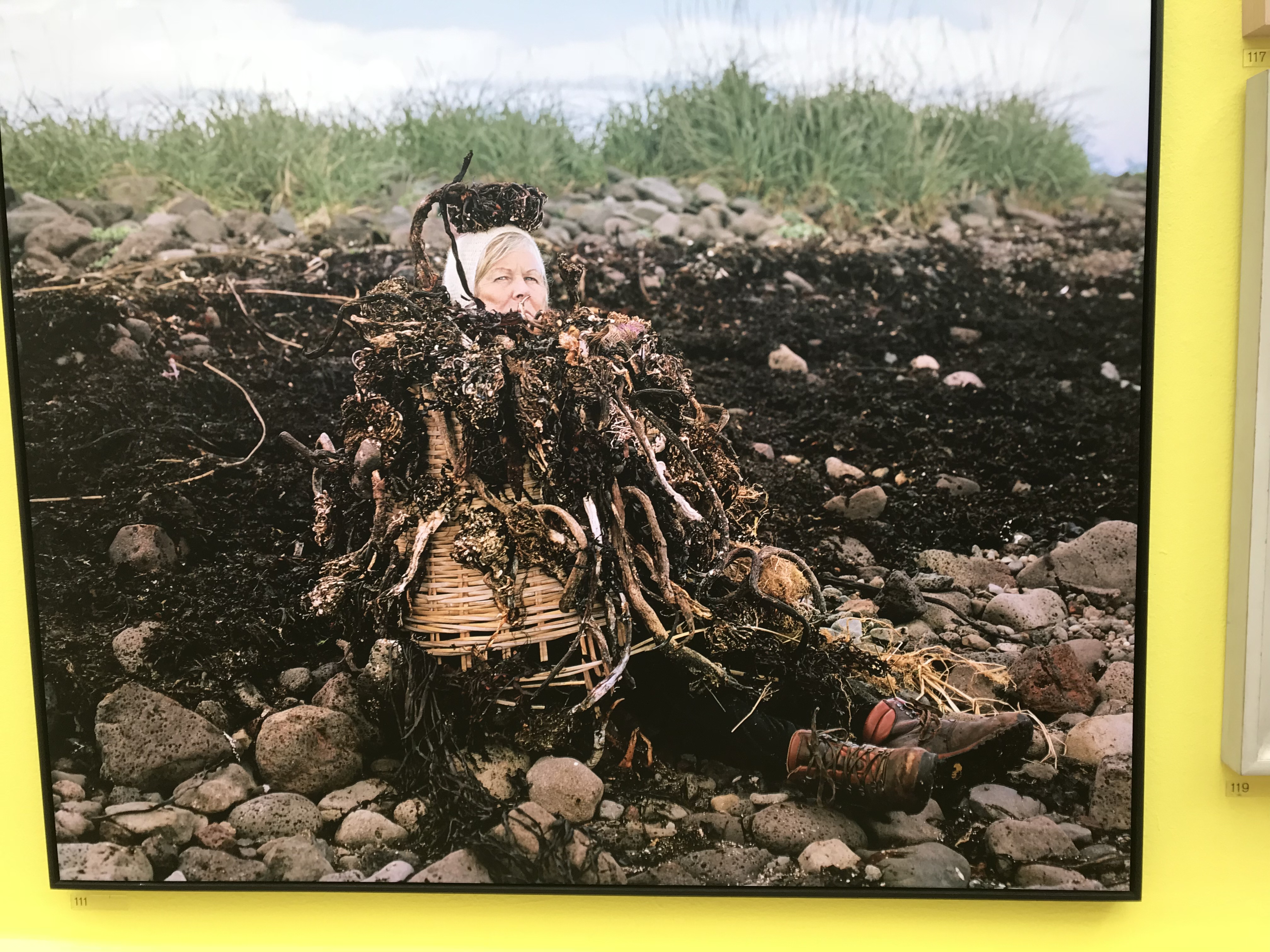
This particular photograph made me laugh. I assume the model is the artist’s mother. No one else would be prepared to dress up as a compost heap. She doesn’t look especially pleased. Hopefully she’s proud of him now.


 This gallery also had a picture by Banksy, with the ‘Vote Leave’ slogan changed by a heart shaped balloon to ‘Vote Love’. It was for sale at the price of £350 million (bit sarcy).

There was also a large portrait of Nigel Farage. Above it was a portrait of a man being sick. Which I’m sure was a coincidence.

The picture on the left was simply a nice picture—one of the few on display that you might actually choose to hang in your own house. It was wonderfully chocolate-box, and little children could write whole stories about it.


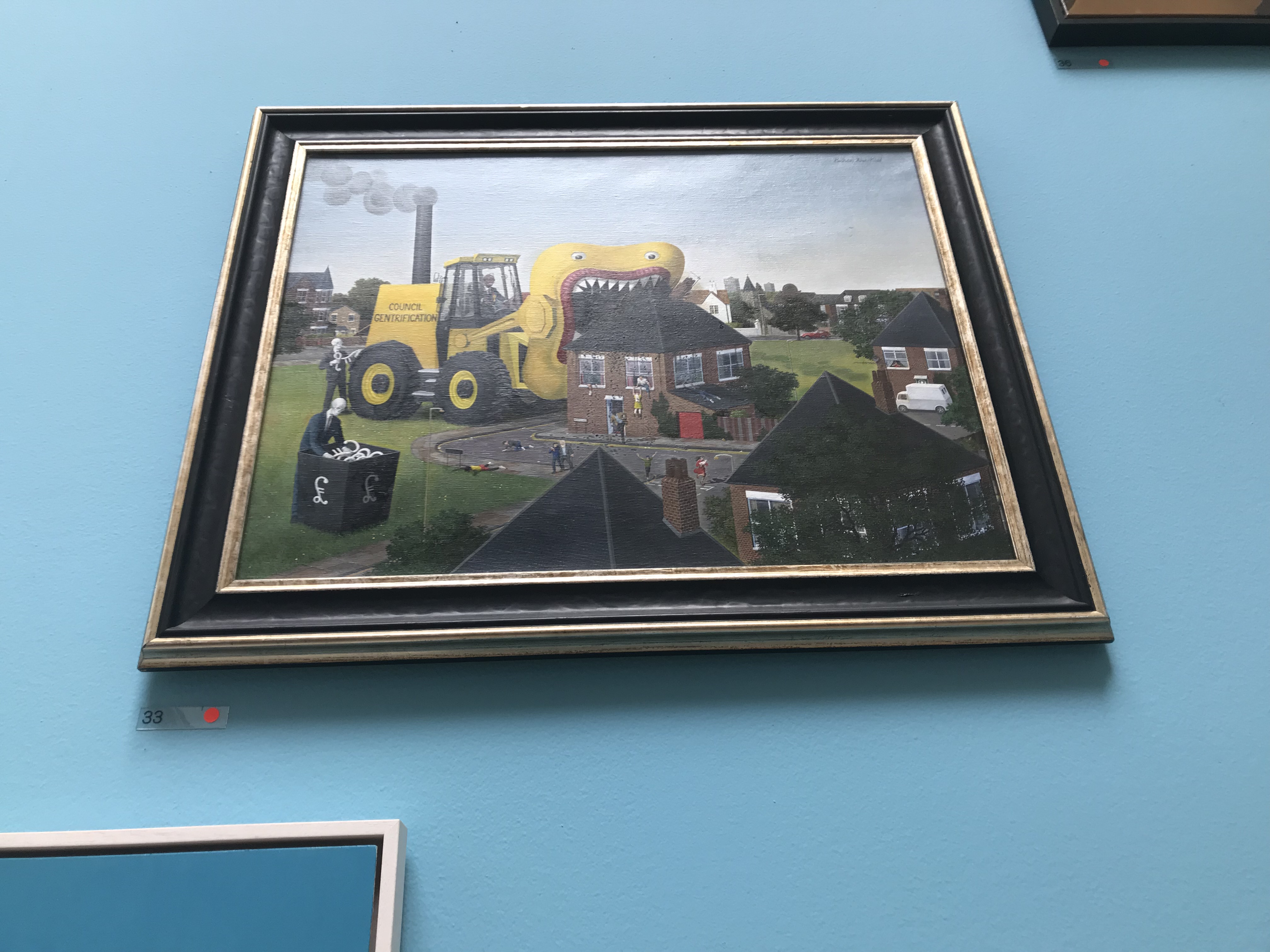
 Talking of stories, this should definitely be used for the cover of a book.It had some wonderfully clever imagery, with people of different heights, and all sorts of political messages.


 Here’s one for my Aunty Margaret. Not sure she’s ever knitted/crocheted anything quite like this. Something to aspire to perhaps. Or perhaps not. It wasn’t something you really wanted to look at for long.


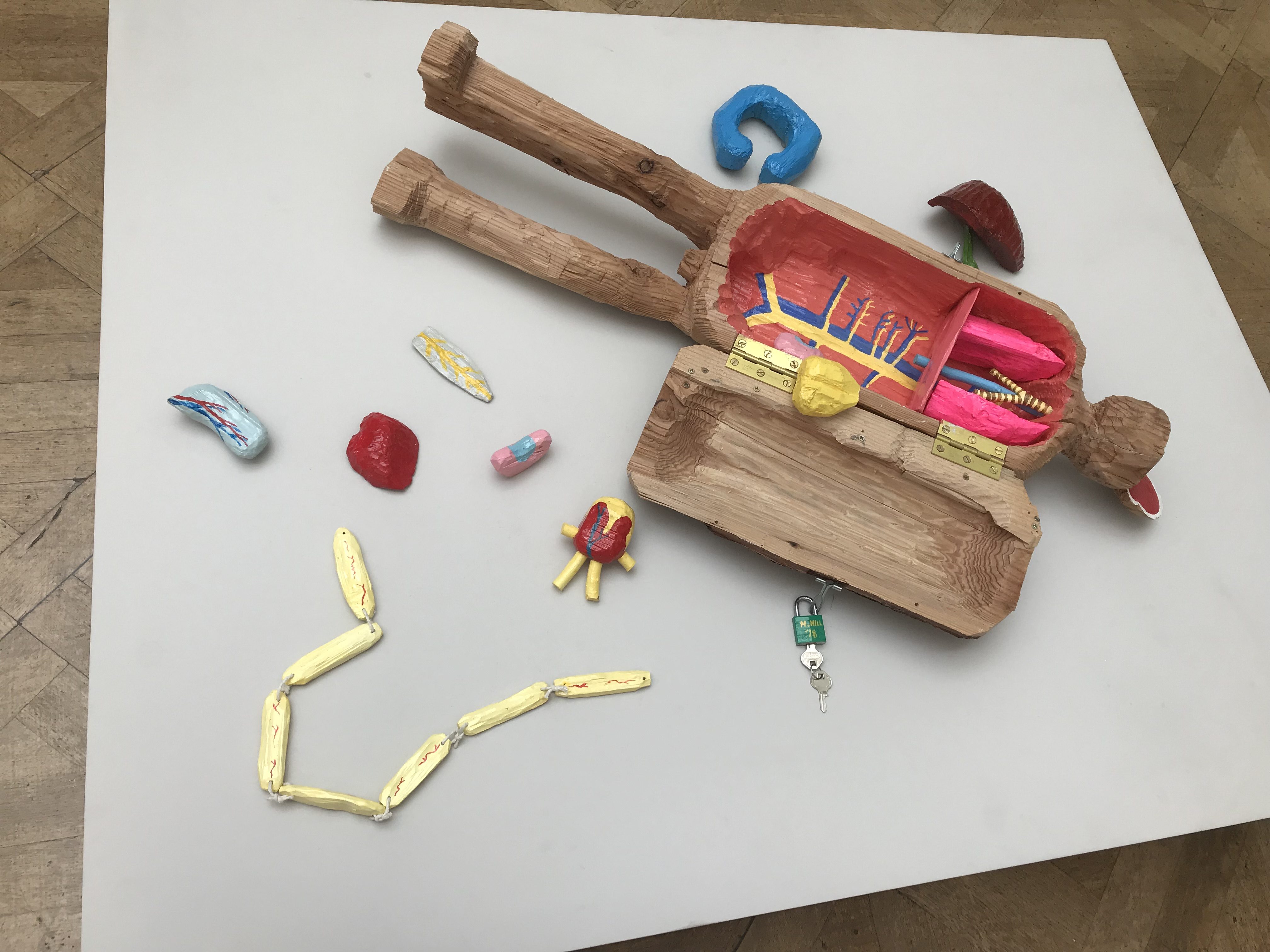
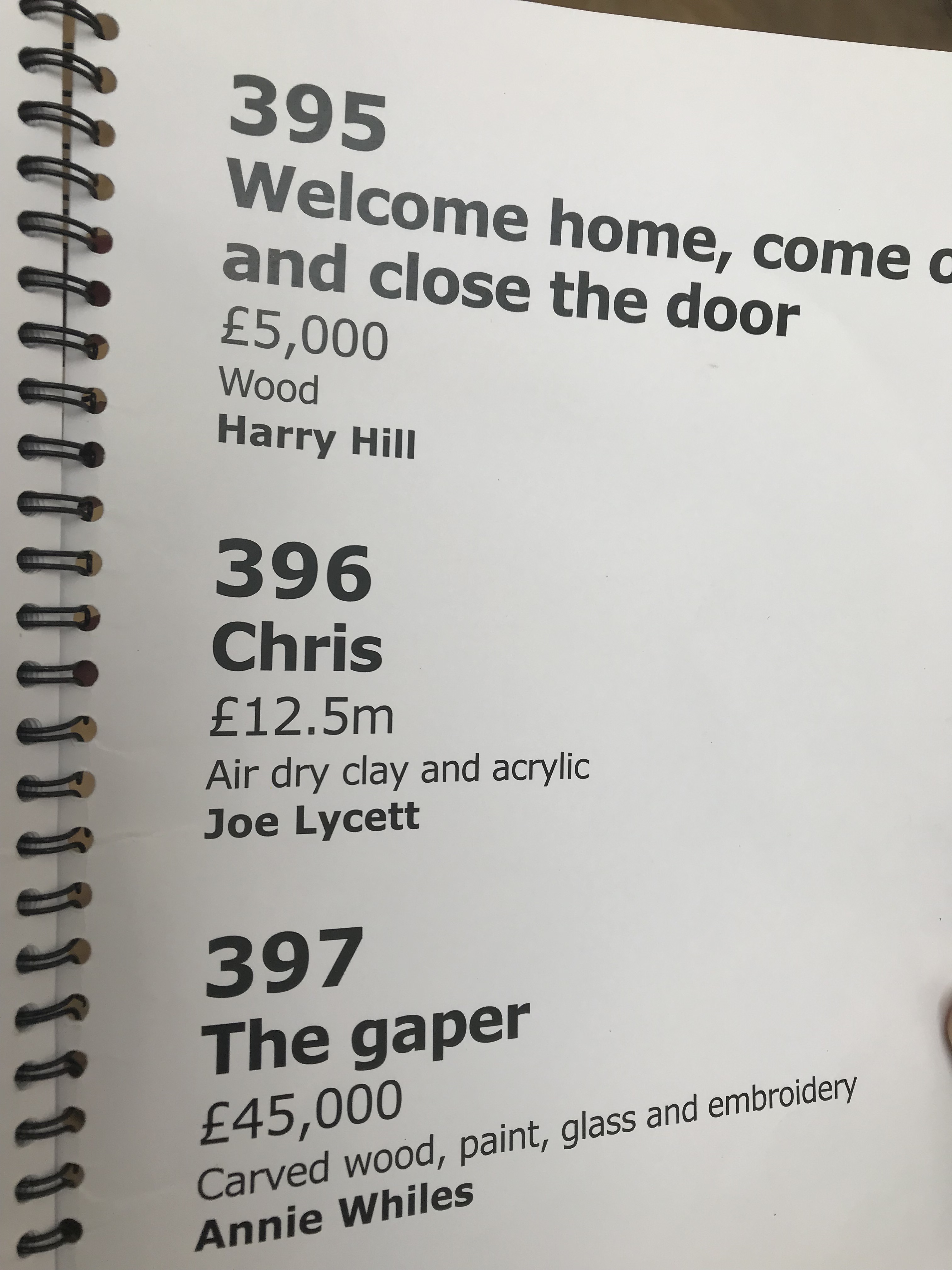
 This one was by Harry Hill, who apparently used to be a medic. I didn’t like it. But I guess someone did. It reminded me of the game: ‘Operation’ which we used to play when I was a child. (I didn’t like that much, either.)


 I have no idea why anyone thought this head was worth displaying. If it had been in a primary school art room, it might have been considered good. But not here. And not at that price. 


 This was brilliant. Completely brilliant. It is made from broken egg shells. Wow. Glad I wasn’t responsible for transporting it.


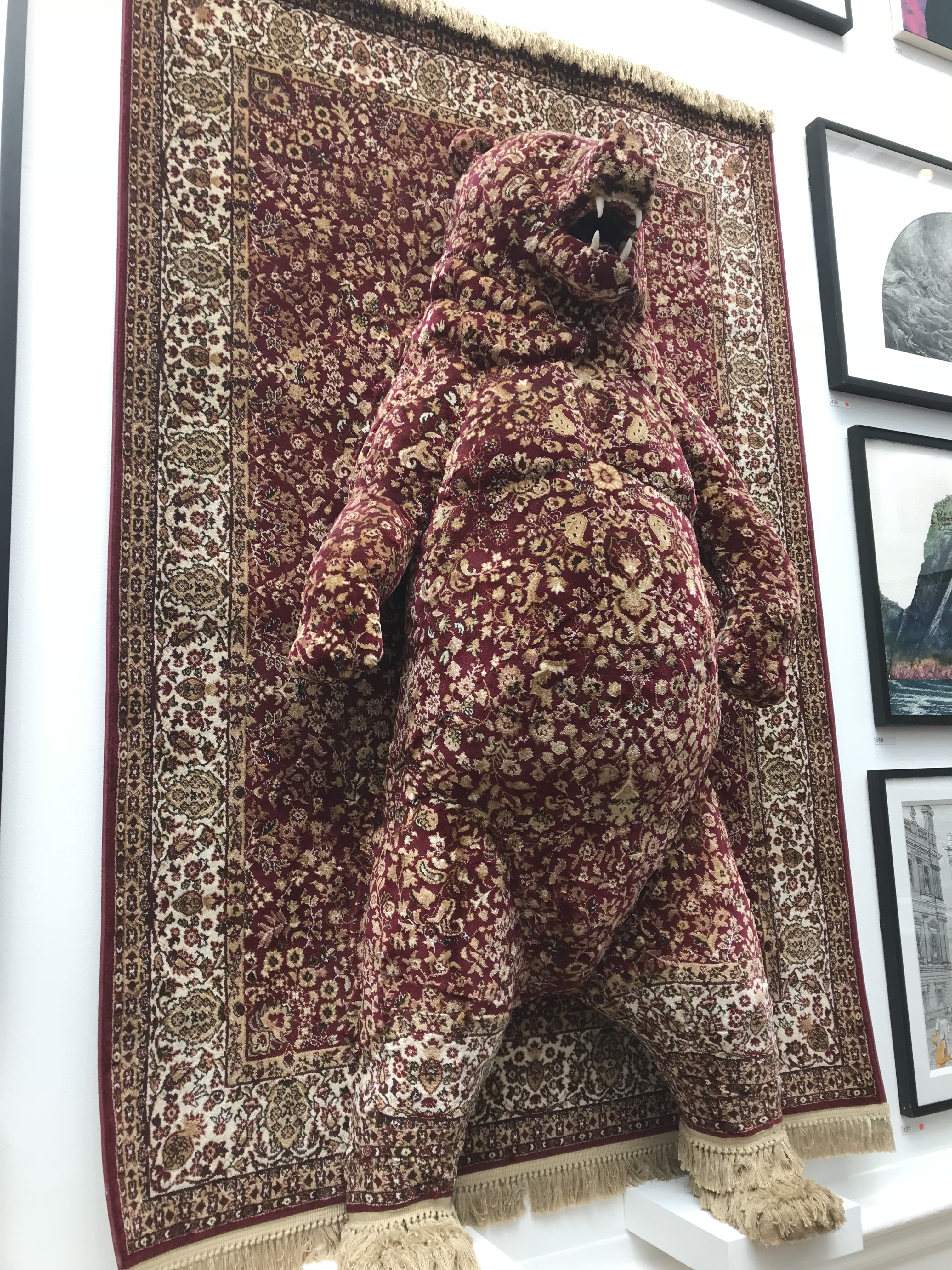
 The carpet bear was another favourite. Though again, I imagine the artist’s mother was somewhat cross when she came home and saw what he’d done to her best rug.


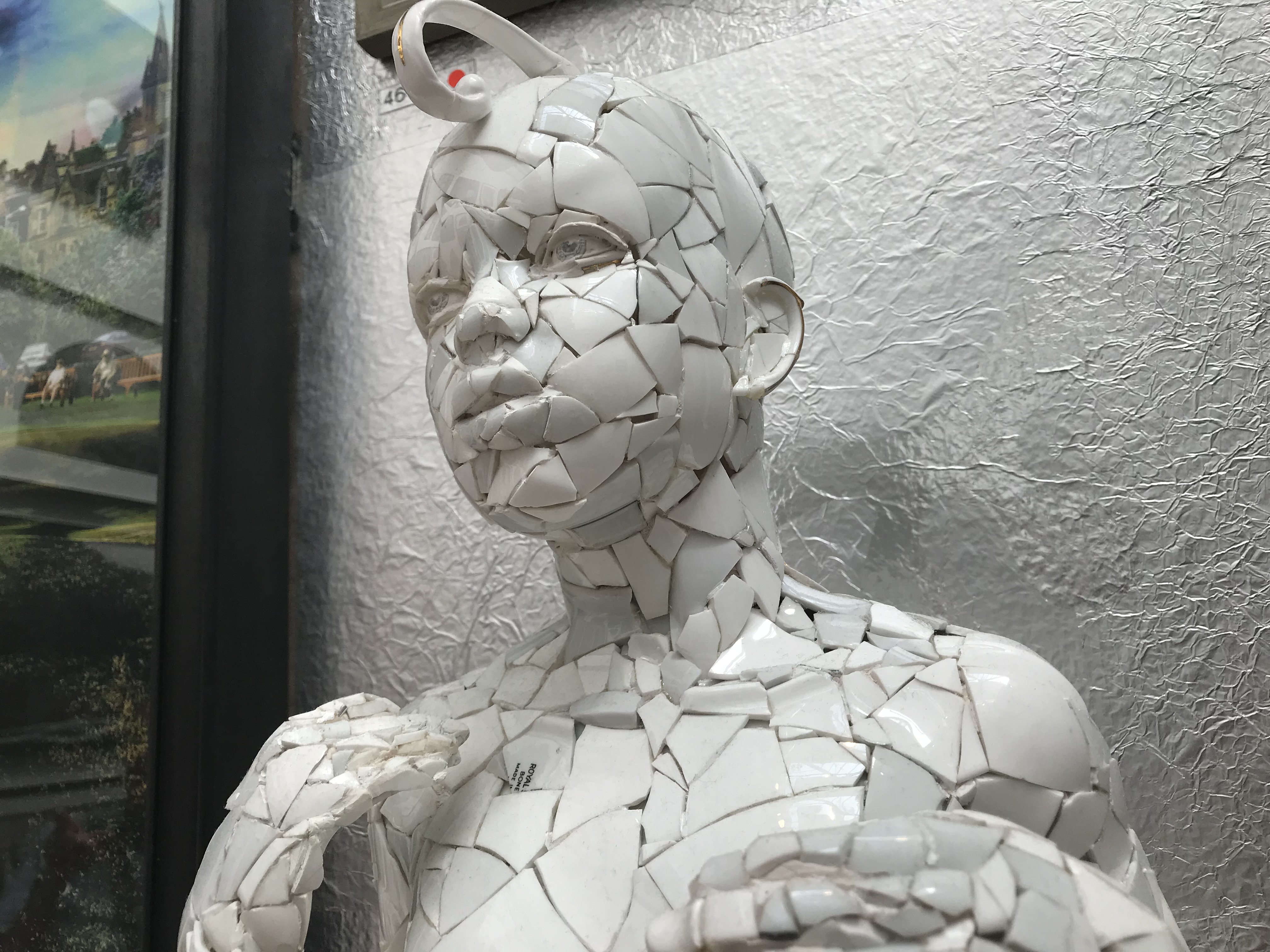
 On the topic of broken things and mothers, next time you break a tea-cup, here’s what you should do with it. A brilliant way to avert anger. It wasn’t until I spotted the handle that I realised it had once been a cup.


 This was a great picture that was spoilt by the terrible lighting in the gallery. I’m not sure why we needed lights on anyway, as the sun was bright enough. Several works were very hard to see. Maybe the exhibition is best visited after dark. Or on cloudy days.


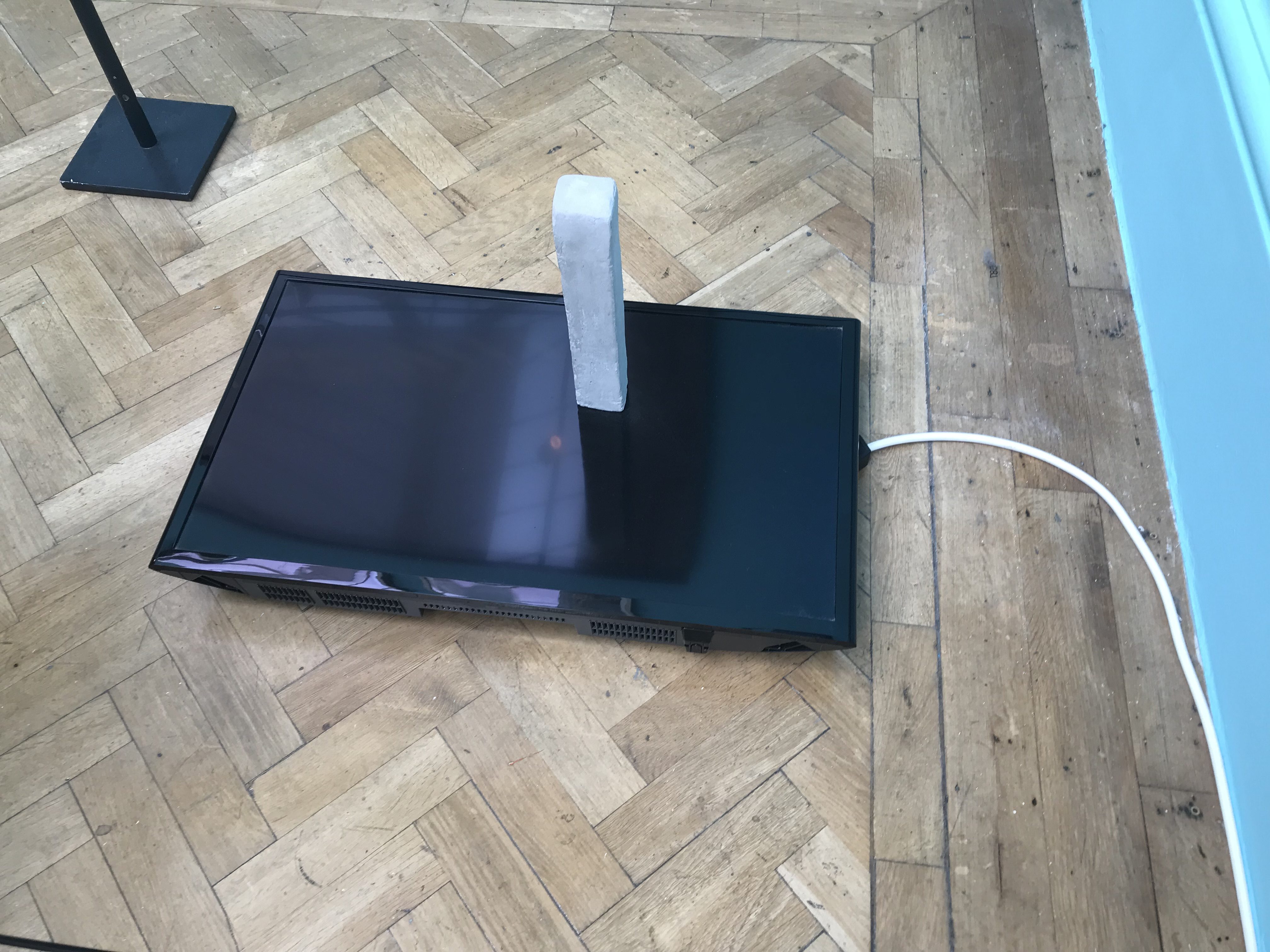
 This one would be impossible to spoil. It was an upturned television and a block of concrete. Why? No idea. My best guess is that it was put out for the bin men and someone took it to the academy by mistake. It said nothing to me, and was ugly. (Sorry if it was your child who created it.)


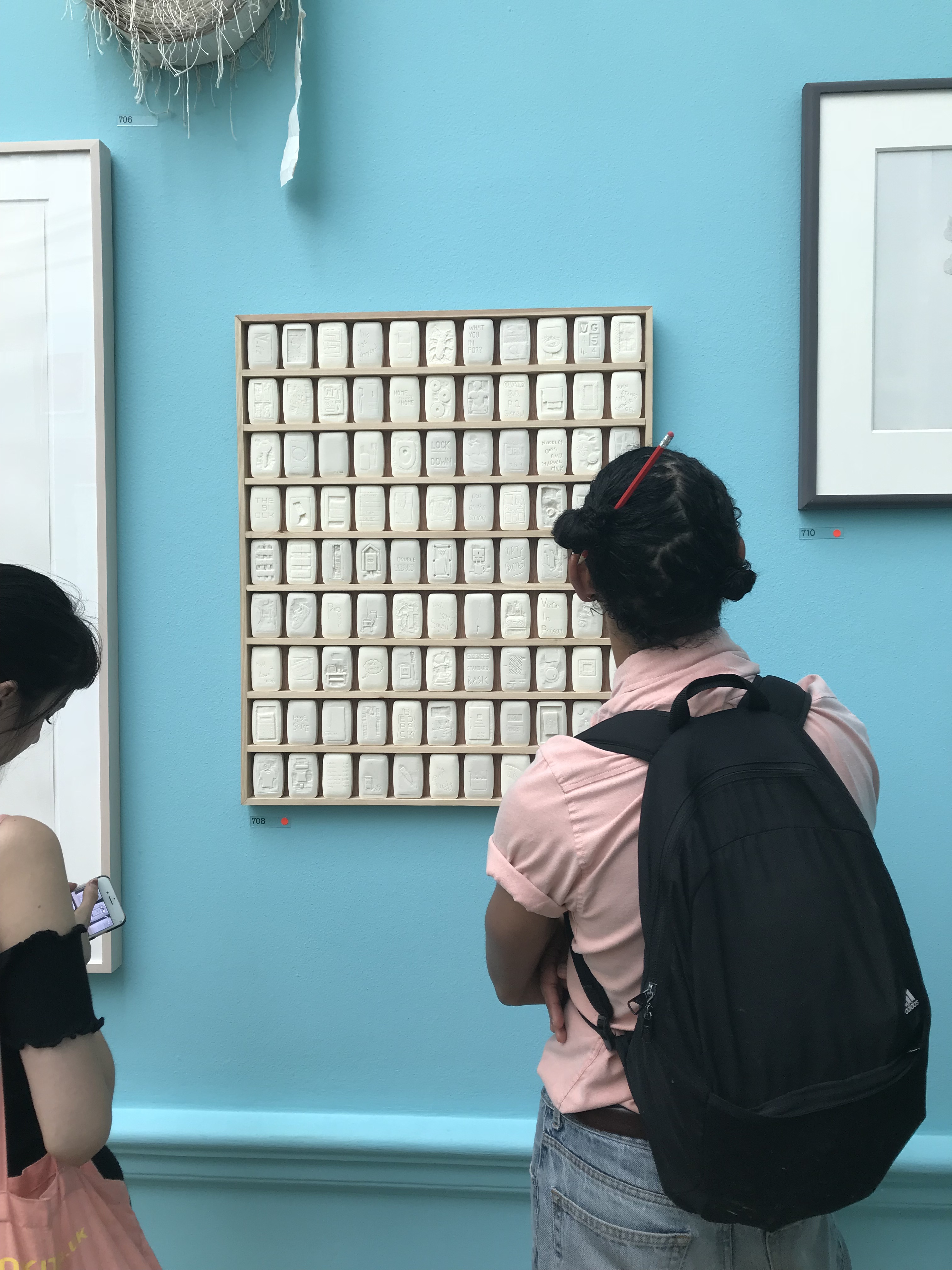
 This was a display of carved soap. There wasn’t a scent (it just smelt of the pine display rack). Very clever. The soap is prison soap. We had trouble stopping the man next to us from touching it, but I did know what he meant. There was something about it that made you want to touch it.


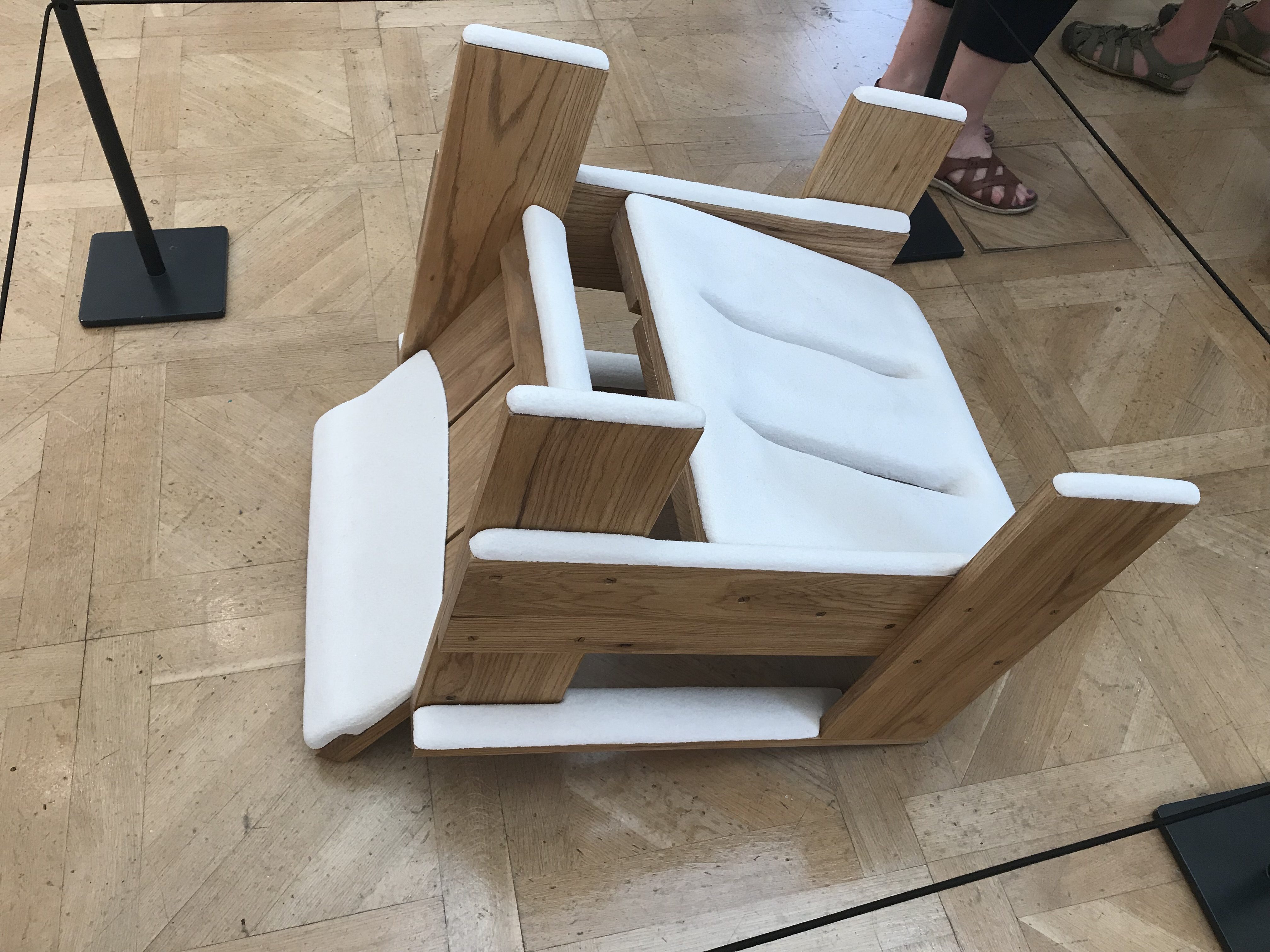
 This was a chair, with the seat the wrong way up. All I can think is that someone ordered something from IKEA, lost the assembly instructions, and then was too embarrassed to admit they’d messed it up, so entered it to the academy instead. Not something I needed to see.


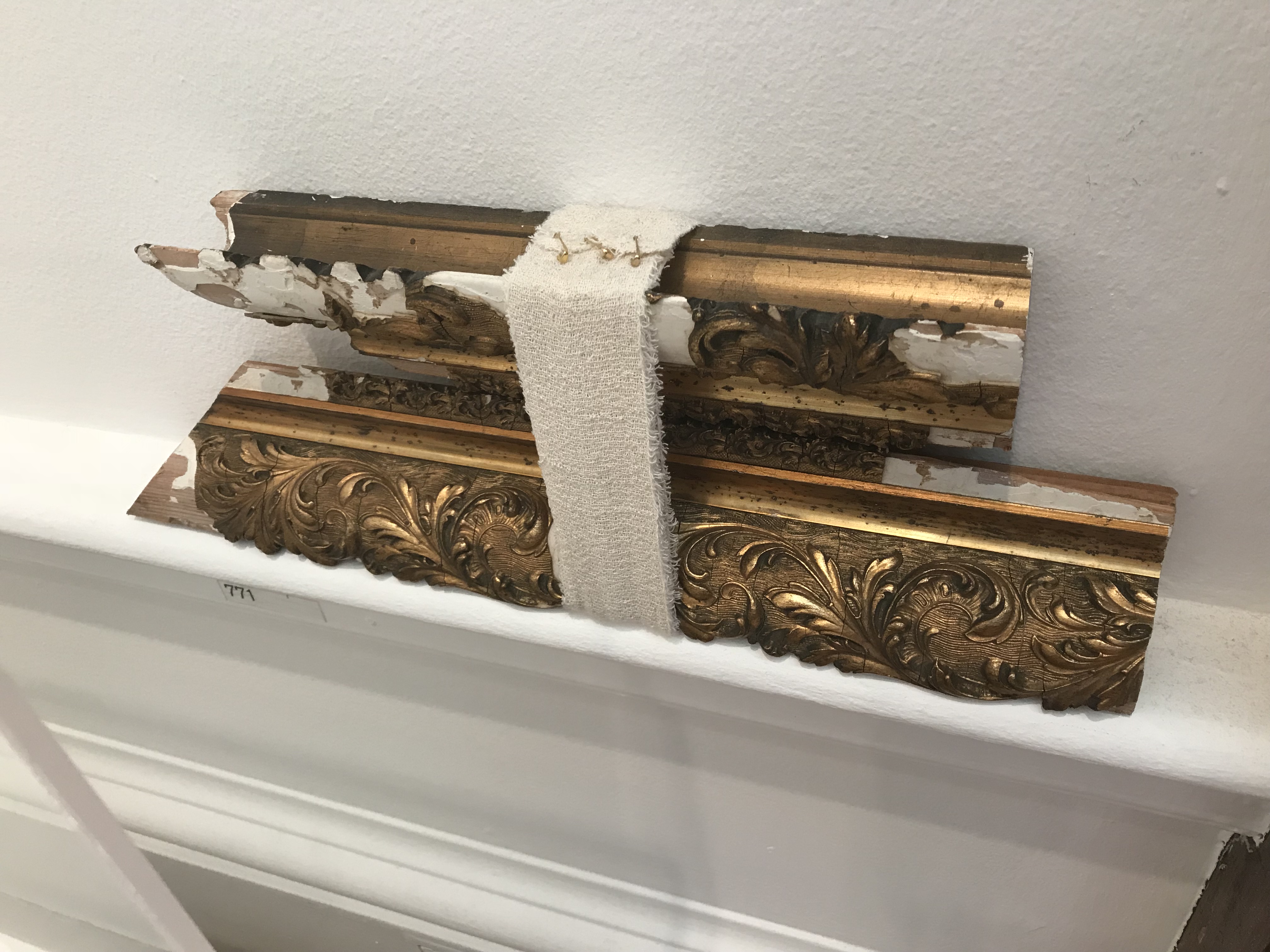
 I don’t even know what to write about this one. It was sort of hidden behind a display cabinet. Were the workmen having a laugh? Really?


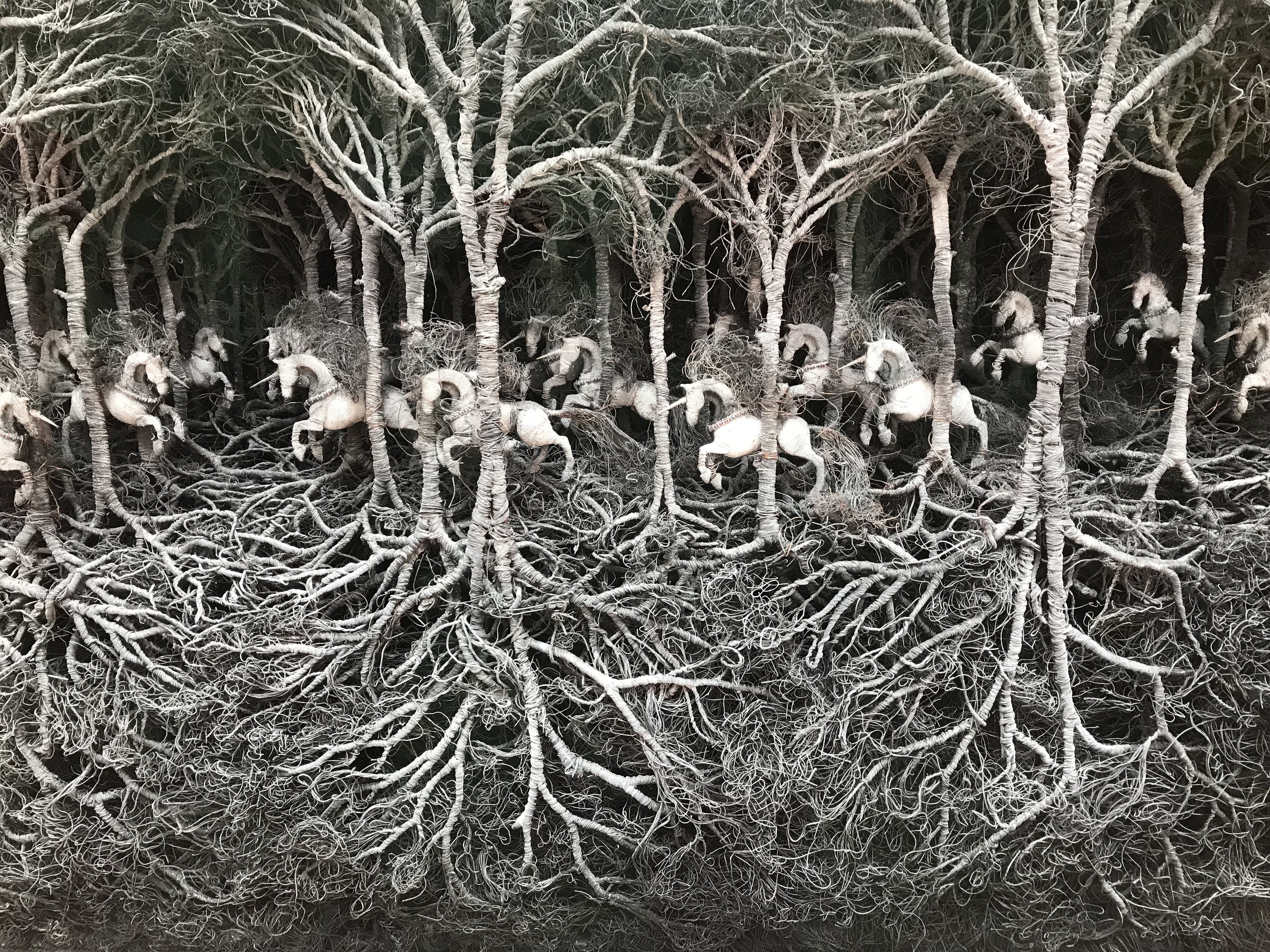
 This was my favourite. Unicorns, galloping through a forest, all made from twisted wires. It was beautiful, a whole story.


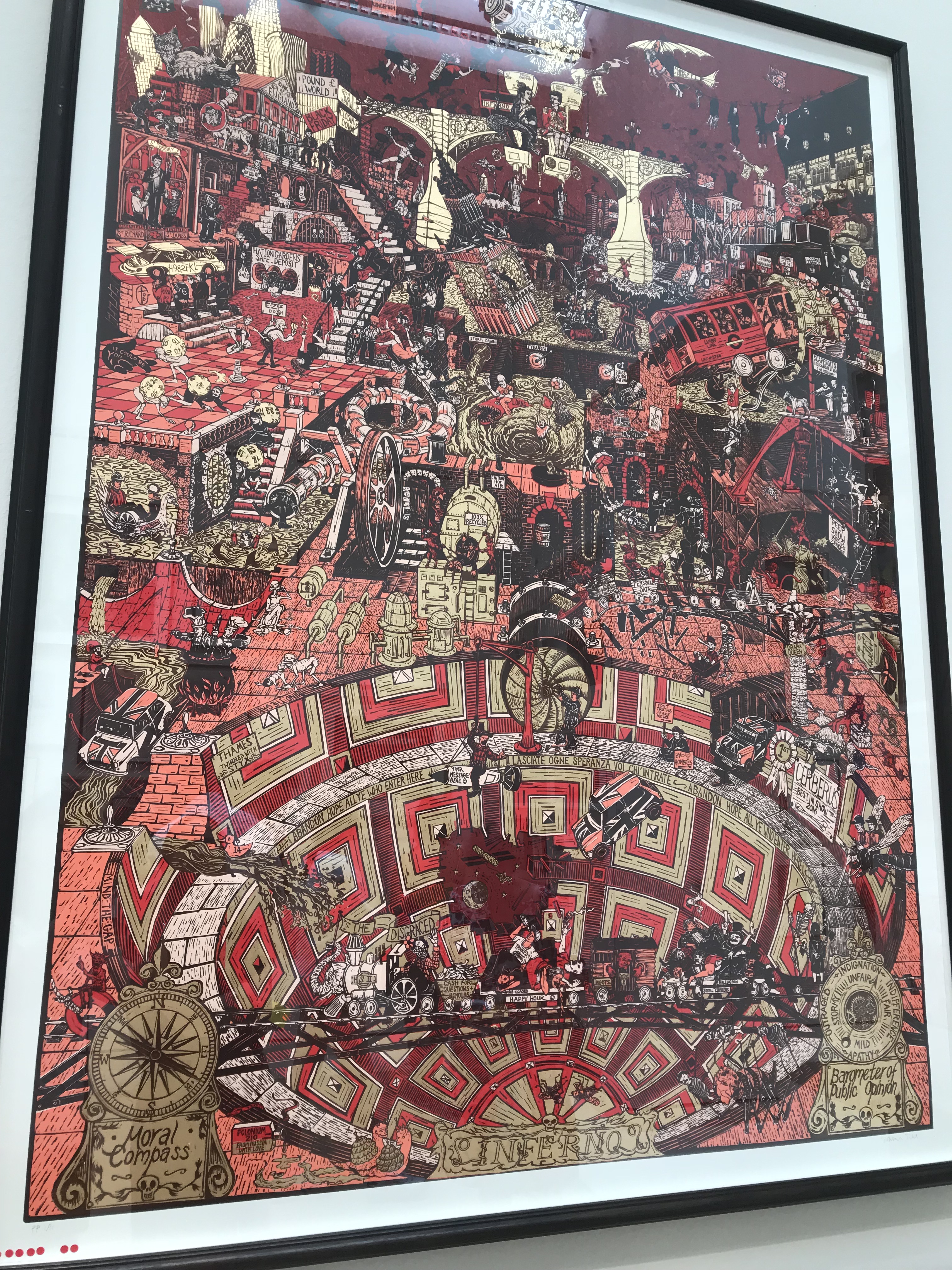
 You have to see this one in real life really, as the details are too small. It was very contemporary, with lots of references to politicians and modern life. There was so much to see, it was very skilful, very intelligent, a visual feast.


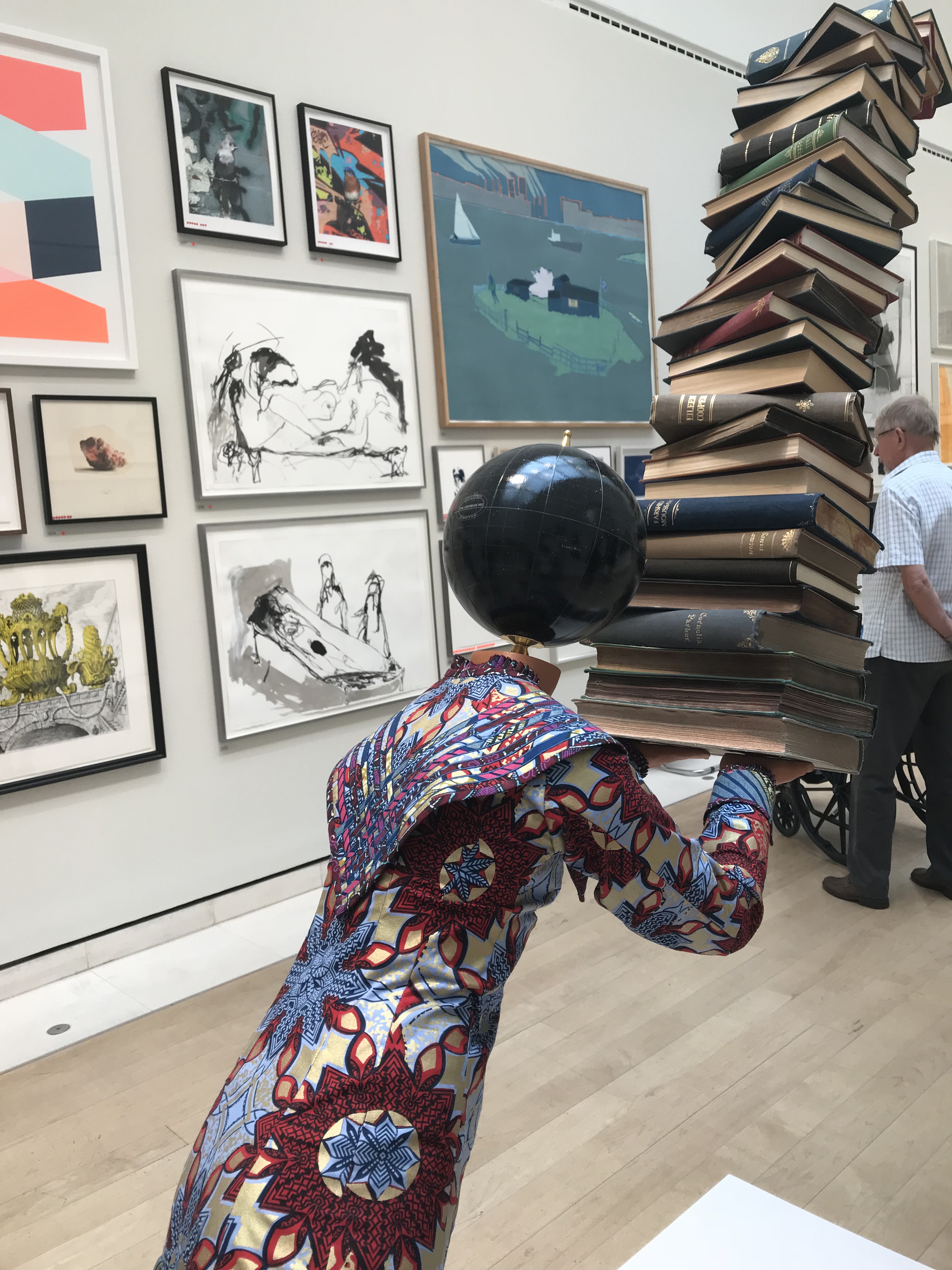
 As an author, I had to include this one. A finely balanced work of art, which said that we need books to be balanced (at least, that’s what it said to me!) Excellent.


Thank you for looking at the art with me. Try to find time to pop to London to see the exhibition for yourself. It’s there until the end of August.


Have a good week, and don’t melt.

Love,
Anne x

Thank you for reading anneethompson.com

If you enjoyed this, why not sign up to follow my blog?


Caution: Old(er) Woman Running


It was Grandpa’s 80th birthday, so we invited the family round for cakes and scones. Those of you who remember that I am meant to be reducing my cholesterol levels, might be wondering how cakes and scones fit with this. But my mother told me to never answer questions like that.

To be fair, I have tried to increase my exercise, and I have started to run. Opposite our house is a big field, about 125 miles in circumference, and when I walk the dog, I now jog for some of it. It’s nicely remote, so no one can see me, and I started to run just a few paces, then walk to recover, then run a little further. I can now jog around 3/4 of the field, which I think is pretty good going. I won’t be entering the marathon, as other people might measure distances differently.

As soon as I start to run, the dog picks up a stick, and then trots in front of me, tail up, head forward, as if showing me that she thinks my speed is pathetic. When Son 2 is with me, I have to tell him I am jogging, otherwise he might just think I am doing a funny walk. There is not much discernible difference in speed between my walk and my run. In fact, the only real difference is my face goes very red, and stays that way for about 3 hours afterwards. I have no idea whether it’s making any difference to cholesterol levels.

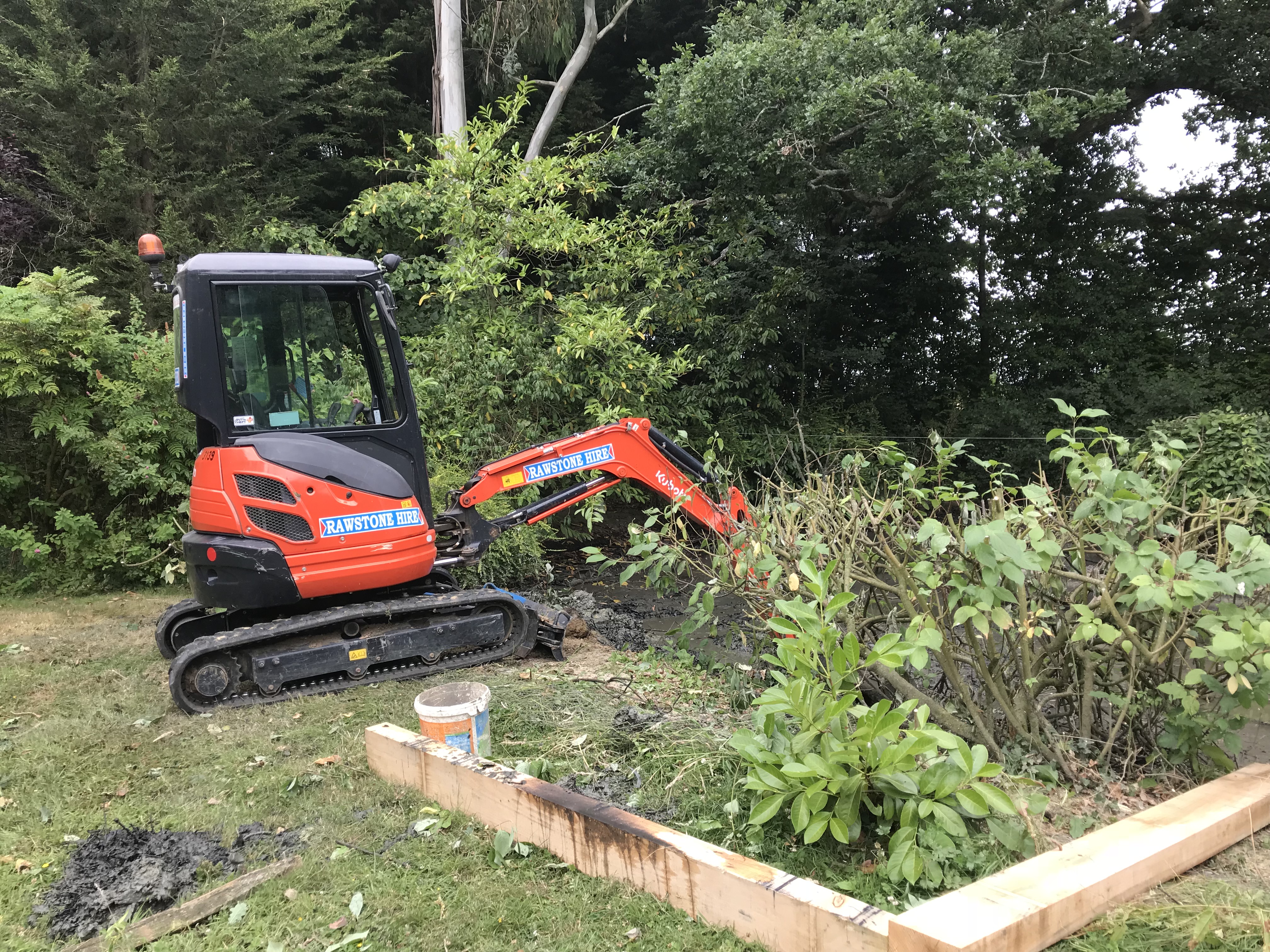
My other news is that we have started work on the pond. It’s quite a large pond, and it’s under some large oak trees. The trees drop all their leaves into the pond, so the bottom was filling with silt, and the water was becoming ever more shallow. It was also eroding the edge, so was in danger of undermining the roots of the trees. We therefore decided to hire someone to move it. Which has turned out to be fairly major work.

Firstly, I had to catch all the ducks. This worked well with my aim to teach the duckling who was hatched by the chicken, that s/he’s a duck, and over the course of a week, I managed to catch all the ducks on the pond. They’re now in a cage, very unhappy but safe, and I spend lots of time cleaning them out and refilling water pots.

Yesterday the workmen arrived. They first had to dredge the pond, so removed the fence to make an easy access point, and began to pump out the water. They also had to move some plants that we hope to keep. A delivery of sleepers arrived, and these will make a wall on the side where the trees are, so it doesn’t erode in the future. The other edge will be natural, so it will be easy for the ducks to get in and out. They painted the grass to show where they plan to dig. The island had to be far enough from the edge to be safe from foxes, so they asked how far a fox can jump. They can, according to Google, jump 2m, so I’m hoping that’s an exaggeration or requires a run-up. I’m not sure how athletic the foxes around here are – more athletic than me, that’s for sure.

Today, a digger arrived, to dig out the rest of the pond. I had to shut the ‘outside cats’ in the workshop, as they won’t necessarily be helpful. The remaining chicken and cockerel are also still in a cage, so the fox can’t get them. Which means all my animals are caged, and I do not like animals in cages. I will let the hen go broody, so she has something to do, and then I will allow them out again in September, when any chicks she hatches will be big enough to be left. The ducks will be free in a couple of weeks I hope.

Hoping you have a healthy week.
Love,
Anne x

Anne E. Thompson is an author of several novels and one non-fiction book. You can find her work in bookshops and on Amazon.
Thank you for reading.
anneethompson.com