Being an Author and the Rest of Life


First of all, thank you for reading my writing each week. I now have over 100 followers, which is very exciting! Most are people who I don’t know, from several different countries. Every time I’m notified that I have a new follower, someone who is happy for all my blog posts to be emailed to them, it means something special. Thank you everyone. I will do my best for you.

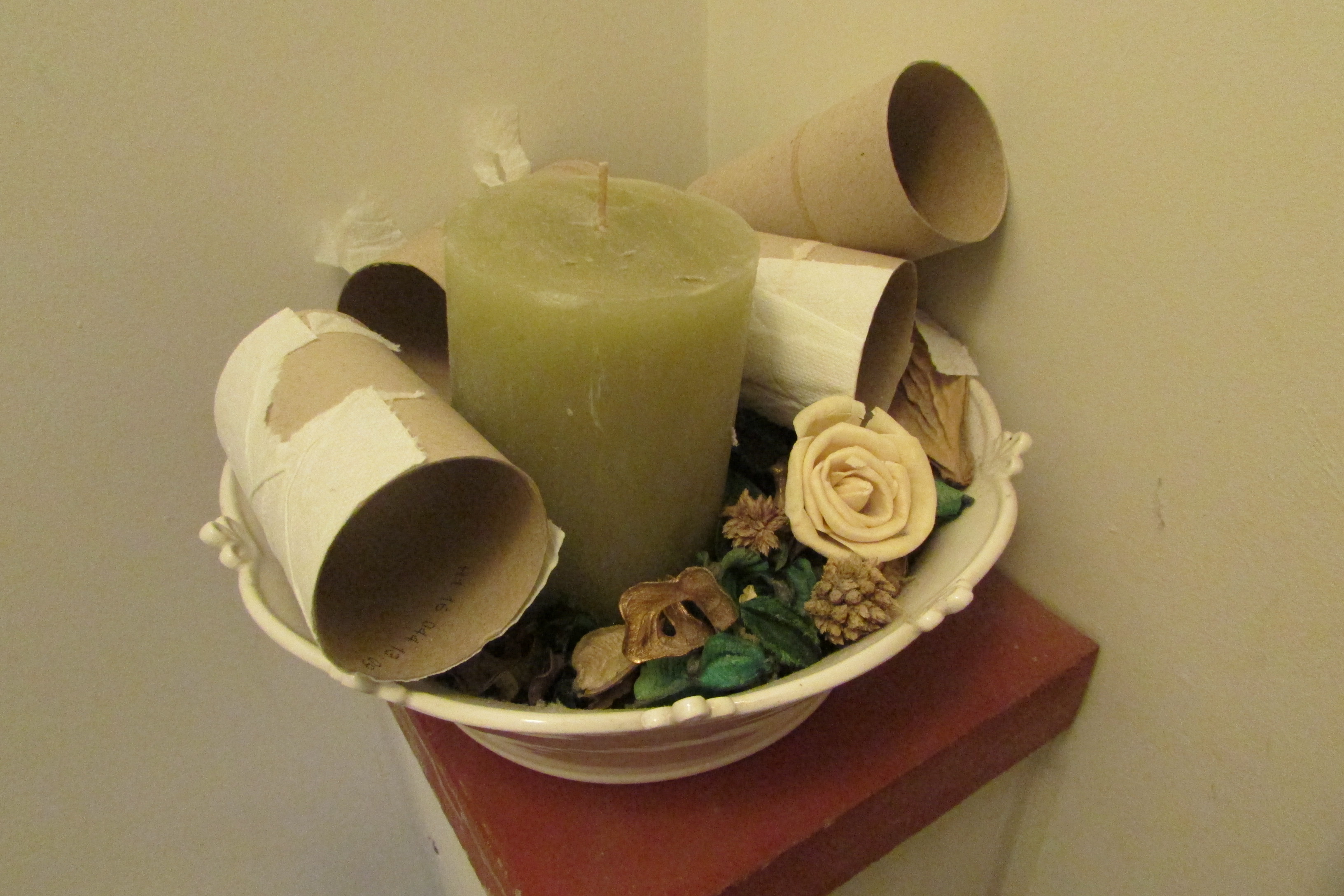
Bit of a moan now. Why, when you buy a bowl of potpourri and place a candle artistically for the downstairs loo, do people think that is good place to fling empty toilet rolls? Why? I have been ‘discussing’ this with my family for over a year now.

IMG_4842

Also, can anyone explain to me WHY some people are so against Pokemon? When I look at Facebook, I regularly see posts saying, “If you feel stupid, just remember there are people out there catching imaginary Pokemon”, or other even more caustic comments. Why do some people feel the need to be so scathing? Personally, I cannot see the attraction of walking round looking for little cartoon creatures. But if others want to, why not? Son will meet his cousin, they’ll pop in and say hello to my Mum, then walk round town for a while, looking for Pokemon and often seeing someone else doing the same thing, which leads to a brief chat. It seems like a harmless, fairly sociable activity. Not one that appeals to me, but certainly not one I feel the need to be nasty about. I like reading psychological thrillers. These are an arrangement of words describing people who have never existed in places that are imaginary. Some people like watching telly – this is usually adults being filmed pretending they are other people doing things that have never happened. Does it matter? Relaxing and having fun is part of being human. Seems sad to me that some people need to criticise those who do it differently.

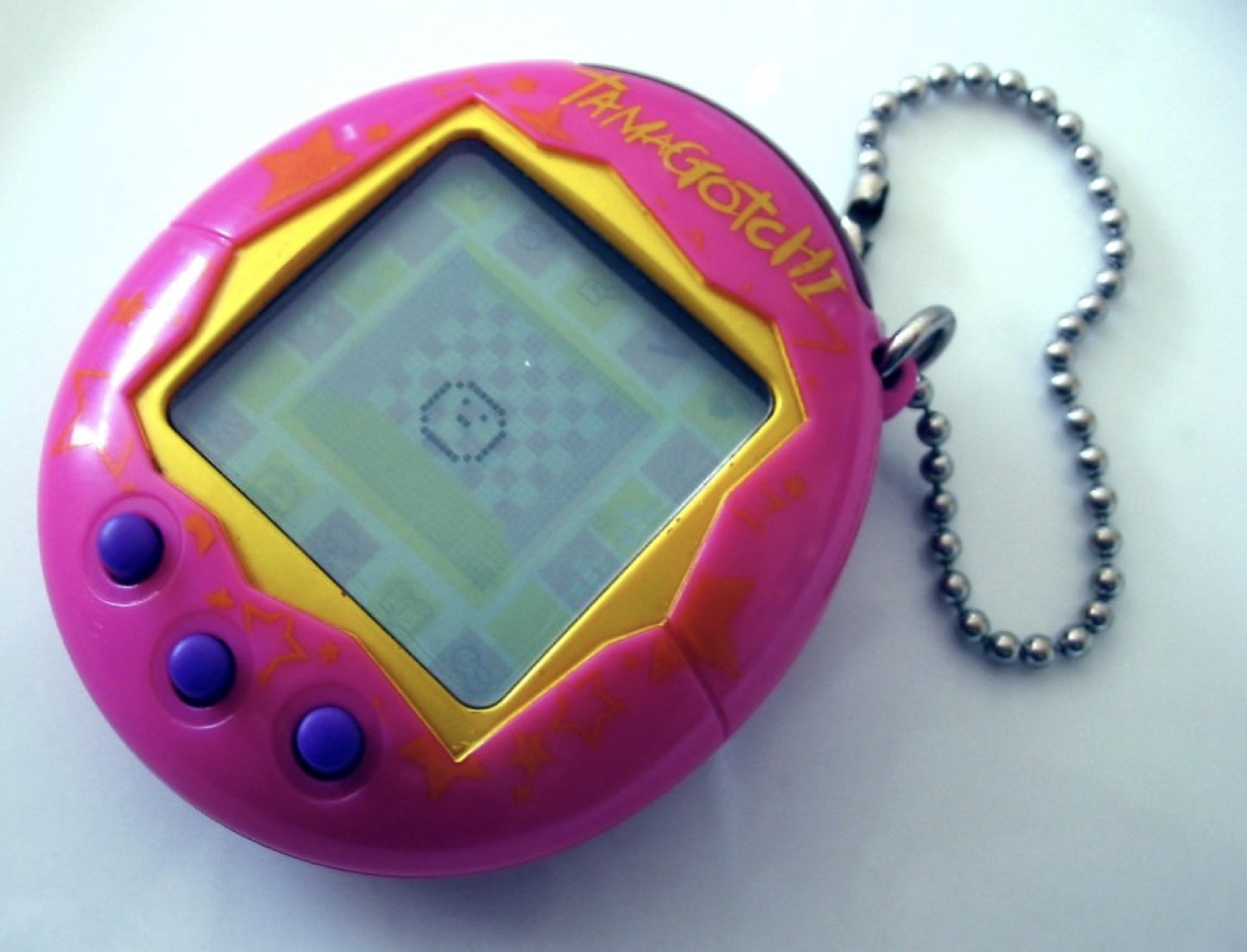
I would, however, like to abuse the creators of Tamagotchis. Have you seen them? They are ‘virtual pets’. They are aimed at children, we bought one for daughter when she was young and we lived in the US, and she was desperate for a pet. The screen had an image of a kitten. She could use the little buttons to feed it, play with it, give it medicine, etc. Above the kitten was a score, it told her if the kitten was happy or playful, or healthy. Her kitten was never happy. Or playful. Or healthy. Its score was always low. So little daughter spent hours trying to improve it, pressing buttons, watching it constantly. The score continued to drop. Husband decided to intervene, confident that he could find the right combination to create a high score. He couldn’t. After a few days of plummeting score, the image changed to a kitten lying on its back with an angel floating above it. Daughter was distraught. To her, this was a real pet and she had failed it big time. We did our best to comfort her and put the toy in a cupboard. (We were meant to reset it and let her try again, but she was so upset, I wasn’t sure we could cope with a repeat performance!) Not the most successful gift we ever bought.

tamagotchi - Google Search

There is no Lunch Club during August but that makes a very long time without seeing people for some of the members, so we try to have at least one meeting during that time. This year there’s an afternoon tea. I have made forty large scones – hope it’s enough. Also hope my family don’t discover them before I get them to the church freezer.

It is very strange being “an author”. People come and talk to me. This is mostly nice, though sometimes is difficult if I’m in a rush. So many people have told me about someone they know who I ought to write a book about! It’s funny, it seems to be the main thing that people want to tell me. Although I’ve only written fiction, I am obviously seen as the person who can write the life story of their brother or neighbour or best friend. Maybe one day I will – lots of people have certainly lived amazing lives.

Have you read my book yet? Next week I’ll give you an update on what I have learned about how larger shops select books to sell. Why not buy a copy – it’s only £7:95! I bet you can’t read the first two pages and not smile….

Hidden Faces final cover 6 July 2016

Thank you for reading.

Cromer – Letter to a Sister


P1050424

I’ve just read your article about Cromer. Love it, so many memories. I thought the photo of Dad looked exactly like Son 1. When I told him this, he said it was deeply disappointing – he has been hoping for a few years now that he might have been adopted.

It’s strange how fondly I now think of Cromer. I pretty much hated it when I was young. Cold damp tents, sleeping on hard ground, absolutely NO facilities other than a tap in the corner of a field because that was what Dad considered to be ‘real camping’. Personally, I never found the attraction of ‘real camping’, how I longed for a caravan! Since having children, we did once go to a camping shop, intending to buy a tent. But as we walked around, as I smelled the canvas and heard it flapping in the wind, so many memories rushed back. I couldn’t do it. I have promised myself I will never have to camp again. Not if I’m pretending it’s a holiday.

Do you remember the earwigs? There always seemed to be millions of them. We’d lie in bed listening to them climb the sides of the tent and pinging when they dropped onto the floor. Uncle told us they were called earwigs because they climbed inside your ears and chewed through to your brain. That story didn’t much help with sleep. It was so cold, some nights we would stuff all our clothes into the sleeping bag to try and insulate it a bit.

Then there was the year when we had a plague of ladybirds. I didn’t mind them so much, but they were everywhere, swarms of them, with their hard red bodies and little black spots. We used to count the spots and try to find one for each number – do you remember? (I can understand the attraction of Pokemon when I think of the games we played in the ‘olden days’!)

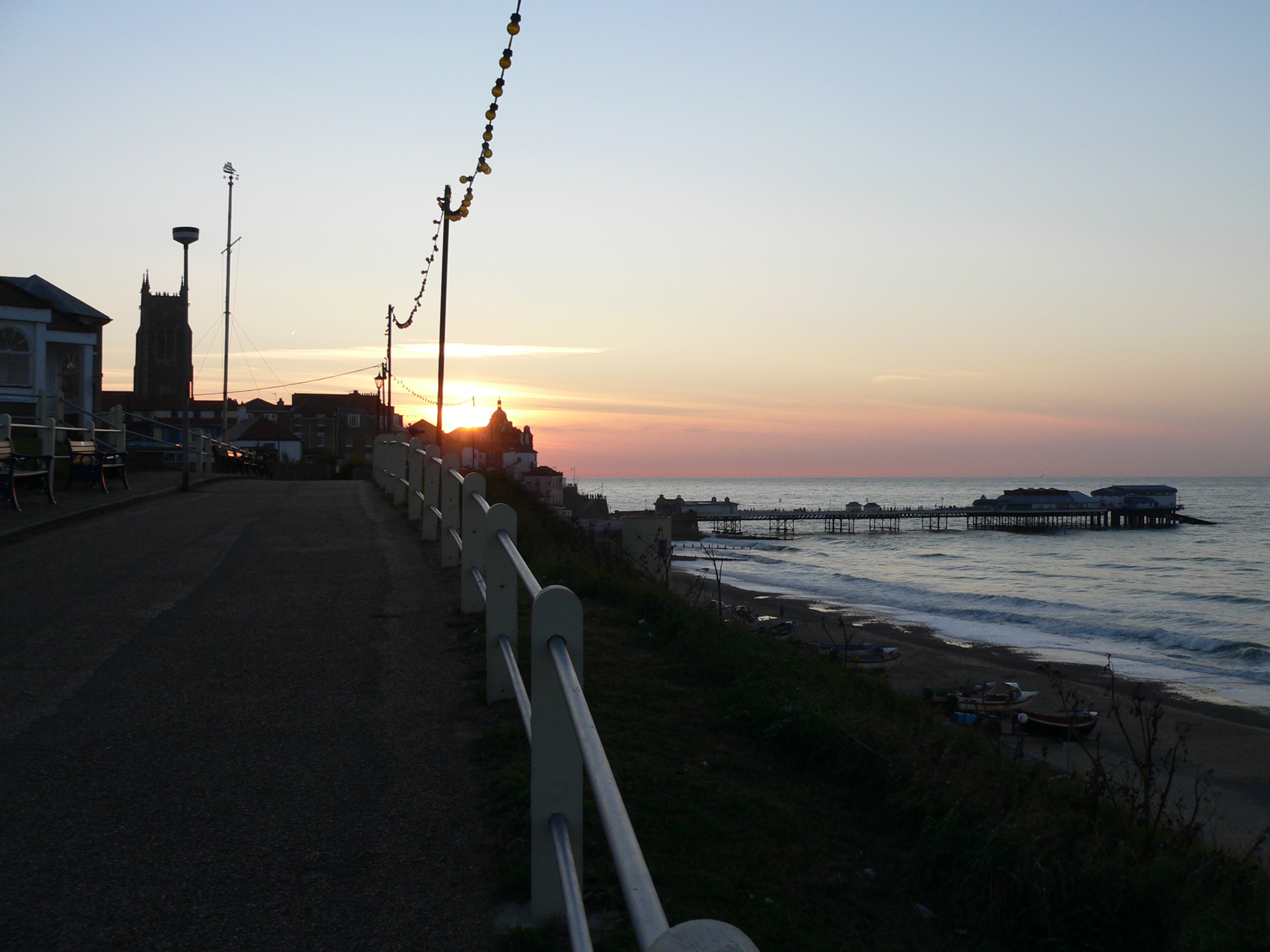
So, what are your main memories when you think of Cromer? For me, it would be walking up the hill to the zoo (is that still there? It even had a tiger I think, poor thing.) Then there is the church, of course (I included Cromer church in my story Counting Stars) I can still remember that smell of old wood and musty cushions, and there was a little bookstall at the back where we bought those cartoon books of the Bible. Most photos have the church in there somewhere, it’s almost what defines Cromer. There was the town centre, which was always bursting with too many people for the width of the paths and cars which were lost and trapped in the confusing one-way system. There were the ‘amusements’ on the prom, where Dad didn’t like us going to “waste our money” and Mum used to send us when it was raining!

But mostly, there was the beach – a lovely mix of sand and rock pools. Many hours watching sea anemones curl up when we touched them and crabs burying under the sand as we tried to catch them while the sea bashed the beach. It was always a rough sea. We pretty much learned to swim there didn’t we. Nice healthy mix of near drowning while gulping mouthfuls of diluted sewage! There’s nothing like swimming beyond the break waters and being lifted and dropped by great waves, and the water always felt warmer than the beach. I don’t recall many warm days at Cromer, though there must have been some. Swimsuits and cardigans with damp sleeves.

The food was pretty rough too. Tins of stew and dehydrated mash, cooked on that little camping stove. I loved the breakfasts, we always had bacon and eggs (with tinned tomatoes, which wasn’t quite so nice.) One year Dad found mushrooms growing and ate those, and I seem to think he found wild horseradish too, though I’m not sure if he actually ate that.

Once a year we would walk to the lighthouse, which was deeply disappointing as it was on the cliff, so short and fat. Not at all like the tall slender ones in my Blue Peter annual. The heather and gorse smelled nice though, and it always felt warm up there, the sandy cliffs absorbed the heat and insulated it I guess.

Mostly though, as you wrote in your article, Cromer was about family. It was about being teased by aunties about our navy blue knickers, uncles building us boats in the sand, Granny telling us stories, Mum taking us to watch the carnival, Dad helping us to sail boats on the little boating lake. Looking back, they were happy times. At the time, I just longed for a caravan! Life’s like that isn’t it, so hard to appreciate what is actually happening.
Enjoy your week.
Take care,
Anne x

P1050420

You can read my sister’s article (and see some excellent photos) here:
http://ruthdalyauthor.blogspot.co.uk/2016/08/cromer-sand-in-my-shoes.html

Thank you for reading.

If you enjoyed this, why not buy my book? Gentle humour entwined with strong characters bumbling through life:

Hidden Faces final cover 6 July 2016

xxxxxxxxxxx

Selling Books – Letter to a Sister


Hi, how was your week?

I am feeling like bit of a plonka. Someone – a complete stranger, never met them before – asked me to sign their book, which I was very excited to do. So, they told me their name, I wrote a little message, then signed it “Love, Anne”. As you do. Except, when you are an author, signing a book, I imagine that you don’t write “Love, X” I bet JK Rowling doesn’t sign books for strangers “Love, Joanna”. Realised immediately it was an amateur mistake, but what could I do? I could hardly snatch it back and put a line through it.

Most authors have a ‘book launch’. I am not brave enough to do this. This was bit of a mistake. I hadn’t realised that local shops (possibly bigger ones too) are quite slow when restocking. They have lots of suppliers, there is no sense of urgency. So friends were going in to buy my book and being told it had sold out. I took a fresh supply, but was told by the shop that they couldn’t take them until they had done the paperwork and paid me for the books sold. There was no way round this system (I did try). The process took three days. I have no idea how many sales I lost in those few days – some people will go back, but not everyone will bother twice. Very frustrating. If I had organised a ‘book launch’, all my friends could have come in one go, seen the book, and if they liked it, they could have bought it then. This would leave the shops for the slower, less definite customers. Next time…

I also realise now how important it is to make sure my supply chain is working properly before I start advertising. (Hope you are noticing all the clever marketing phrases I have been learning.) I have now put it into more than one shop in each town, so if one sells out, the other will hopefully still have some.

A few things went badly this week actually. I also lost the chicken who thought he was a duck. (I am pretty sure he was a ‘he’ as his tail feathers were getting worryingly long.) Every day when I let him out the chicken cage he would run to the pond and peck all the ducks so they went back into the water (nasty bird.) In the evening, when the chickens all went to roost, he would try to stay by the pond, but if I chased him (dog helped) then he would follow his sister (who might be a brother, not sure yet) into the chicken cage, where he would safely roost all night. This went badly wrong on Saturday, when we met friends for dinner in London and arrived home later than expected. All the chickens were roosting, so I could just shut their door – all the chickens except for that one. He was asleep at the top of the ramp into the pond, which is as near the actual water as he ever goes. When I woke him up to move him to the cage, he charged off. Not sure if you have ever chased a chicken around a pond on a dark night with only a torch with weak batteries and an overly excited dog to help, but it’s not great. Eventually he darted into the middle of a prickly bush and refused to budge. We couldn’t reach him and he wouldn’t come out. I left him and hoped if he stayed there he might be safe. He wasn’t. Found a heap of feathers the following morning. Feeling slightly guilty (though not sure what I could’ve done differently.)

Also this week I was interviewed by the local paper. This is so not me – I’m quite a private person really. Son came for support. The reporter was very nice, but he did tend to chat about me, and I just wanted to talk about the book. You can’t “not answer” when someone asks why you stopped teaching or where you lived and when. Of course, when the article appeared, it was more about me than the book. But it was nice of him to include something. He even took a photo (which is awful, I am wearing my “I feel really silly” face.) I hope it’s a good way to let people know about my book. I loved writing it, now I would like to hide under the bed and let people buy it and recommend it to others. But no one will buy it unless I advertise it a little, so I’m forcing myself to publicise it. I have to keep reminding myself, it’s not about me, it’s about the book. And it IS a good book. It has strong, realistic characters, so by the end you feel they are real people, and you might have met them, and you want to give them some advice about the terrible decisions they are making…

Have you bought a copy yet?

Hidden Faces final cover 6 July 2016

Thank you for reading.

xxxxxxx

Officially an Author


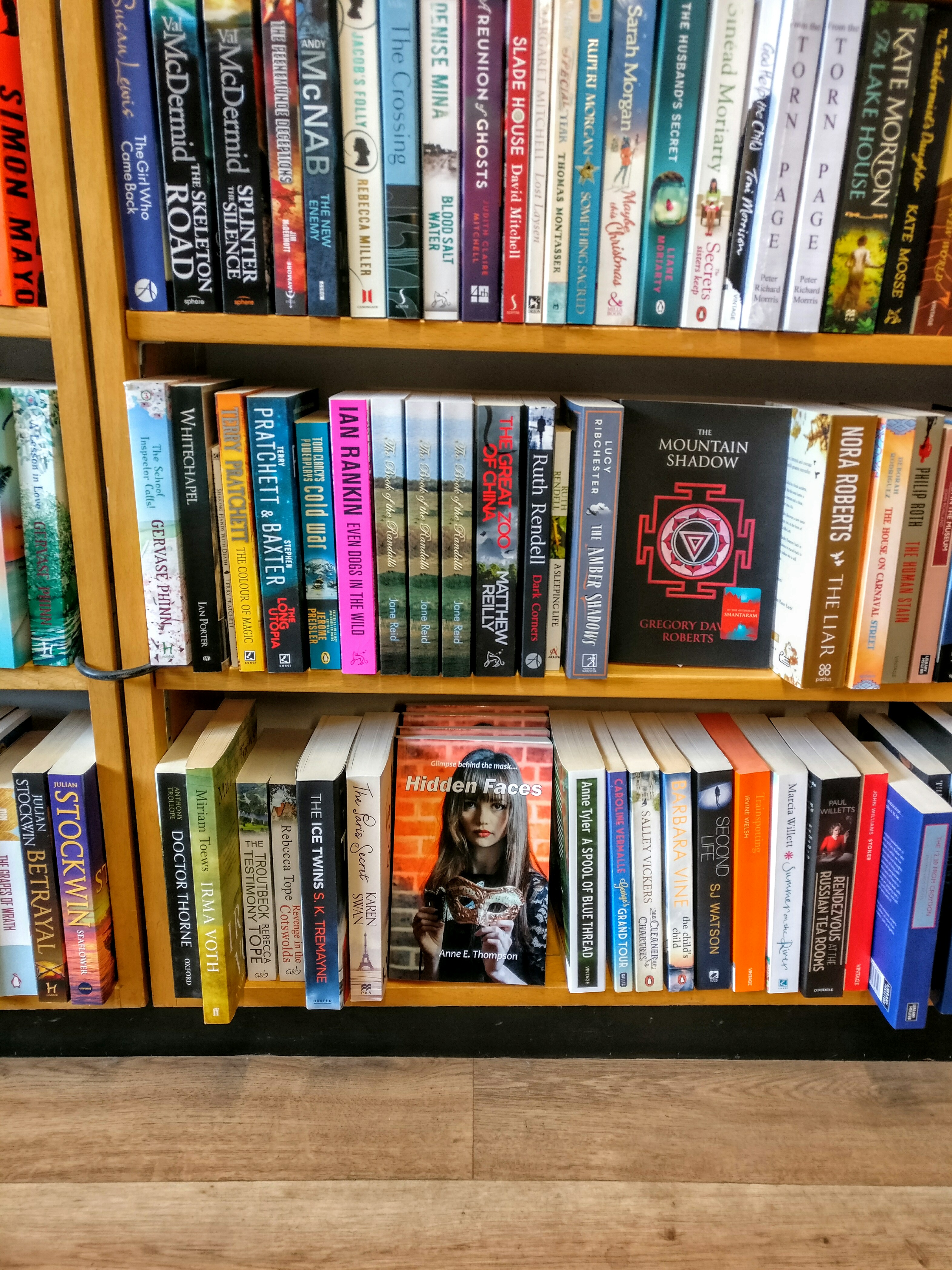
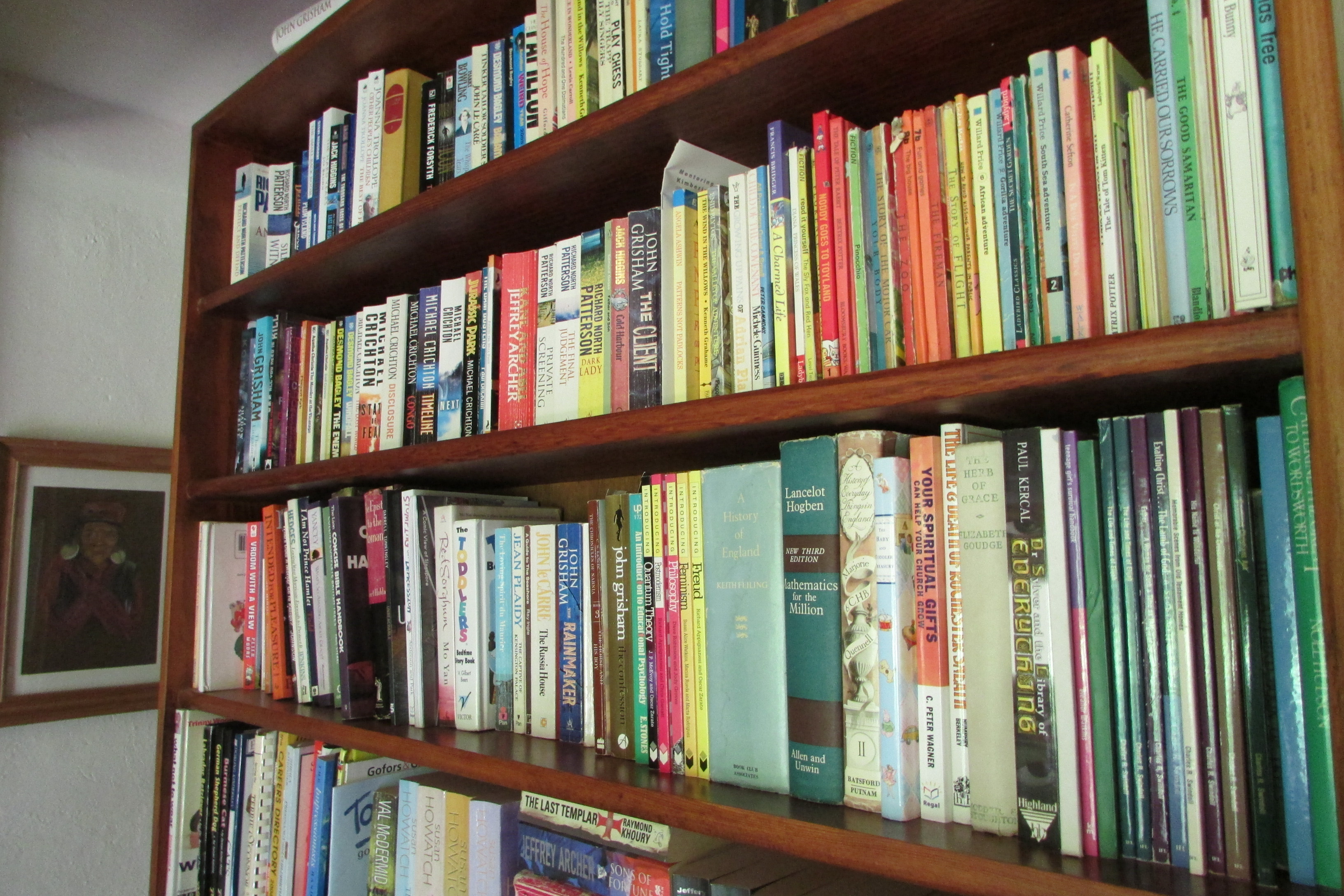
Thank you everyone who has bought my book. I am very excited by how many have sold already (in fact, I am very excited by the whole thing. Am not being very ‘cool’ about this!) It is in four local bookshops – picture below. I realise I should have renamed myself something beginning with an earlier letter in the alphabet (did you know that Lee Child did that? His real name is something completely different, but he wanted his books to be near Agatha Christie’s!) My book will be spotted by people who like to lie on the floor in bookshops. Still extremely wonderful though.

IMG_20160801_113715

It is very strange hearing people talk about my book. I am too close to it, when I write I climb inside the characters, so I don’t always know how other people will see them.

Here are some of the comments so far :

“The first two pages are brilliant” {I am hoping that means he’s only read two pages!}

“That Esther really moans a lot.”

“When I read the bit about {no spoilers!} I laughed for ages.”

“Is this book about me?” {NO! All the characters are fictional. Don’t start thinking that – my next one is about a psychopath!}

“No idea what your book is like – I can’t get it away from my husband!”

“It’s a real page turner.”

“Cynthia is shocking. Really shocking.”

“I cannot believe you wrote that bit!”

Have you bought a copy? When is the last time you tried a new author?

Hidden Faces final cover 6 July 2016

Hidden Faces by Anne E Thompson, published by The Cobweb Press. Available from Amazon:

Thank you.

Publishing a Book – Part Five


Hidden Faces final cover 6 July 2016

So, rather momentous – my book arrived (cue small fanfare of trumpets…) Now,  I needed to find some more places to sell it. I drove to Bluewater.

Bluewater is not my favourite place. It has way too many shops. I took son for moral support. He was keen to come due to the possibility of Pokemon being more available than in our country lane (hard not to be proud of them sometimes, isn’t it…) Anyway, there we were, standing outside WH Smiths, me wondering if it would be better to just have a coffee and go home, him concentrating on a Pikachu (no idea how you spell these things.)

I went into WH Smith first. I was told the person I needed to speak to was on holiday. But they were nice, no one shouted at me or told me I was an idiot. Feeling slightly braver, I went into Waterstones. I learned lots of information, the most important being that selling through big shops takes time and is expensive. I will cover what I discovered in future blogs.

I decided that I would first launch my book locally and online. The bookshop in the next town was happy to sell it. I would try to find another couple of small shops who would be willing to stock it, and also sell it on Amazon. This was not as easy as it sounds…

First, the maze that is Amazon. My overall feeling about Amazon is that the process is slow and confusing, like trying to join a secret society. It is also expensive – you pay for everything. We first (note the ‘we’, I decided fairly early that this was beyond me, so Husband rescued me. But I will pretend that I helped) explored the ‘fulfilled by Amazon’ option. This would mean our customers would pay less in postage, and I could go on holiday or be ill without worrying about posting book orders. However, it was far from easy. You could email and ask for help, and they would phone back and advise you. But each advisor only dealt with one area, so they could only answer specific questions.

We wanted to know where exactly we had to deliver the books – if it was Scotland, we might find a different option. This information is a secret. If I ever discover it, I will tell you. I even accosted a poor Amazon delivery man and asked him where the depot was that stored the goods. He told me, “Oh, we’re not allowed to give information like that, I would get into trouble.” The plot thickens.

It was taking ages, plus would only cover five countries in Europe, so we decided in the meantime we would become Amazon sellers and post the books ourselves. We then went online to add the book – only to discover it was already listed! There it was, Hidden Faces by Anne E. Thompson, published by The Cobweb Press, with the ISBN number and a price. It was also, strangely, listed as a ‘mystery/thriller’ (which it isn’t, it is contemporary fiction.) We had more phone calls, but no one at Amazon could explain who had listed my book. Eventually we learned that when you buy an ISBN number, it is automatically listed on certain websites. Some shops also list it (though they won’t sell it, because I do not yet have a trading agreement with a wholesaler.You can ‘buy’ it, and checkout, they will then check their suppliers and notify you that it’s unavailable. They will not deal directly with either authors or publishers. I know, I tried.)

We eventually managed to add a photo, price, and the correct description. Then, when it appeared on the Amazon website (after about an hour) it had deleted all the paragraph breaks. No idea why. Not easy to rectify this (you might notice other book descriptions with no paragraph breaks – there are many – do not blame the author.) I am trying to remedy this but not sure if it is possible. Please be understanding if you look at my book on Amazon….

Approaching local shops was also not without problems. I drove to East Grinstead, which is slightly beyond my comfort zone. The town was having some sort of fair, half the roads were shut and people were everywhere. I parked in a side road and walked to the bookshop. The owner was on holiday. I took his contact details and walked back through the fair – only to find my car was not in the side road I thought it was. It was hot, I was tired, coming had achieved nothing, and now I had lost the car. I thought about phoning home, but they tend to be unsympathetic when I lose the car. Bought an ice cream. Wandered around and eventually found car. Drove home, having not sold a single book.

My own town was also difficult. There is no bookshop – my town has mainly charity shops, supermarkets and hairdressers (everyone has nice hair in my town. And secondhand clothes.) I tried a few ‘gift’ type shops and some stationers. No luck. One stationers even told me that he wouldn’t take a couple of books on ‘sale or return’ because “it would just be another thing to think about”! Honestly! Here I was, a local author, with advertising in place, asking if they could take a couple of books. They would earn a few pounds on every book sold, and I would collect any unsold books. No wonder small businesses are failing. I felt rather cross with my town. Until I found a very nice man in the newsagents at the top of the High Street. The shop is one of those open all hours, family owned, tiny shops, selling mainly newspapers and alcohol. He was willing to help and said he would display five books and a poster. Nice man. I hope it brings him some extra business.

I also popped into my local Shell garage and the Waitrose in my town (you can’t say I wasn’t trying.) Both were surprisingly helpful, but said it needed to go through head office. This seems to be the story with all chains of shops – however willing the manager is, the final decision is with head office. I took contact details and will let you know what happens.

Book selling is dominating at the moment (my family are coping.) I am also managing to stop the big fox that prowls at night from eating anything, I am trying to teach two of the stupidest chickens in the world that they are NOT ducks, and I am remembering to feed and clean out all the animals (I probably include my sons in this description.)

The book saga will continue…

Thanks for reading. Take care.

Anne

xxxxxxxx

Hidden faces by Anne E. Thompson.

Available locally (!) and from Amazon:

Hidden Faces final cover 6 July 2016

xxxxxxxxxxxx

If you enjoyed this, why not sign up to follow my blog?

anneethompson.com

xxxxx

Two Years…


Hidden Faces final cover 6 July 2016

Two years ago, July 2014, I had brain surgery. It was scary! It was also the end of lots of things. The end of a five year headache. The end of knowing I had a high chance of ‘sudden instant death’. The end of constant medical monitoring. The end of the brain tumour.

But not all good. It was also the end of being able to juggle several ideas all at once. The end of reliable memory. The end of any kind of mathematical ability. And, because the part dealing with anxiety was chopped through, the end of much of my confidence. The end, in fact, of me teaching.

I learned that, God still has a plan for us however broken we are. So yes, the end of teaching, but the beginning of writing. A blog grew into longer articles and finally, at last, a book. A real, solid, hope you enjoy it, book.

I hope you will read it, enjoy it, recommend it to a friend and buy one for your sister. Thank you. It means the world to me.

Hidden Faces is published by The Cobweb Press.

Available from Amazon:

Hidden Faces final cover 6 July 2016

Publishing a Book – Part Four


IMG_4814

When your book has been written, edited, typeset, proofread (sweated over, prayed over, cried over….) it will be ready to send to the printer. Now all you need to worry about is selling it. This is, I think, the main (and massive) disadvantage to self-publishing. So, how to overcome the problem?

Son-the-marketing-expert had lots of advice (really, lots – many, many hours worth – I have summarised.) He strongly suggested that before I even thought about selling, I should listen to some focus groups. He told me to think about my target audience and ask groups of people some questions. This was not within my comfort zone, so I thought I would just email questionnaires to some friends. This apparently is ineffective, as when a focus group discusses, they remind each other of things, so the results are better. I was told that after listening (trying to not influence the discussion) I should decide where and how I would advertise and sell my book. Here are some of the questions:

Were they influenced by price? – So, would a very cheap or very expensive book make them more or less likely to buy?
Most people said they were unaffected by price, as long as it was within the ‘normal’ price for a paperback book. If it was cheaper, some people said they would be suspicious of the quality unless it was marked “special offer”.

Where do they buy books? Would they consider buying a book from somewhere different (for example, a charity shop or coffee shop or community hall.)?
Older people and avid readers tended to prefer shops to Amazon. If there was a display of books somewhere unusual, they would look at them and possibly buy one.

Before buying a book, do they read some of it first? If so, where would they do that? (Would they remove a book from a shelf to read it, or more likely to pick it up from a display on a table top?)
Definitely table top.

When did they last buy a new author, and why? (Was it recommended by a friend, seen in a review?)
Reviews in newspapers or on radio scored highly here.

Would they look at a book that came with a ‘special deal’? For example, ‘buy the book, get a bar of chocolate for free’. {I told my son this was silly, no one would buy a book just because it had a bar of chocolate attached! He told me ask anyway, so I did. One of my friends told me that in China, a new author did exactly that – if you bought the book, you got a free mobile phone! The author made a massive loss, but her book rose to the top of the best sellers list. Her subsequent books made a profit and she is now a well known author. Interesting…}
Everyone I asked agreed this was silly!

What types of cover attract your attention?
Some looked at books with scenes from the television. Many liked people or ‘cosy scenes’ on the front.


xxx

I dutifully asked the questions and thought about the answers. This guided the types of places I decided to advertise and display my book.

If you persuade local bookshops to stock your book, they will want to receive a certain amount per book (between 35% and 50% mark up, depending on the shop. So, £2 or £3 per book.) You also have to deliver the books to the shop and collect them if they don’t sell, as shops tend to be willing to take them on a ‘sale or return’ basis. If it’s a bookshop in your town, that’s easy.

If you decide to sell through a big London shop (say Foyles or WH Smith) then you will need to factor in travel/delivery costs. Large bookshops (like Foyles) will sell self-published books. Each shop has different criteria, and you may need to use a wholesaler, which is expensive. For Foyles, you have to write a submission, much like when trying to find an agent, and they decide whether your book is suitable for their shop. You need to decide if it’s worth the time/money. You can find all the details online (sometimes it is hard to find – try clicking on the ‘contact us’ button, it’s often there.) I will explain about wholesalers in my future blogs, as there’s a lot to say.

Amazon also charges to sell. If you use Amazon, you can either use ‘fulfilled by Amazon’ in which case, they will store (for a price) and send out (for a price) your book. Or, you can post the book yourself. For my size of book, an envelope cost 35p, UK postage was £3:35 and US postage cost £7:80. If you aren’t a US resident and you want to sell on amazon.com (to US customers) you have to register for US tax. You need to think about if you are away/ill – will someone else send out your books for you, or will your customers have to wait a few weeks?

As can be seen, even selling the book is expensive and relatively time consuming. The basic cost of your book depends on how many you print (which should depend on how many you think you will sell.) As a rough guide, if you print 500 copies, your costs are likely to be as follows:

Indemnity Insurance : £175
Formatting : £302
ISBN (for ten titles): £149
Editing : £750
Printing : £1,051
Barcode: £35
Cover Format: £35
Cover photo : £50
Proofreader : £300

If you add the amount a small shop requires for selling the book, this comes to roughly £7:99 per book. This is the price of the average novel. So, if you want to make any profit at all, your book will cost more than the average book on the shelf. You need to listen carefully to your focus groups. If people in your target audience (and this will depend on the type of book you have written) are affected by price, then consider carefully how many books you will print.

If, realistically, you are only going to sell to your close friends and favourite aunty, then probably price matters less but you will need fewer books.

If you are trying to launch a new career, you hope your book will become popular, that your friends will recommend it to their friends, will buy a second copy for their mother’s Christmas present, then I would recommend keeping the price of the book down. Try to cover your costs, but don’t expect to make a profit. Not even a penny. None. If you give books to your nearest and dearest, they are not ‘free’ books, they are a gift, which has cost you £6 (not that this should deter you, but you should be aware.)

If people help you, if they recommend your book, if they buy a copy as a gift for someone you don’t know, if your market place grows, then you can do a second print of your book. Then, all your fixed costs (editing, formatting, etc) will already be covered, then you will make a profit. You might turn out to be the next JK Rowling – making 50p per book on a couple of million books, is not to be sniffed at. But probably you shouldn’t plan for that. Probably you shouldn’t start looking at new cars just yet….

I will let you know how my own writing career develops in my regular blogs. Next week I’ll let you know how I get on in the ‘big’ shops (going to Waterstones tomorrow – very scary!)

You can follow my blog at anneethompson.com

– why not sign up to follow it?

xxxx

Thank you for reading.

Hidden Faces by Anne E. Thompson will be available to buy very soon…….(Which is both exciting and terrifying.)

xxxxxxxxxxxx

One Little Life


IMG_2422

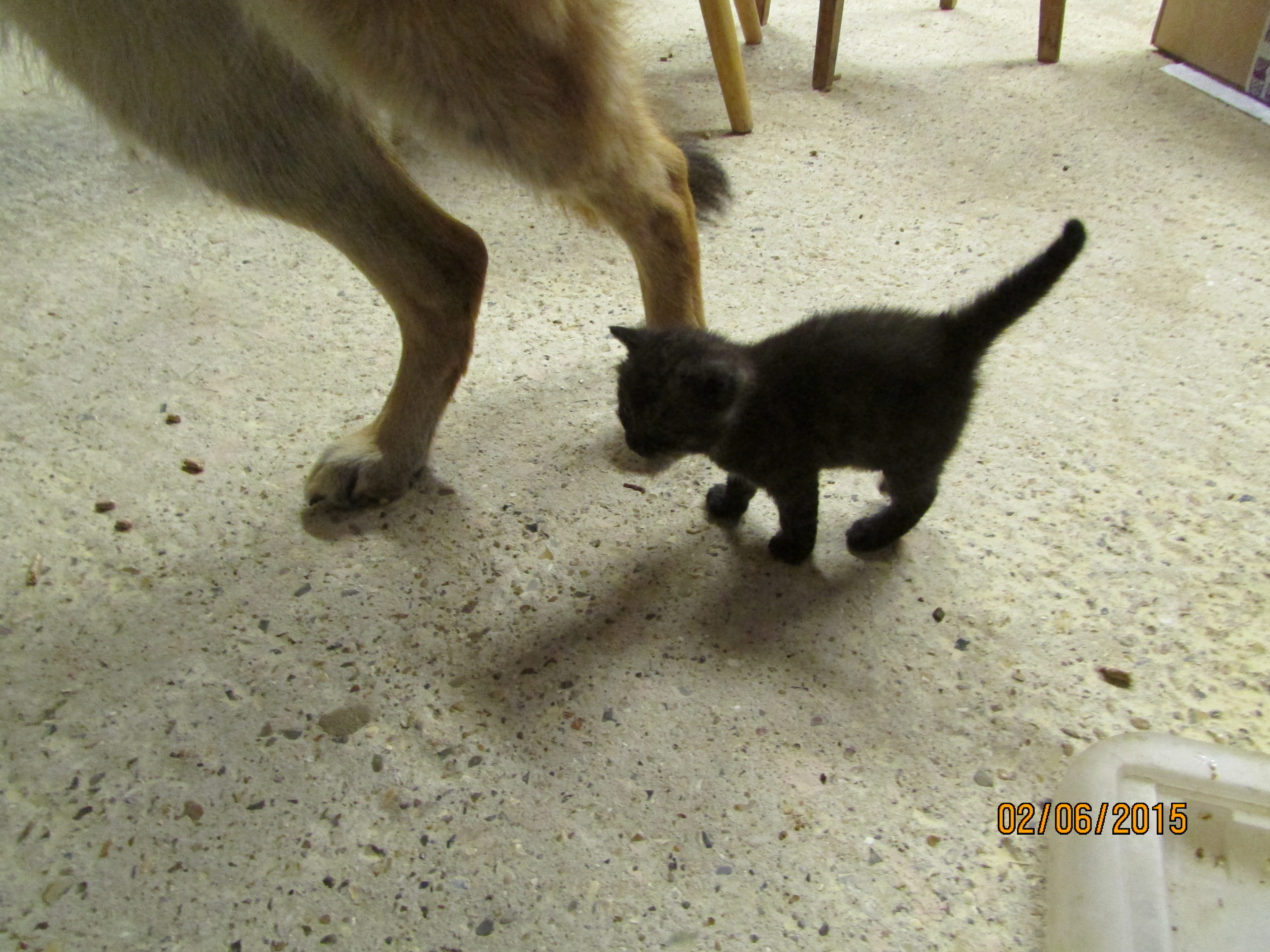
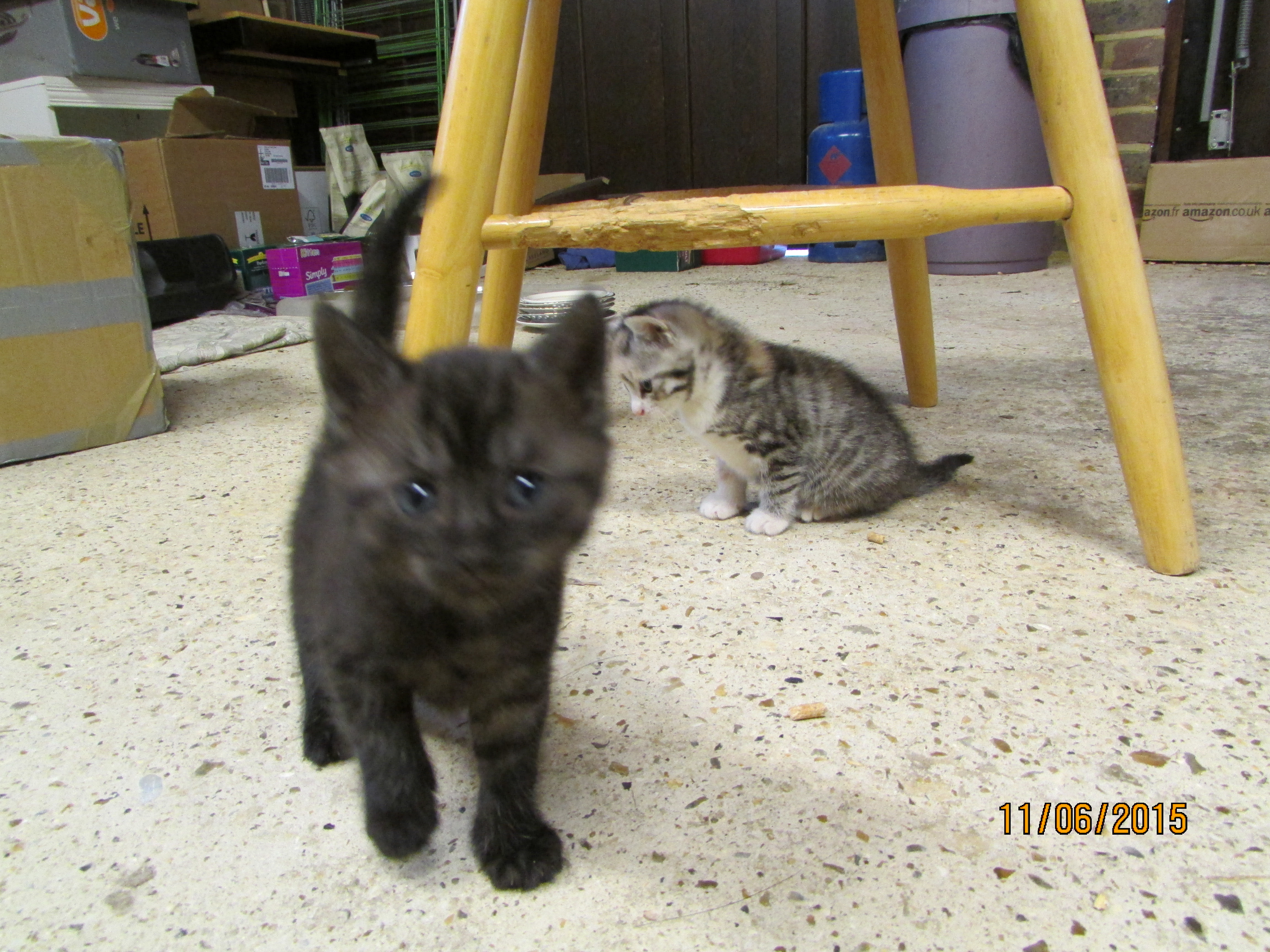
We had rats. Anyone who has poultry and a pond has rats. If you also have several mild winters, you then have a rat problem. Mr Rat Catcher came with traps and poison, but we still had a rat problem. So, we decided to get cats.

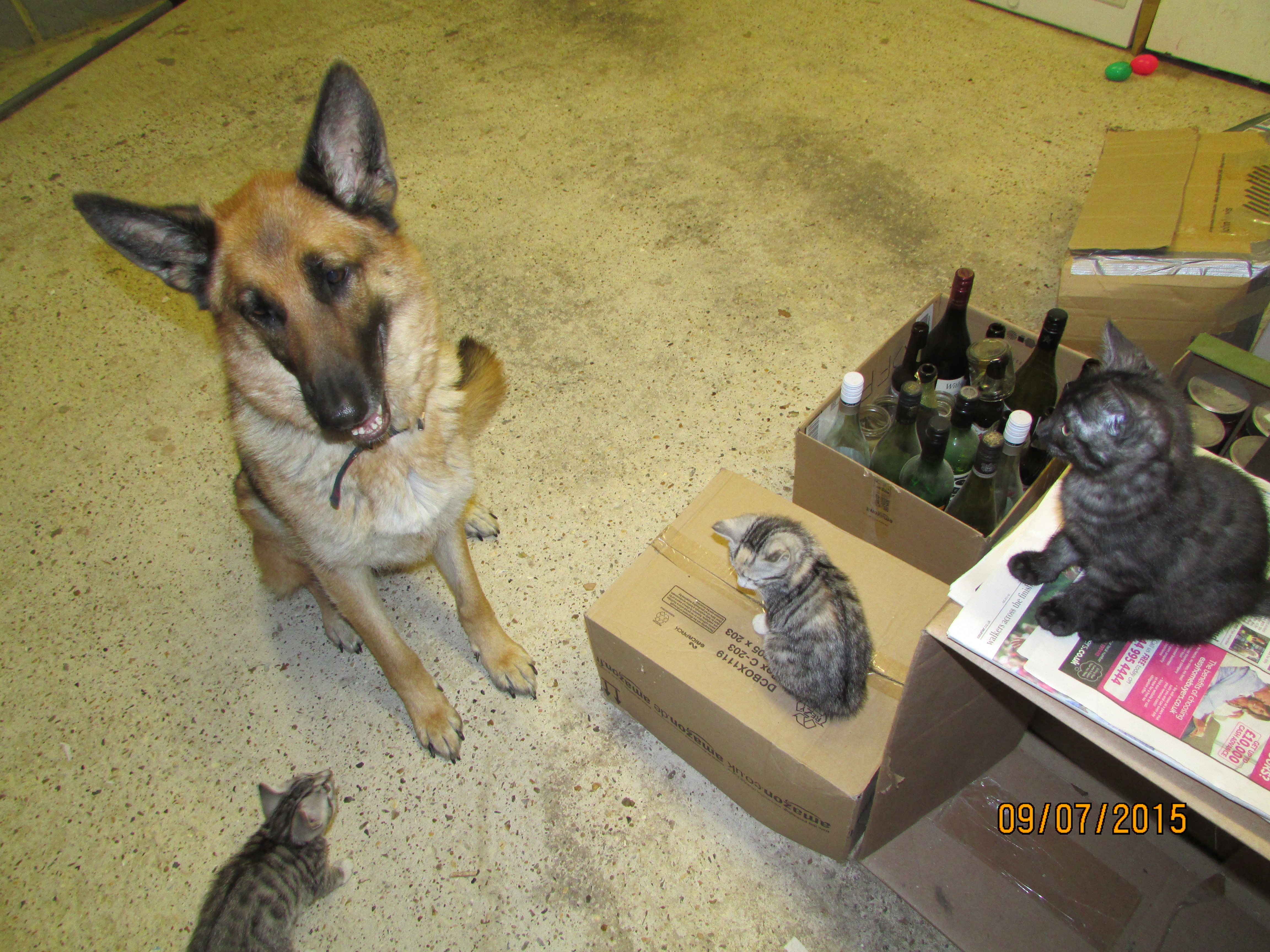
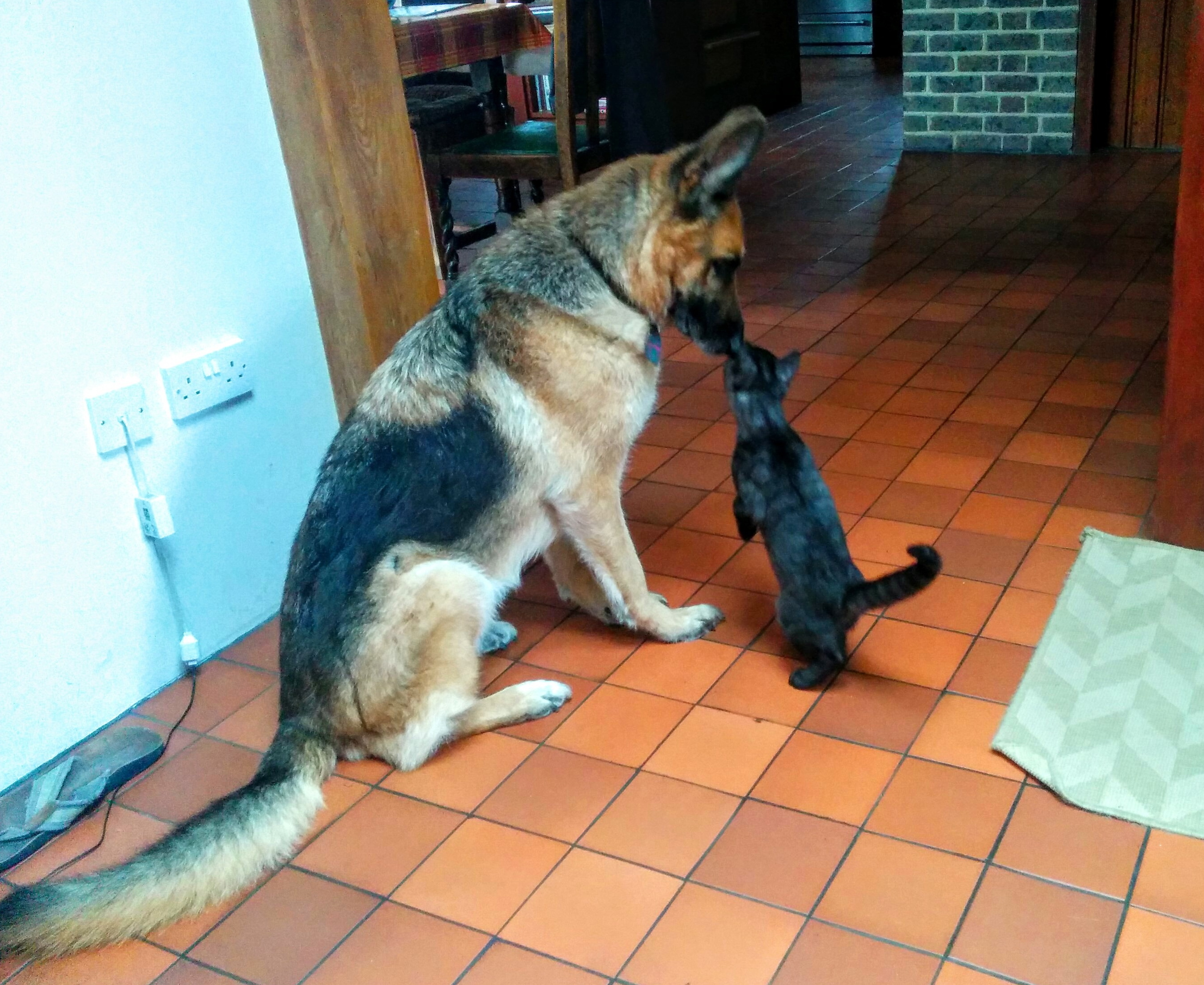
We found some cats that had been born in a stable, not feral as they had been well cared for, but they were used to living outside. We bought two, Milly and Molly, brought them home, and put them in the garage. For three days, I didn’t see them, and wondered if they had escaped! Then I took the dog into the garage with me, and two tiny kittens tentatively appeared. They had been raised on a farm with German Shepherd dogs, and they recognised Kia as a friend. Gradually they learned to like us too. When they were bigger, they moved to their home in the workshop.

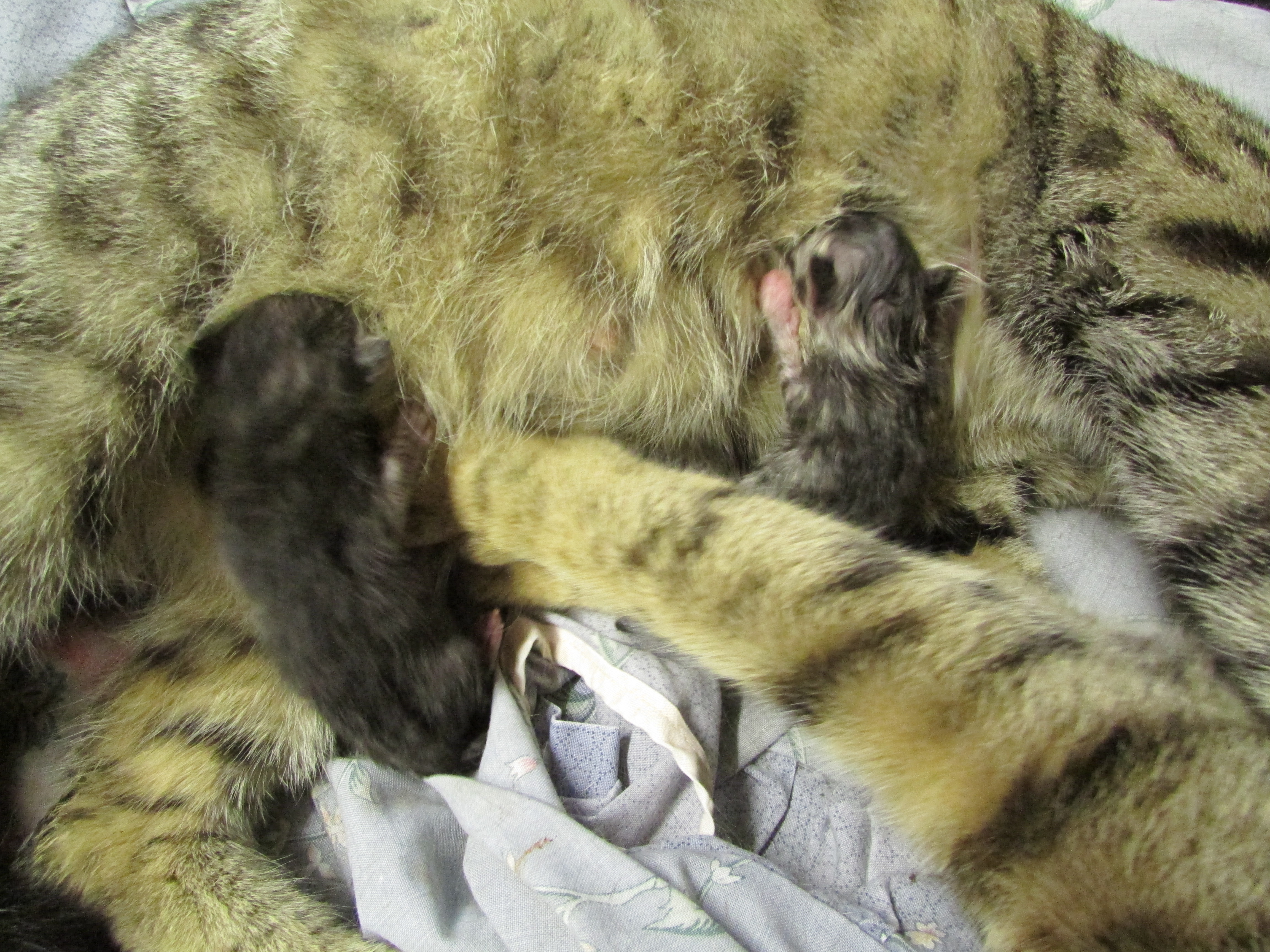
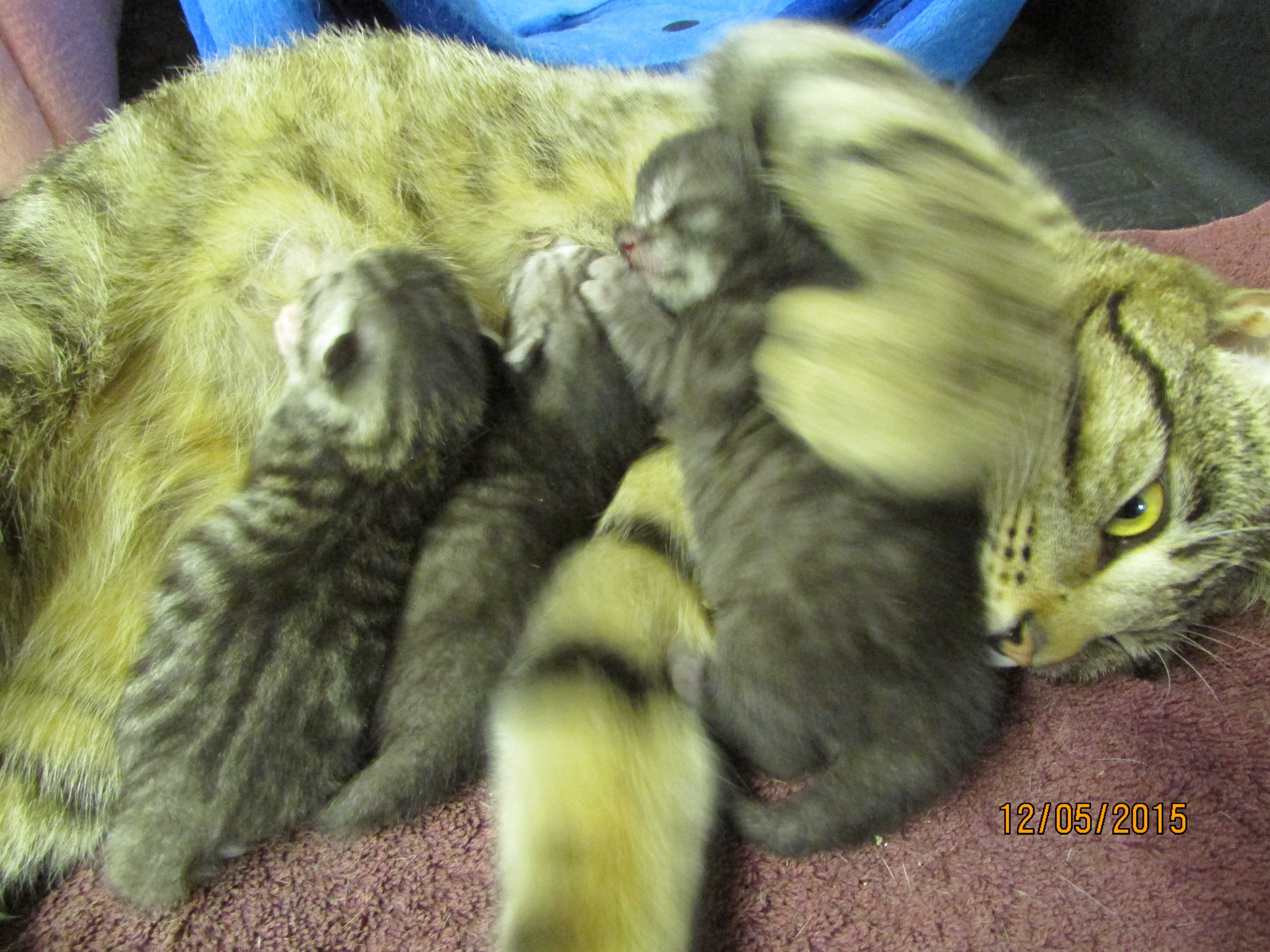
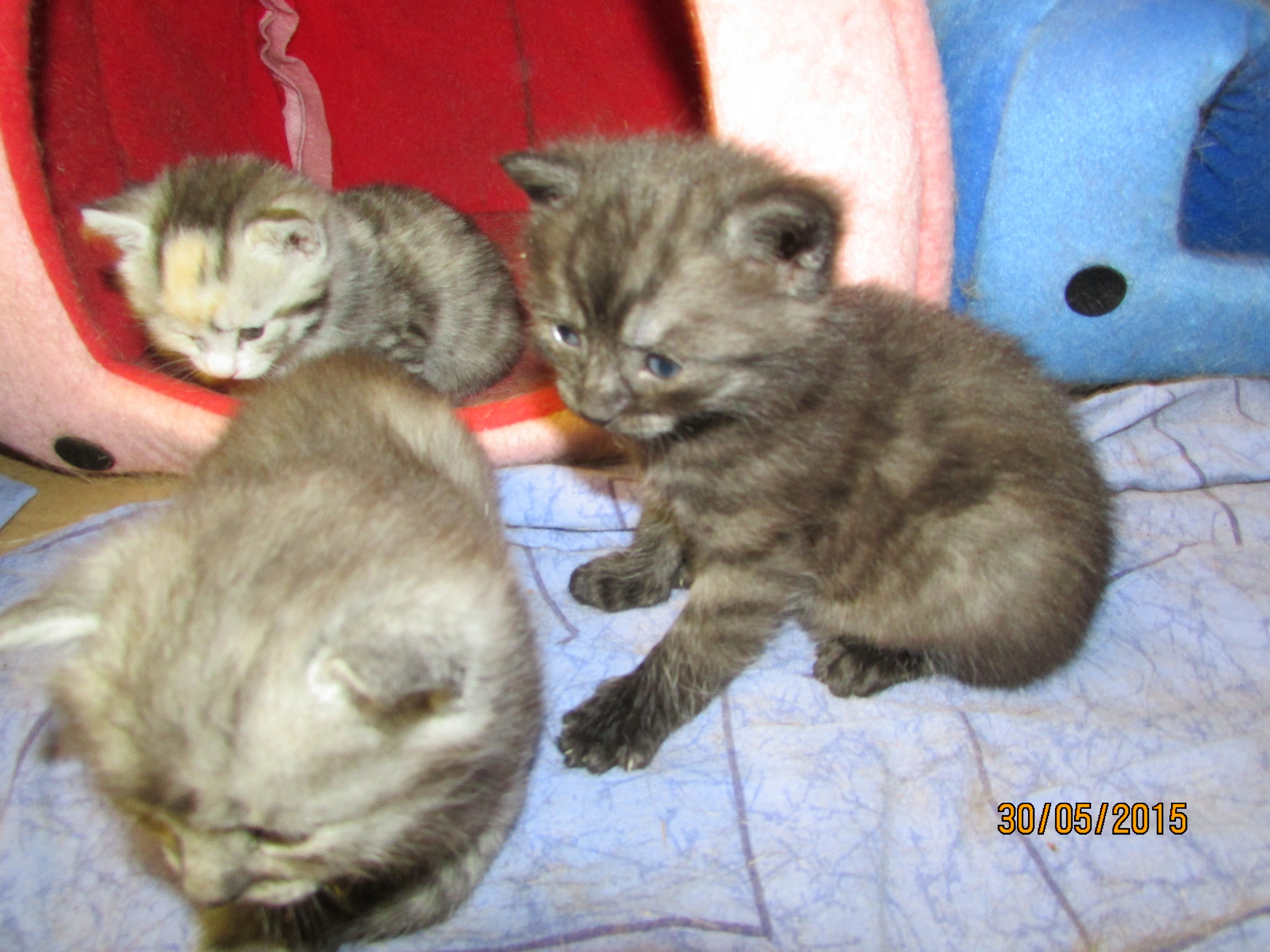
Two cats wasn’t really enough to cure the rat problem, so we didn’t spey Milly and Molly. After about eighteen months, both were pregnant. Between them, they gave birth to four live kittens. Both cats are tabbies. Their kittens were a mixture of silver tabby, smoke and black. They had clearly never read any of the parenting books about how to care for kittens, and regularly sat on window sills where the kittens couldn’t reach them. I had to check them frequently and reunite mothers and kittens so they could feed. They weren’t really keen on any of them. Apart from the black one.

Milly had given birth to the black kitten, but they both wanted him. So they would hide him. I would go into the garage and all the kittens would be mewing in a heap, the mothers would be sitting somewhere high, and the black kitten would be missing. I found him at the back of shelves, in empty boxes and behind gardening equipment. When I put him with the litter, Molly would try to steal him, ignoring her own kitten.

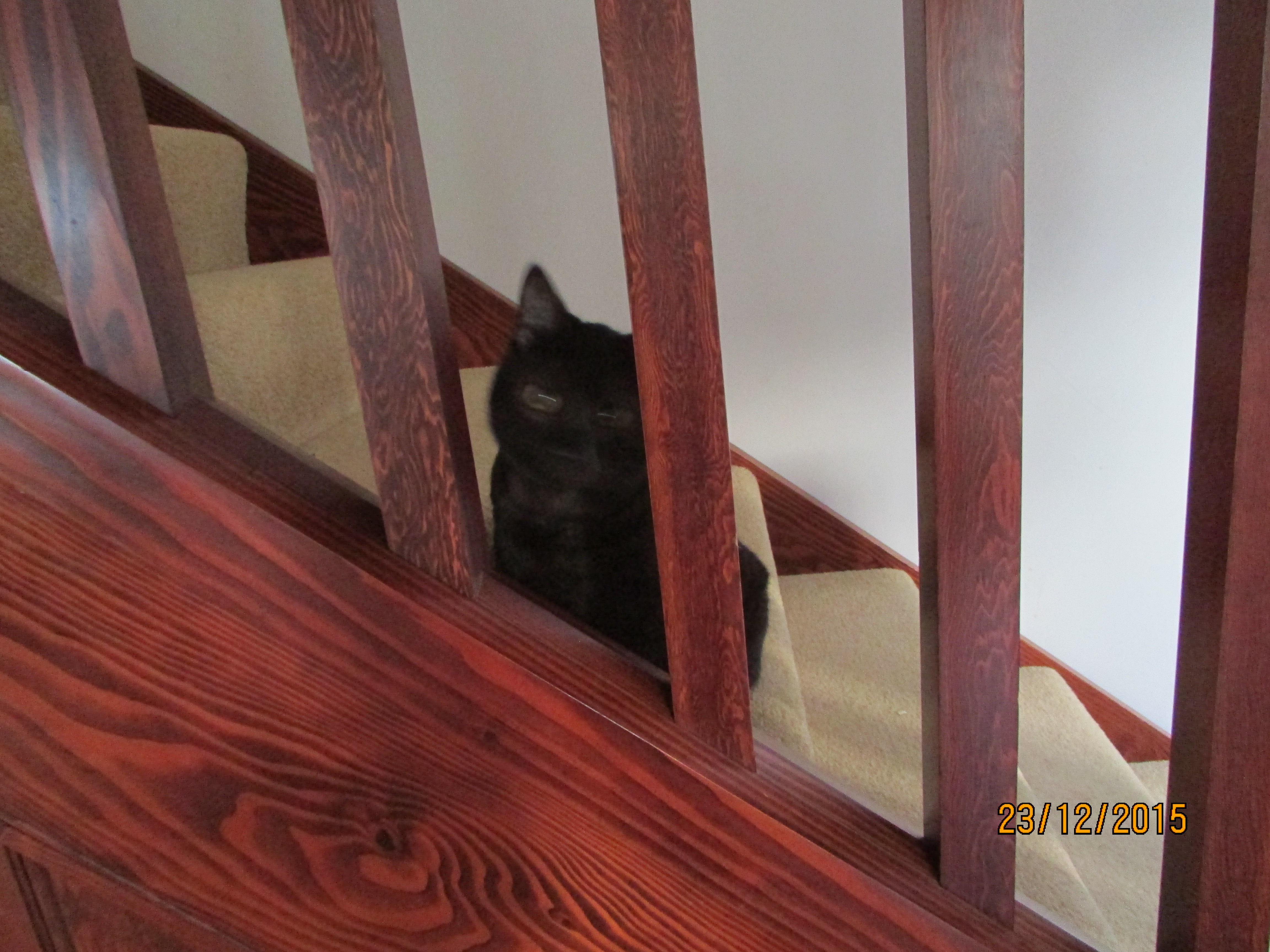
Eventually the kittens were weaned. I decided we had too many cats, so gave one kitten to a friend, put two kittens with the mothers to live in the workshop, and kept one kitten inside, as a house cat. I chose the black kitten (I wanted him too!) We called him Mungo.

Now, everyone thinks their pet is special, (and people without pets think they are slightly mad.) So I won’t bore you with details of how Mungo would ‘beg’, reaching up with his front paws when he wanted to be picked up. Or how he would chase a plastic egg for many hours. Or how he loved the dog and would dive bomb her paws when she was sleeping. Or how he regularly killed the kitchen towel. Or slept in a very ‘uncatlike’ manner, on his back, with all four legs outstretched, often in the dog’s bed. Or how he adopted Husband (“not a cat person”) and ran to meet him when he arrived home from work and sat on him all evening. But he was special to us, and we loved him.

Initially, the plan was to keep him inside, for him to be a house cat. Then one day he escaped. I found him outside, playing with his siblings. He looked so happy, it seemed cruel to keep him locked inside. But the traffic in the farm lane worried me. So we decided that at night, when there were very few cars (about 4 per hour) he could go outside. During the day, when the roads were busier, he would stay inside.

We soon had a routine going. Every evening, Midge, his brother, would loiter around the cat flap, waiting. When we went to bed, we would let Mungo into the utility room, so he could use the cat flap. Every morning, around 6am, when we let the dog out, Mungo would run in. His siblings often were with him, it was like they were saying ‘Bye’ to him when he came inside. He would then eat, drink, and follow us around, asking to be picked up. Then he would nap for most of the day.

Until the last day. Until the day when he didn’t come in when we let Kia into the garden. The day when a man knocked on the door at 7am, to ask if I had a black cat.

I rushed outside. Some landscapers had found him, on their way to work. They had parked their vans in the lane and were carrying him in a sling made from an old towel. There were about nine of them, young men in their green uniforms. It was so kind of them to bother. Sometimes people are nice.

We could see Mungo had, at least, a broken leg, so we rushed him to the vet. As we drove, he took my thumb into his mouth, like a child holding my hand. Then either pain or fear became intense, and he bit down, both sides, straight through my thumb. It hurt.

He spent all day at the vets. Apparently, the most dangerous thing for a cat is shock, so they kept him warm and sedated, planning to operate the following day. He died that evening.

It was a bizarre day. I ate four doughnuts and drank lots of coffee. Completely missed lunchtime, it was suddenly mid-afternoon. I had walked the dog and cleaned out the birds and was wishing we had something other than Mr Bump plasters in the house for my sore thumb. Felt weird, sometimes fine, sometimes contemplating losing all the other people and animals I care about. Everyone dies. It’s always horrible. There isn’t a way to protect yourself, not without being hard.

I wondered where God was in all this. The thing is, we aren’t protected from the rubbish in life. God helps us get through it, but we aren’t ‘owed’ by God, whatever our relationship with him. He isn’t a genie in a lamp, we cannot pray and ‘make’ God change things. Life is horrid sometimes. It hurts. It’s tough. We can only try to survive and recover from the hurt. But I do believe he cares. When we hurt, God hurts too. It doesn’t have to be lonely even if it is always hard. I did pray, but in a sort of wordless, lifting the sadness sort of way – a young child raising their arms to a parent sort of way.

In time, I will thank God that I had Mungo, even though a year was too short, his life was too little. But do I have the right to say that? Sometimes, when we are hurting, we feel the loss more than we ever felt the joy. Mungo was a cat. In a few days, life will be back on kilter. I will carry the loss of my father’s death for the rest of my life. However, I have no ‘rights’ here, I did not create any of the things that I have loved, I can feel pain, sadness, loss. But should I feel anger? Whilst it is a natural part of the grieving process, there comes a time when I should let that go. We have never been promised a pain free life, not here, not now.

If you have had a pet, I don’t need to explain the sorrow, the tears, the huge hole that he has left. My thumb was sore for days, but the pain was sort of helpful. It was something physical that recognised the pain I felt inside.

There is no happy ending here. Sometimes in real life there isn’t. I wish I had never let him outside at night. But then, I am glad that I did. He had such a happy little life. He climbed trees and played with his family and did everything that cats are designed to do. I know, eventually, I will think of him and smile. I will recognise that he gave us one year of lots of joy. But right now, I miss him. Thank you for reading.

IMG_2242 IMG_2292 IMG_2334 IMG_2345 IMG_2363 IMG_2373

IMG_2380 IMG_2404 IMG_2421 IMG_2682 IMG_2689

IMG_2700 IMG_3562 IMG_3803 IMG_3868 IMG_1917

Image 16

xxxxx
You can follow my blog at : anneethompson.com

xxxxx

If you are interested, you can read why I think prayer doesn’t work at:

Why I Think Prayer ‘Doesn’t Work’

xxxxxxxxx

Publishing a Book – Part Three


IMG_4814

So, after you have had your manuscript edited, have proofread it about a million times, and are fairly sure that you have picked up as many typos as is humanely possible, it is ready to send to a typesetter.

The typesetter puts your book into the right format for the printer. You can assume a cost of about 90p a page. It depends on print size, but a 100,000 word book is about 300 pages. They will send you examples of different text, ask if you want the first letter of a new chapter written as a capital, or the first word, or the whole of the first line. These were all things I had never noticed before (and I am an avid reader!) I think I only notice if something is ‘odd’, if a self-published book has strayed from what my eye is used to seeing. I was therefore grateful that my typesetter knew more than me. He had done this many times before and could tell me what a ‘normal’ book looked like. I had to keep running to my bookshelves to check things.

You also want someone with experience so the margins are the correct size – you don’t want the words running into the fold of the book, nor do you want massive margins because that means more pages, which will cost you more money.

Some people choose to have a running header, with either the author name, or the chapter title on each page. Some people like the page numbers in the centre, some prefer them at the top. I didn’t have strong opinions on much, I was mainly just keen that my book didn’t look odd : that chapter one began on a right hand page, that the starting margins were full width and all others indented, things like that. This was all learned while I was answering questions and checking inside other books.

I was told that pages are bound in batches of 16 (I think it depends on the size of your book.) This means there might be some empty pages, at either the front or the back. My typesetter suggested that this would be a good place to put some ‘tasters’ of my other books, to encourage people to buy them, a ‘free’ advert.

You might also like to think about the copyright page. There is fairly standard wording inside most books, but you can adapt it to suit yourself. In England, copyright is automatic, if you have written something, you own the copyright. Proving that you have written something might be difficult, so it is possible to register your copyright – there are details of how to do this in the Writer’s Handbook. It does not mean you now own the copyright (you did already) but if someone challenges you, you have proof of when you registered it.

It is usual on the copyright page to name the publisher and to put their contact details. If you use a self-publishing company, they will, I presume, put their address there. We weren’t using a company, we were doing it all ourselves and I wasn’t keen on having my own address in the book. We therefore made a company name, The Cobweb Press, and made a website. This gave us an email address that we could use in all the books. (I am sort of hoping no one ever looks at the website, as we made it in a rush, and it’s not going to impress anyone. But it serves a purpose and means strangers can contact me – to order books – without knowing my home address.)

You might decide to have an ISBN number. These are usually included on the copyright page and also on the back cover. It is not essential to have an ISBN number, but shops like them (some shops will refuse to stock the book unless it has one) and it makes it easier for people to find your book if they know it. You buy them. I bought 10 numbers for £149. There was some paperwork to fill out (husband did that for me) and then they were issued, to use as I wished. The ‘cover guy’ had to leave a white space in the correct place so the barcode could be added (my printer did that.)

We also needed to register the book with the British Library, and send them a copy when it was published.

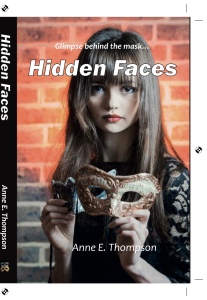
You need a cover for your book. Go and look at some. I wanted something that would stand out, but not something that looked odd. Find someone who has done other book covers. You need to consider how thick the printed book will be, because that changes the thickness of the spine (and the cover is designed as one long, -front/spine/ back – file.) My typesetter had also done other book covers, so he also did my cover. For the front, you can look online and find many different photographs that are available to buy to use as book covers. These range from textures to use as backgrounds, to full pictures. I opted to have a person on my cover, as the book is about people. The ‘cover guy’ came and took lots of photographs and I chose the one I liked best. He then added the words, designed the spine of the book, suggested ideas for the back. I included the ‘blurb for the back’ in the file I sent to the editor, so that was ready to use. I think you need to allow £35 for a cover, plus a price for the photograph.

We also discussed choices with the printer. We used cpi (if you look at books you have bought, it usually says who has printed them; ‘cpi’ have printed many of the paperback books that you find in the bookshops.) They were very helpful and gave us a menu of options. We could, if we had wanted, had just a single book printed. If anyone has a book they want to see in print but they don’t plan to sell, they might like to have one copy made. Obviously, the more books we had printed, the cheaper the cost per book. It cost about £2 per book to print 500 copies. If you want to add a barcode then add an extra £35 to the overall printing costs.

They asked us which thickness of paper we wanted and what size of page. I didn’t have a clue! They kindly sent samples of books they had printed, so I could ask all my family and friends to turn the pages and tell me which thickness they preferred. Made a change from talking about the weather.

If you read all the terms and conditions that the printer sends, you might find that one condition is that you have indemnity insurance. This was quite a hassle to arrange, and I don’t think actually it will cover much should anyone ever sue me, claiming I have stolen their ideas. But if you read all the small print (husband is good at that sort of thing) it was a condition of being published, so we did it. We had to estimate my probable earnings for the year – the insurance company then told us they didn’t go that low! It cost £175 for annual insurance.

I really want to tell you about the things we did to market the book, why I had to register for US tax, and how much shops will want to make when they sell your book; but this is too long. I will include it in Part Four. Why not sign up to follow my blog so you don’t miss it?

anneethompson.com

xxxxxxxxxxxx

Thank you for reading.

xxxx

Hidden Faces by Anne E Thompson.
When did you last buy your Mum a gift that made her laugh?

Hidden Faces final cover 6 July 2016

xxx

Publishing a Book – Part two


IMG_4814

All the characters in my book had the same names as my cousins. I have a lot of cousins. This was completely unintentional. When I write a story, it’s like watching a film, I see what is happening in my head and write it down. When a new character arrives, I pluck a name quickly from the air and continue. Obviously somewhere deep in my subconscious, my cousins’ names popped up. I didn’t even notice until reading the manuscript a few weeks after I had finished it. None of the characters were like my cousins, they just shared names. I changed them (the names, not my cousins.) I now use the internet to find ‘the most popular names in’ a certain year, and choose a surname from the telephone directory. It is safer.

My point is, it is difficult to always see what we have written. We are too involved. This is why I think an editor is an excellent investment. Someone unconnected with the book can point out that you use ‘that’ five times in a sentence and that it isn’t always that essential. Plus all those split infinitives that want naughtily to creep into your writing.

Finding an editor was not altogether easy (nothing was, to be honest.) To begin with, anyone can call themselves an editor, so how do you know who is worth employing? It will be a major outlay before you can even think about recouping any money – about £750 for a 100,000 word manuscript. If an editor is worth having, they will be busy, so sending them samples of work as a ‘test’ is unlikely to be possible unless you intend to pay them for that. You can of course ask which other books they have edited and buy them. However, how do you know if the splattering of unnecessary commas and the split infinitives are because the editor didn’t spot them or because the author/publisher rejected their editorial points? We decided on two editors eventually, one for Hidden Faces and one for Counting Stars. We figured that whichever one we preferred could then edit my other books (which had now grown to four, as I had finished writing Joanna, my story about a psychopath.)

One person (who had better remain nameless) was an editor by trade, did a lot of work for mainstream publishers and was very busy. So busy in fact that we had to wait three months before she would start work on my book. This was annoying, but I felt she was ‘a professional’ and therefore worth waiting for. The other editor we chose, was a writer himself, a writing lecturer and had edited various other books.

I think you need to decide what you want the editor to do. I thought I wanted them to simply proof read my work. This is a confusing term. A proofread is the final thing that happens, after the work has been edited and type-set, before it goes to the printer. What I actually wanted is called ‘copy-editing’.

My use of English is not terrible, I have taught English, I know most of the ‘rules’ about using possessive apostrophes, using fragments of sentences, all the usual stuff. I also knew that it is very difficult to notice mistakes in my own work. I tend to read what I meant to write. I also tend to miss things if I have rewritten something, and perhaps the tense is now different, or the possessive comma is now in the wrong place because I have changed to a plural noun. There is also lots of formal English that I do not know. I am hazy on when you need an Oxford comma, when to use “had -plus -verb” in past tense, when “leant” should be “leaned”. I would guess that most of my readers would also not know, however, I find badly written books irritating to read. I did not want my book to irritate someone who was better educated than me. I did not want to be embarrassed by my book (letting strangers read my work is embarrassing enough as it is!)

Editors will also check for continuity. It is easy to lose track of days in a story, and then you find that you have a nine day week. Or a character enters a room wearing a blue sweater and leaves wearing a red one. The editor should spot these mistakes. I also wanted to be told if the book was too long, or had boring parts, or was confusing. It is difficult to know yourself, because you have written it, you know everything about the story, someone else has to tell you if you have communicated it effectively.

The final thing an editor will do, is prepare the file for the type-setter. So, when everything is edited and all the words are perfect, they will prepare a file that shows where the time breaks are, which paragraphs should be indented, things like that.

As a separate point, do you know where paragraphs are indented? I thought a new paragraph was always indented. My editor pointed out that actually, the first line of a new chapter or after a time break, is NOT indented. I had never noticed that before! This is the sort of thing that makes paying for an editor worth the money. If I had simply printed my book (the “vanity press” label) then I would have started the chapter with an indented paragraph. Then, when someone pointed out to me that actually, ‘proper’ books do not have this format, I would forever be embarrassed by my book. (In case you haven’t noticed, this is a big fear of mine.)

Now, the actual process of editing was also unexpected. Editor 2 took my manuscript immediately and in roughly two weeks, returned it, with comments put in using ‘track changes’. This allowed me to read his comments and either accept or reject his advice. It was good advice, I accepted it. He told me things like, I had built up a lot of tension, and then immediately let it go, I should keep the reader in suspense for longer. Or, I had used “then” four times in a paragraph. Or, Max had put a drink into his bag but the next day he took out a snack. He pointed out split infinitives that I had missed, some dodgy spelling and suggested I lengthened some descriptions. All very helpful, well worth the money.

Editor 1 was a different experience. As a rule, I try to not criticise people on my blog – I think there is enough negativity in the world. But I want to warn you, so you don’t make the same mistakes. Some of her recommendations were valid, but many were just frustrating. She changed things that made the text clunky to read, changed the flow, made it feel like a school essay, not a novel. I spent many hours going through my manuscript, mainly changing her additions to what had been there originally. This is a definite bonus with self-publishing. If someone else was publishing my book, they may have accepted all her suggestions, changing my work into something which I myself would never want to read. I’m not sure how you would initially avoid this. People have different writing styles, so unless you have worked with an editor previously, you will not know if their style suits your own.

This makes choosing an editor difficult. If they do not actually write themselves, will they be aware of emotive writing, making the words flow easily, building atmosphere – or will they just plonk down full-stops where they were taught to in school? If, however, they are writers themselves, will they necessarily know what a split infinitive is? Will they have the discipline necessary to catch every error?

Then, when I returned the manuscript to editor 1 for the next round of changes, she informed me she had received a lot of work from Random House, she would let me know when she had time to pick up my script again.

This was a shock! I had expected that, having waited three months for her to start, my manuscript would then take priority. I felt like the person who hires builders, watches while they dig a lot of holes for foundations, and then doesn’t see them for months because they have gone to build something else. Please learn from my experience. If you hire an editor who works for mainstream publishers, those publishers are likely to take priority. If time is important to you, discuss that at the outset and put it in writing.

Also, someone who is using all their energy editing other work, will not necessarily be as thorough with yours. I found grammatical mistakes in my returned manuscript. True, I had missed them myself, but my misconception was that an editor would find and correct them all. This is not the case. I sometimes read books that have occasional errors in them. It doesn’t much bother me, they are easy to pass over, and I have always assumed they were printing errors. I now realise they might not be, they might be mistakes that neither the author nor the editor nor the proofreader picked up prior to printing. No one is perfect and three checkers do not guarantee perfection. When I queried this with the editor (and in fairness, she did lower her final bill accordingly) she said that no editor would expect to pick up every mistake, that is the job of the type-setter and author and proofreader. So, be warned, employing other people does not mean your own work is finished!

Eventually, your work will finally be edited. It has been back and forth several times until it is exactly how you want it and this takes time. It is a full book. A book takes a few days to read and every time it is returned you need to read the whole thing, from beginning to end. Hours of work. By the time I had read it for about the eighth time straight, it was beginning to lose some of its appeal. I was finding it hard to enjoy the story. This is where you need good family and friends. My sons pointed out that authors often dislike their own work when it’s first published, that actors and directors are renown for not wanting to watch the films they are in. This was normal. I should keep hold of my first conviction and keep going. (Sometimes my family are nice to me.)

After the editing, you also need to consider the cover, the blurb for the back, the type-setting, the final proofreader. Then of course, you will need to sell your book, which involves some marketing. Son the Economist has studied Marketing, he had a LOT of advice. I will continue this another time.

If you want to be sure you won’t miss the next instalment,
why not sign up to follow my blog?
Then each post will be emailed to you.

anneethompson.com

Thank you for reading.

xxxxxx

HIDDEN FACES by Anne E Thompson

Available from bookshops and Amazon. Strong characters and light humour wrapped up in an easy-read novel.
Hidden Faces final cover 6 July 2016

xxxxxxxxxx