Holiday with the Sibs.


Holiday With The Sibs

I went on holiday with my siblings. It’s the first time in decades that we have all been together, without our spouses, for a few days of reminiscing. If you follow my blog, you will know that Uncle Frank died a few weeks ago, and my cousin wrote to say that she was taking her mum to Cromer. My other cousins all agreed we would try to be there at about the same time, and on a hot July weekend we met in Cromer.

Cromer is where my family always went on holiday when I was growing up. Set on the North Norfolk coastline, I have many memories (not happy ones) of horizontal rain and wind that was always cold. Always. The sea was rough and grey, and I learnt to swim in it, gulping salty mouthfuls as the waves washed over me. It’s a wonder I didn’t die of typhoid. I believe it’s a lot cleaner now.

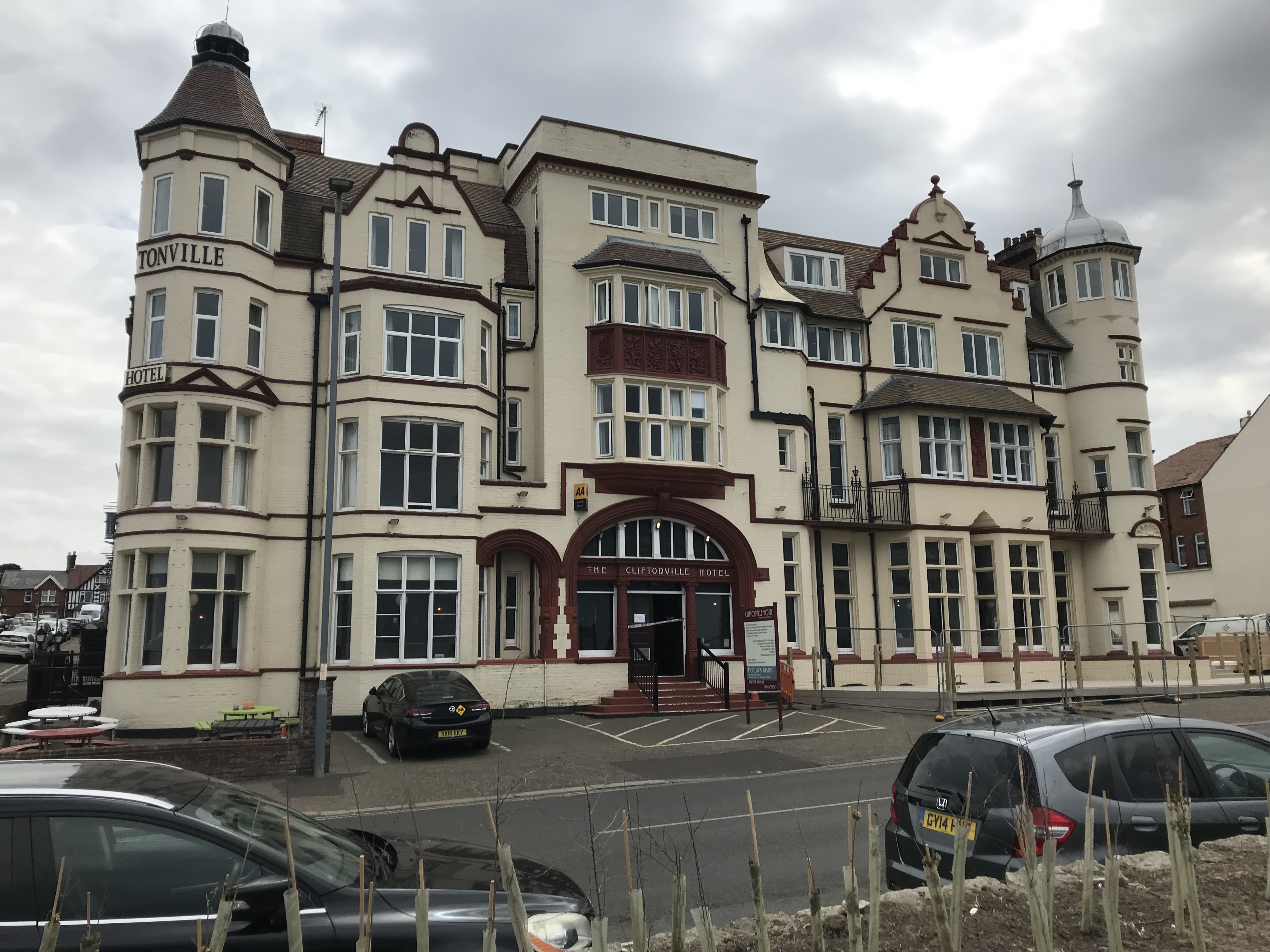
We used to camp, which is not my favourite thing. This time my siblings and I stayed in a hotel—The Cliftonville—with Mum and Aunty Margaret. What fun! The hotel looked on the website rather like an old people’s home, but it was cheap, so we booked it anyway. When we arrived it was under renovation by new owners, and it was all rather lovely. I thoroughly recommend it if you visit Cromer, very comfortable and the staff were amazingly helpful.

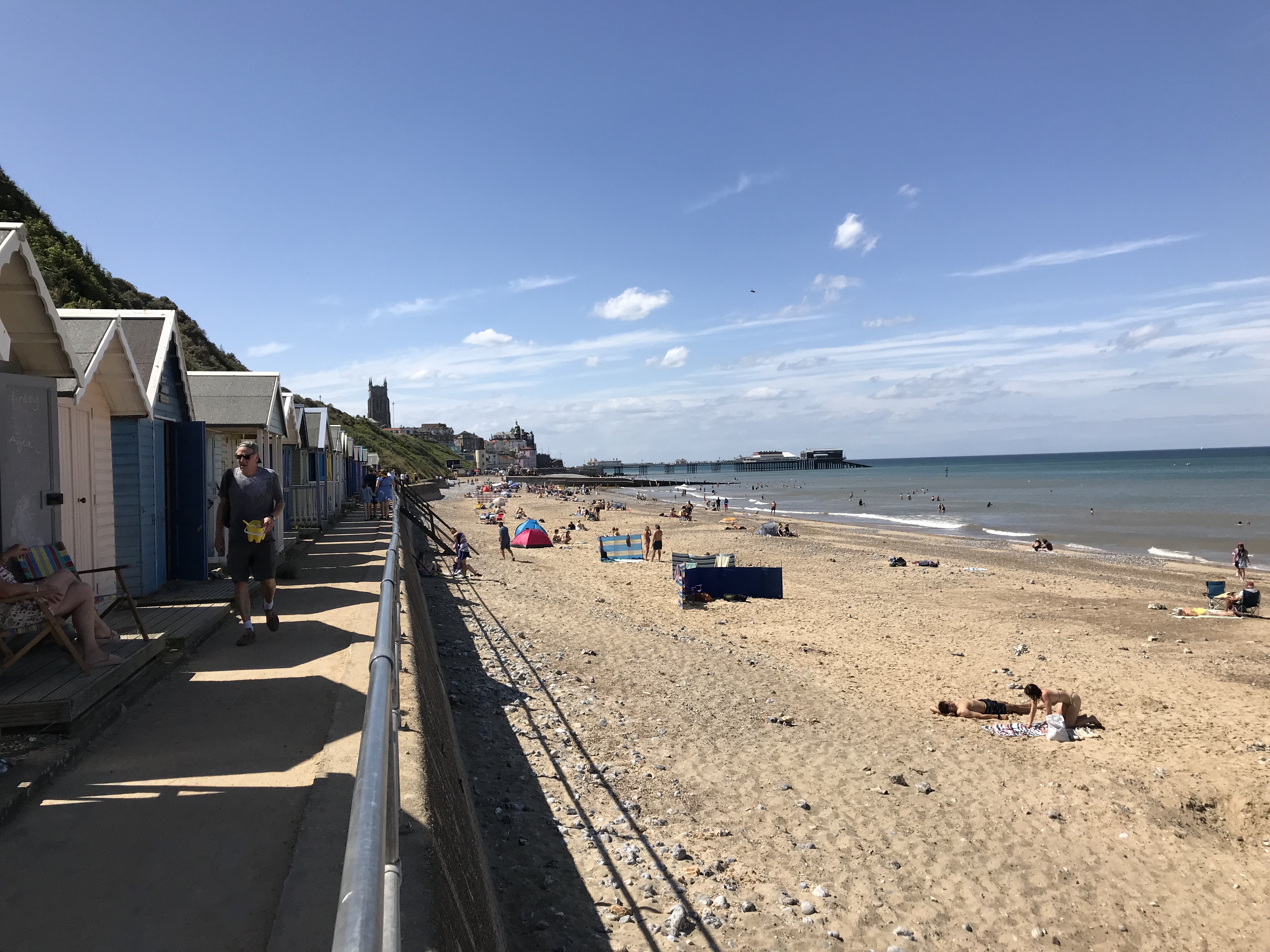
My relatives however, camped. Some were in caravans or motorhomes (the older generation) and some were in tents. We all met up each day on the beach in Runton, at the bottom of the ramp behind the big black rocks. The weather this July was hot—I don’t think I have ever been in Cromer when it is hot. The beach was full of families, and dogs, and old ladies in deckchairs. You could tell the regular visitors, because they sat behind windbreaks, a tradition borne from experience. But they didn’t need to, any breeze was a welcome break from the sun.

We sent the days simply talking; remembering past events and people, reliving happy moments. Cromer hasn’t changed much, but there were a few new things—like goats (bagots) which now live on the cliff edge, and the steps to Granny’s caravan have now washed away, and so have the steps to the picnic field, so the routes down to the beach are fewer, and people willing to walk can have a private pitch between Cromer and Runton. The military pillbox on the beach has sunk, we used to be able to go in there when we were young (it always stank though). The boating lake has gone, and most of the shops have changed owner, and Banksy has painted a picture on the concrete wall.
But our own graffiti was still there—we carved our names in wet concrete 40 years ago, and you can still see the shape of the letters, though Bessie’s[1] footprints have worn away over time. The slot machines were still there, and many ice cream shops, and the painted beach huts, and the fishing boats, and the pier.

A Banksy picture, a bit washed away but still pretty cool!

We popped in to one of the many antique shops, and found shelves of old books and stacks of papers from before we were born. I bought some from 1936, but my brother did better because he found some from the war which describe the liberation of the camps. They were only £2 each, and I wished I’d bought more. There were commemorative mugs, and medals which were shockingly cheap—only a few pounds for a medal marking 15 years in the red cross during the war.

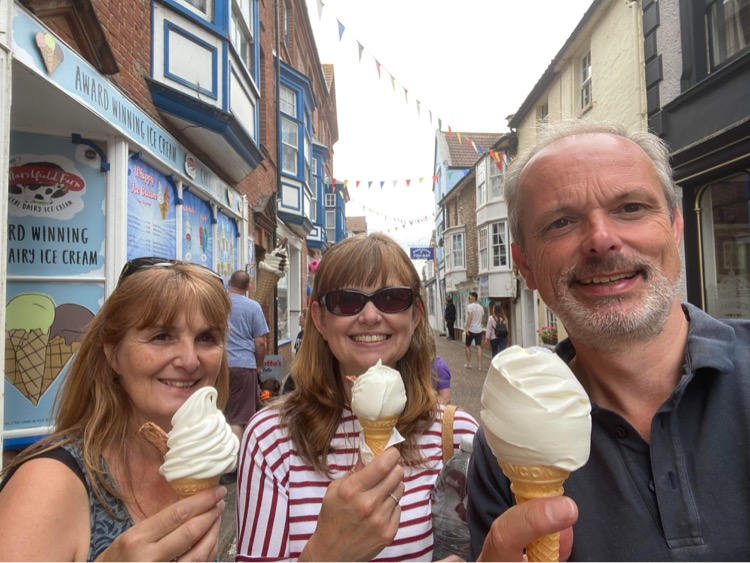
We ate fish and chips, and ice creams, and walked along the pier—because you have to do those things in Cromer whether it’s sunny or raining. It’s nicer when it’s sunny. Actually, everything was fun, especially the talking. There we were, three pretty-old-now siblings, reliving our past. Not something that happens very often, but definitely worth making time for.

Then I returned home, to find out how Husband had coped with the chickens and ducks and cats and dog. All was well, and I tried to thank him, and to explain what we had done for the weekend, but I couldn’t really, there wasn’t much to tell. We had just talked.

Thanks for reading. Hope you find something nice to talk about today.
Take care.
Love, Anne x

anneethompson.com


[1] Bessie was the family collie dog, and she ran all over the wet cement when we wrote our names. She died in 1985.

Anne E. Thompson
Thank you for reading anneethompson.com Why not sign up to follow my blog?

Reykjavik Holiday Diary 3


Friday June 10th

I needed recovery time after the trip to see the puffins (see last blog for more details). I did absolutely nothing all morning, except a quick trip to the supermarket. I realised that many of the vegetables and fruit are grown in geothermal greenhouses. The heat is pumped up from underground, all that the plants need is a bit of light, and tadaah! Icelandic strawberries are a thing. According to my sister, Icelandic chocolate is also a thing, so I bought some to give as gifts when we get home.

We drove to see a recent (2021) eruption at Fagradalsfjall, about an hour from the city. The volcano had been dormant for 800 years, though the geologists had guessed it might erupt when they started measuring new activity. I expect being a geologist is rather an essential job in Iceland. The puffin island has a whole town that was covered by lava in the 70’s, which has now become bit of a tourist attraction. I’m not sure what it must be like, living somewhere that you know is relatively unstable. Perhaps you simply don’t think about it.

As we drove towards Fagradalsfjall I could see the mountain, it looked as if a giant had tipped black oil all over it, lines of black running down the sides. We parked in a grey gravel carpark, and began to follow signs. But the walk to the lava was long and steep, so we gave up.

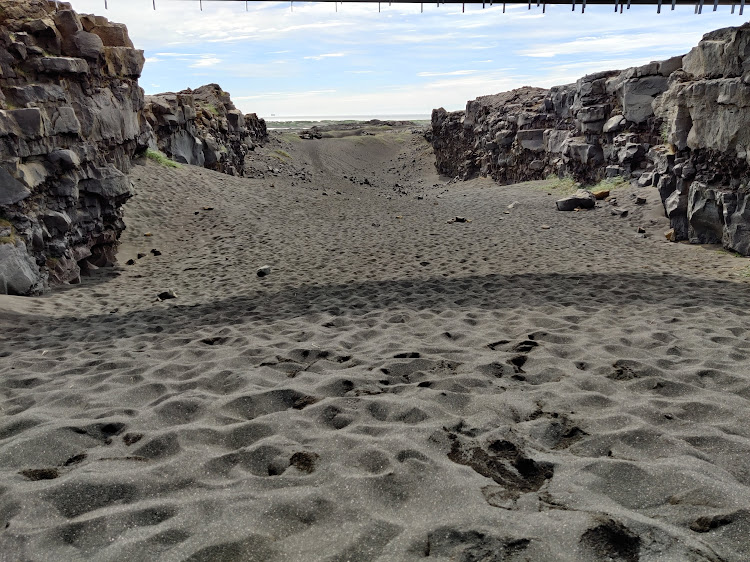
Drove to where the North American and Eurasian tectonic plates meet. This is so not something that I understand—I remember the theory, that the earth is covered in massive plates of rock that are moving too slowly to see, and that when they rub against each other we get earthquakes—but faced with two walls of rock, my head cannot quite link the two. The area looked like a moonscape. More grey rubble.

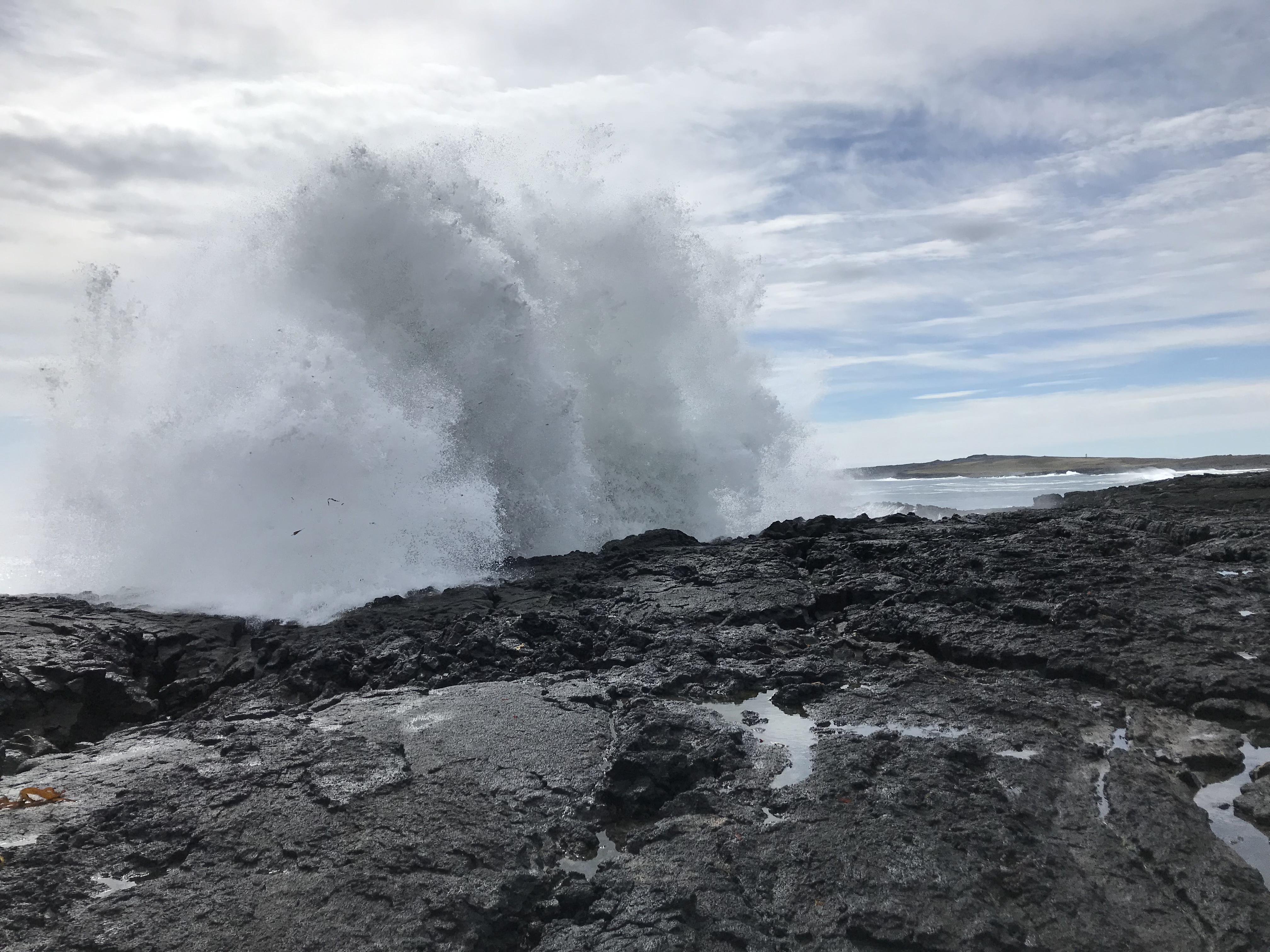
We saw more hot springs, and a lava cove with great waves crashing onto them. Iceland is fascinating, but there’s nothing cosy about it.

Waves crashing over lava.

Saturday 11th June

Spurred on by the excitement of seeing tectonic plates meeting, Husband suggested we drove ‘The Golden Circle.’ This is named after a waterfall, and is a circular route (obviously) that passes a few major highlights. It’s an 186 mile loop. I worried about whether there would be toilets, and decided not to drink anything all day.

First stop was Thingvellir National Park. (This is an anglicised spelling, as it actually begins with a strange p/b letter.) The park has the first parliament (which we didn’t see) and another rift valley between plates, which was very dramatic and was used in The Game of Thrones. We saw Oxararfoss waterfall, plus some toilets and expensive parking.

We drove across the plain, with snowy mountains in the distance, while Husband muttered about the speed limit. At Haukadalur geothermal field we saw all the interesting hot springs/bubbling mud stuff that we have seen previously, but slightly bigger and better organised in terms of paths and signs. I stayed on the walkways this time. There was also a geyser, Strokkur, which erupted every 10 minutes. It was a large pool of water, steam floating on the surface, and it sort of ‘lifted’ for a moment, before erupting in a giant plume of boiling water. Amazing.

Click on the image to see the video.

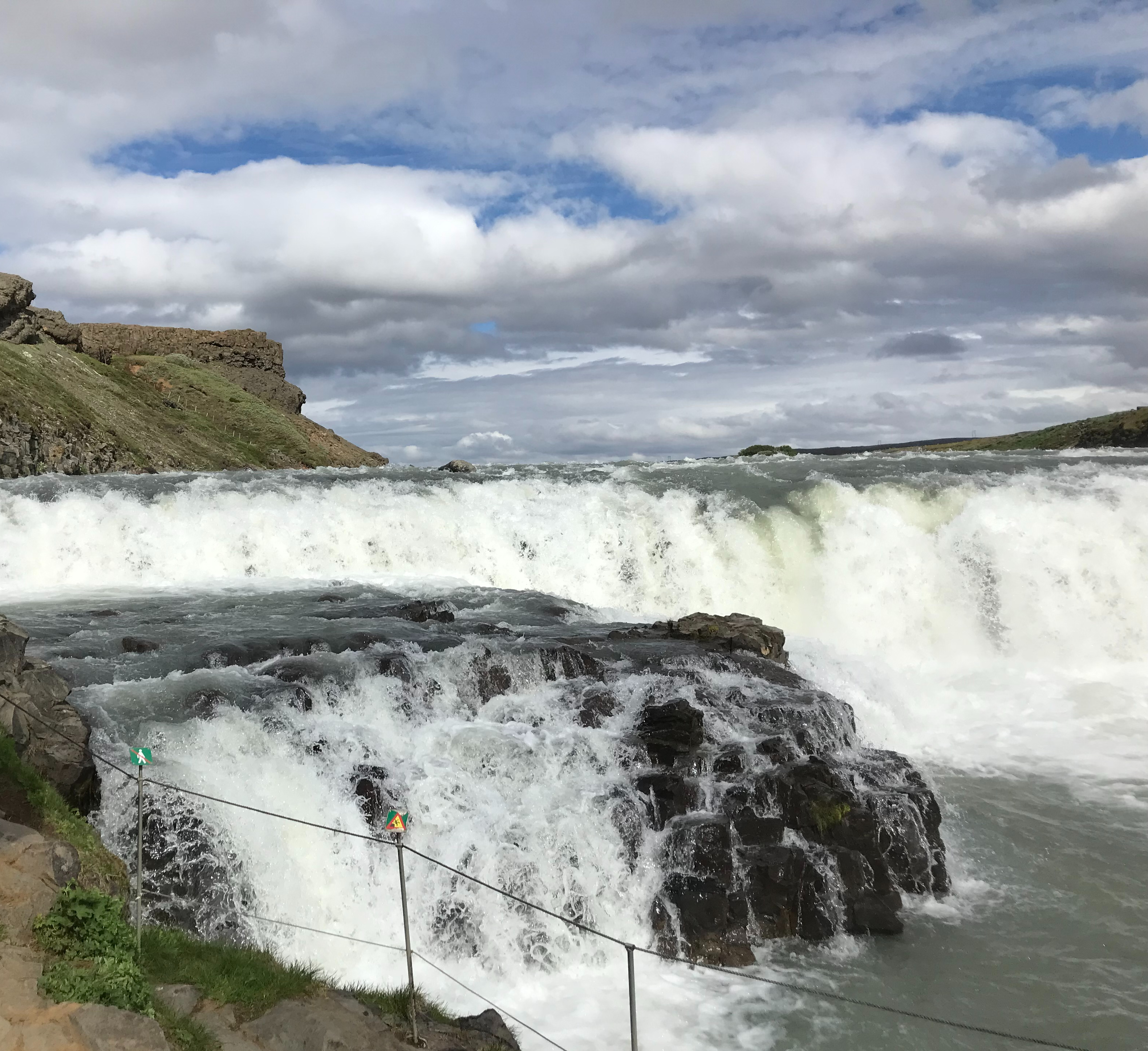
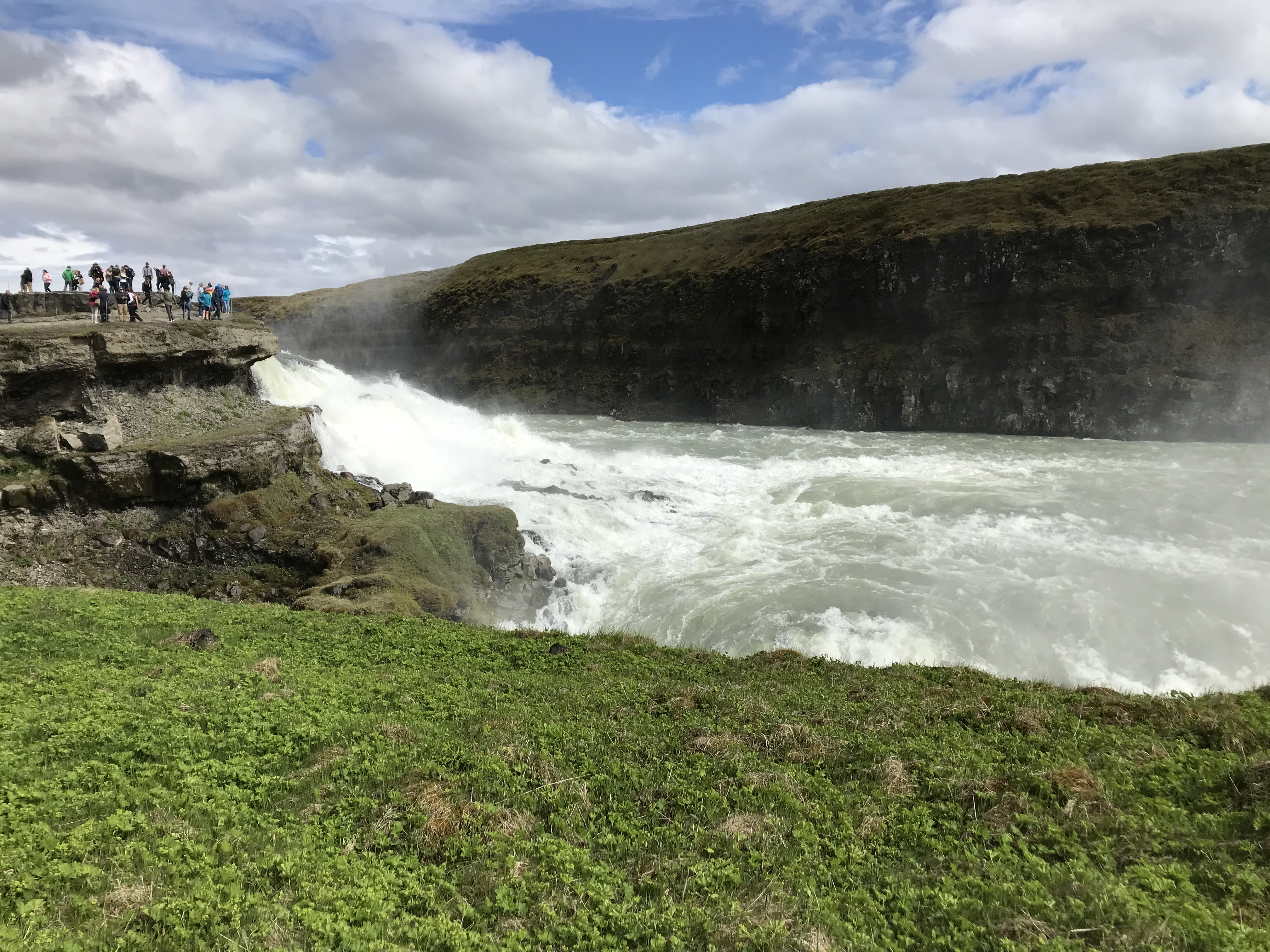
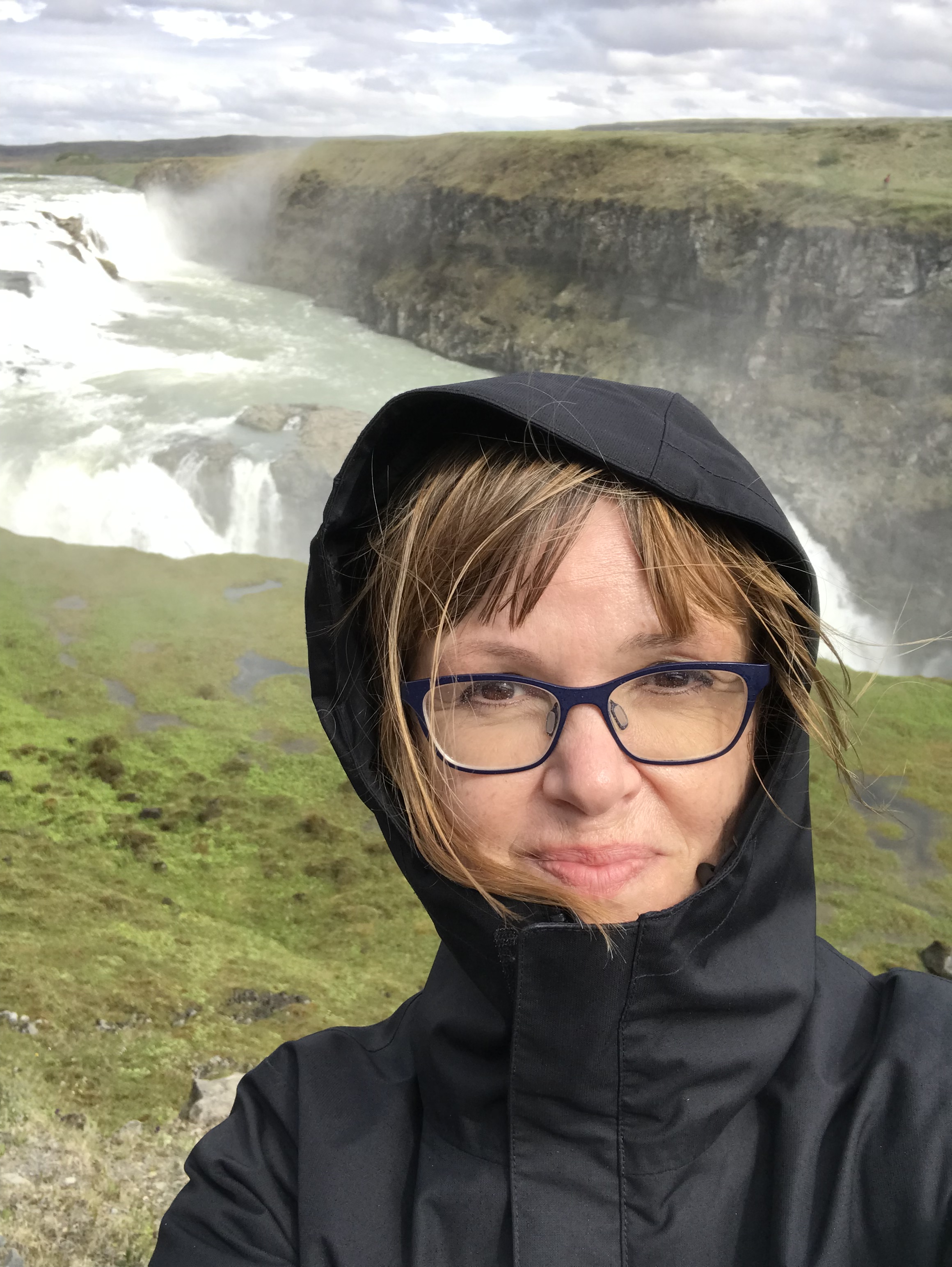
We finished our drive at Gullfoss, the ‘golden’ waterfall. It was huge, a great mass of water tumbling into a valley.

There were carparks, with toilets, at every stop, so dehydration was unnecessary.

Hope you have all that you need today. Take care.
Love, Anne x

Anne E. Thompson
Thank you for reading anneethompson.com Why not sign up to follow my blog?

I tried to learn 2 Chronicles 7:14 while in Iceland. How much of it have you managed to remember? Read it again to refresh your memory:

(NIV)

If my people, who are called by my name, will humble themselves and pray and seek my face and turn from their wicked ways, then I will hear from heaven, and I will forgive their sin and will heal their land.

(OHB)

וְיִכָּנְעוּ עַמִּי אֲשֶׁר נִֽקְרָא־שְׁמִי עֲלֵיהֶם וְיִֽתְפַּֽלְלוּ וִֽיבַקְשׁוּ פָנַי וְיָשֻׁבוּ מִדַּרְכֵיהֶם הָרָעִים וַאֲנִי אֶשְׁמַע 

מִן־הַשָּׁמַיִם וְאֶסְלַח לְחַטָּאתָם וְאֶרְפָּא אֶת־אַרְצָֽם׃

(CCB) 

而这些被称为我名下的子民若谦卑下来,祈祷、寻求我的面,离开恶道,我必从天上垂听,赦免他们的罪,医治他们的土地。

anneethompson.com
*****

Reykjavik Holiday Dairy 2


Day Three: A Walk From Hell

Woke early, had coffee, read Bible. Then went for a run (my first mistake of the day).

Grabbed a packed lunch (well, a bag with bread, cheese, a knife, tomatoes and some biscuits). Drove to ferry terminal. We were off to see the world’s largest puffin colony, and I was excited. This was why I had come to Iceland. The tourist shops were filled with photographs of the cheery little birds with their colourful beaks, and plastic models, and fridge magnets. Now I was going to see thousands of them. It was going to be a once-in-a-lifetime event.

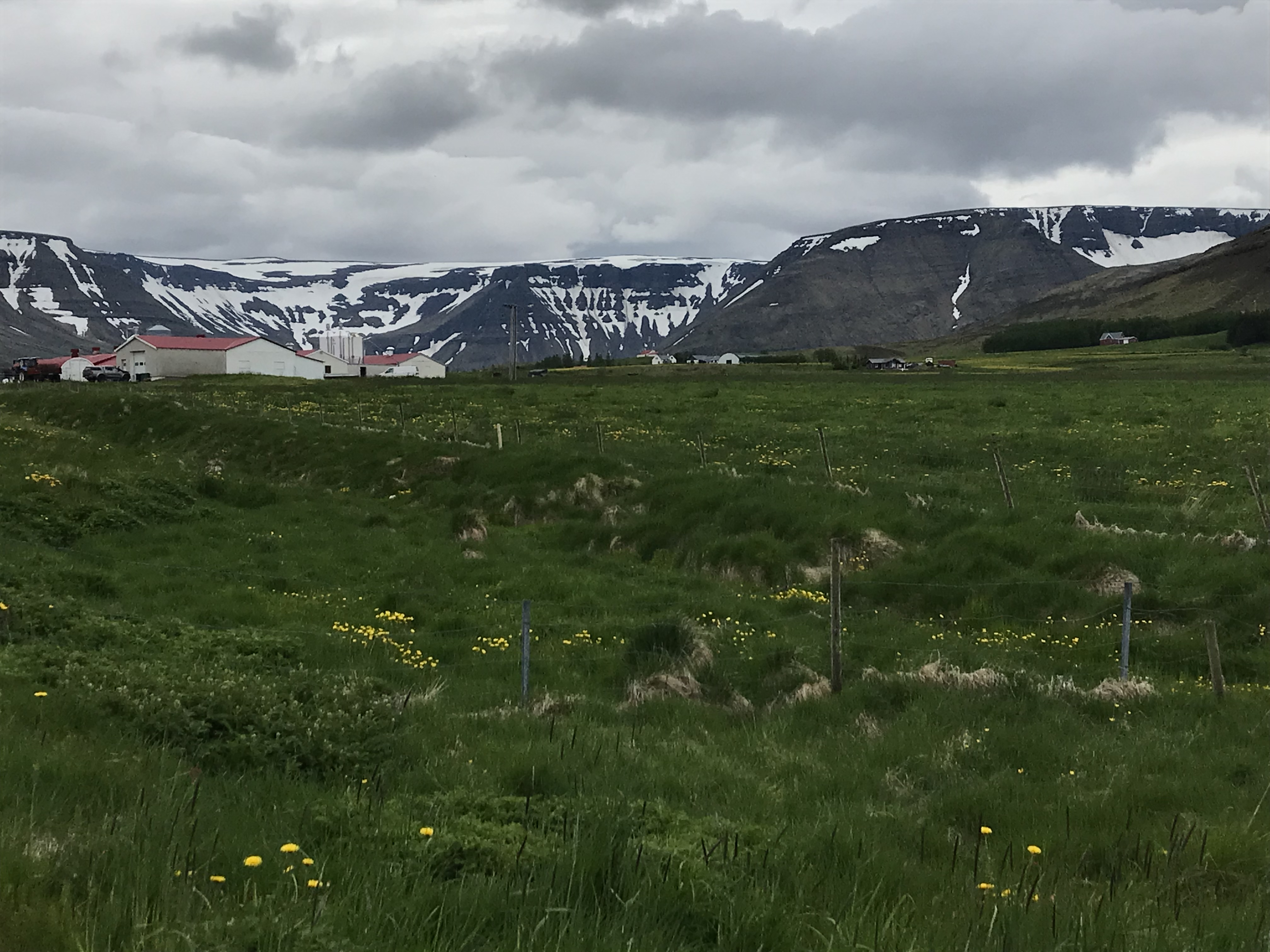
On the drive we saw flat plains with mountains in the distance, black rubble, steam rising from the ground, colourful houses, blue lupins everywhere and spectacular waterfalls. There were sheep, and horses, but we didn’t see any cows.

At the ferry terminal, all the cars were parked on an area of gravel, but there were no spaces. A line of cars was waiting to board the ferry, but we were going the cheap route and leaving our car at the terminal. (Second mistake of the day.) Husband decided he would ‘start a new line’ and abandoned car between two rows of neatly parked vehicles. We would return to either a new line of cars with ours in the middle, or wheel-clamps. I hoped it wouldn’t be the clamps.

Caught the ferry from Landeyjahafnarv to Heimaey, one of the Vestmannaeyjar islands. (Do hope that spelling is correct, and don’t ask how they’re pronounced!) We saw black sand, and choppy water. Didn’t see a whale (though I am sure they were there). As we drew into port we sailed close to cliffs pock-marked with white, each one the nest of a sea-bird. It was incredibly windy on the boat.

The ferry terminal was slightly confusing, and we weren’t sure where to go, but Husband had the puffin colony marked on Google maps, so we followed the route out of town. (Third mistake of the day.) I knew it would take about an hour—a long but comfortable walk. What I didn’t realise was that the strong wind from the sea would continue, with powerful force, blowing against us the whole way. The cross-winds were immense, blowing me across the road (luckily very few cars) and pushing against me as I struggled up the hill out of town. I thought it would improve as we left the port, but it didn’t. In some places the gusts were even stronger. Every step was a fight. I seriously doubted if I would make it.

Nearly dead. Walking to the distant mountain on the right.

About half way, I informed Husband that there was a distinct possibility that I might die of exhaustion. He checked his map, and said there was a much-less-good puffin lookout a bit nearer than the completely excellent one that we had travelled especially to Iceland to see. He didn’t mention that I had forgotten to bring both binoculars and a proper camera with a zoom lens, but he was probably thinking it. I didn’t have the energy to discuss it, and on I plodded, blown off-course with every step. Husband carried all my stuff, and offered frequent rests, but it was still incredibly difficult. I felt real envy as taxis and mini-buses passed us.

We made it to the lookout shelter. There were lots of puffins, but they weren’t very near, and without either binoculars or a camera zoom, we couldn’t see their bright beaks. It was still fun to see them, and after I had recovered, I was glad that I had come.

Each puffin mates for life, and we saw the couples working together. They made their nests in burrows on the cliff edge, it looked like a rabbit warren, with one puffin standing at the entrance and the other flying off for food. We saw flashes of their rounded tummies as they flew past, and their distinctive black and white feathers. But not really their beaks.

Probably not the best puffin photograph that you will ever see.

After our picnic lunch, Husband (nervously) reminded me that we had booked to go back on the ferry that left in an hour. I made no comment, saving my energy for another walk-from-hell. The wind was no less on the way back, and neither way was it behind us, it simply blew (blew is such a feeble word, it heaved and shoved) across us and around us, pulling at our coats and hats and pushing us when we walked. I staggered back to the ferry, made it in time, and sat, huddled on the deck, every muscle limp. I remembered the car, and decided that if the wheels were clamped, we would leave it, and buy a new one. I was much too tired to negotiate with an Icelandic carpark attendant.

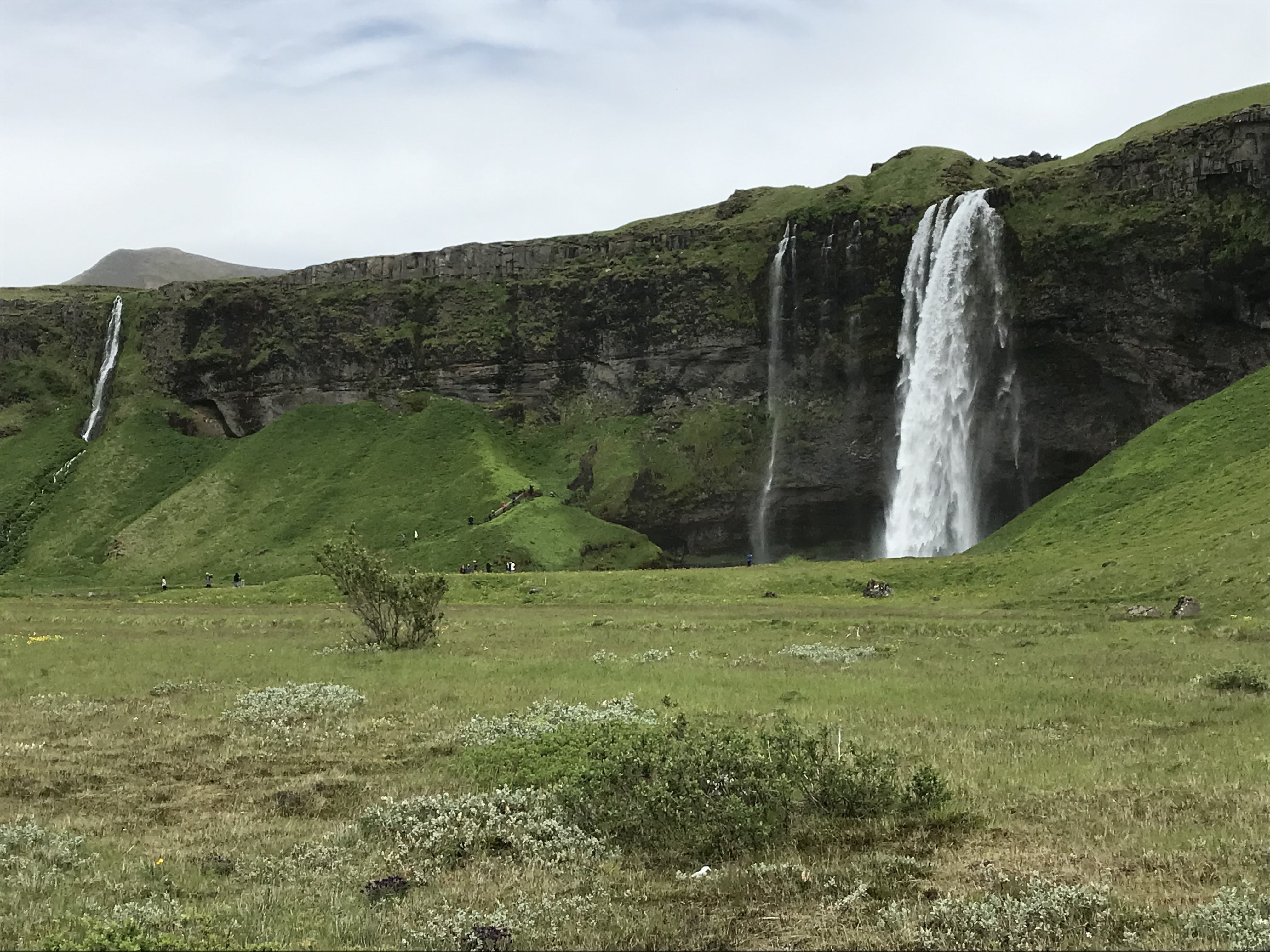
Luckily, the car sat in the middle of a new row of cars. We drove back via Seljalandsfoss waterfalls. I stayed in the car. Husband went to look, and reappeared with a box of donuts (this is why I love the man).

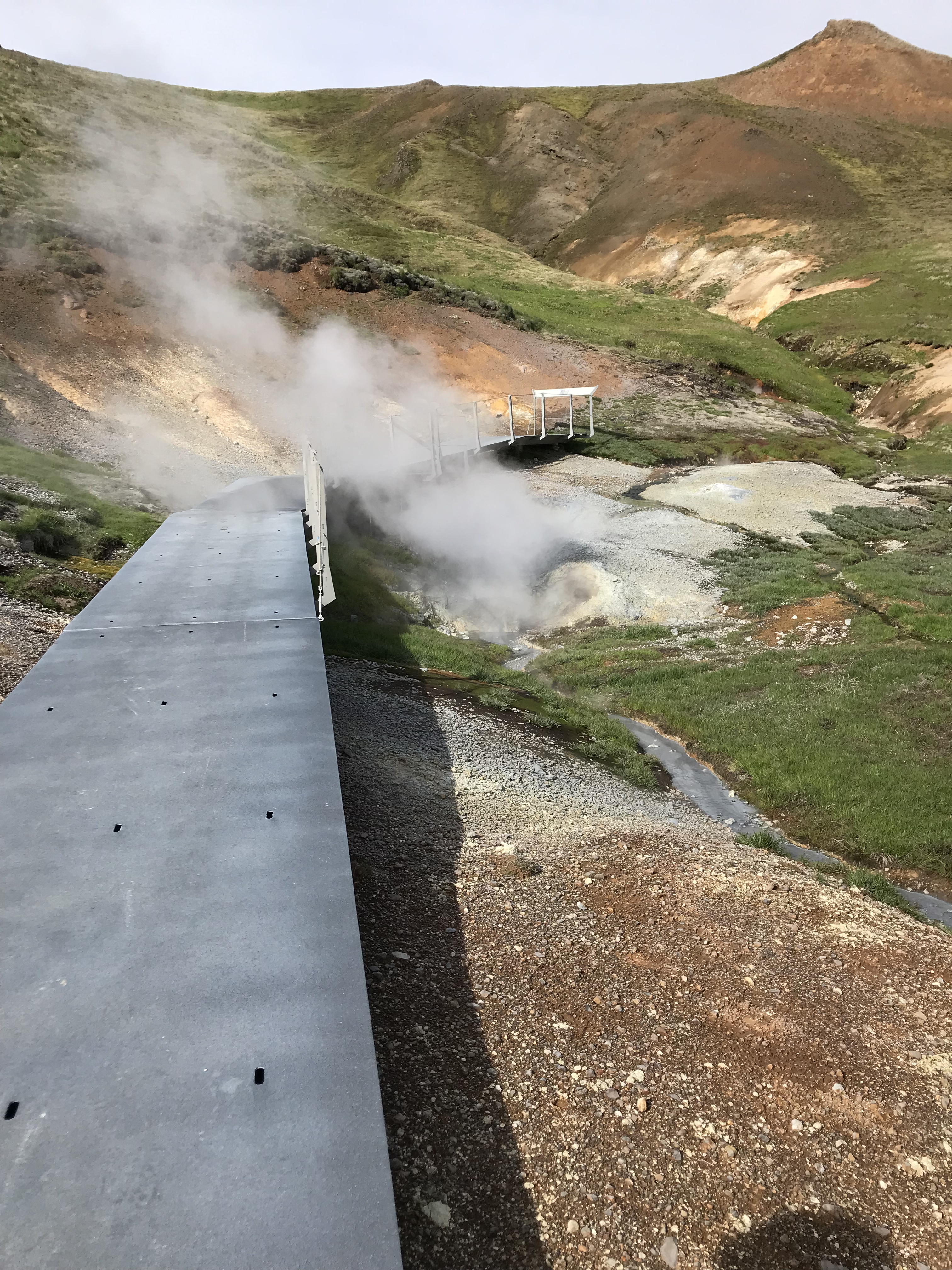
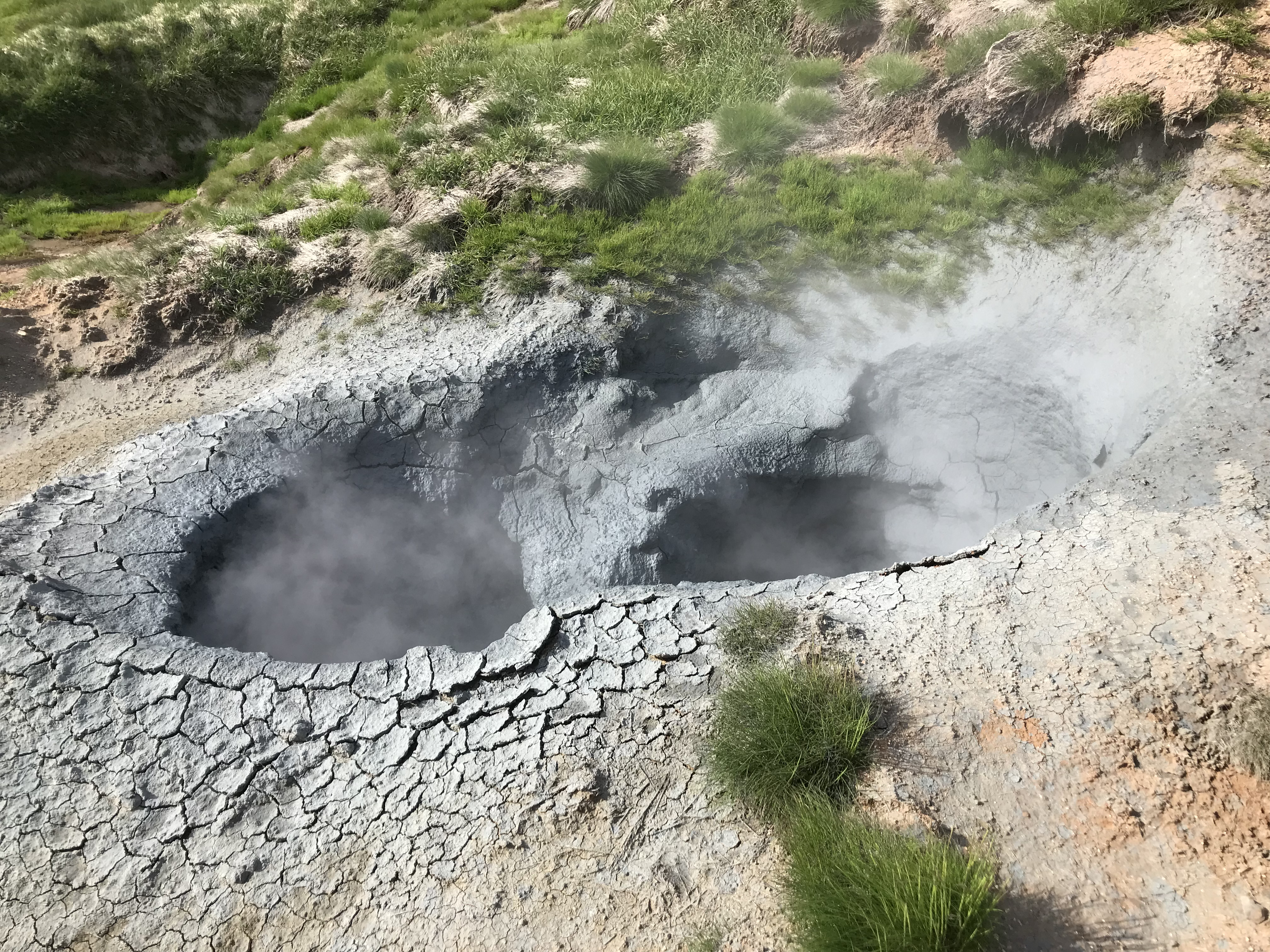
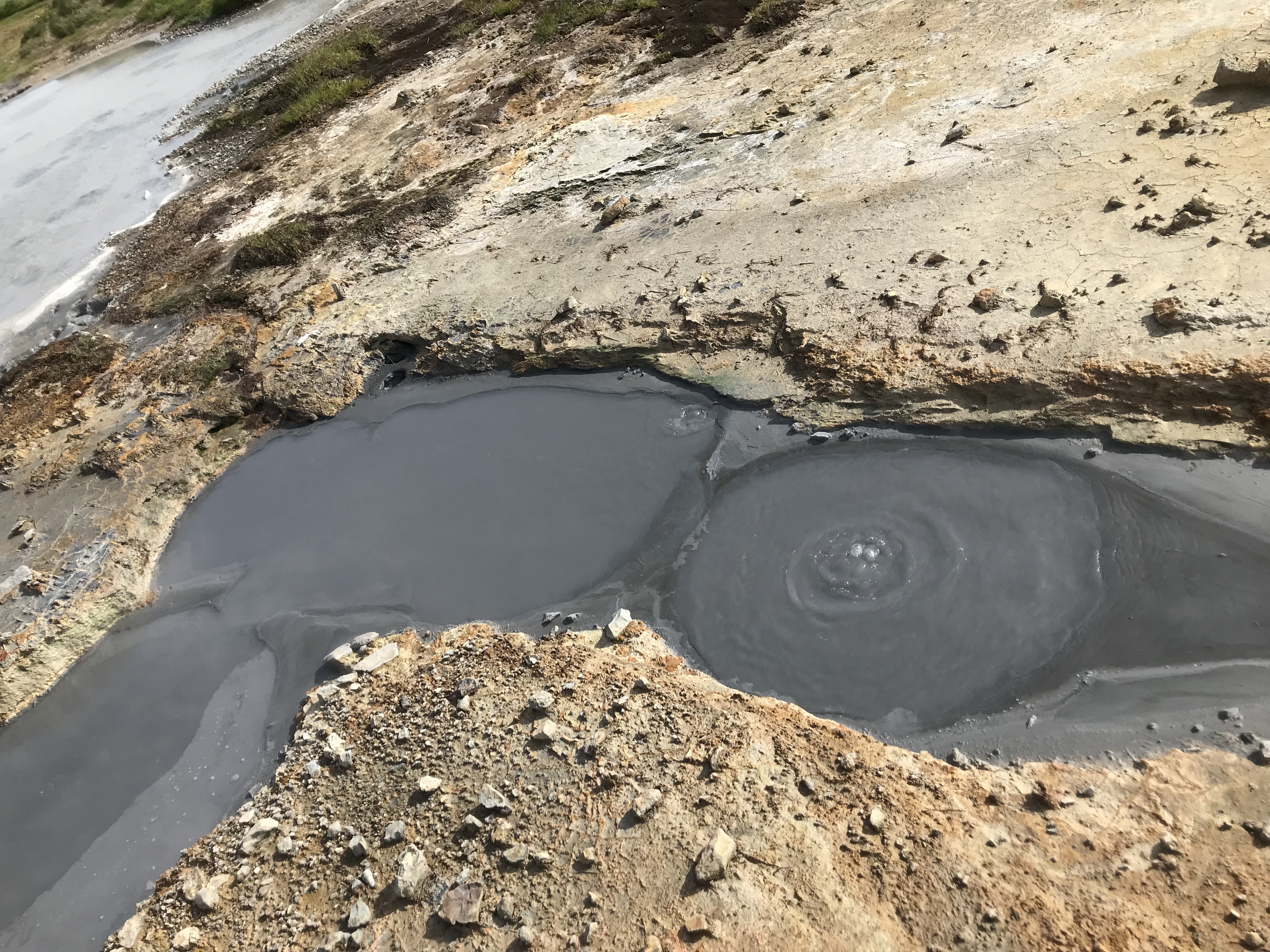
Next we stopped at Hveraldalir geothermal area, and the donuts had revived me sufficiently to leave the car. There was a slightly run-down walkway, and information signs, and a strong smell of sulphur. No one else was there. We couldn’t see where the walkway started, and my legs were too shaky to walk far, so I nipped across the mud. Big mistake. In fact, it was fine, but a short distance further, the innocuous-looking mud was bubbling. A foot in boiling mud was probably not a good idea. (I remembered my daughter had explicitly warned me about things like this, I should have listened.)

All very interesting. We saw steam vents, and boiling mud, fumaroles and pools of boiling water. The sulphur/rotting eggs smell was overwhelming. But a very cool place to visit, and it was free. I stayed on the walkway on the way back to the car.

Dinner at the lamb burger place again, too tired to be creative. Went to bed exhausted.

Thanks for reading. I’ll tell you about our whale-watching trip in a later blog.

Hope you don’t make any big mistakes this week. Take care.
Love, Anne x

The verse I tried to learn while in Iceland was 2 Chronicles 7:14.

How much have you managed to remember? Read it again to refresh your memory:

(NIV)

If my people, who are called by my name, will humble themselves and pray and seek my face and turn from their wicked ways, then I will hear from heaven, and I will forgive their sin and will heal their land.

(OHB)

וְיִכָּנְעוּ עַמִּי אֲשֶׁר נִֽקְרָא־שְׁמִי עֲלֵיהֶם וְיִֽתְפַּֽלְלוּ וִֽיבַקְשׁוּ פָנַי וְיָשֻׁבוּ מִדַּרְכֵיהֶם הָרָעִים וַאֲנִי אֶשְׁמַע 

מִן־הַשָּׁמַיִם וְאֶסְלַח לְחַטָּאתָם וְאֶרְפָּא אֶת־אַרְצָֽם׃

(CCB) 

而这些被称为我名下的子民若谦卑下来,祈祷、寻求我的面,离开恶道,我必从天上垂听,赦免他们的罪,医治他们的土地。

Anne E. Thompson
Thank you for reading anneethompson.com Why not sign up to follow my blog?

anneethompson.com
*****

Reykjavik


Reykjavik Holiday Dairy

Day One: Arrival Day

Unpacked our stuff at the Airbnb, then went to find a supermarket. Everything is very expensive, and as we speak no Icelandic, it was quite an adventure. A man overheard us debating the milk, and kindly showed us which one was semi-skimmed (yellow top). I later overheard some Americans trying to find ‘half-and-half’ and mistakenly picking up baby-milk. “That’s breast-milk!” one exclaimed, which made me laugh.

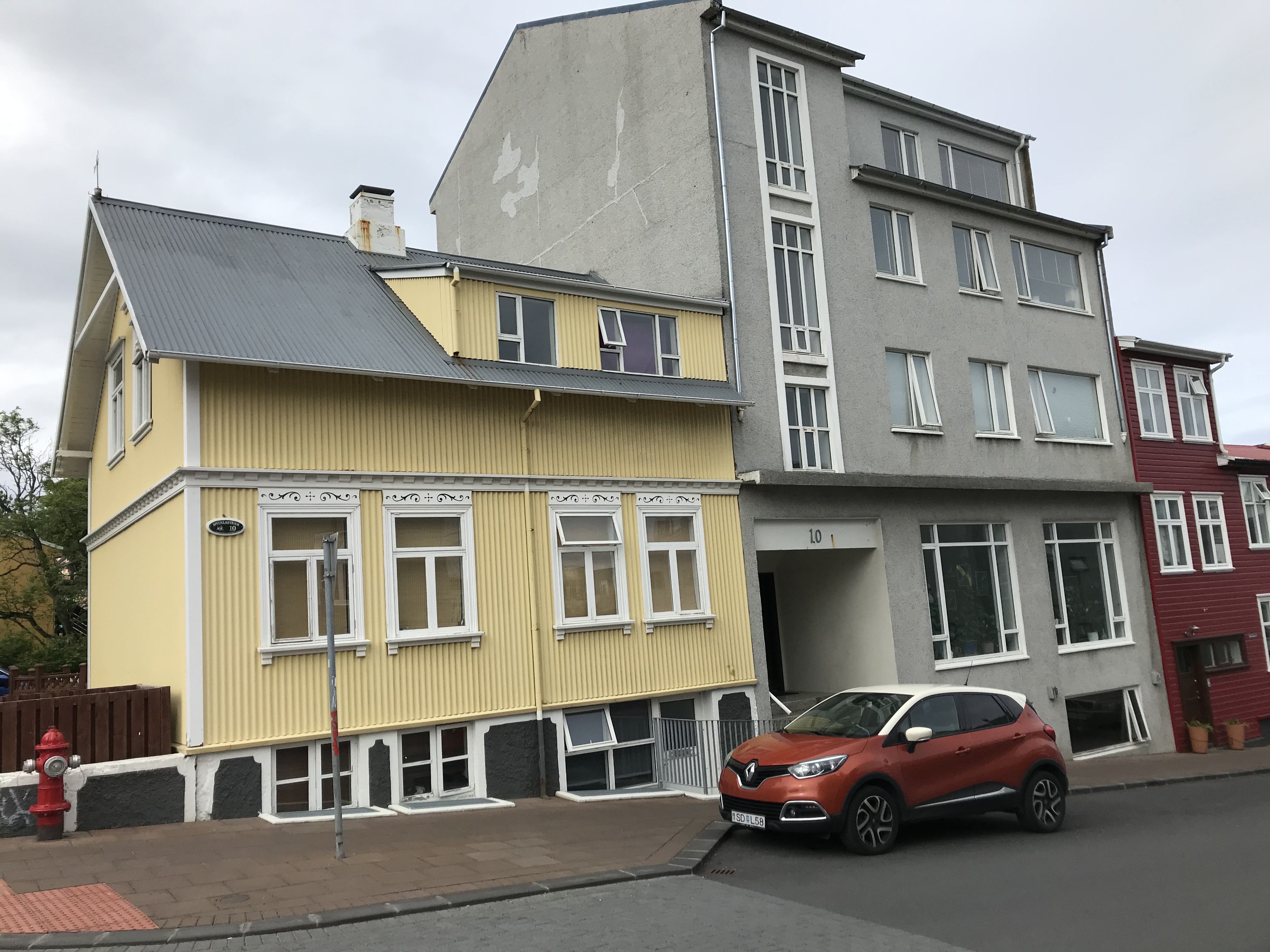
Wandered round the waterfront. The air is cool and clear. There seem to be a lot of tourists, a lot of gay couples, lots of Viking stuff, a lot of pink hair. The painted houses are rather cheerful. They have big blank windows, which I don’t understand in a country that has constant summer daylight (when I would want thick curtains) followed by almost constant winter darkness (when I would still want thick curtains). I find it confusing; the houses and shops look the same. Sometimes I think I’m looking into a café window, and I realise I’m watching a bloke cut his toenails in his lounge!

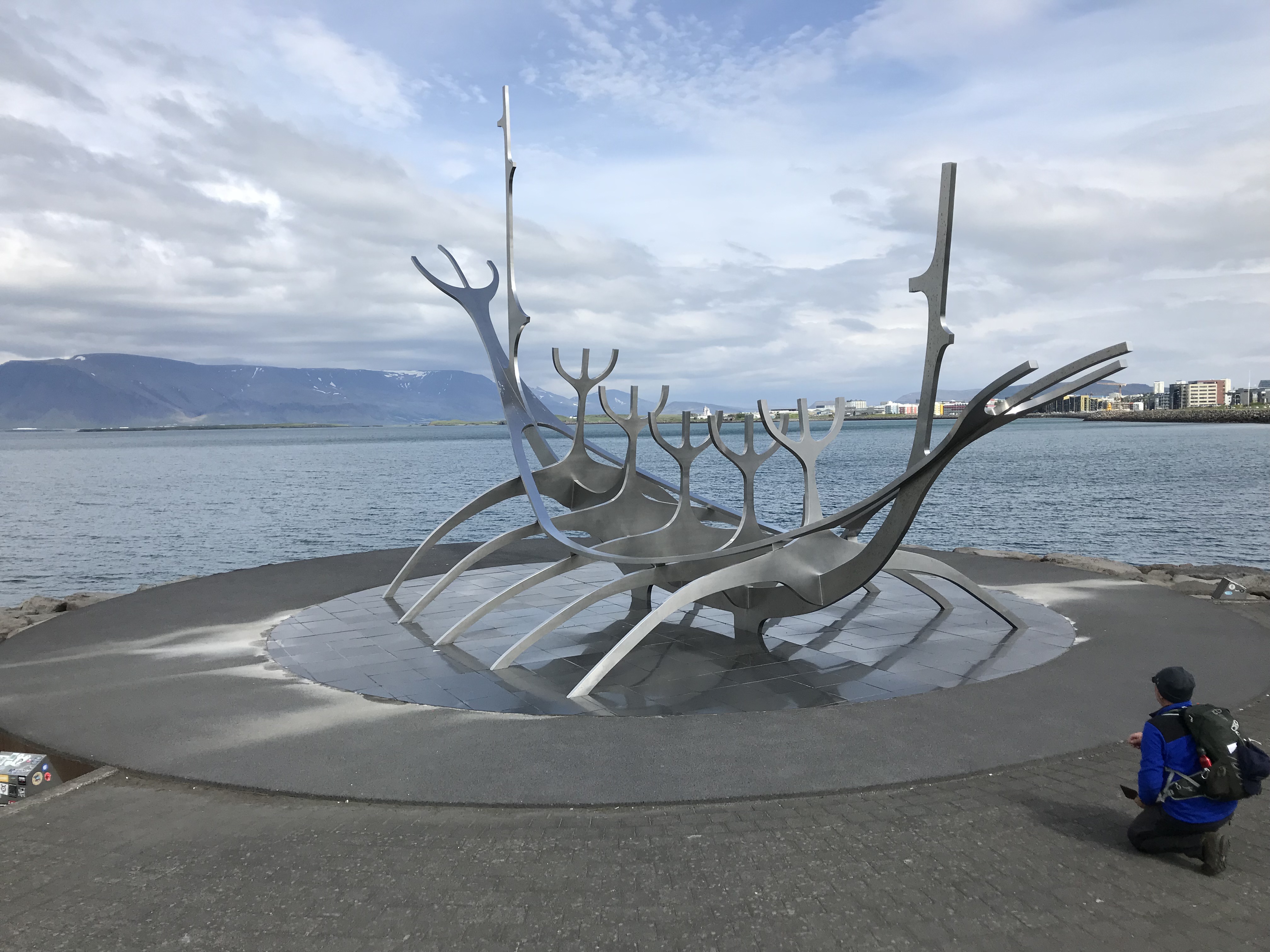
Viking Stuff

We ate lamb burgers in Fjallkonan, a buzzing restaurant full of chatty people. Excellent food, comfortable chairs (it matters!) It cost £60 for two burgers, one beer, and a sparkling water. Not a cheap city.

Day Two: Drive from Reykjavik

Terrible night’s sleep due to constant daylight. Need to invest in some eye-masks. Got up 6am, read Bible and had coffee, dragged Husband out for a run.

Showered—it stinks of sulphur. The hot water is pumped straight from the ground, which makes incredibly cheap heating/hot water systems. But it’s smelly. Hoping I get used to it; holding my breath for the length of the shower was a near-death experience. Maybe will buy an oxygen tank and mask when I buy the eye-mask (though Husband is bound to make comments). However, the cold water in Iceland is good, very pure, and perfect for drinking straight from the tap. Don’t waste money on bottled water in Iceland.

Decided to go for a drive as the weather forecast is wet. Driving here is fairly easy as long as you remember which side of the road to be on. Good quality wide roads (not like the warrens of Madeira). There are several gravel/unmade roads, but our hire car agreement doesn’t allow us to use those (for which I am grateful). We drove towards Glymur Waterfall, stopping to eat a picnic lunch on the way. Husband made comments about the bread knife (I don’t like making sandwiches, easier to do it at the time). Ate looking at black mountains with white patches of snow.

Drove NorthWest to Kolbeinsstadhir. (Icelandic is a bit like Welsh, every word is crammed full of consonants.) Stopped to look at some thermal water. It was shut, due to Covid, but we ignored the sign and walked up anyway. There was a hot spring, which was piped, so looked a bit like someone had randomly put a tap in the middle of wasteland. There was steam. Husband was more impressed than me.

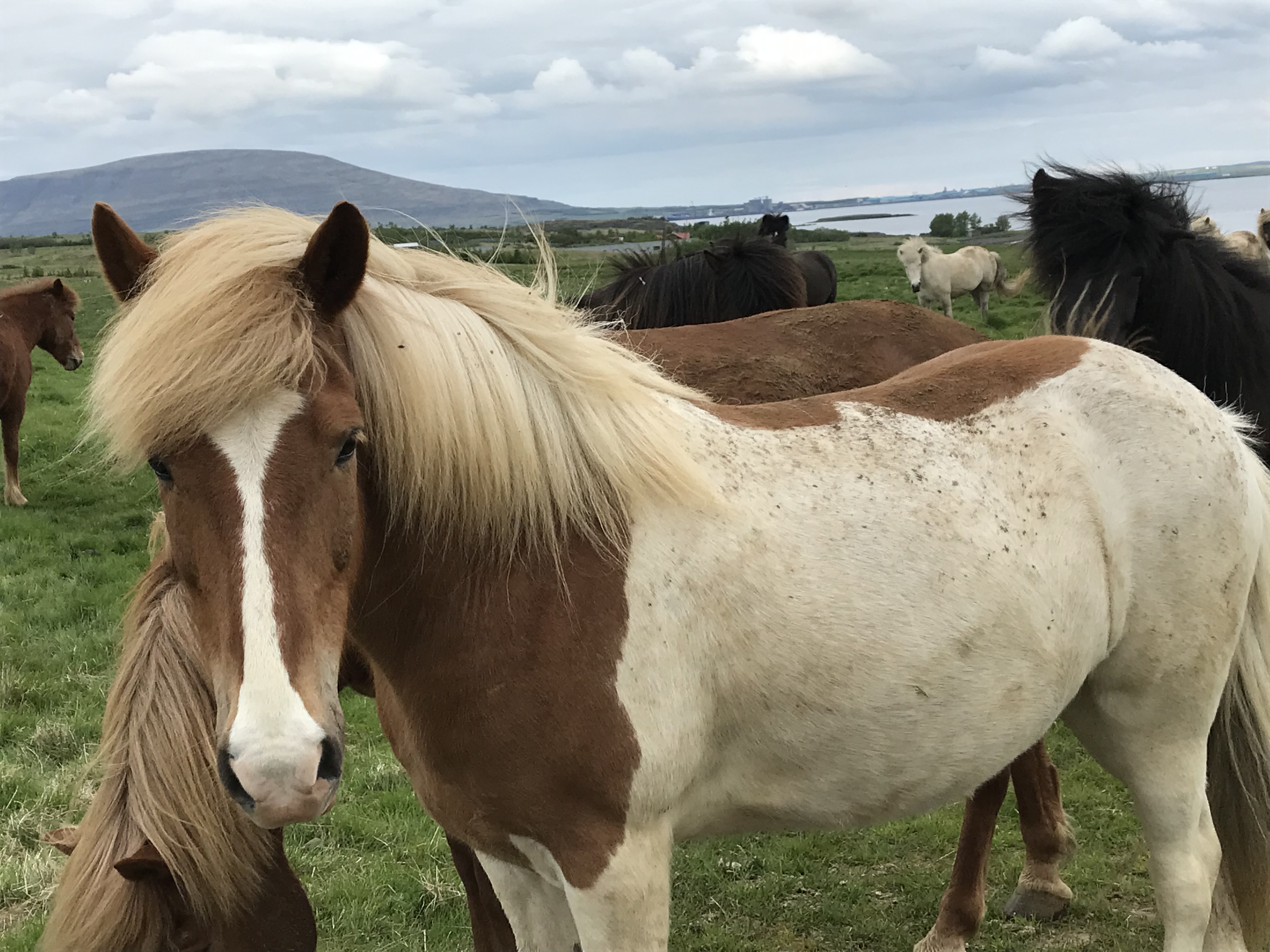
We saw several herds of horses. Icelandic horses are a thing. They are classified as horses (though I’m pretty sure they are ponies really) and they’re very pretty. If you remove one from Iceland, it’s not allowed back, which keeps the line pure. Some restaurants serve horse meat, but I like to think the beauties I saw were kept for riding.

Beautiful Icelandic Horses

We got home about 4:30pm. I saw lots of very flat plains, black mountains, spectacular waterfalls, and thousands of blue lupins. But not many trees. There’s a saying: “If you see three trees in Iceland, you’re in a forest.” Or a joke: “If you’re lost in a forest in Iceland, stand up!” I guess repeated lava flows doesn’t encourage long life for trees, and the earth below the surface is too hot for deep roots. There were trees, but not many, and none were ancient. I still prefer Scotland for scenery.

Dinner at Messinn. I started with a dirty plate, and was then given a sticky menu, so not a great start. But they served traditional fish stew, with potatoes and vegetables and hunks of lava bread. Lava bread is good. It’s rye bread, and the dough is cooked in a pot in the hot ground. I thought it tasted a bit like malt loaf but without the fruit, and it was nice with butter and a cup of tea. But they also chuck lumps of it into their fish stews.

Thanks for reading. In my next blog I’ll describe the most difficult walk of my life, going to see a puffin colony. Hope you have a good week.
Love, Anne x

The verse I tried to learn in Iceland was 2 Chronicles 7:14. Have you managed to remember any? Read it again to refresh your memory:

(NIV)

If my people, who are called by my name, will humble themselves and pray and seek my face and turn from their wicked ways, then I will hear from heaven, and I will forgive their sin and will heal their land.

(OHB)

וְיִכָּנְעוּ עַמִּי אֲשֶׁר נִֽקְרָא־שְׁמִי עֲלֵיהֶם וְיִֽתְפַּֽלְלוּ וִֽיבַקְשׁוּ פָנַי וְיָשֻׁבוּ מִדַּרְכֵיהֶם הָרָעִים וַאֲנִי אֶשְׁמַע 

מִן־הַשָּׁמַיִם וְאֶסְלַח לְחַטָּאתָם וְאֶרְפָּא אֶת־אַרְצָֽם׃

(CCB) 

而这些被称为我名下的子民若谦卑下来,祈祷、寻求我的面,离开恶道,我必从天上垂听,赦免他们的罪,医治他们的土地。

Anne E. Thompson
Thank you for reading anneethompson.com Why not sign up to follow my blog?

anneethompson.com
*****

‘Iceland is Beautiful,’ they said…


‘Iceland is beautiful,’ they said… ‘Iceland is my favourite country in the world,’ they said… ‘You’ve never been?’ they said, ‘You should plan to visit.’ So we did.

I prepared for our trip by watching Icelandic films, hoping to learn the odd phrase and perhaps see a little of the culture. This was a mistake, as I mostly watched crime films. I therefore stepped off the flight, entered the arrivals hall and was confronted by a line of serial killers holding name placards. Luckily we had rented a car, so avoided all the psychopaths and edged our way to the Avis desk. Avis had queues of people, very little space, and lots of signs about wind (the weather version). Wind is a thing in Iceland.

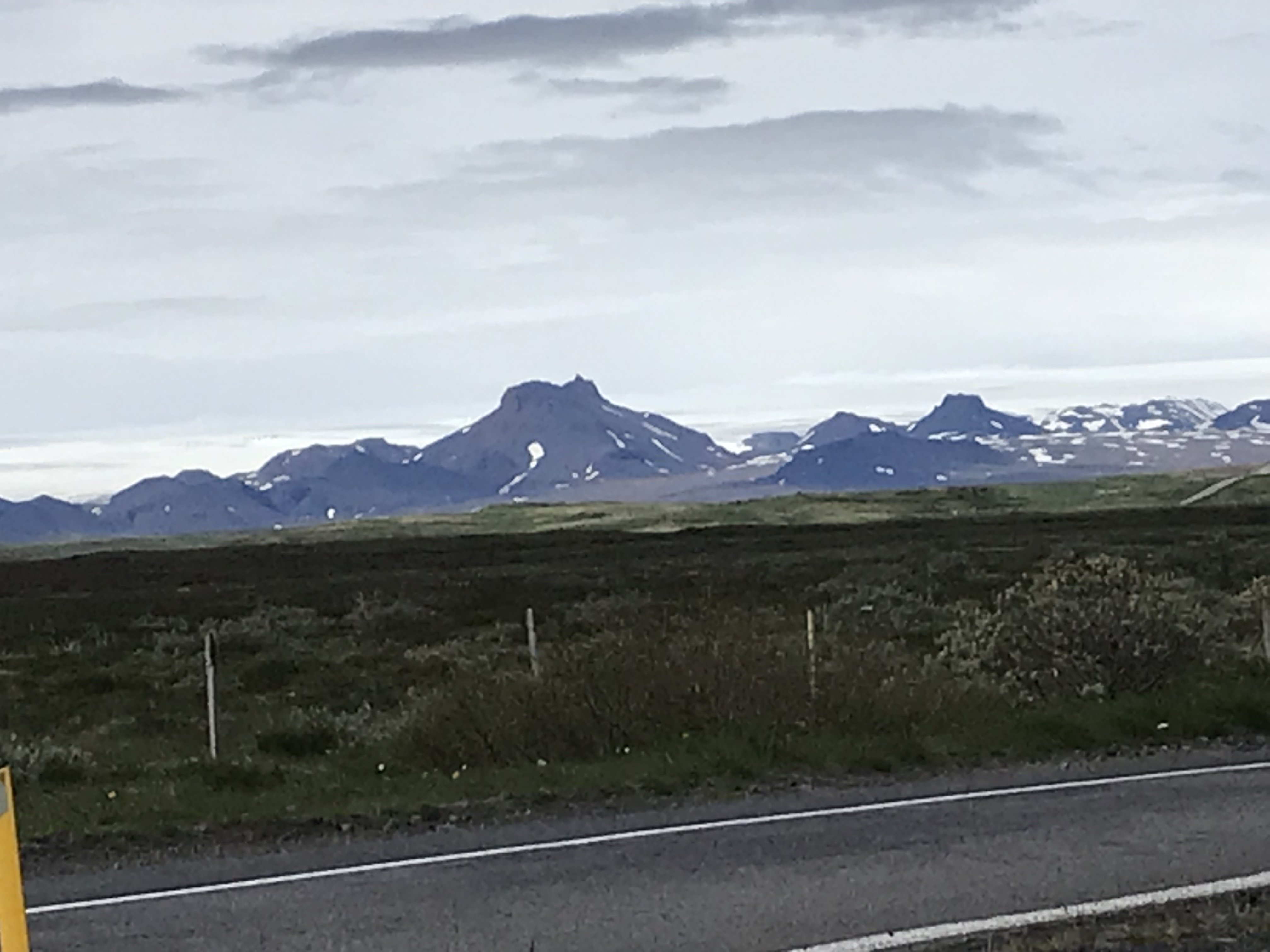
Known as the land of ice and fire, it should also be called the land of blue lupins. They were everywhere, lining the roads, growing on ancient mounds of lava, covering every hill and plain. Iceland in June is blue. Blue and grey. People told me that Iceland is beautiful, and it’s true that many parts were, but there’s an awful lot of grey. As we drove from the airport the landscape reminded me mostly of the groundwork when a new motorway is being built —mounds of grey rubble. Volcanoes are not tidy, and Iceland was produced by a string of eruptions. I guess there’s no point in clearing up the lava flow, so it sits there, pretending to be builder’s rubble, until the lupins move in to cover it in blue.

We rented an Airbnb in Reykjavik. This turned out to be wonderful, a converted printing works that consisted of one huge room filled with plants and nicknacks, with separate bedrooms and bathroom. It was used in the Netflix series Sense8, though most of the furniture was different.

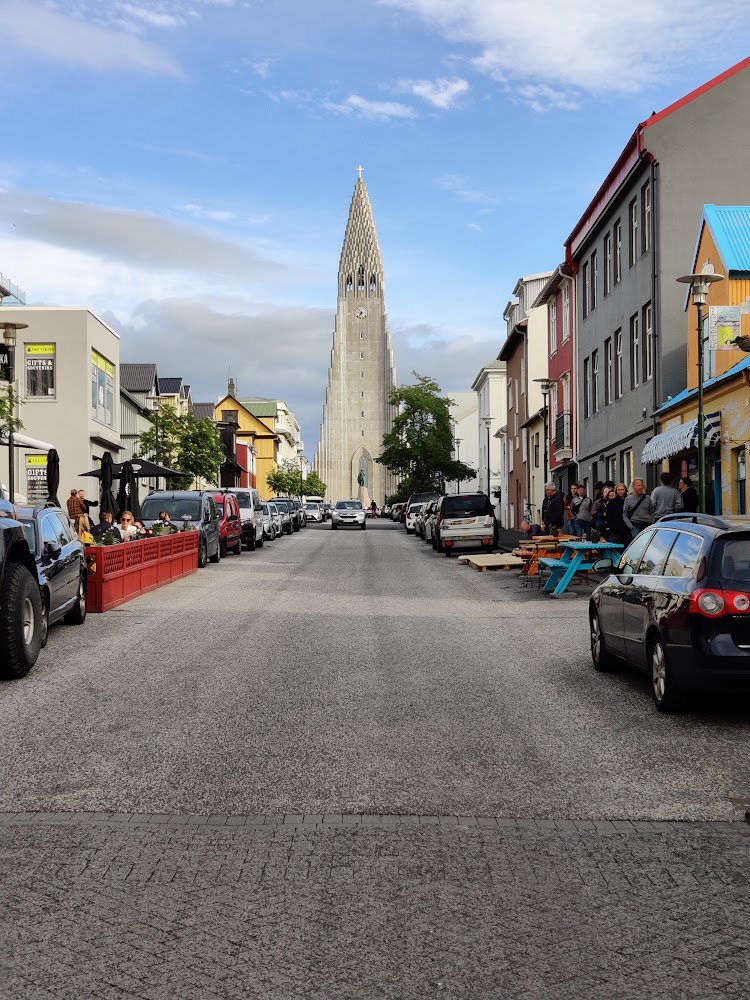
Reykjavik is more town than city, with mostly wooden houses covered in colourful corrugated iron. It has clean streets, happy people in weird clothes (though to be honest, I think the clothes of most people younger than me are weird) and high prices. Iceland is expensive. The city also has a harbour, and a huge church (which looks like a cathedral) high on a hill, seen above the city. 

A cool church building, towering over Reykjavík.
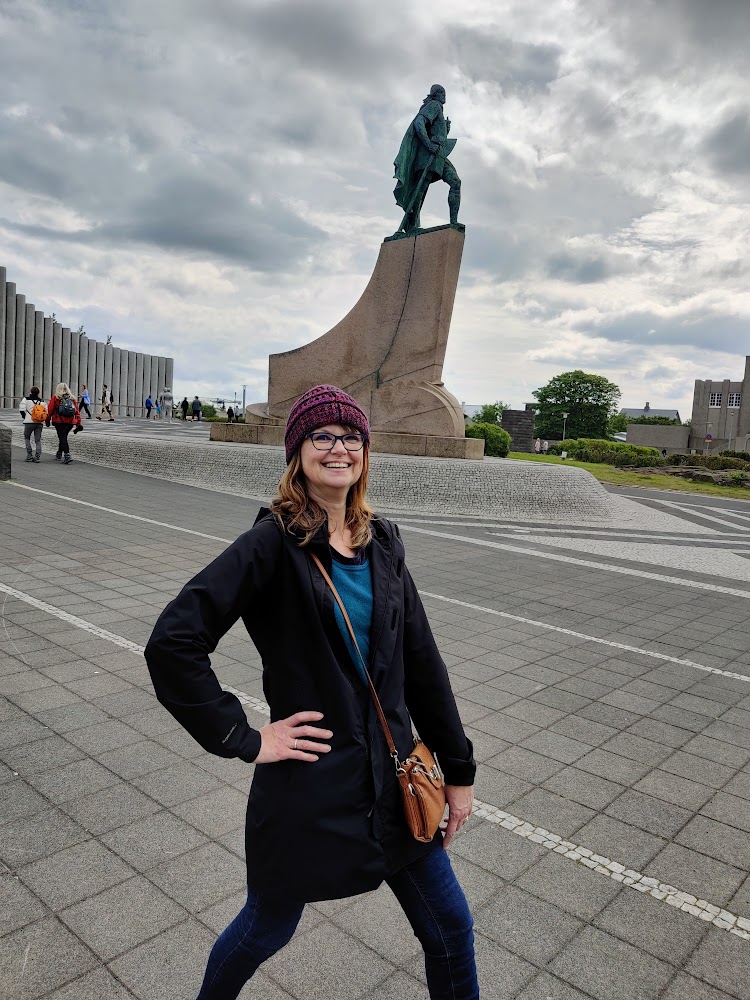
Pretending to be a Viking, outside the big church.

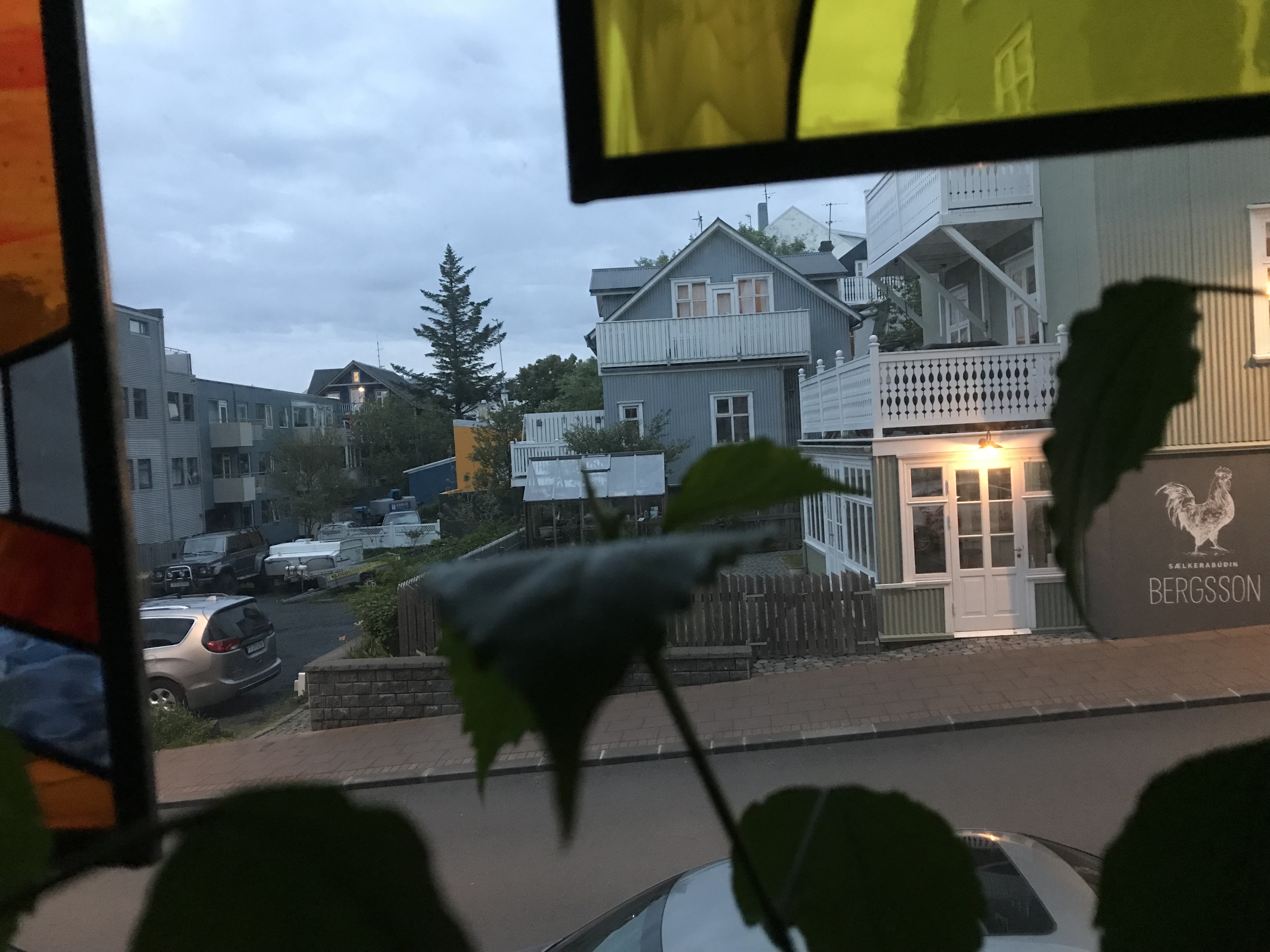
We were told that in June, it would only be dark for a few hours each night, between midnight and 2 am. This was a lie. I got up in the night to check, and it was never dark. Slightly gloomy perhaps, like a grey day at home, but never dark. I took a photo for evidence…

No streetlights needed: 2am and definitely NOT dark.

The June weather was cold, but not freezing. I needed a warm sweater and a coat, but not a ski jacket (which is lucky, as I don’t own one!) A woolly hat is fairly essential, not so much for warmth but more for hair control. Husband declined repeated offers to borrow a hat, and the hair style wasn’t good. As I said, wind is a thing in Iceland. 

We saw some amazing stuff while we were there, but I’ll tell you about our trips in another blog. Is Iceland beautiful? Beauty is very subjective, and I never really saw past the grey rocks, the black mountains, and the lack of trees. Especially the trees. Most other people have a different view, so I’ll leave you with some pictures and you can decide for yourself.

Thanks for reading. Take care.

Love, Anne x

I try to learn a little more Hebrew whenever I run (it helps take my mind off the pain!) In Iceland I began to learn 2 Chronicles 7: 14. You could try to learn it too?
*Note to Mother: Please learn the English version and we can make another Facebook video!
I will add it to the end of each Iceland blog:

If my people, who are called by my name, humble themselves, and pray and seek my face and turn from their wicked ways,
then I will hear from heaven and will forgive their sin and heal their land. 

2 Chronicles 7:14

וְיִכָּנְעוּ עַמִּי אֲשֶׁר נִֽקְרָא־שְׁמִי עֲלֵיהֶם וְיִֽתְפַּֽלְלוּ וִֽיבַקְשׁוּ פָנַי וְיָשֻׁבוּ מִדַּרְכֵיהֶם הָרָעִים וַאֲנִי אֶשְׁמַע מִן־הַשָּׁמַיִם וְאֶסְלַח
 לְחַטָּאתָם וְאֶרְפָּא אֶת־אַרְצָֽם׃

Thanks for reading. Why not sign up to follow my blog? anneethompson.com

****

Mini Break After Easter


After a fantastic Easter Sunday with the family in Cambridge, we kept driving north for a week away. Despite my vow to never again take elderly dog on holiday, the kennels were all full and so she travelled in a well-prepared boot and all our luggage was on the back seat. Husband had booked an Airbnb, so I told Mum we were off to the Lake District and I would see her in a week.

The roads were empty, so even with a few stops for elderly dog, we arrived at the cottage early evening. Beautiful scenery. No lakes though, so I messaged Mum to say we were in the Peak District.

Our cottage is the middle one behind me. This is my tired face. I need a holiday.

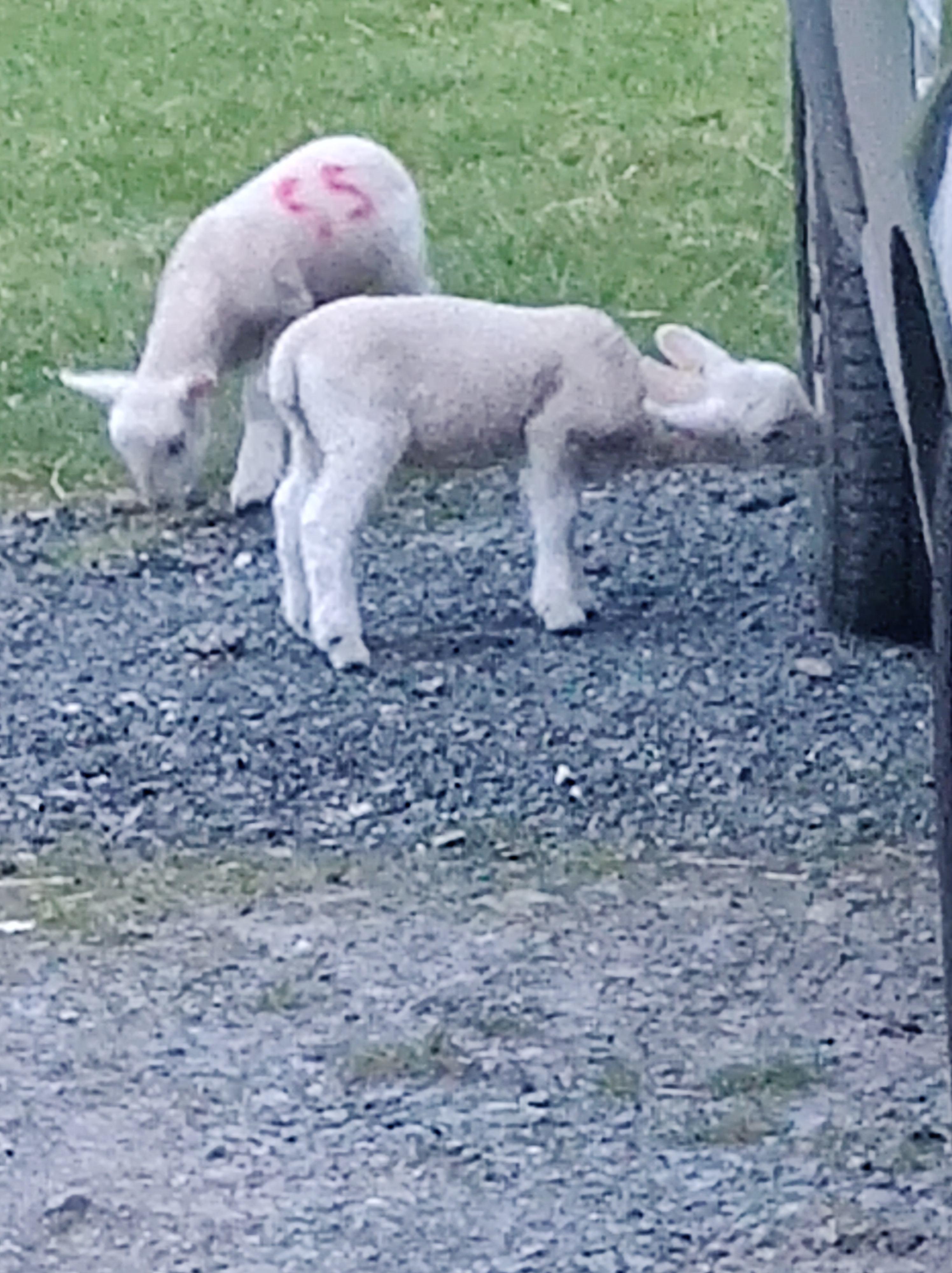
The cottage was lovely, plonked right in the middle of a field with lambs skipping around. There was an enclosed back yard, so even if elderly dog had been at all interested in them, she wouldn’t have been able to reach the lambs. However, the lambs were interested in us—or to be precise, the car. They kept licking the wheels. Husband worried they might nibble something important. I told him lambs don’t have teeth. (This may not be factually correct, but it stopped him worrying.)

Lambs attempting to eat tyres.

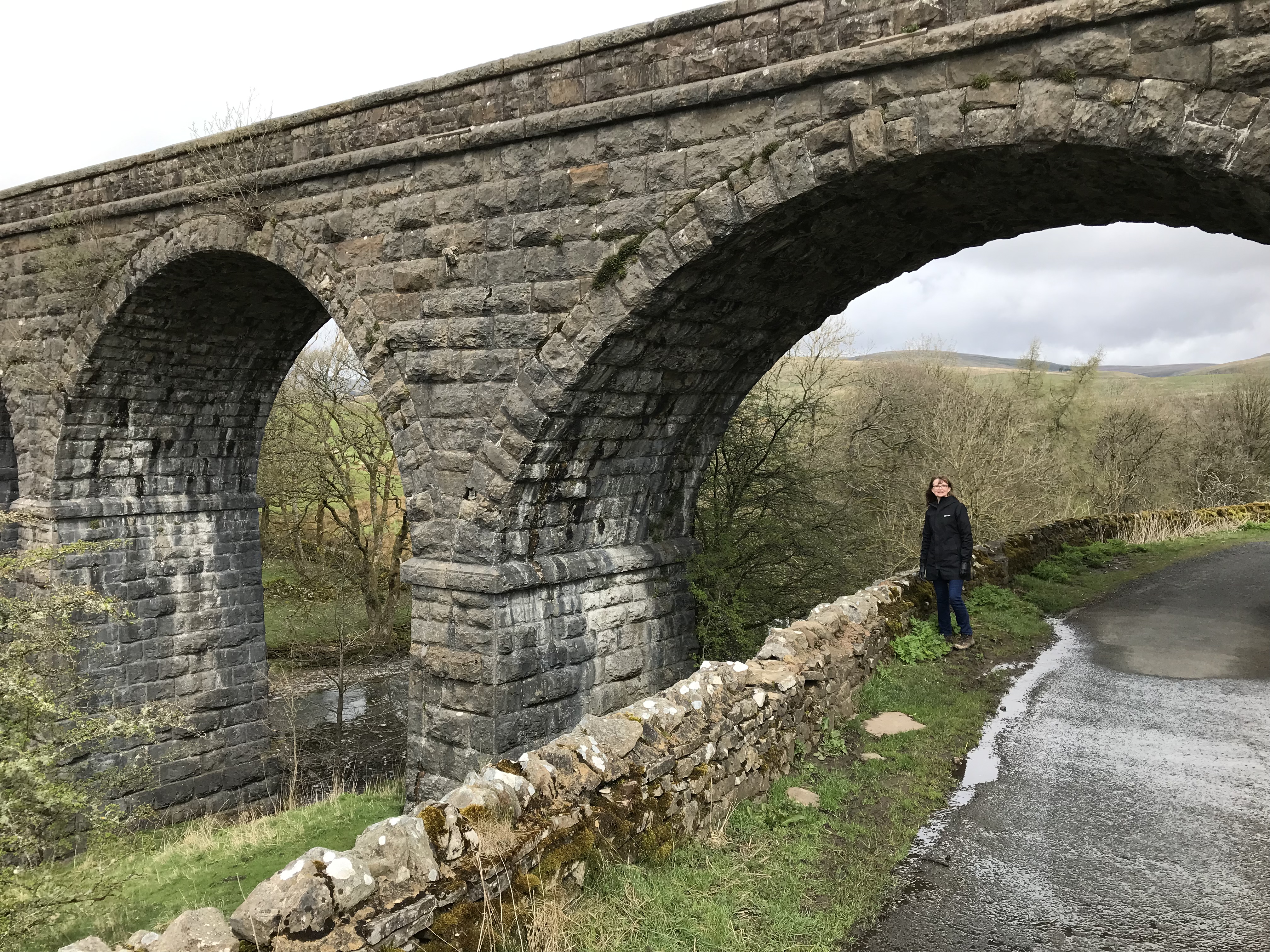
On the first day we wandered into town. There were some nice shops selling posh food products. Lots of cheese and wine from Wensleydale. I messaged Mum and told her that actually, we are in the Yorkshire Dales. The nearest town is called Hawes. Husband told me you’d need to be careful not to name your house: The Hawes House, and I nearly fell off the pavement laughing. (This shows the sort of conversations we have when our children aren’t around to correct us.)

The first café we saw advertised bacon butties, so we had a cup of tea and a sandwich. I think it’s a biker café, as everyone else looked slightly like Hagrid, wore leathers and carried a helmet. I’m sure we blended right in though. Very nice bacon butties, so I think we’ll go there every morning.

I attempted a short stroll with the dog. She’s unkeen on hills, so had that ‘tolerant look’ when we set off. Lots of lambs skipped away, but their mothers did not. One mother in particular was very angry that we were in her field, and she walked deliberately towards us, her head lowered. She then stood facing us, and stamped on the ground. I don’t speak ‘sheep’ but the message was very clear. Not sure that elderly dog would fare very well in a stand-off with angry ewe, so we went back to the cottage. Dog returned to her bed with an ‘I told you so’ look. I told Husband he would have to come instead.

We went for a lovely walk across the fields. Husband wore wellies because it might be wet—he walks quite slowly in wellies. I wore walking boots, because they’re comfy for long walks. I walk very fast in my walking boots. You can guess how that turned out. Husband has a clever ordinance survey app on his phone, so he could give precise directions as we walked. I mostly ignored him and followed the footpath signs. This is how our household works. But the walk was lovely, with lambs everywhere and stone walls with little stiles and far-reaching views over the… lakes… peaks… dales.

Hope you have something lovely today too. Don’t forget where you are…
Thanks for reading. Take care.
Love, Anne x

Why not sign up to follow my blog?

anneethompson.com

xxxx

Crazy gang of lambs! Touch to watch the video.

More From Madeira


I’m writing this on the balcony, listening to the waves wash over rocks. No seagulls though, as Madeira seems to have more pigeons than seagulls. One comes and sits on the rails next to me, checking to see whether I am eating, before flying off in disgust. I will give you a quick tour of the rest of Madeira. Then you can add it to your list of places to visit. Coming in January/February was brilliant, because we had hot sun, cool wind, and very few other tourists. But perhaps we were lucky with the weather, it would have been gloomy if it had rained all the time. Either way, we needed summer clothes for the too-hot-to-sit-for-more-than-10-minutes sunny days, and warm clothes for the cold evenings. Wish I’d known that before we came. Also wish I had packed my walking boots because when it rained, it really rained, and all the walks we did were basically up, or down, the steep side of a mountain. Not much call for flip-flops because the streets are all cobbled.

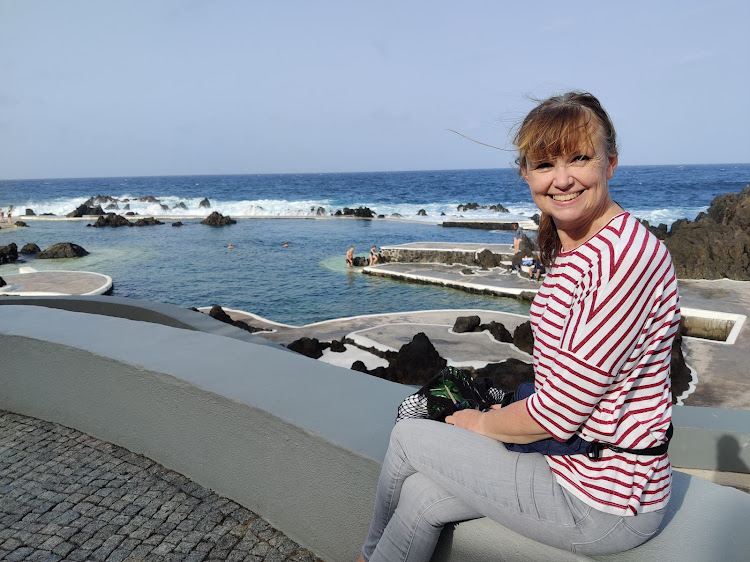
The north side of the island seems to be always under cloud or in the shade of the mountain. We need to remember to take jumpers when we drive north. There are some brilliant natural swimming pools, built into the rocks, and we had fun swimming there, watching the waves crash over the rocks while protected by the edge of the pool. It was freezing though.

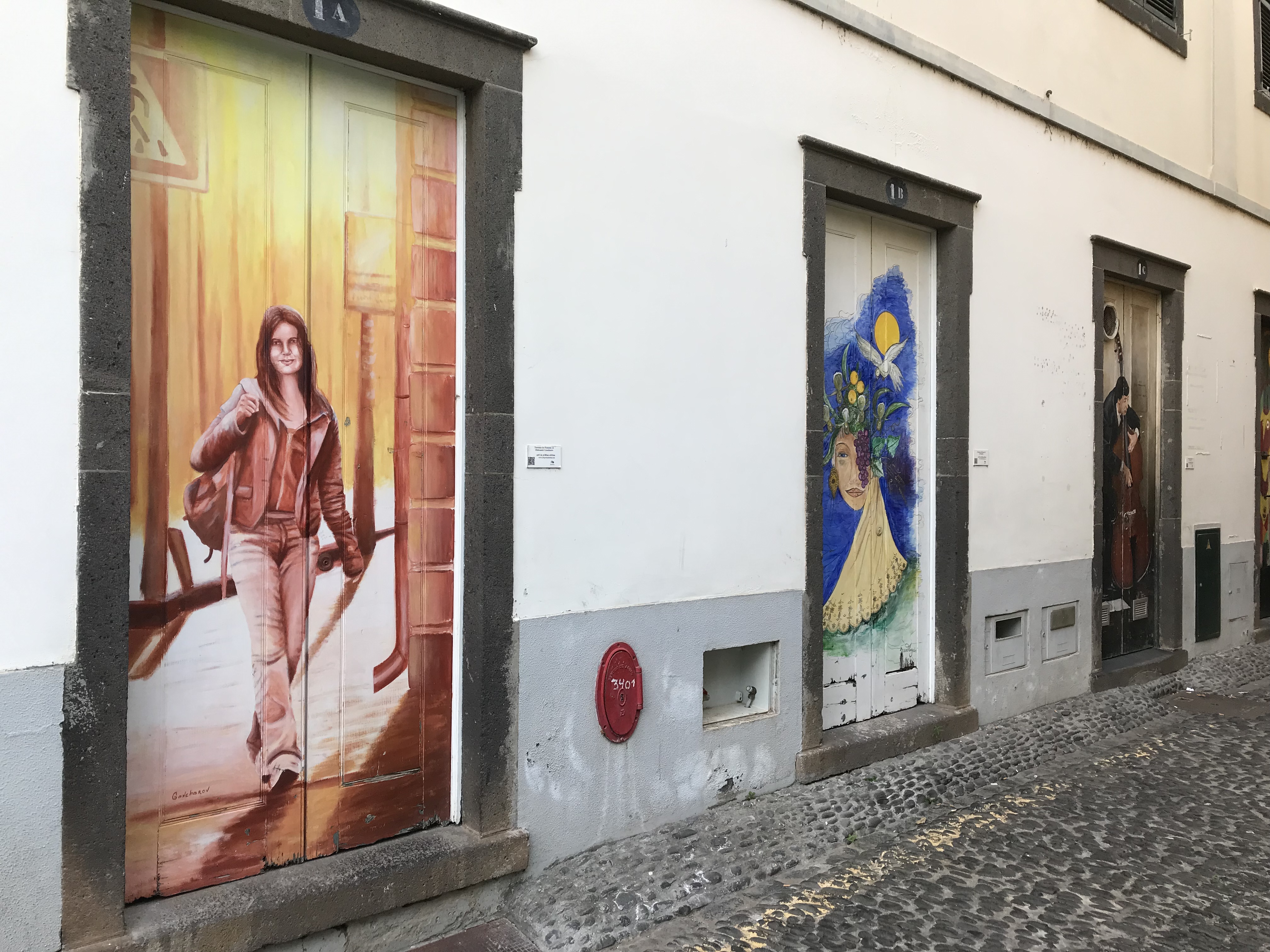
We stayed in the old town of Funchal. I am looking across orange-tiled roofs as I write, the cable-car sweeping past in the distance. If I walk down to street level, I am met with uneven cobblestone roads, palm trees, painted doors. Painted doors are a thing here.

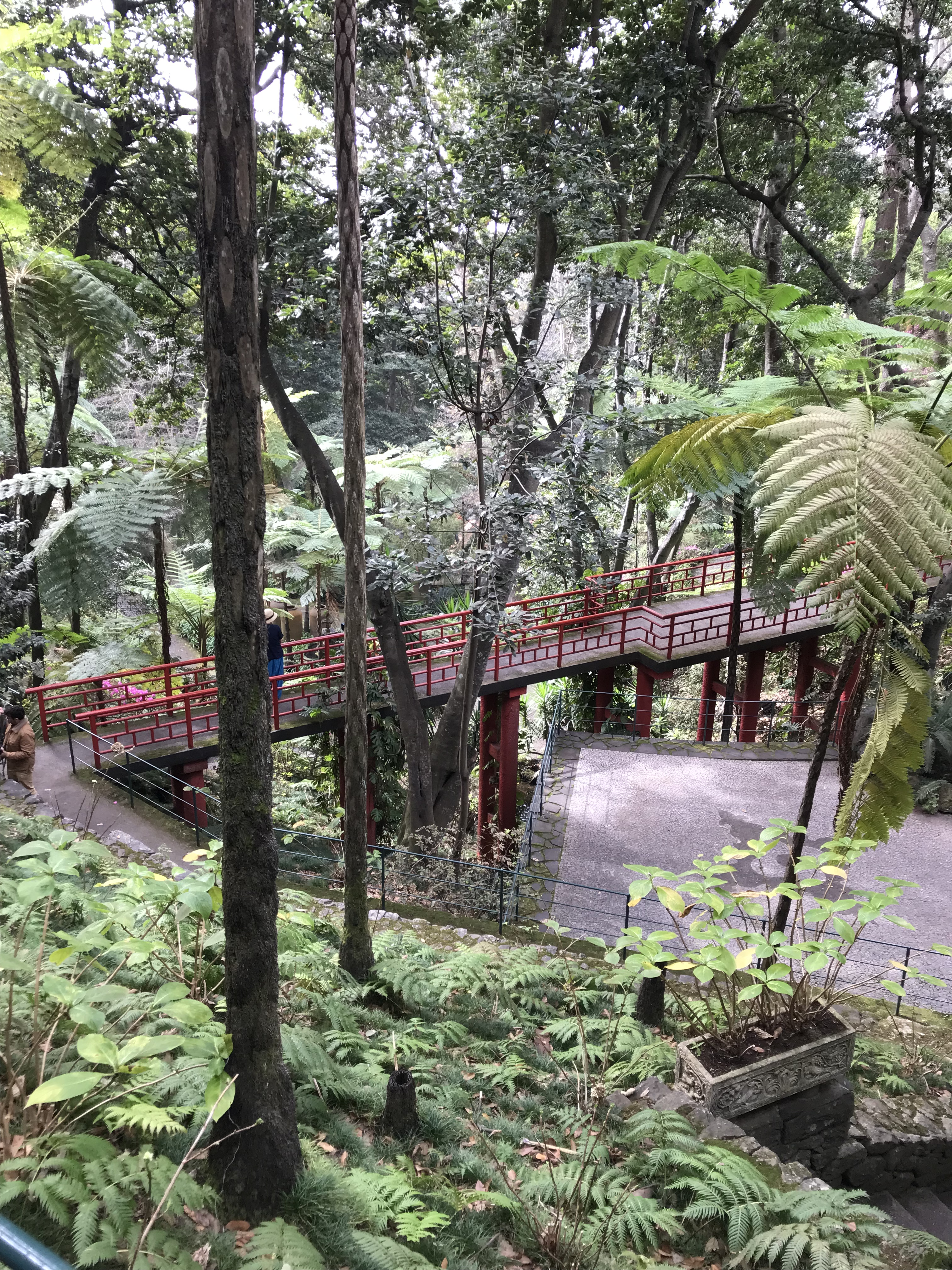
The plants on Madeira are brilliant, it really does feel like a tropical island, even in the winter. There also seem to be very few insects, which is a bonus. One day we walked up the mountain to the botanical gardens. This was not worth the effort. Perhaps it’s seasonal and we were unlucky, but the plants growing wild were better. The garden in Funchal was disappointing. In contrast, the garden of Monte Palace was beautiful, with exotic plants, and vibrant colours, and water features. There were little displays of African art and mineral crystals, plus a taste of Madeira wine all included in the ticket price. Worth the cable-car ride to get there.

One other disappointment was the fruit market in Funchal. It’s basically a tourist-trap, with aggressive stallholders trying to entice you to buy their fruit. I read online that they tend to soak fruit in sugar, offer some to tourists to taste, then sell the not-so-sweet fruit at inflated prices. It was worth a visit, just to look, but don’t buy any fruit! If you walk round the corner, there is a big supermarket, where you can buy all the same fruit at a much better price. It annoyed me that they were so blatantly ripping-off tourist. But maybe that happens in every city in the world.

It is, however, worth trying some of the fruit after you have bought it from the supermarket. There is the big green ‘custard apple’ which is white inside with big black seeds. It tastes of custard. The ‘delicious fruit’ (Monstera delicious) is the fruit of the cheese plant (the one with holey leaves in your auntie’s house). It tastes like a pineapple crossed with a banana, and is poisonous before it’s ripe (so only eat the soft ones). The peel falls off in hexagonal segments when ripe, and the inside is slightly slimy (like a banana). The ‘English tomato’ is not an English tomato and I thought it tasted more like a red version of kiwi fruit. The skin was very bitter, so not great if you take a bite, and you should scoop out the acidic seeds with a spoon. I didn’t like it much. Some of the more delicious local fruits were the bananas and avocados.

The water is carried around the island in levadas, which are sort of long drainage ditches. It’s possible to hike beside them, as they all have maintenance paths next to them, though some are dangerous. We followed the Levada do Risco to a waterfall, and the walk was beautiful (but incredibly steep, so hard work walking back to the car).

Santana has some examples (mostly modern copies) of tent-shaped houses that were typical in Madeira in the past. They are pretty, but I preferred the church of St. Ana (which is what they named the mother of Mary—I didn’t know that).

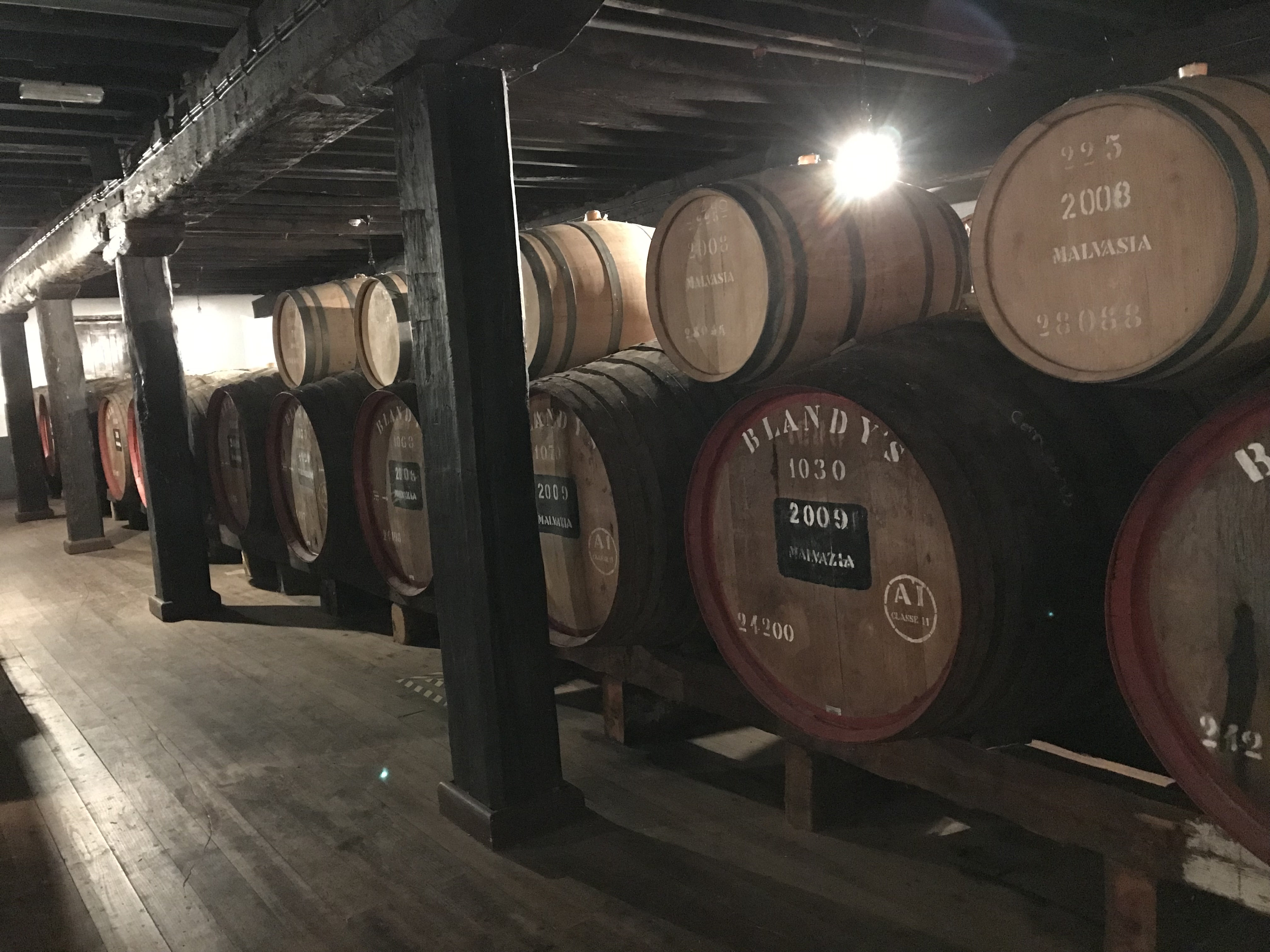
One day we did a tour of Blandy’s and learnt about the production of Madeira wine. It used to be fortified with rum, made from the sugar cane on the island. But the EU stopped that, saying a wine needed to be made only from grapes, so now they import the strong grape alcohol that fortifies it. There are different flavours, depending on the grape used. It tastes very like sherry, I think, and is nice to sip after a meal. Restaurants offer it, or limoncello, (which I’m not so keen on) when you pay the bill.

Eating on the island is very easy, and there are no queues in February, so we never needed to book. Most restaurants have outside eating, and it was often chilly but okay in a thick sweater. The food is nice, very like in Italy or Spain, and we found the staff friendly and helpful. Everyone speaks excellent English, and the menus are always available in English. Importantly for me, all the eateries seem very clean, with good hygiene procedures. Covid rules here seem less strict than in Zurich, but everyone wears masks in restaurants unless sitting.

If you want some winter sun, come to Madeira. England seems a long way away, and I can feel my batteries recharging. The perfect place for a holiday.

Thanks for reading. Hope you have something nice today too.
Take care.
Love, Anne x

My next few blogs will all be about the Lent challenge that I am going to attempt. More next week…

Whaling in Caniçal


Whaling in Caniçal

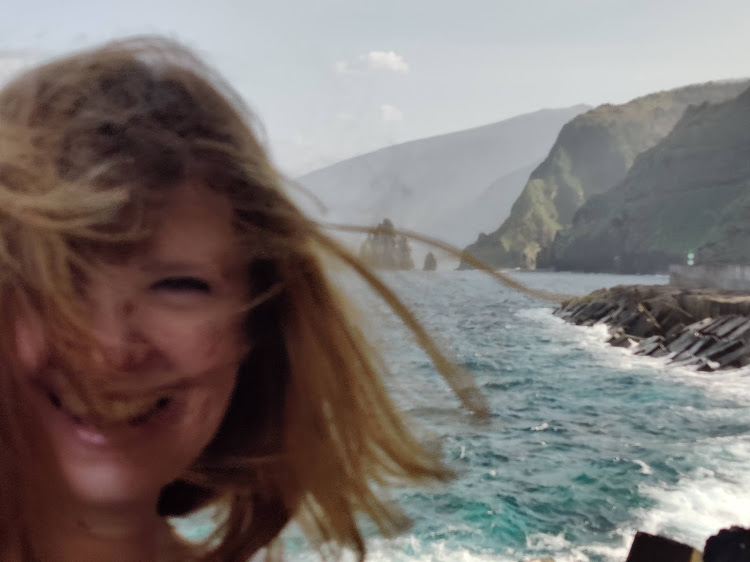
A short drive along the coast from Funchal is Caniçal, which used to be a whaling community but is now, according to the guidebook, at the forefront of whale conservation. We went to have a look.

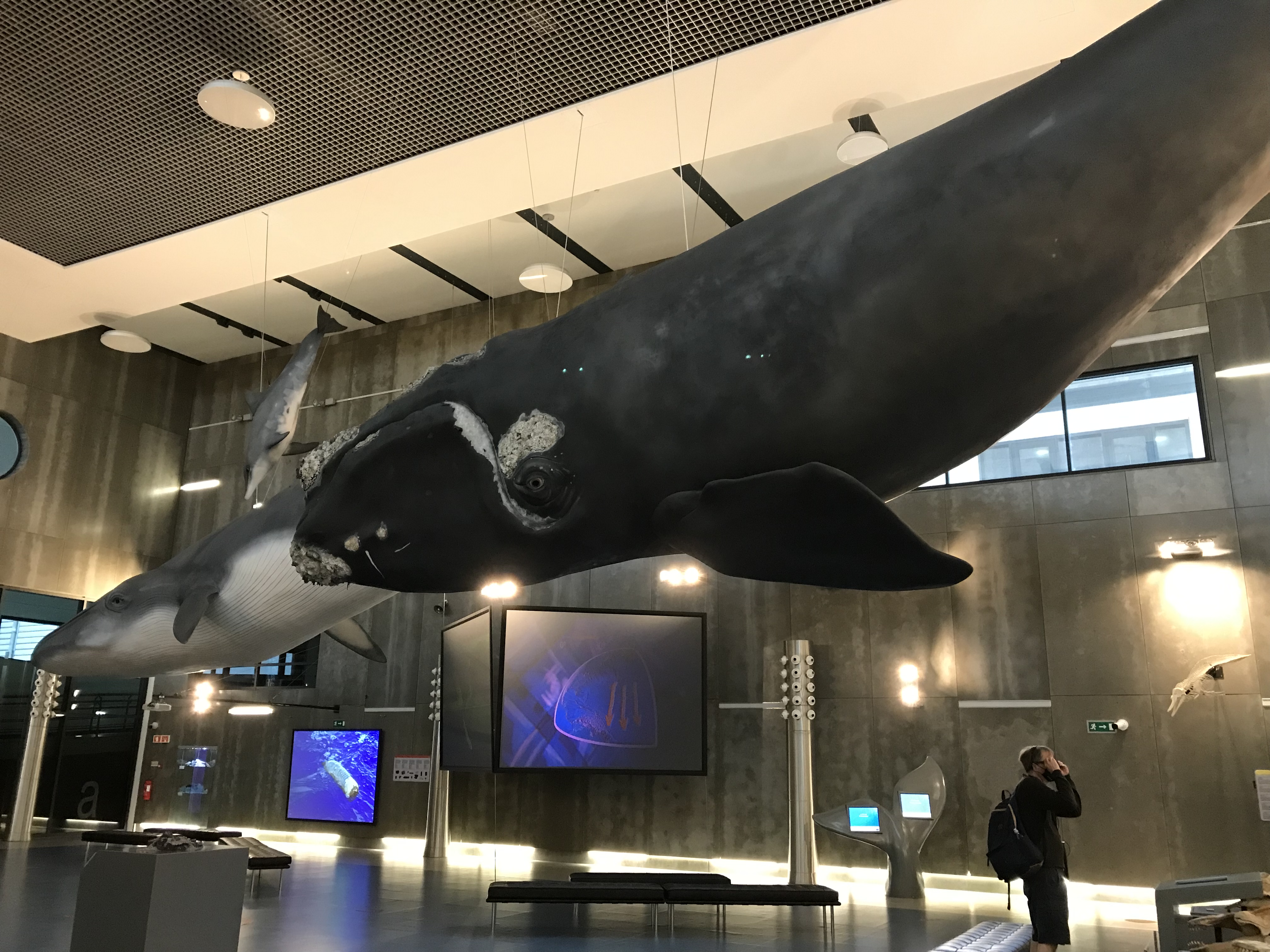
The best place to start seemed to be Museu da Baleia, which looks like a huge warehouse. The museum had a strict covid protocol, and we were instructed to sanitise our hands, and show our covid certificates before we could enter. We were given headphones, charged 10 euros each, and sent off down a series of ramps to the lower level. The headset was very clever, with the commentary automatically changing as I wandered around, giving the correct information for the display I was standing next to. At one point we were given 3-d glasses, and watched a film about how whales evolved, the land mammals returning to the sea.

I was expecting the museum to be about whales, explaining their habitat, showing how they were protected, perhaps a model that I could stand next to and be amazed by their size. There were models hanging from the ceiling, but too far away to really appreciate their size. Mostly, the museum seemed to be about whaling.

A modern museum, with smart headsets and 3D films.

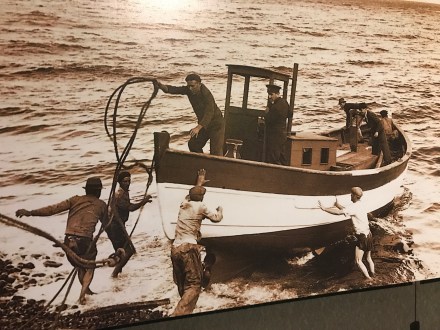
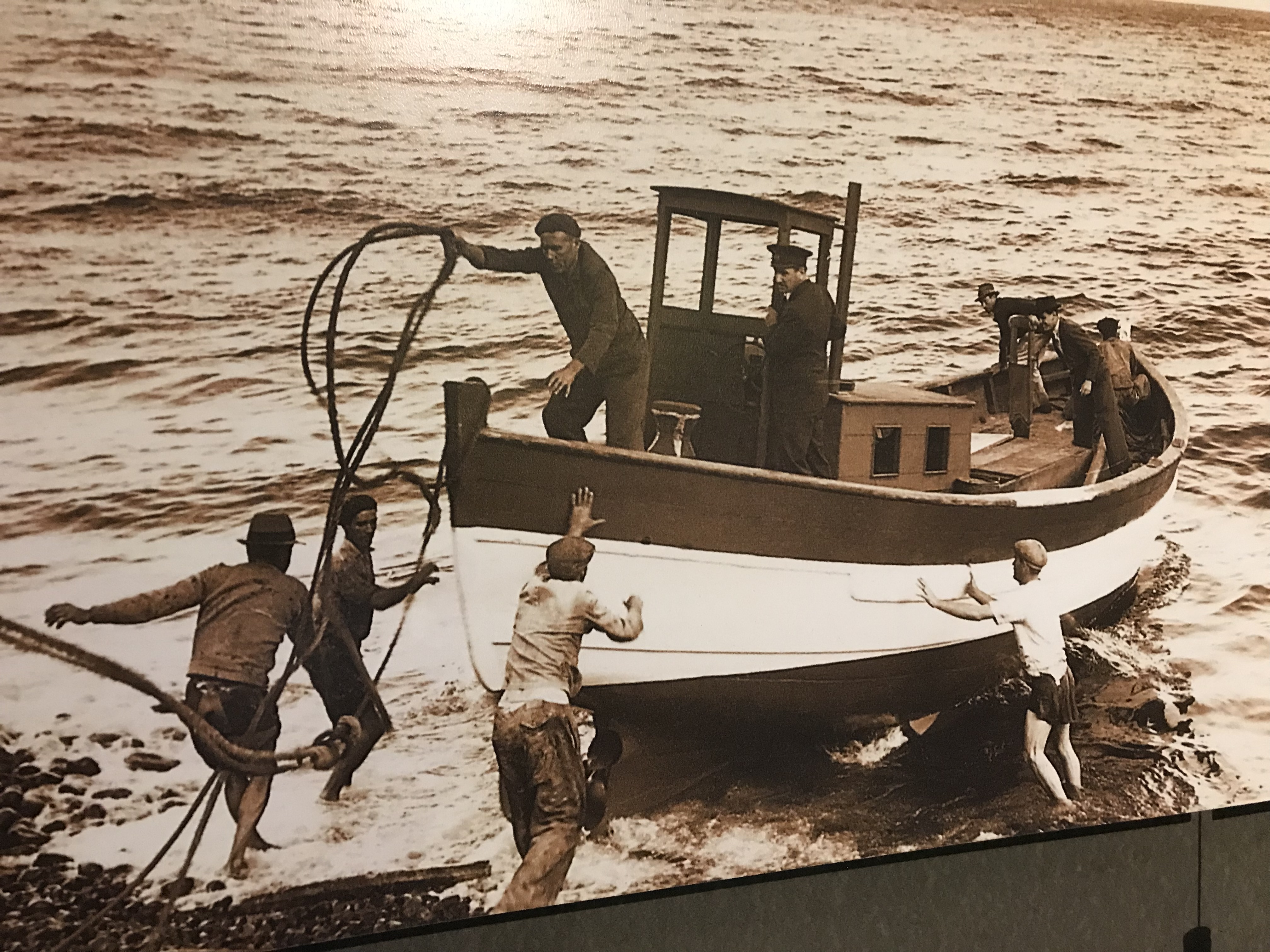
There was a photo wall of whaler portraits. There were models showing the process of stripping the whales after they had been slaughtered, explaining what each component was used for. There was even a film, showing whalers in the 1950s, running to their boats, putting out to sea, harpooning whales. The emphasis seemed to be on the courage of the whalers, the dangers they faced, the difficulty of catching such a huge animal on small wooden boats. It was uncomfortable to watch, like watching a film of hunting elephants. It was also telling that the film was so dated. Nothing from the late 1970s (whaling stopped in 1981) when the boats were more sophisticated, when the whales had no chance of escape. If I had been a ten-year-old on a school trip, I would’ve been impressed by those early sailors, they would appear as brave heroes. Perhaps, at the time, they were.

I guess it’s difficult to know how to portray whaling in a community that until relatively recently has survived due to the practice. School children will know that their grandad was a whaler, the teachers probably grew up in the home of a whaler. I wonder whether my grandchildren will feel the same about me eating meat, and if they will wonder how and why I did such a thing. I wonder if my abhorrence of whaling is hypocritical.

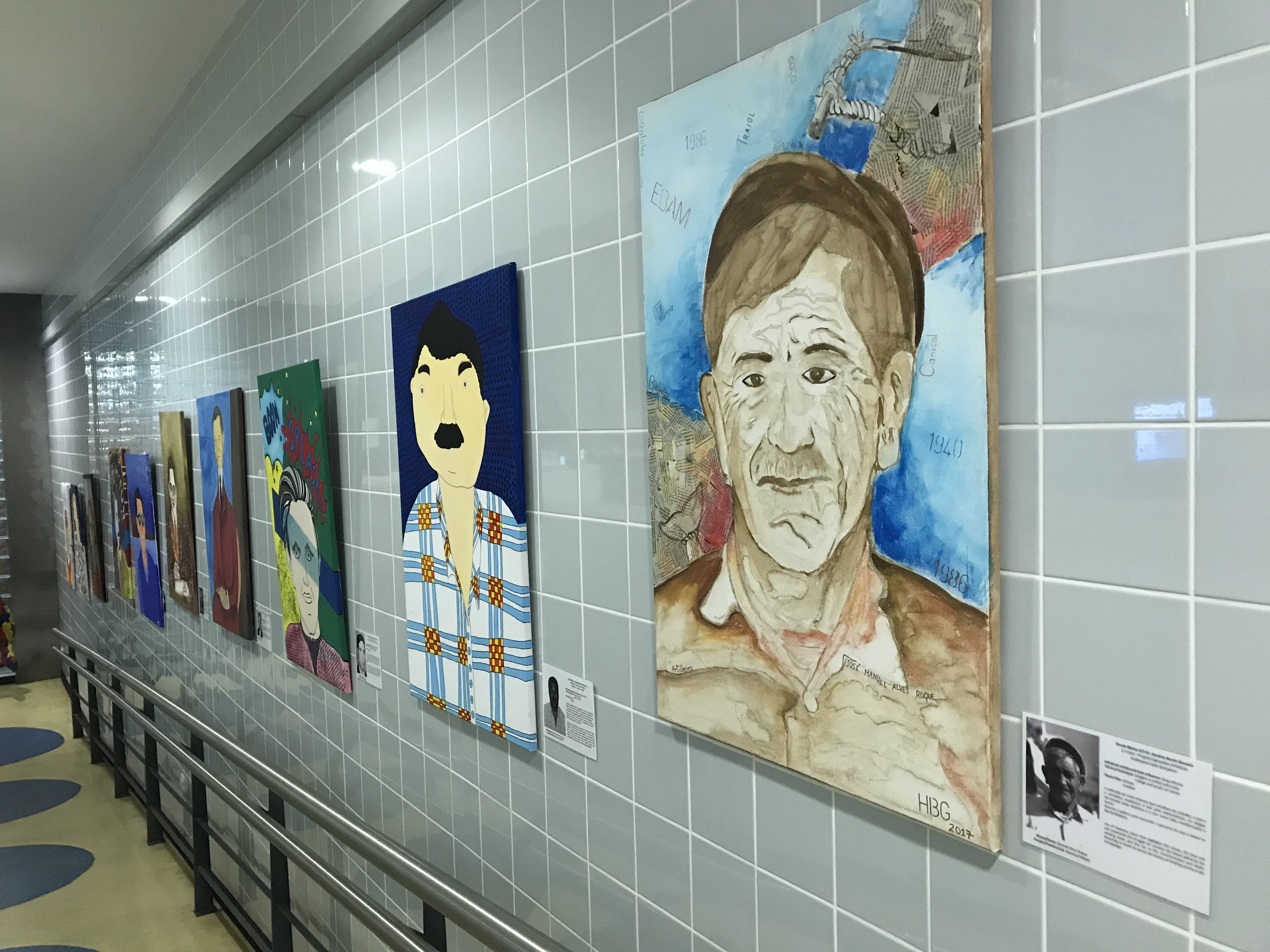
We left, walking up a ramp with portraits of the whalers painted by school children in the style of famous artists. They were clever, the sort of work I would have been pleased to encourage when I was teaching. Though I still felt uneasy with the subject. Were the children honouring their past—and should they have been? But should the community cope with judgement and condemnation when at the time, it was seen as a way of life? I don’t know. But I had hoped to learn more about whales, to stand in awe at their size, to understand how they are faring in today’s world. I had hoped that killing these magnificent creatures would be seen as wrong. Perhaps I was in the wrong town for that to happen, perhaps we need to be further removed from the mistakes of the past before we can face them.

Some talented artwork, portraits of whalers.

Thanks for reading. Take care.
Love, Anne x
Anne E. Thompson
Thank you for reading anneethompson.com Why not sign up to follow my blog?

Madeira in the Winter


Exams were over, essays submitted, it was a chance to relax. Husband, who is forever lurking in the background trying to entice me away from home (because his work is mostly online) persuaded me that some winter sunshine would be good for me. I didn’t take much persuading. We went to Madeira.

Have you ever visited Madeira? The only thing I knew about it was that it named a rather nice plain cake. I now know that the cake was invented in the UK, to eat when drinking Madeira wine. I now also know how to make Madeira wine (had a tour of Blandy’s) and that it’s delicious—but more of that in later blogs.

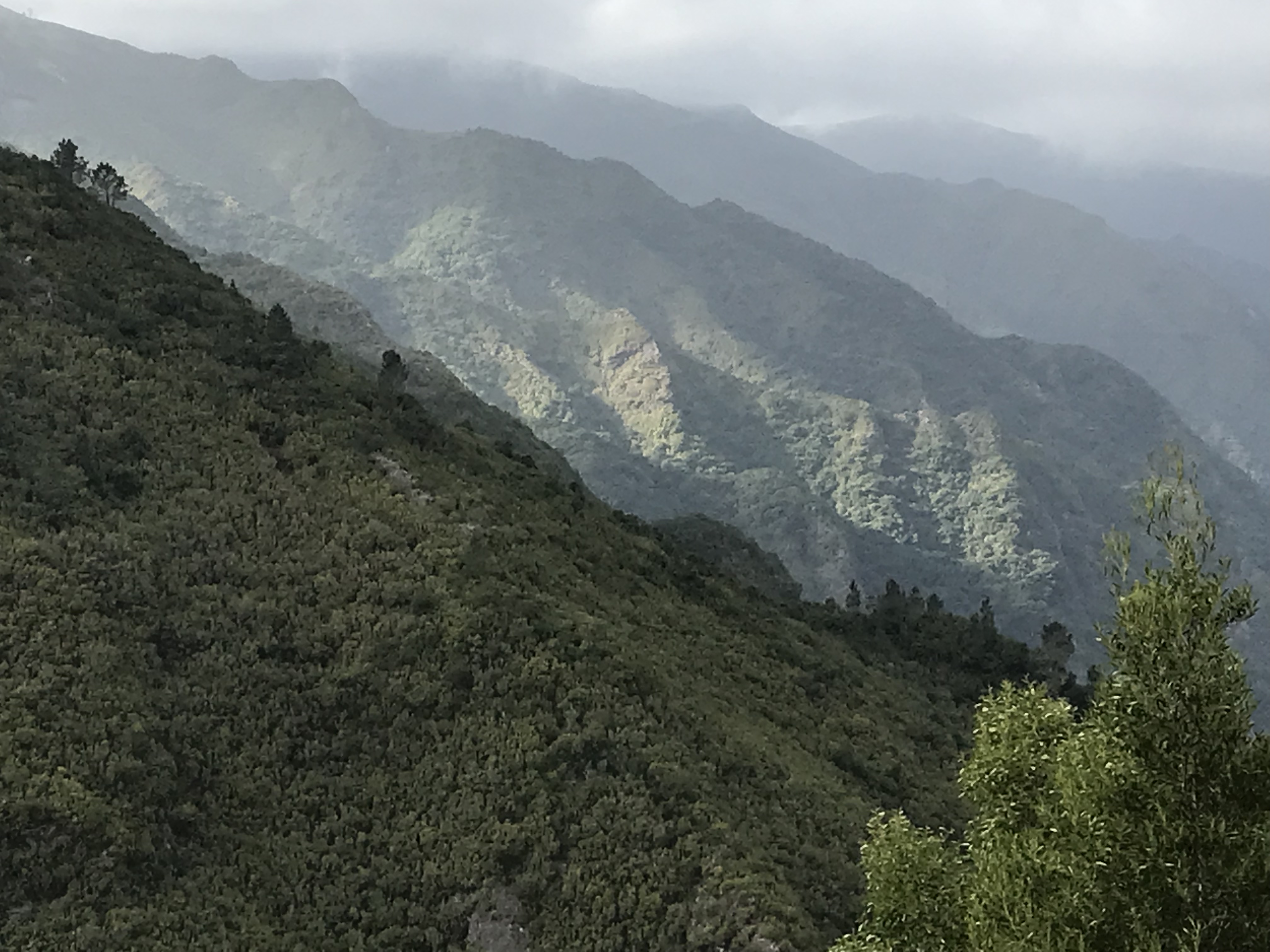
Madeira is a small island (about the size of the Isle of Man) owned by Portugal but actually nearer to Morocco, a drop of volcanic rock in the Atlantic Sea. My brother told me to look out of the window as we approached the airport, and I wish I hadn’t because I saw the rather flimsy-looking runway perched on stilts. I also saw that the island is basically a series of mountains, caused by an ancient volcano and now covered in plants. The plants are fascinating.

We visited right at the end of January, which is sort of their rainy season, though we mostly had glorious sunshine. We rented an Airbnb, which was owned by an agency so fairly plain (individual owners tend to care more and decorate the house a bit) but it was very clean. The main thing was the position, which was brilliant. We were right at the end of the old town, next to an old fort (which someone decided would look nice if painted yellow—a mistake I feel). We overlooked cobbled streets and the sea, and the bright yellow fort.

Driving to the apartment was an adventure. We picked up a hire car ( a small one, thankfully) and set off along the main road. But then the Satnav took us into the city of Funchal and the streets grew smaller and very steep. As we approached the old town, the streets sort of disappeared and turned into narrow cobbled pathways. Very steep narrow cobbled pathways. With blind-bends at the junctions, and parked cars and pedestrians. Some streets had tables spilling out from cafes, for even more excitement. I was map-reading, and we made a few wrong turns, but I decided it was best to not mention it and just to keep talking in a calm voice. We arrived at the apartment, but there was nowhere to park, the narrowed cobbled street/footpath was busy, and a couple of policemen were strolling towards us. Not the time to practice my Portuguese.

Hard to know what to do, so I took charge (I felt Husband had enough on his plate with not killing anyone). I told him to unload me and the luggage and drive off and find somewhere to park, before the policemen reached us. Then he could walk back to help me find the key and lug our bags up to the flat. He left me with the cases and drove off.

I was standing in the entrance to a student residence. The sun shone down, I could hear the sea, the cases were unstable on the old cobblestones. I shuffled into a space next to a wall. Felt conspicuous. Tried to edge cases further from oncoming traffic, and blend into the background. It was quite hot, the street was busy, I had heavy bags, no key to the flat, and limited Portuguese. Felt rather vulnerable and hoped Husband would arrive quickly.

Husband was gone some time. He finally showed up, still driving the car, which was rather disappointing. He told me he had done several laps of complicated one-way system up and down steep, narrow roads, and there was nowhere to park. The flat provided free parking in the town carpark (which cost 40 euros) but the ticket was in the flat. Super.

We left the car sort of jammed in the entrance to the student building and hoped no one (especially the police) would notice. I used the code to get the key, ran up to the flat, grabbed everything that might possibly be linked to parking instructions, and ran back. Husband took the wadge of papers and drove off again. I stood next to heavy bags, feeling things hadn’t really improved.

Eventually Husband returned without the car. Things were getting better. He lugged the bags up to the flat. The view from the balcony made it all worth the effort. I will tell you more in my next blog. Madeira is lovely. But hire a small car.

Thanks for reading. Have a good week, and take care.
Love, Anne x

Quick Trip to Zurich


Zurich

I am writing this in Zurich. My college had a week with no lectures, set aside for reading and reflection, and it coincided rather nicely with Husband having to visit Zurich for work. I had a mountain of reading to do, plus an essay to finish writing, but we agreed that I could work in the room, and breaks would be spent wandering the city and eating meals that I hadn’t had to cook. An excellent plan (which I hoped would turn out better than the Devon ‘excellent plan’ of earlier!)

We arrived late Friday night. As the aeroplane neared Zurich, I could see the Alps, white with snow, shining in sunlight. We appeared to be flying over a sea with islands, but as we dropped, I realised the sea was cloud, and we dropped down, into the misty ‘water’ to the gloom of a city in dusk. The mountains were like a basin of cloud, and the sunlight was hidden from the land below.

As this was a ‘work trip’, our room was a rather lovely suite opposite a park in the city centre. We had the weekend to explore, so after a run round the park and breakfast in the hotel, we set off. (The breakfast was good, but there was a lot of sausage on offer, and I am pretty sure one of the fruit options was coleslaw.) The weather was crisp but dry, and gradually some of the clouds dispersed so we could almost see mountains beyond the city.

The city has the river Limmat flowing through it and we walked beside it to the large glacial lake, the Zűrichsee. The houses are very Germanic, with pointy roofs and shutters at the windows. It was all very pretty. It was also hideously expensive for British travellers, as the exchange rate is very bad at the moment. There were coffee shops with seats in a pretty square, huddled around patio heaters, all the seats lined with fur to keep people warm. But to pay £6 for a coffee was off-putting, so we enjoyed looking but kept walking. Luckily we had access to the ‘members lounge’ in the hotel, where there was a coffee machine for free.

As I am studying theology, I felt that I should visit the church where Zwingli preached. Who, you might ask, was Zwingli? Ulrich Zwingli (not a looker, but you wouldn’t expect him to be with a name like that) was quite a character in the 1500s. He was a priest in the large Grossműnster church, during a time when the church was ruled from Rome and was very powerful. Zwingli began to preach against some of the practices (which made him popular with the people, but not especially liked amongst his clerical peers). He decided that fasting in Lent was wrong, and (somewhat controversially I feel) attended a sausage supper during Lent.

He learnt Greek and Hebrew (so must be a good chap) and sought to find the correct translation to passages that he felt the church had corrupted. He preached against celibacy for priests (which I cannot help but feel sceptical about, as he had a wife at the time so I feel he was perhaps slightly biased). He also tried to rid the church of icons, and told people they shouldn’t worship saints. He was a contemporary of Luther (who is more famous) but they disagreed over the Eucharist, and were never friends. When there was a plague in Zurich, many people left the city but Zwingli stayed to help the sick. He survived the plague, but died during a battle (which I think he partly caused by speaking out against the church).

So, an interesting chap with some strong beliefs. It seems silly now, that he and Luther didn’t work together, simply because they disagreed over one point of doctrine. It seems to me that Christians still do this today, it can feel a little like a club, where if you don’t agree with all the rules some people don’t think you belong. Perhaps that’s why Jesus never tried to start a new religion, he showed people how to live and left them to copy.

We saw Zwingli’s statue, and went to the Grossműnster, which was very plain because he had removed all the icons and decorations. I blame him a little, for the ugliness of Baptist churches. I understand the sentiment, that we should be worshipping God not the building/statues/icons. But I do feel people go too far. Baptists seem to thrive on very ugly places in which to worship. I find it off-putting.

I will leave you with some photos of Zurich. Lovely clean city, mortgage your house and pop over for a weekend. You will need proof of two vaccines to enter any public building, and people here wear masks whenever they’re inside a public building. Other than that, it’s almost the same as pre-Covid times.

Hope your day is good, wherever you happen to be.

Thanks for reading.
Love, Anne x

*****

Thanks for reading.
anneethompson.com
Why not sign up to follow my blog?