Auschwitz Birkenau


Auschwitz Birkenau

The second Auschwitz camp was built in 1941, using prisoners from Auschwitz 1 as labourers. The focus had shifted, the prison was no longer viewed as a work camp for people who opposed the regime, it was primarily a death camp. Although there were still other prisoners, mainly gays, gypsies and Soviet prisoners of war, the vast majority were Jews.

We drove to Auschwitz II, and parked outside the main gate. This is the image so often seen in films, of the cattle trucks on the railway, driving into the camp, and stopping inside where the prisoners are unloaded. In reality, the railway lines finished at the gateway, and were only extended inside the camp in 1944 (or so I understand from what I have read) because the Nazis were losing the war and were keen to exterminate as many Hungarian Jews as quickly as possible.

The thing that struck me first was the size of the camp. After Auschwitz 1, this was a whole village in size, it was death on an industrial scale.
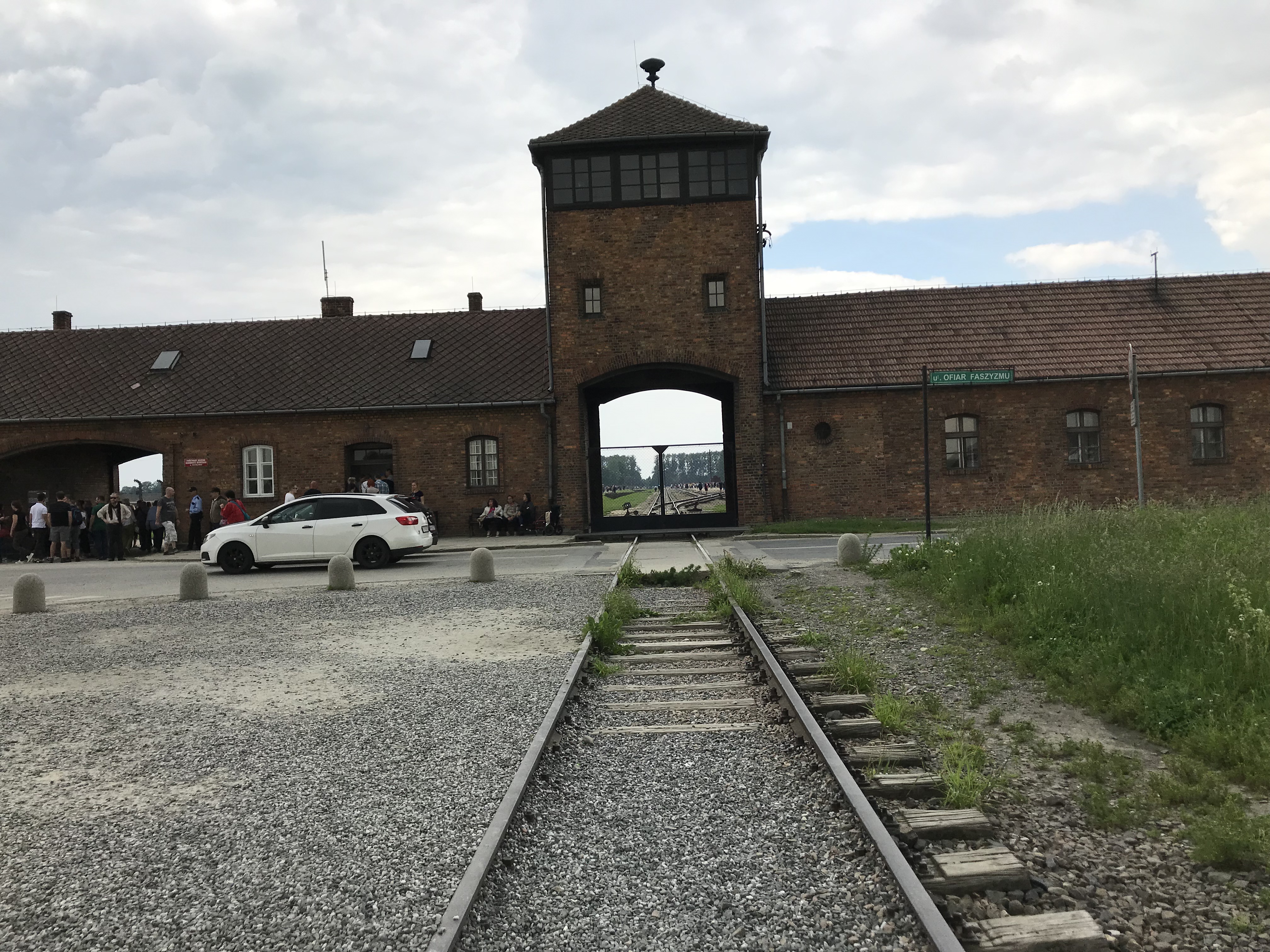
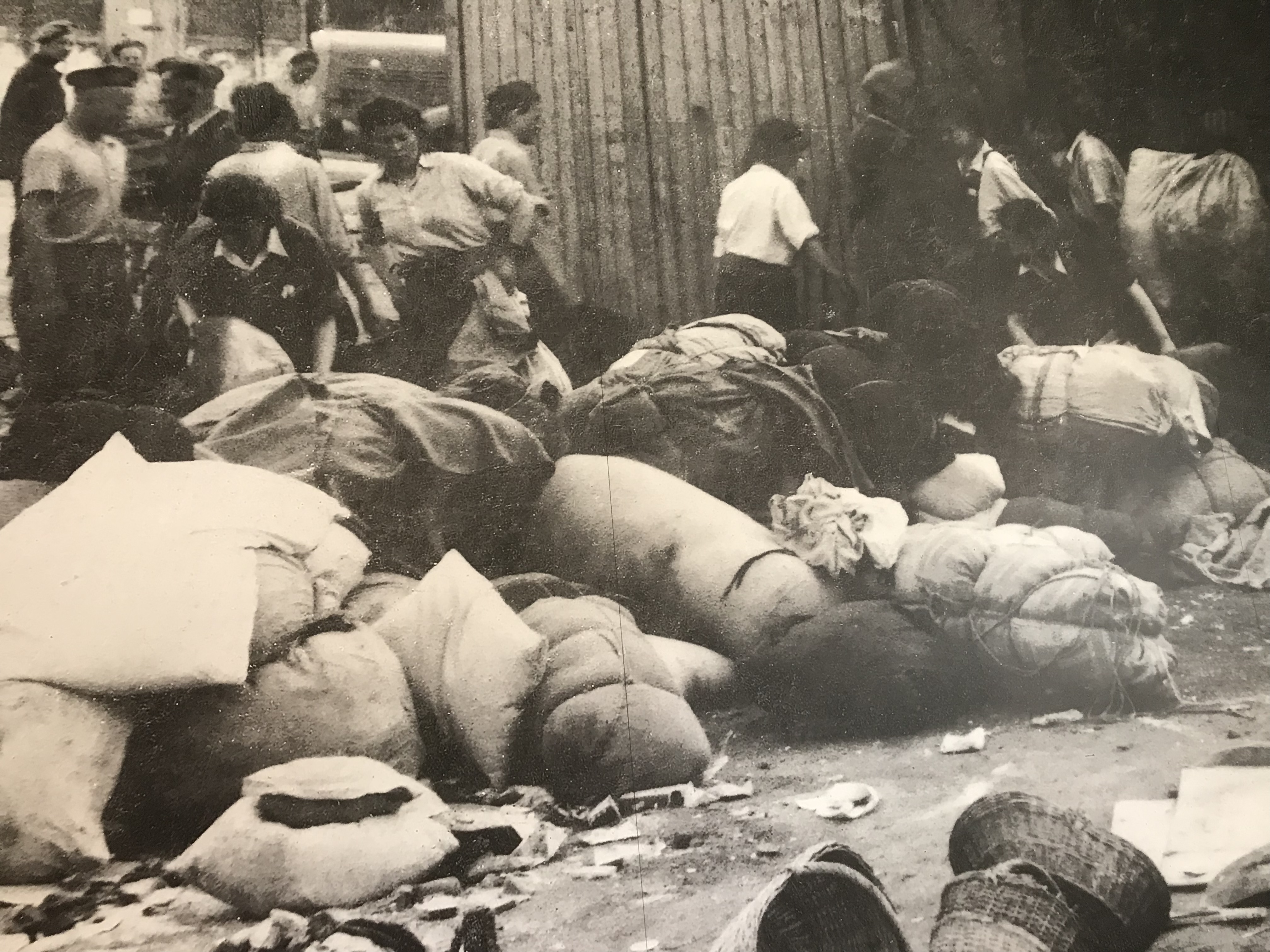
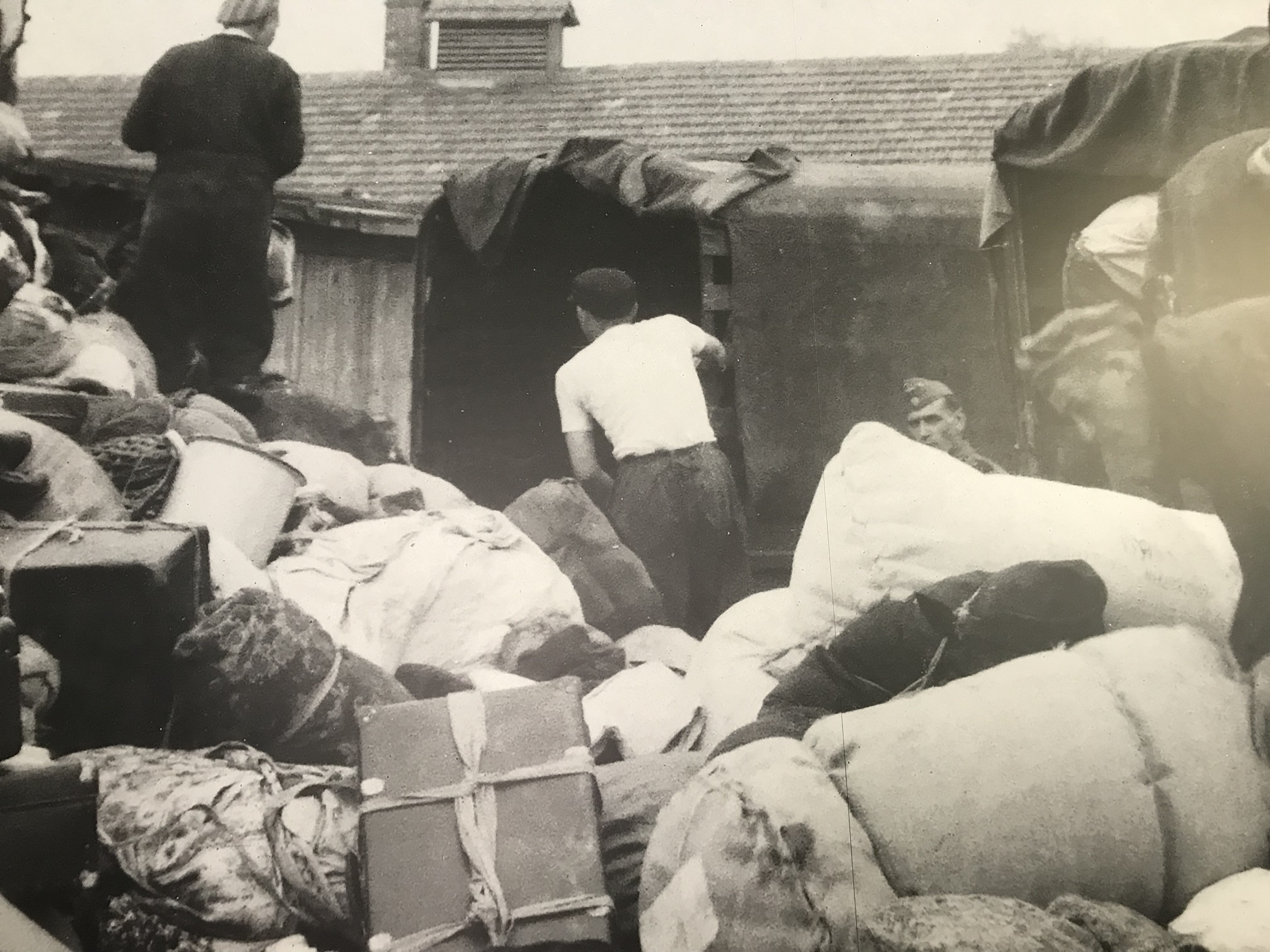
The trains would draw into the camp, the people (who had travelled in awful conditions for several days) would be unloaded, then made into lines of men and women. A doctor would then look at everyone, deciding who was fit for work, and who was not. Those deemed able to work would leave their belongings on the platform, strip, be shaved, showered in disinfectant, and given a uniform and tattooed with a number.

Those deemed incapable of work—the old, the ill, the very young—would be sent to the ‘bathhouse’. These were the crematoriums at the end of the camp, next to the forest. They consisted of an undressing room, a gas chamber, and a crematorium. We went to have a look, though the buildings have now been demolished.

Now, I have read several books about the holocaust. As a teenager, I read all the books by Corrie Ten Boom, and Sophie’s Choice, and more recently I read Schindler’s Ark, The Tattooist of Auschwitz and The Boy in the Striped Pyjamas. I therefore knew a lot of facts, but what I was not expecting, was how weirdly civilised the killing seemed. The photographs show people discussing things with the Nazis, everything appears calm, organised. There is no panic—until later, when they were actually inside the gas chambers, when it would be too late. Right until the end, people thought they were simply being processed, and they were not being forced along at gunpoint.

I was shocked by how almost peaceful, some scenes were. For example, the cremating part of the process took hours, so the Nazis did not have the capacity to murder the thousands of arriving Jews immediately. There are photographs of families waiting their turn. There they are, sitting under the trees, grandparents and children, clearly exhausted from their journey, waiting. There seemed to be no resistance, no screaming; people were waiting calmly, looking serene, wondering how long they would have to wait for. The area was surrounded by tall hedges (to hide what was happening from the neighbours) and is bordered by forest—there would I assume have been birds in the trees, in the summer there was grass to sit on; such things seem incompatible with the horrors of what was happening, and that is my point. Auschwitz was not set on the moon, it existed in the midst of life and nature, which somehow makes it worse.

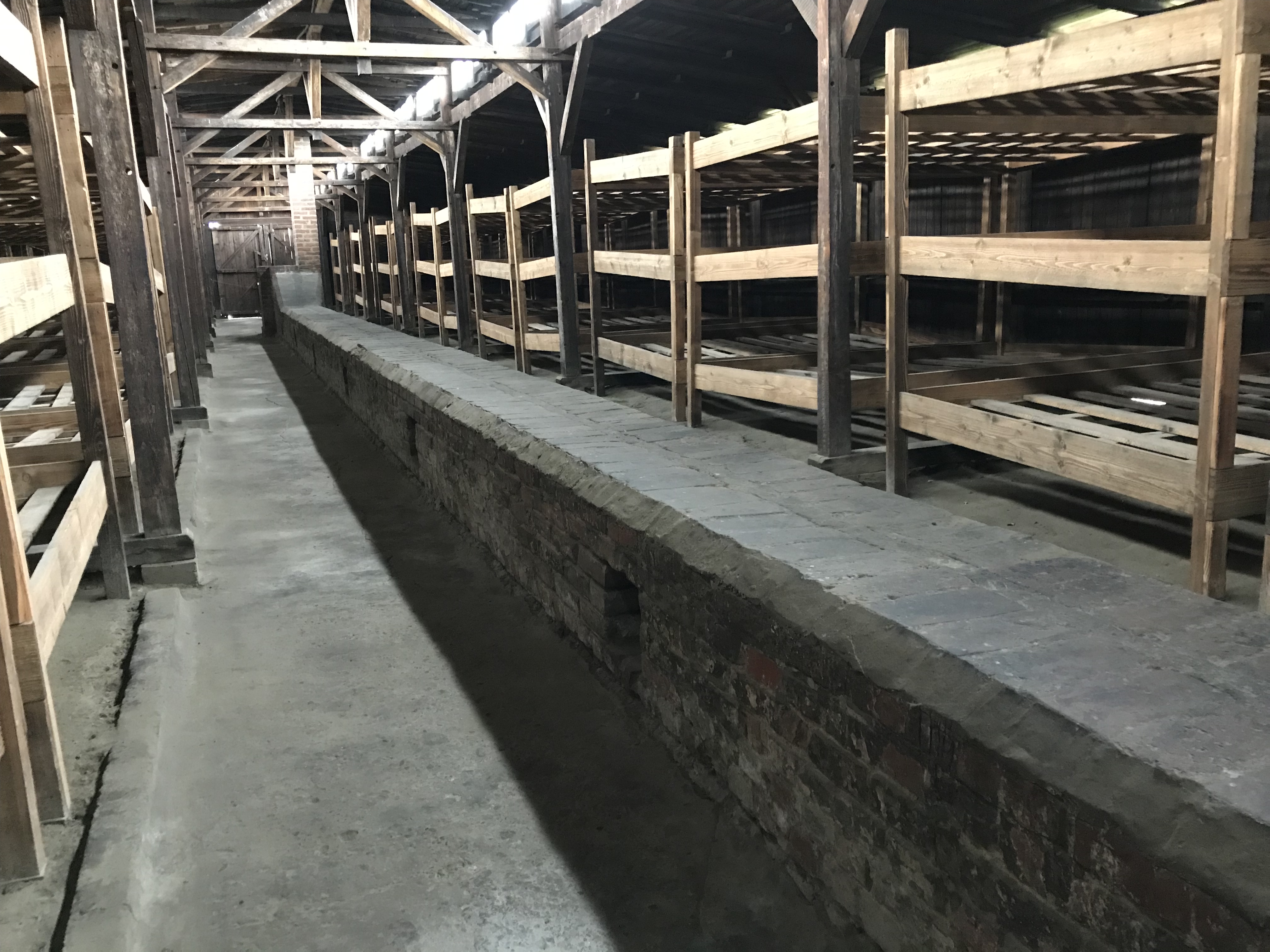
Whereas Auschwitz 1 was very informative, with information and displays, Auschwitz II gave you more idea about how the place would have felt. We saw the brick buildings, which are now beginning to need structural support, crammed with bunks. There were wooden huts—made elsewhere for easy assembly, and designed originally as horse shelters (we saw the rings in the walls for tethering horses). They were designed to shelter 52 horses, they housed 400 people. Many of the huts have disintegrated over time, and all that is left is fields of chimneys, all that remains from their heating system.
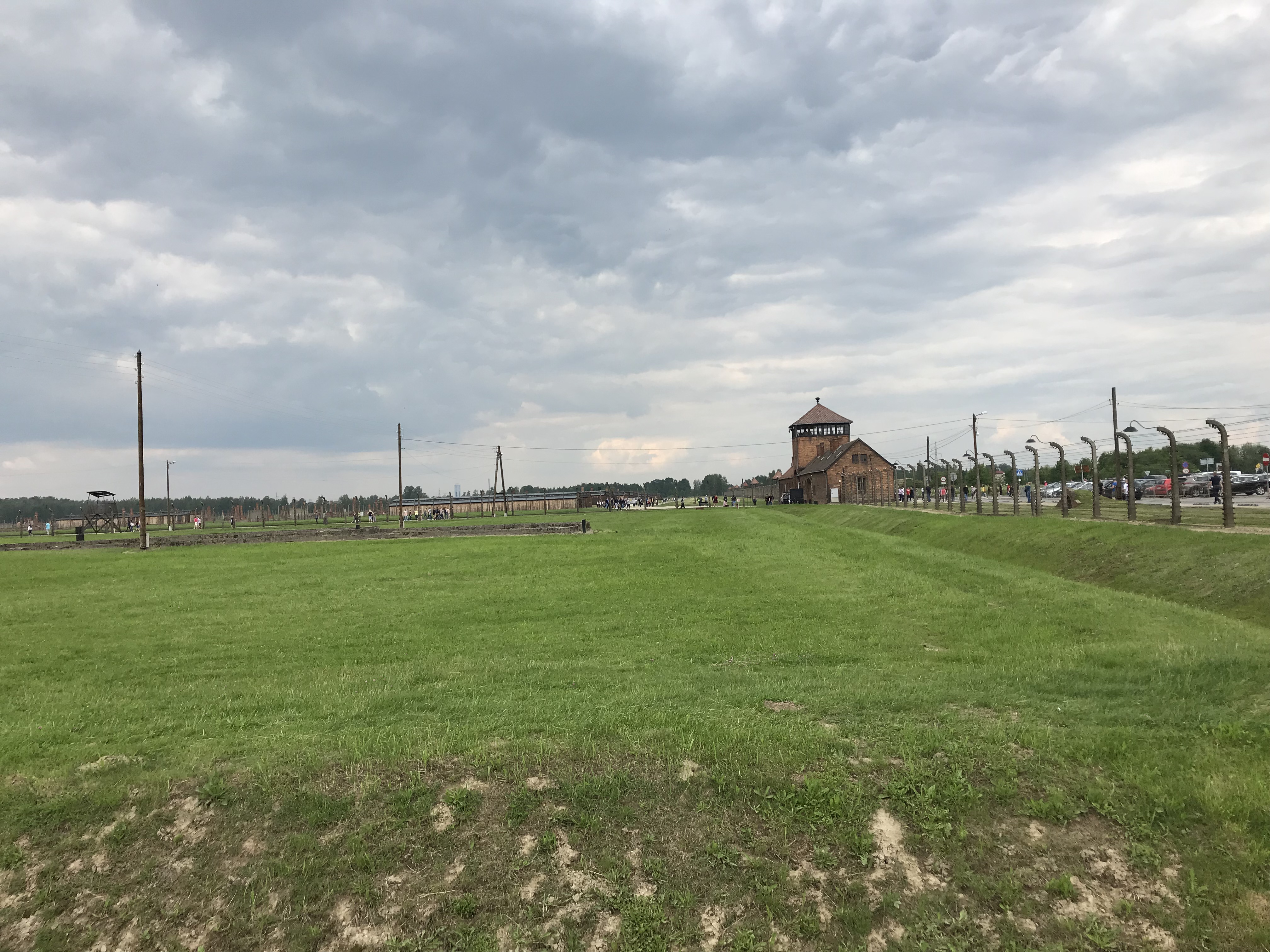
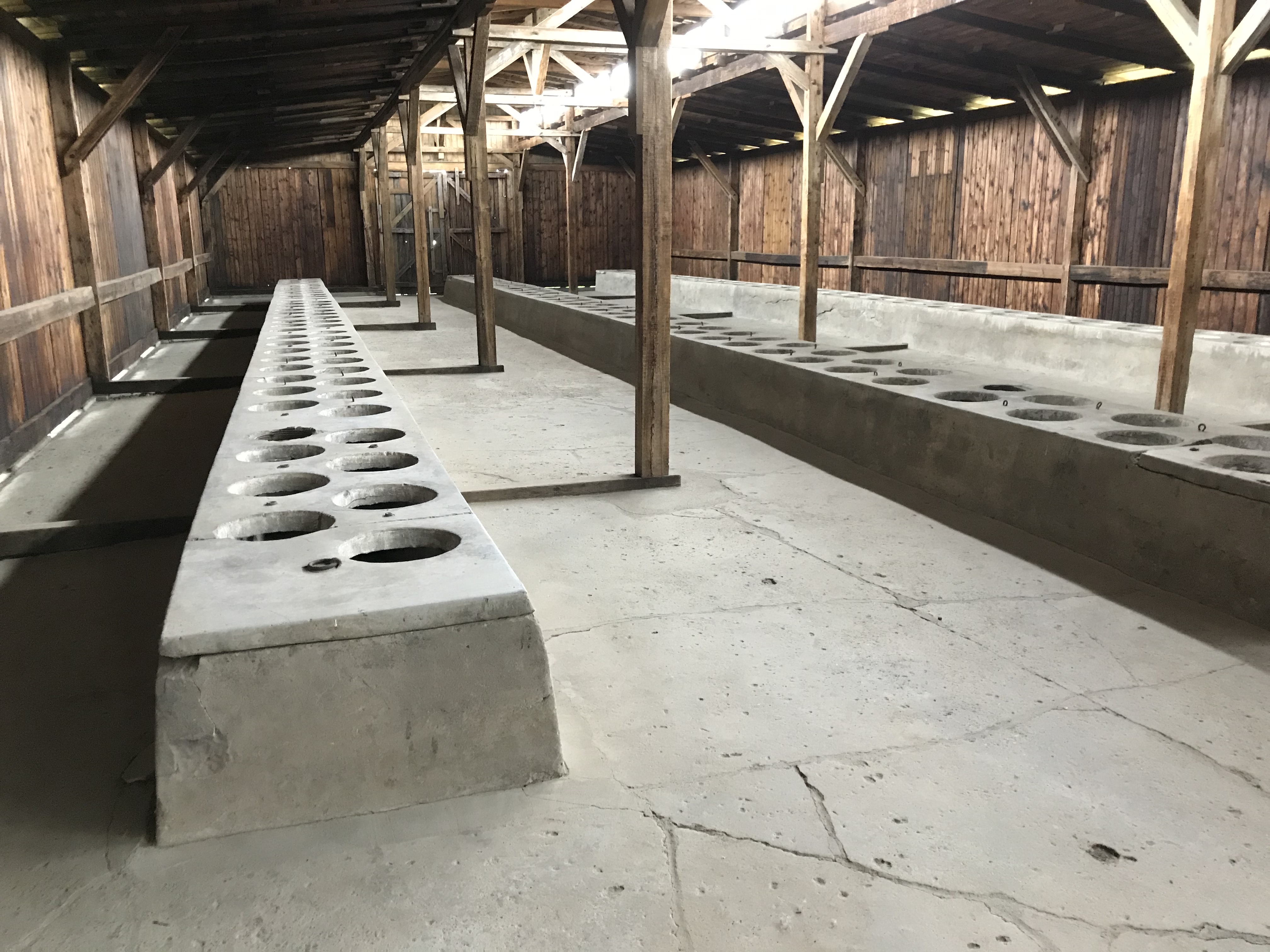
We saw the toilets (2 visits per day allowed) and the brick-floored washing area. The hut has since been rebuilt, and today it smells of fresh wood and creosote.

This was a vast camp, with thousands of people crammed together, in terrible conditions. Many people starved to death, or died when working or due to cold. I knew all this before I visited, but to stand next to the electric fence, and stare at row after row of huts, to imagine those people running between them was something no book could explain. Auschwitz today is a quiet place, where larks sing overhead, and people come to remember. I do not know how we make sense of what happened there, when I stare at the photographs of the guards I do not see evil people but I cannot fathom how they could have been part of such horrific actions. Perhaps the problem starts when we begin to see ourselves and those like us, as better than others. If we begin to think some groups of people are less good than us, do they become slightly less human in our eyes? If we think our race, our religion, our career, somehow makes us better than others, then is that the first step along the road we should never travel again? I don’t know, but I pray that we will learn from our mistakes.

Thank you for reading.
Take care.
Love, Anne x

anneethompson.com

Visiting Auschwitz


Visiting Auschwitz

We followed a long line of coaches and minibuses, alongside the disused railway line, to the car park. It was a huge car park, with hundreds of people. Our guide went to park, and we went in search of washrooms.

The washrooms are in the basement of a brick-built building—we stand in line on stairs which wind downwards, the walls are grey, the steps are concrete, surrounded by people speaking various languages—we pay 2 zloty to the women at the counter—we file into the clean but over-used cubicles. There are lots of people, everyone sombre, all sort of waiting for what comes next on our tour. Which has faint echoes of the past with the immense difference that we are here voluntarily, and only our emotions are at risk.

We are at Auschwitz 1 (there were two camps—I’ll explain later). This camp has the iconic gateway, with ‘Work Makes Free’ welded above it. We walk through the gate, into the camp, and look around. My first impression is that there are trees (were there trees when it was a prison, or have they been added since it became a museum?) and that it is relatively small—when you stand in the centre you can see all four corners. It reminds me of a students’ hall of residence, which is perhaps not surprising as it started life as a barracks for Polish soldiers, though was extended by the Nazis.

Auschwitz is the German translation of Oswiecim, a small town in Poland, which before the war had a population of about 70% Jewish Poles. It was chosen because of its position, in an area of forests, near good resources, with excellent transport and several large industries (which could be supplied with workers). The Nazis turned the barracks into a prison, filling it with anyone who was deemed to be an enemy of the state (so initially, mainly Polish people who were resisting the occupation, and later gypsies and Jewish people). It was designed as a work camp, with the prisoners sent out of the prison to work, marching to the nearby factories. As the war progressed, the inmates were gradually starved, abused and finally executed.

Auschwitz is now a museum, and although it’s possible to visit alone, there is more opportunity if you have a guide. When we arrived, we had our bags checked (you can’t take much more than a bottle of water and sunglasses inside) and were given headphones. These connected to a microphone which our guide spoke into, making it easy to hear him, so there was not a general cacophony of noise with various guides all trying to out-shout each other. It also meant that when I wanted to simply think and absorb what I was seeing, I could turn him off (though that probably wasn’t the plan). We did though have to follow the route that the guide chose.

We were taken to the extermination block: Block 4. We filed inside, squashed on all sides by people from around the world, a murmur of other languages, cameras in hands, bags slung on shoulders. The building smelt clean, but of bodies—a bit like a school. The stairs were dipped, worn down by thousands of feet—but during the war, these buildings were relatively new, it is tourists’ feet that have worn things down.

The block has been set up like a museum, with display boards and signs and maps and photographs. (The photographs were found by chance, by a little girl after the war, and were taken by German photographers.) The map showed how people from all over the occupied world were sent to Auschwitz. In 1942, the inmates changed to being mainly Jewish, and it became a death camp. The numbers are so big they begin to lose their meaning. The local town became full of German families, moving into the area.

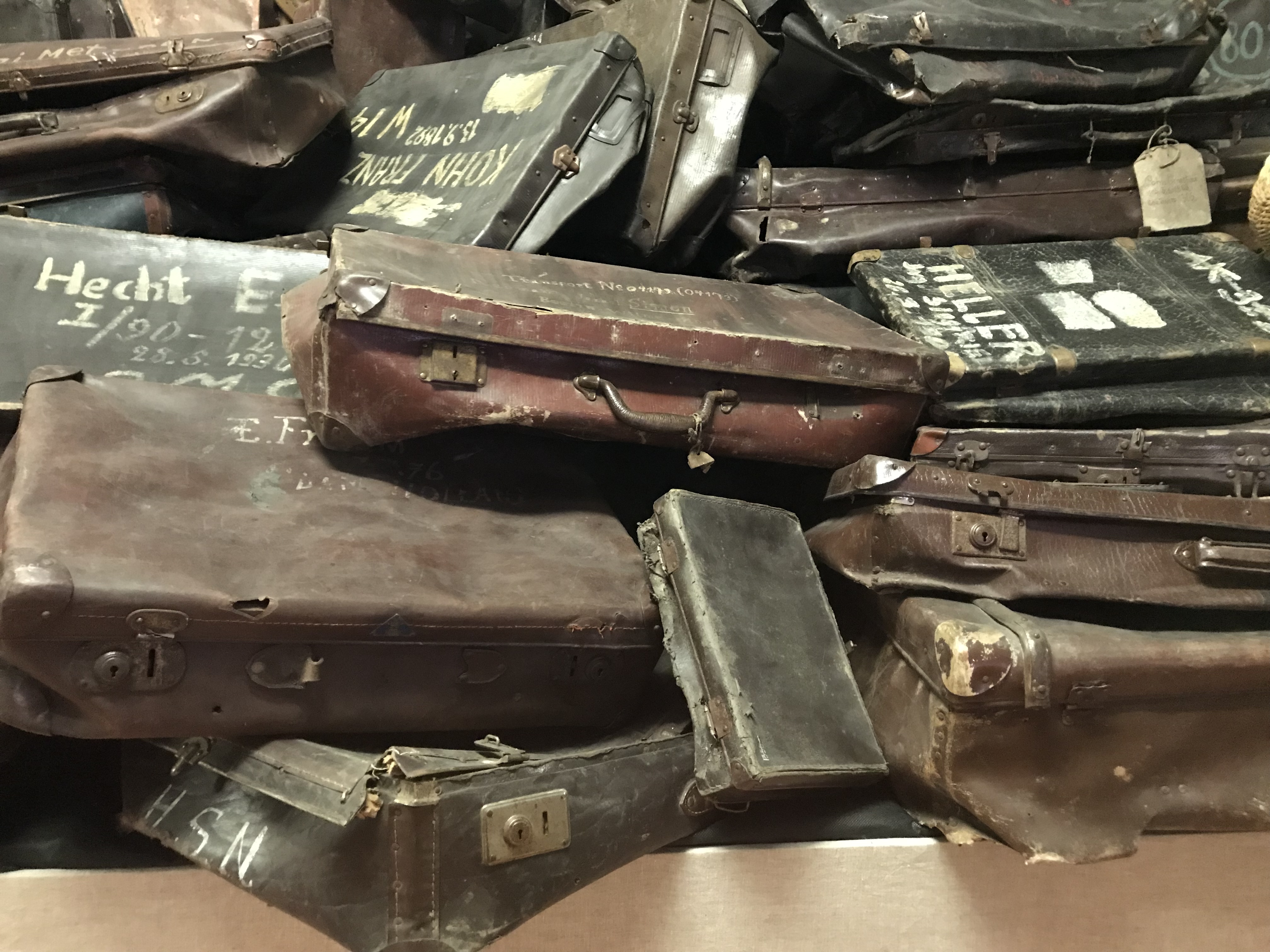
The displays explained facts from both prisons (Auschwitz 2 is much larger). It showed how the Jewish people had been told that they were being relocated, and they paid to buy tickets to Auschwitz. They were told how much they were allowed to bring: up to 25kg of stuff, and we saw displays of their possessions. What, I wonder, would you pack if told to relocate with only what you could carry? There were scissors, and rolling pins, pots and cutlery. On arrival, people were told to leave their bags and go to be disinfected. We saw heaps of their luggage, briefcases and baskets. There was another display of their clothes—a child’s clothing was displayed in a glass case; the clothes were handmade and I wondered who had knitted the socks, who had sewn the trousers? Another display was heaped with shoes, most of which looked faded and dusty, but you could still see fashionable sandals, and fancy heels, and children’s shoes scattered at the front. The inmates were shaved, and there was a display of their hair, faded grey now, and matted with time, so it more resembles old wool than human hair. It was used to make blankets and socks for the war effort. There was a display of crutches and false limbs, which made you realise the scale of the operation, and made you wonder how it felt to relinquish these last, necessary, items. There were shaving brushes, and hairbrushes, and brushes (like my dad had when I was young) for polishing shoes. One display was given to prayer shawls.

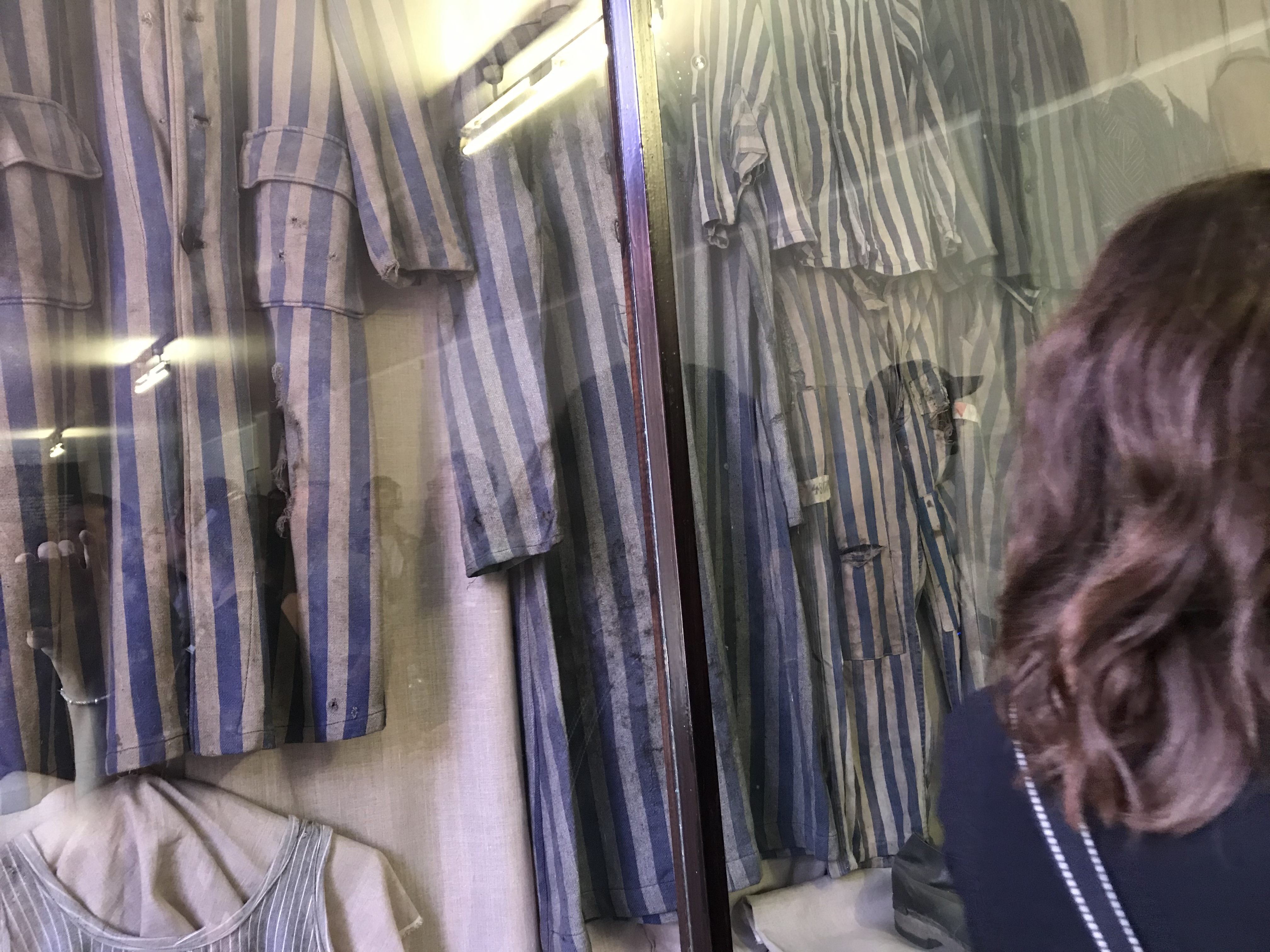
After being shaved and showered, the prisoners were given uniforms—the blue striped pyjamas that we recognise from films. This was their only uniform, so if they couldn’t wait to go to the washrooms (only allowed toilet visits morning and evening) or if it got muddy, it stayed dirty. I guess that dirty, stinky, people are easier to dehumanise.

When they arrived, they gave their profession. It was best to be something useful (like a welder, or jeweller, or cook) rather than useless (like a lawyer or accountant—they were sent off to do hard labour).

We were taken (not my choice) to the ‘judgement block’. Some of the things were heard about were horrid, so I shan’t repeat them. We saw the wall where people were shot (I believe the original wall was destroyed, so this was reconstructed in the same place). This now has flowers and candles, with the Israeli flag flying behind it. People paused for a moment, some crossed themselves, couples held hands, people bowed their heads as if praying. It’s in a sunny courtyard, and we could hear birds singing, and the crunch of footsteps, and the murmur of guides’ voices. Then we walked, though the open wooden gates, away.

The next block was the one which I found the most affecting. It was simply showing home-movies, taken before the war. As the images flickered on the walls: a child learning to ride a bike, a family swimming, a school concert—you remembered that the people who died here had lives which were not so dissimilar to our lives today. This did not happen hundreds of years ago in a strange land. This was Europe, less than a lifetime ago.

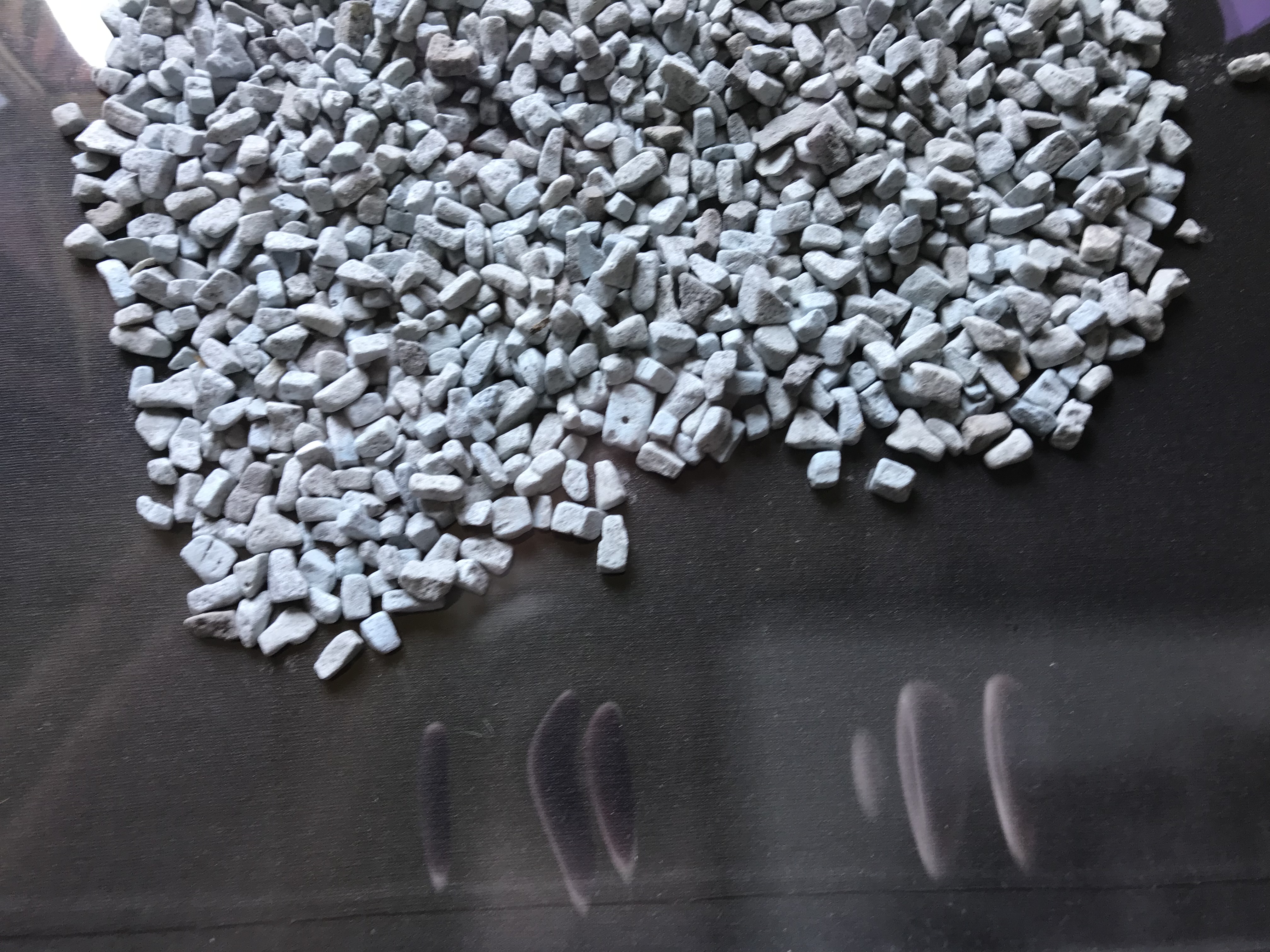
Auschwitz 1 was where the first experiments with gas were undertaken. Zyklon B was used before the war, as a disinfectant. It is blue/grey pellets, and was sent to the camps in tins. I won’t describe how the Nazis refined their techniques, because it was horrible, but they eventually built a concrete gas chamber, and it still stands today.

As we were about to enter, our guide pointed out the corner of a house, next to the camp. This is where Rudolf Höss lived with his family. I cannot imagine raising my children in such a place (clearly what the book The Boy in the Striped Pyjamas was exploring.) We looked at the flat-roofed concrete building used as a gas chamber, and went inside.

There was an outer room, where people would undress (because undressing a corpse is difficult). There were drains in the floor, it was dimly lit, everything was concrete. We shuffled forwards in the line of people, into the main room. Concrete floor, concrete walls, concrete ceiling. There were scratches on the walls (don’t think about it) and drains in the floor and holes in the roof where the gas was added. I expected to feel upset, or claustrophobic, or frightened, but I didn’t. If it reminded me of anything, it brought back memories of changing in a damp concrete changing room at the swimming pool at Letchworth—not a nice place, but still just a place. I didn’t feel the echoes of the people who had gone before, I don’t think their ghosts have lingered.

Then we walked into the area used as a crematorium. There were rails and turnstiles on the floor for efficient moving of heavy bodies, and large brick-built ovens. As we stood, in silence, thinking, a woman started to weep; the only sound was of her sniffs. I touched her arm, and she clung, briefly, to me, needing the comfort of another human. I have no idea whether we speak the same language, but we are both human, and that was all that mattered—which is sort of the point of visiting this place, trying to grasp how humans could lay aside their humanity so easily. One of the saddest things I saw was the photographs of the Nazi soldiers; they were young people. They didn’t look evil, they just looked like the young people who I know and love. How could this have happened?

We went to Auschwitz 2. I will describe it for you tomorrow. Why not sign up to follow my blog so you don’t miss it?

anneethompson.com

Kraków


We were in Kraków for the Dragon Festival. I didn’t even know there was a dragon festival in Kraków, so in case you are as ignorant as me, here is a little history:

Long ago, in the caves under the castle, there lived an evil dragon. The people weren’t too keen on this, as it ate their sheep and children, so they wanted someone to kill it. One day Krak, a lowly shoemaker, managed to entice the dragon to eat a sheep full of gunpowder, so the dragon exploded. The king was so pleased, he allowed his daughter to marry Krak, and they lived happily ever after in the castle on the hill. The people settled around the base of the hill, and this became the city of Kraków (I have been unable to verify certain facts).

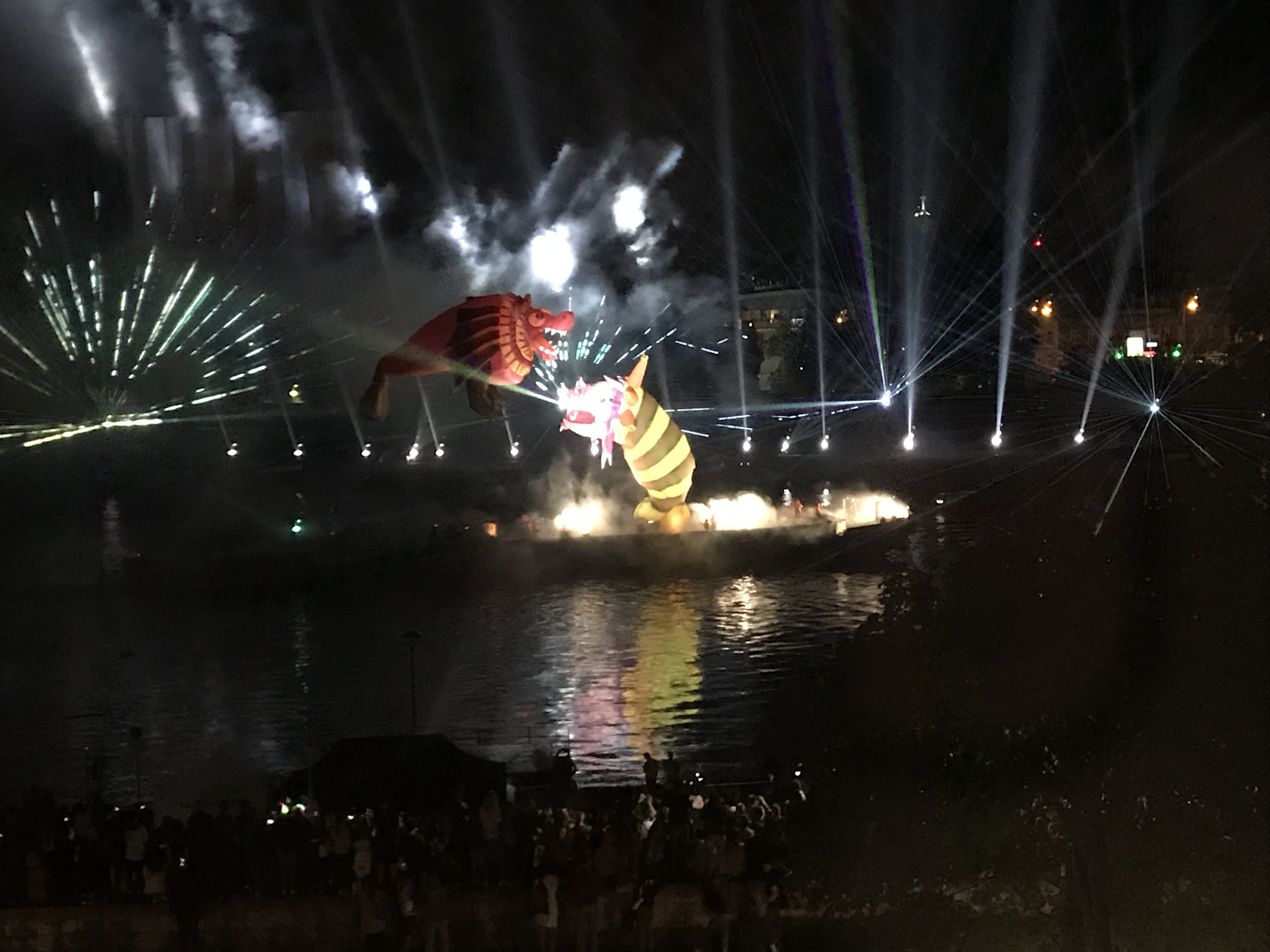
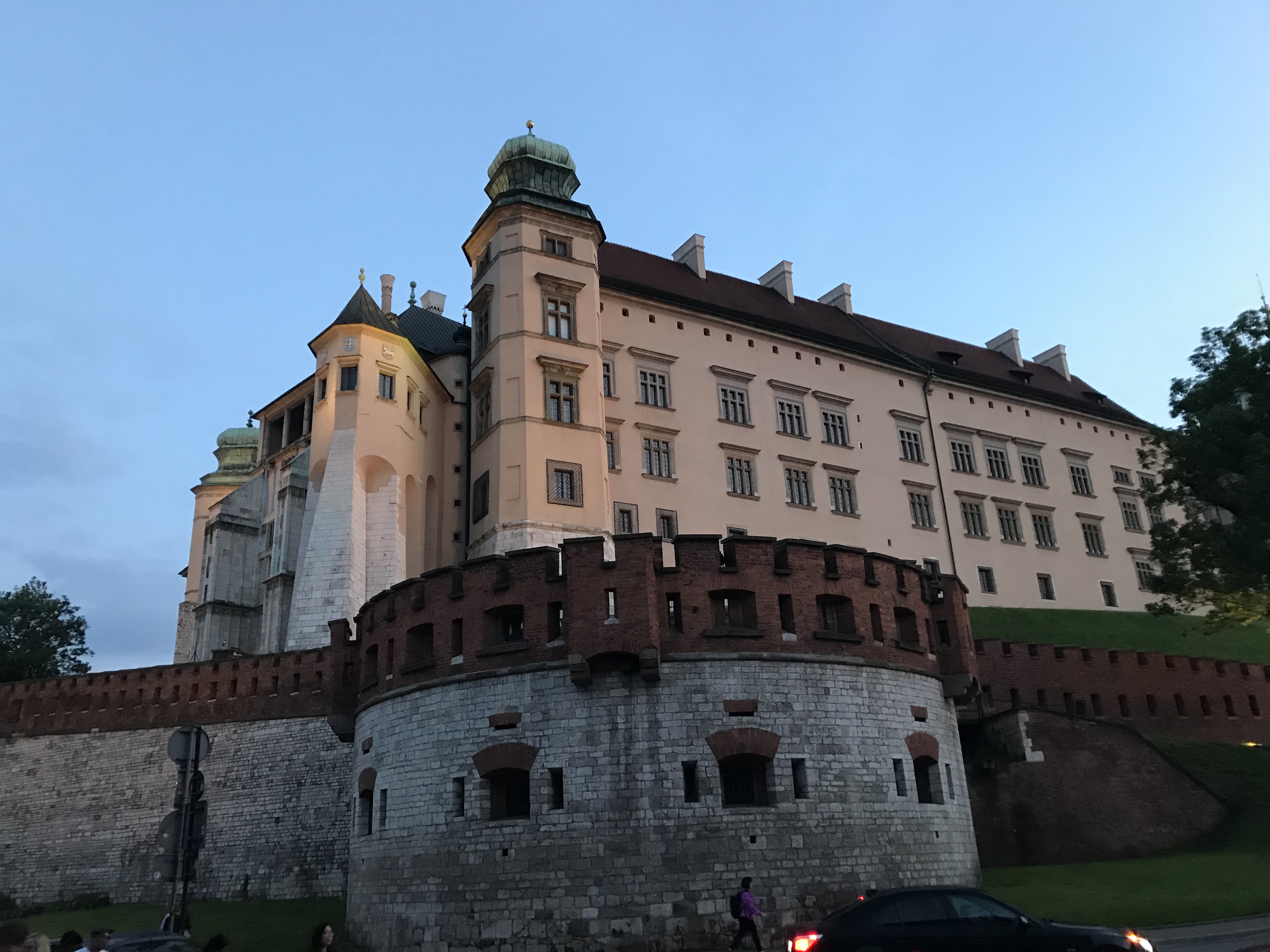
Each year, the city has a festival. There are fireworks across the river, and lasers, and giant dragon balloons, all accompanied by music. As our hotel was just opposite the river, we had a fabulous view, which was all rather unexpected and great fun. The next day, hoping to do some research, I walked up to the castle. There is a statue of the dragon, which breathes fire at certain times (I managed to just miss it in my photograph) and you can see his cave behind, which proves the story must be true.


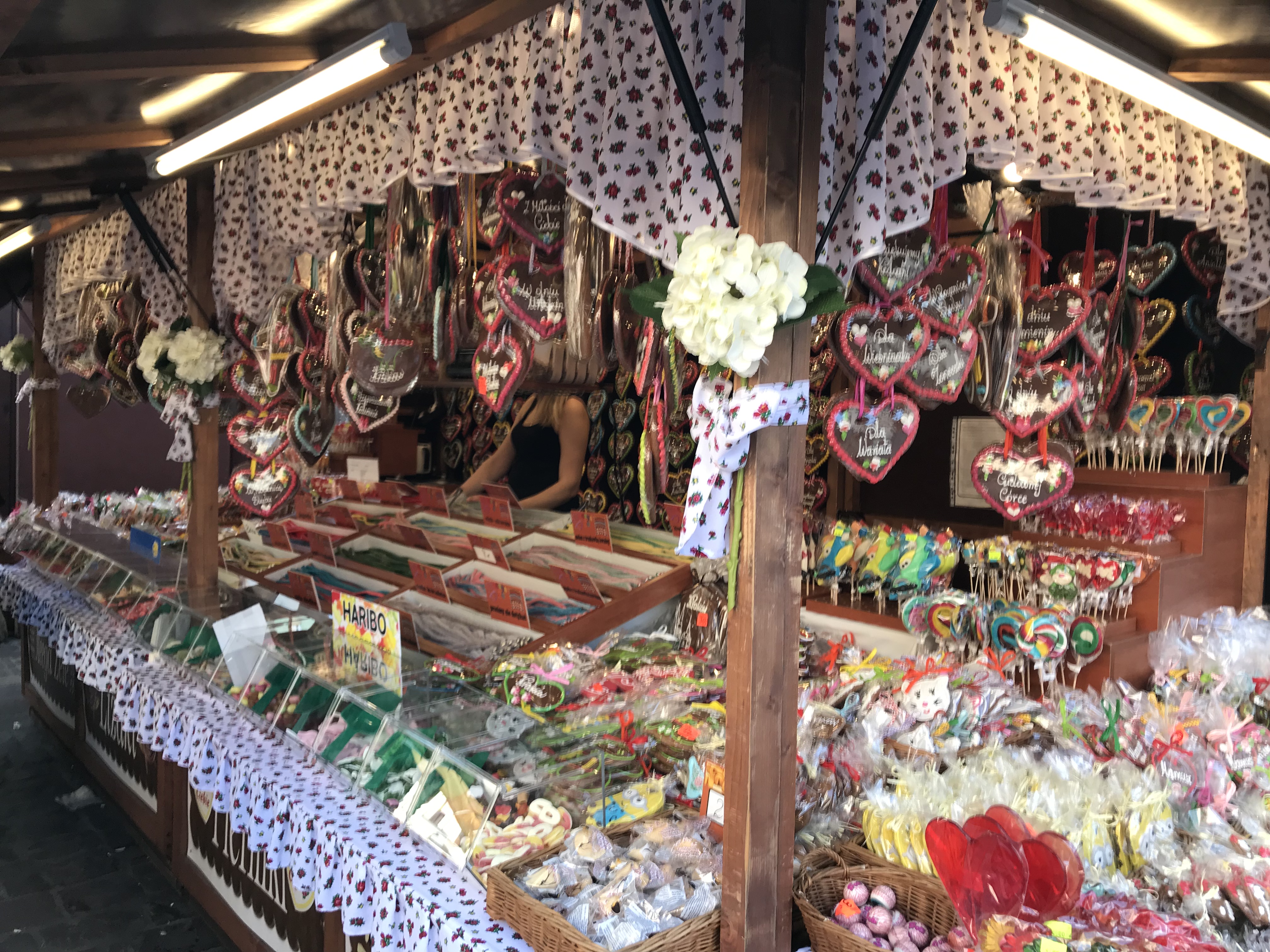
I love Kraków. We walked through the markets, and bought donuts to eat (traditionally, these should be filled with marmalade, but we chose the plain sugar ones). The buildings are beautiful, there weren’t too many stag-dos, and the sun was shining. Eating is easy, as everywhere seems to be very clean, and cheaply priced, and friendly. We had a traditional meal at Sasiedzi one evening, when we sat under vines in the courtyard and ate by candlelight. The following night we ate at Galicyjska, which was a lovely restaurant in the cellar. It was beautiful, and my only wish was that we had bought Son 2 so he could finish all our leftovers!

The real reason for our trip, however, is rather more serious. We have planned a tour of Auschwitz. I’m not sure what to expect really, I will tell you tomorrow.

Thanks for reading.
Take care,
Love, Anne x

You can follow my blog at
anneethompson.com


Have you seen my latest book? The Sarcastic Mother’s Holiday Diary by Anne E Thompson

Why not have a quick look at it now? Available from Amazon.

Diary of a Hatch continued…


Diary of a hatch continued…

The first egg hatched Thursday, the last one (which died halfway through) was on Sunday. By Monday, the box I had used as the first brooder was beginning to look too small. I had 9 chicks in there—though the female Longbar was still looking very weak and wasn’t feeding on her own. I began to feed her yolk every hour, in one last attempt to give her enough energy to recover. The males are fine, but smaller than I was expecting. Apparently, they are a fairly rare breed, so perhaps they are difficult to raise, which is a shame (I really want some of those lovely blue eggs!)

I moved an old dog crate down from one of the coops. It was covered in cobwebs and old bits of straw, so it needed a good clean. I placed it on its side, with the door at the top, so I can easily change the food and water pots. The gaps between the bars are currently too big (though the chicks will soon grow) so I wedged fine mesh fencing inside (cutting my fingers as I did so).

The chicks still need to be fairly close to the heat-lamp, so I put some upturned washing up bowls in the bottom, then covered them with hay, hence raising the height. I dragged the whole lot over an old piece of sacking (because the last time I had chicks in the garage, I left a mucky stain on the garage floor, and for some reason this matters…)

I find that I waste a lot of time when I have new chicks. They are wonderful to watch; I can spend ages staring at them. When they first went into the bigger cage, they were very anxious, and all huddled together under the red light. I checked them after an hour, and they were going bananas! The Leghorns were rushing full speed in circles, round and round the cage, excited to have so much space. The Speckled Sussex are already growing wing feathers, and keep testing them—they’ll be flying before I know it, so I need to keep the door/lid shut. I am supposed to be proofreading my farm book, Ploughing Through Rainbows, which will be published imminently, but watching chicks is way more exciting.

Day Six

When I came down this morning, the female Legbar had died. What a shame. At least I know that I gave her every chance to survive. Sometimes a chick is doomed from the start, perhaps something internal didn’t ever develop properly, or maybe something was injured during the hatch; you get rather accustomed to death when dealing with animals, life is very precarious.

The remaining 8 chicks are all vibrant and growing well. They run madly around the cage, eat and drink independently, and then suddenly, with no warning, will close their eyes and be asleep. They are still clustering under the lamp to sleep, so it’s not time to raise it yet (as they develop feathers, I will move the lamp further and further away, until they no longer need it.

My next problem is how to introduce them to the established flock. My plan was to add them to the broody hen’s nest. However, due to the weak chick, I delayed this (as she would definitely have died, and I wanted to give her a chance). I now have rather large chicks. I could still attempt to smuggle them into the nest and hope the hen doesn’t notice—but she will then abandon her own eggs, and I feel a little uneasy about in effect killing unhatched eggs which must be almost fully developed (she has 2 potentially fertile ones). However, if I wait many more days, the chicks will be too big. I can then introduce them as ‘teenagers’, when they are feathered and more robust but still submissive. They’ll have a horrid few days while the adult chickens establish the pecking order (basically by pecking the young ones and hurting them) but then should be accepted into the flock. If I don’t do that, they will form a separate flock of adults, and will fight if I attempt to combine them with the established flock (and chickens will fight until one dies, so I don’t want that to happen).

Day Seven

I threaded a stick through the bars of the cage, so that the chicks learn how to use a perch. It’s much safer when they’re adults if they’re accustomed to roosting somewhere high (especially if for some reason they’re not in the cage at night). They were very interested in the stick, and pecked it.

Day Nine

The flight feathers are beginning to grow, so the Speckled Sussex now have patterned sides.

The chicks are using the stick (perch) as a hurdle, and seem to enjoy leaping over it.

Day Ten

The outside nest stinks—obviously at least one egg has gone bad. The plan was for the broody hen to accept the incubator chicks with her own hatchlings (she has 2 fertile eggs from Ebay, and several of her own, infertile ones). But, if she abandons the nest due to bad eggs, she will also lose her nurturing instincts.

I donned heavy duty gardening gloves and a coat (despite hot weather) and went to tackle the nest. Hen extremely angry, and fluffed up her feathers, and swore, and attacked me—all rather scary. Even when I moved away, she was flying at me and pecking. In the end, I trapped her under an upturned crate for a few minutes, so I could remove the eggs from the nest. I threw away all the bad eggs (one was so bad, that as I put it into a bucket, it exploded, covering me in extremely stinky pale yellow stuff.

I released the hen, who fluffed her way back to the nest and turned the remaining eggs. I wasn’t sure if she would begin to abandon the nest, so decided to try adding the chicks. I selected one male Legbar, briefly covered the hen’s eyes with a flowerpot, and placed the chick next to her on the nest, with one of her feathers on its back. Then I stepped back, and waited…

The chick was cheeping for its family, the hen was making a sort of low growl—which I didn’t know if it was a warning or a comforting sound (I don’t speak ‘chicken’). They stayed, a small distance from each other, not moving, for ages. I went to have lunch.

Returned after lunch (I still smell of rotten egg) and the chick had disappeared. Had the hen killed/eaten it, or was it safely underneath her? I watched for ages, and eventually, the chick’s head appeared from under the hen. Phew! It was safe. I collected another chick, and left it on the edge of the nest (the mother hisses when I go near—I am beginning to learn ‘chicken’ language).

The second chick was accepted, so I began to add another chick every half hour. Each time, the chick cheeped, the hen made her low growling noise, the chick gradually drew nearer (I’m guessing because she was warm) until the chick was actually leaning against her, crawling under her, climbing on her. All seemed to be going well, and I was feeling extremely relieved.

Although the chicks are cute, the next couple of weeks will be hard work if they remain inside. They will grow very fast, and produce lots of poop, so I will have to replace the hay frequently. Then I will need to gradually acclimatise them to outside, with trips of increasing length to the aviary (transporting them is always adventure, watched on all sides by 4 cats).  My life is so much easier if a hen adopts them.

I then had a problem. I introduced the first big white Leghorn chick, and the hen hated it. She wouldn’t let it near the nest, and when it approached, she pecked it. I have no idea why, maybe it smelled different, maybe I had introduced the chicks too quickly. Whatever the reason, she suddenly turned against the chicks she had previously accepted, and started to peck them too. They ran away and hid in a corner.

I decided to leave. Perhaps, as the chicks grew cold and cheeped, the hen’s maternal instincts would surface and she would care for them. I didn’t think she would actually kill them.

An hour later, all the chicks were huddled in a corner, trying to climb under each other to get warm. The hen was ignoring them. I tried to put the first chick close to her, but she pecked at it. I left them until the evening.

At 6pm it was getting too cold for the chicks to be out without a heat source, and the hen was refusing to adopt them. I put them all into a big flowerpot and carried them back to the heat lamp in the garage. What a shame.

Day Eleven

The chicks are using their wings, and fluttering all around the cage. One Leghorn has found the perch, and flies up to stand on it. The others are trying to copy. As I clean them out, the level of the hay will get lower and therefore further from the lamp, so the warmest place will be on the perch, which should encourage them to roost on the perch at night. (If the mother had adopted them, she would naturally take them on the perch to roost when they had feathers. Such a shame she rejected them.)

Day Fourteen

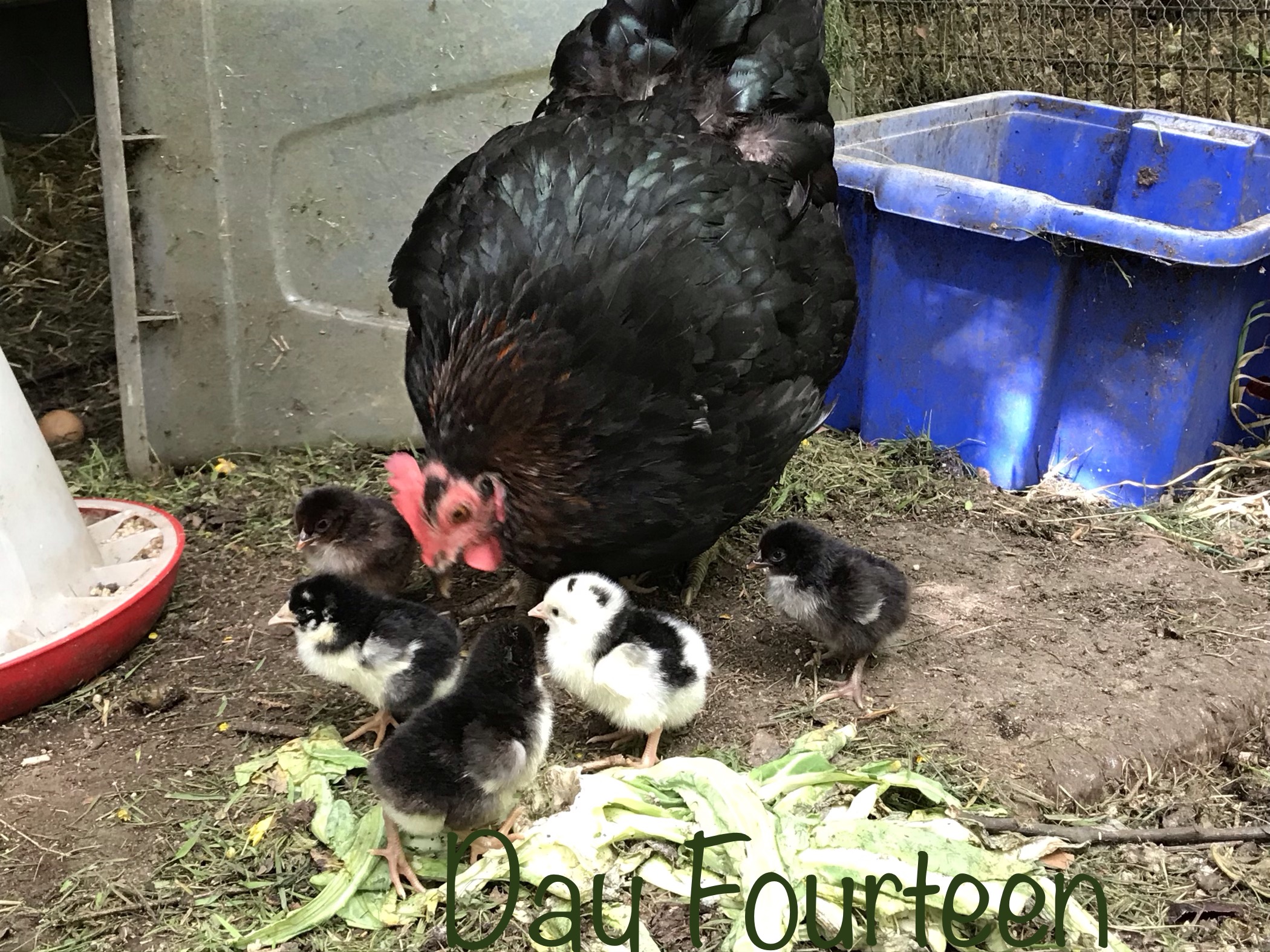
The chicks seem bigger every day. Today, I decided I would put them outside for a couple of hours, to start preparing them for when they’re outside permanently. I first checked the hen, and got bit of a surprise. The infertile eggs she’s been sitting on were obviously not all infertile, as today she had chicks. They are tiny, and beautiful, and she would not let me see them (I think she has 7). When I went into the cage, to add chick-crumb and water, the hen flew at me, beak pecking, trying to kill me. In her fury she scattered the chicks, and one was injured, I think its leg is broken. The hen bustled back to the nest with her chicks, and I rescued the injured one from where it was hiding under a crate. I put the big chicks outside, and put the injured hatchling under the heat lamp to recover.

When I returned to the garden, the chicks were all huddled together in a corner, looking cold—I don’t think they’re very keen on the outside! But they’re getting too big for the garage really, so will have to start spending days in the garden. I’m off to Poland for the weekend, so Son is looking after them while I’m away (I’m not quite sure how to mention that he now has 7 extra to care for…I might not saying anything and let him discover them when he goes to feed the hen!)

Thank you for reading. On Monday I will tell you about our trip to Krakow.

Take care.
Love, Anne x

Thanks for reading.
You can follow my blog at:
anneethompson.com

Summer Exhibition at The Royal Academy 2019


We went to the summer exhibition again, rather a treat, especially as we started with breakfast at Fortnum and Mason’s (very nice eggs benedict).

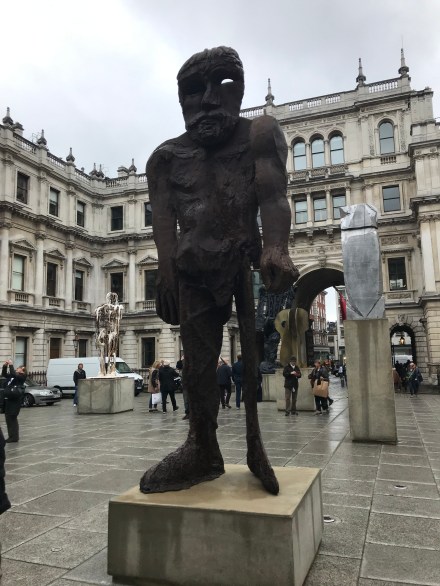
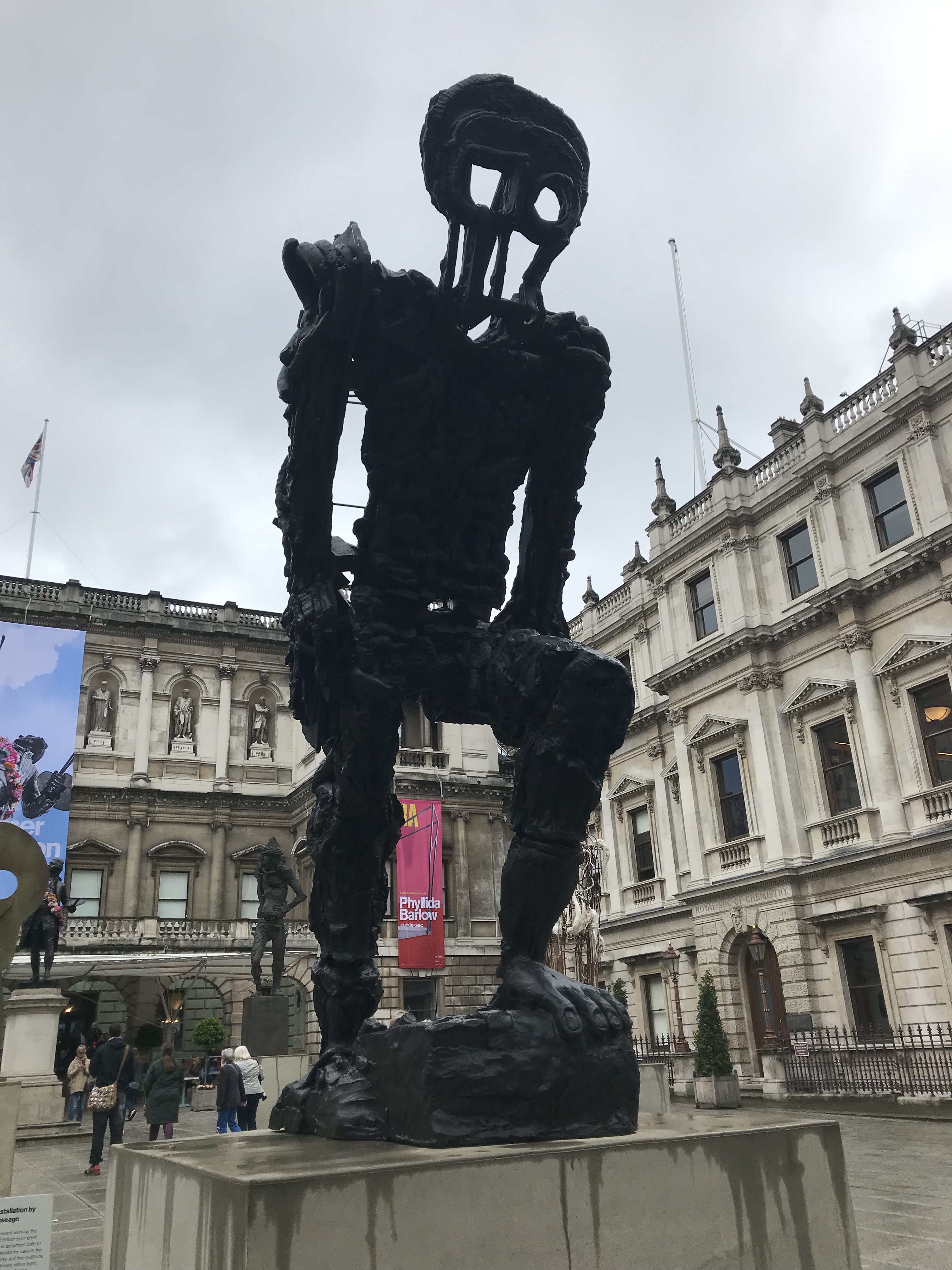
As we approached the royal academy, we were met by zombies. At least, they looked like zombies but we can’t be sure, as the sign which explained what the sculptures are was very highfaluting, and not at all understandable. In fact, this was bit of a criticism with all the signs around the exhibition—they were somewhat pretentious, the sort of signs that you read, twice, and then felt completely confused as to what they had actually said. Why they needed to write: “concerns of scale do not contain his ambition” when they could have written: “He likes making big things” is beyond me.

The exhibition was not, I felt, as flamboyant as last year’s, but it was still fun. Here are a few of my favourites:

I loved, of course, all the book-themed installations, especially ones which seemed to be showing how a story can be lifted from a book.

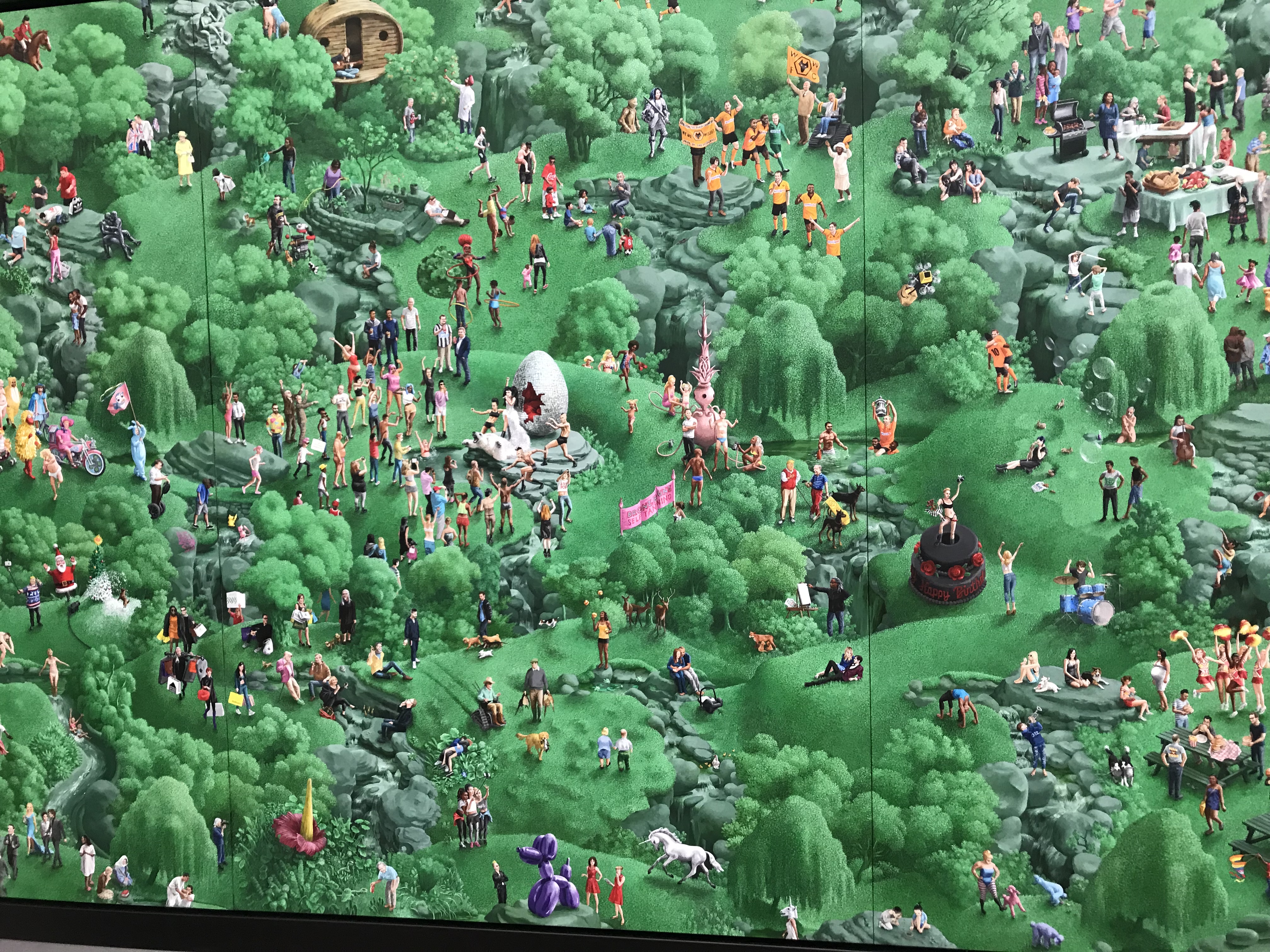
There was a sort of ‘Where’s Wally’ painting, full of famous people to find. As bit of a book nerd who doesn’t watch much telly, many of the characters were lost on me, but I did recognise a few. The painting as a whole had a sort of Central Park feel to it, and was rather fun.

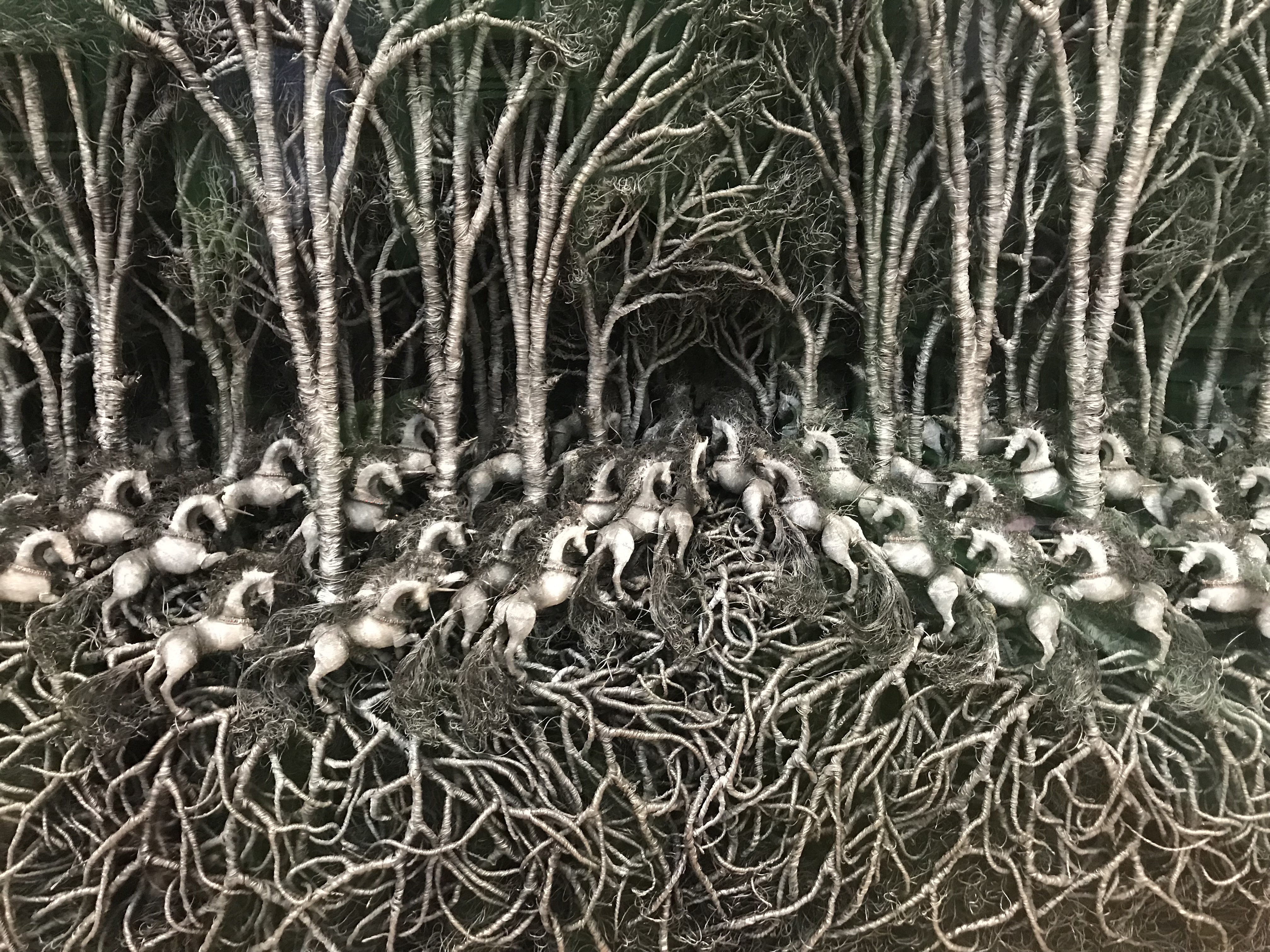
This forest of horses, made of wire, is lovely. I am almost certain that it is the exact same one which I enjoyed last year, which feels like cheating, but it’s still good.

This view of gardens is another one I loved. There is so much going on, and the painting sort of draws you into it.

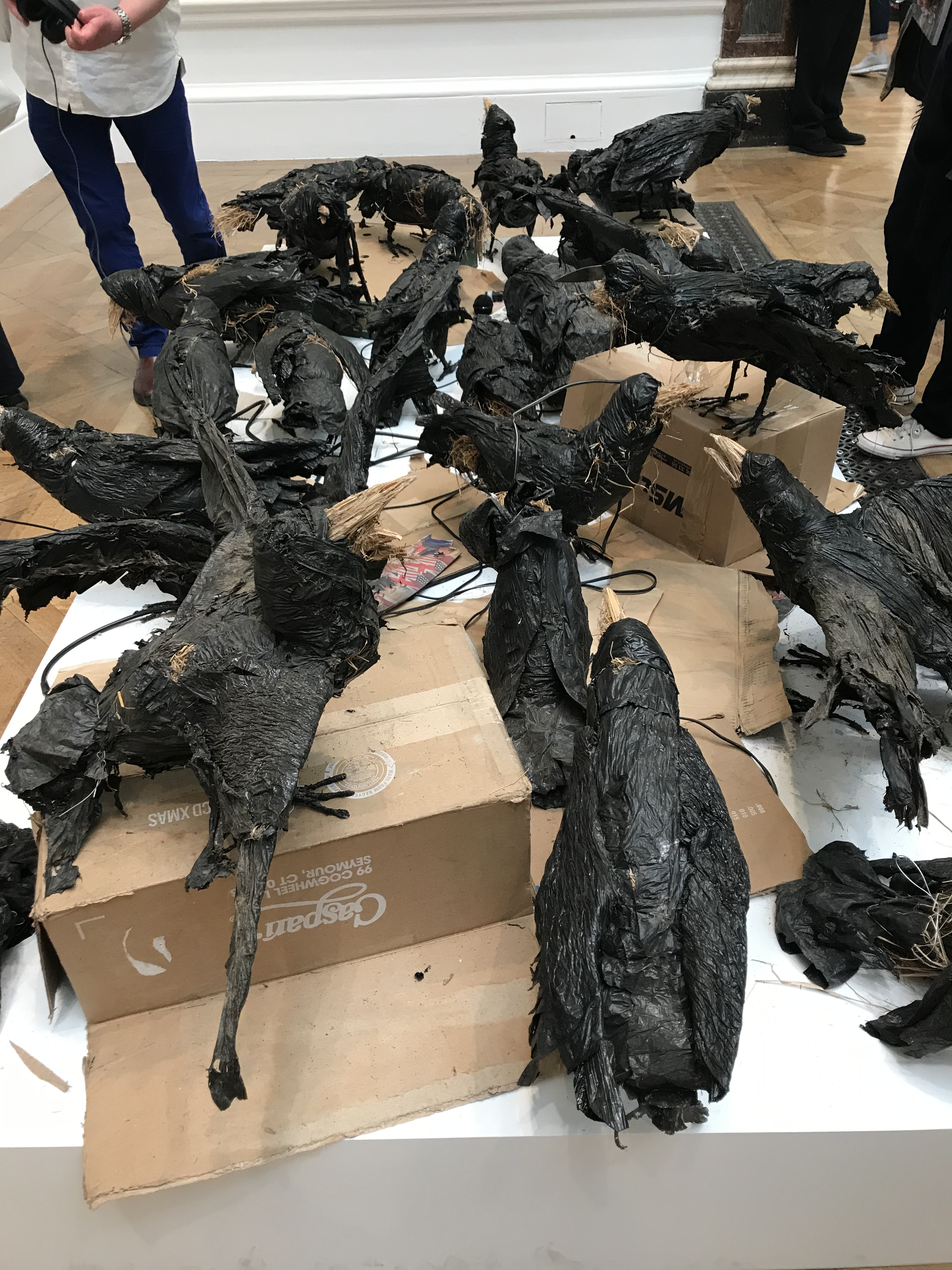
This photo is rubbish, so you’ll have to imagine, but the sculpture was of lots of crows, on upturned boxes. I can tell you that if you get too close and your coat brushes them, they wobble (but I don’t think you are supposed to do that). There are also headphones, with a soundtrack to listen to. I wouldn’t bother if I were you, it’s not very interesting, and I felt it was another bunch of words where the artist was ‘trying to be clever’ but it didn’t really work. I think perhaps I don’t much like how artists write.

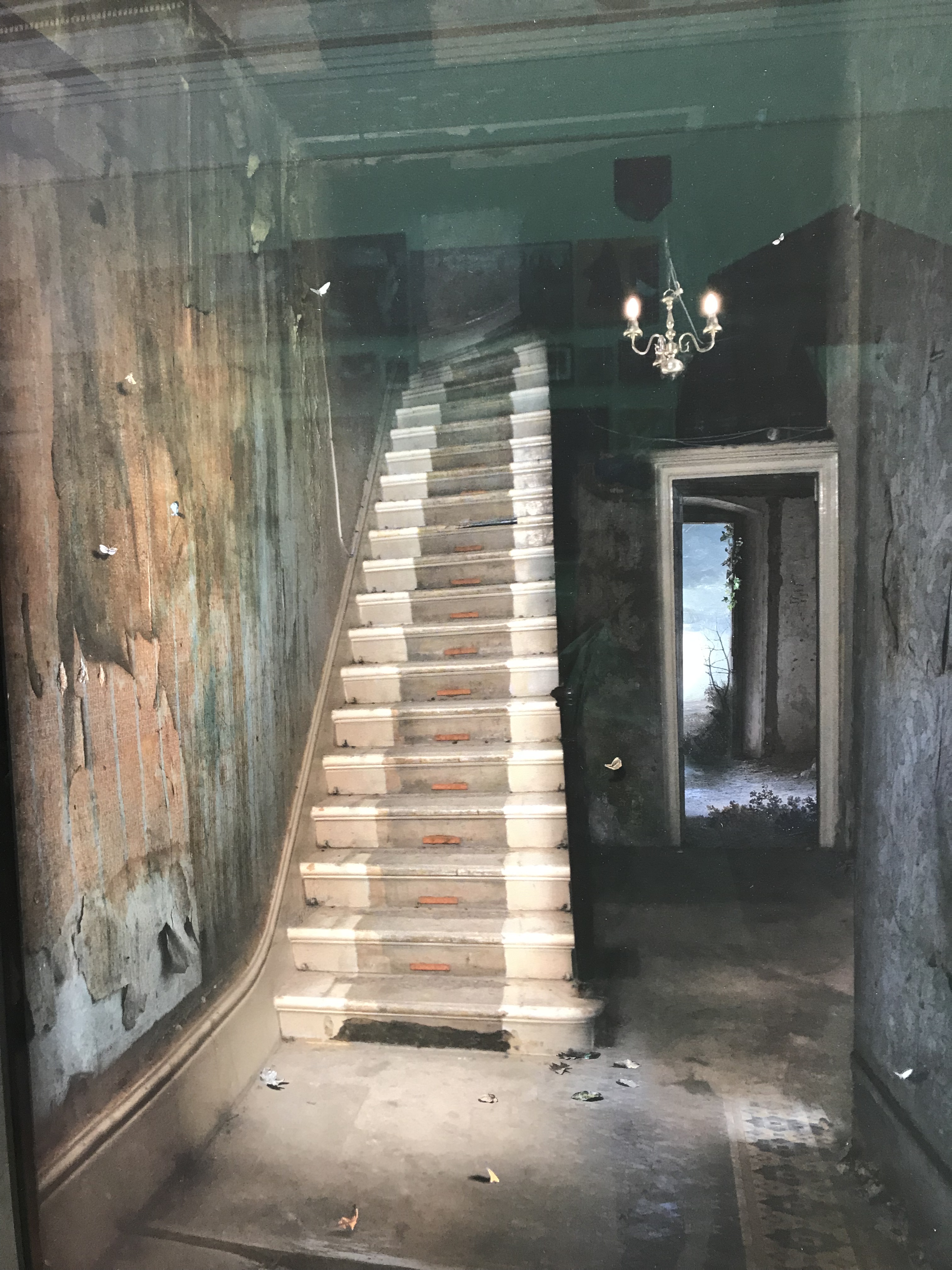
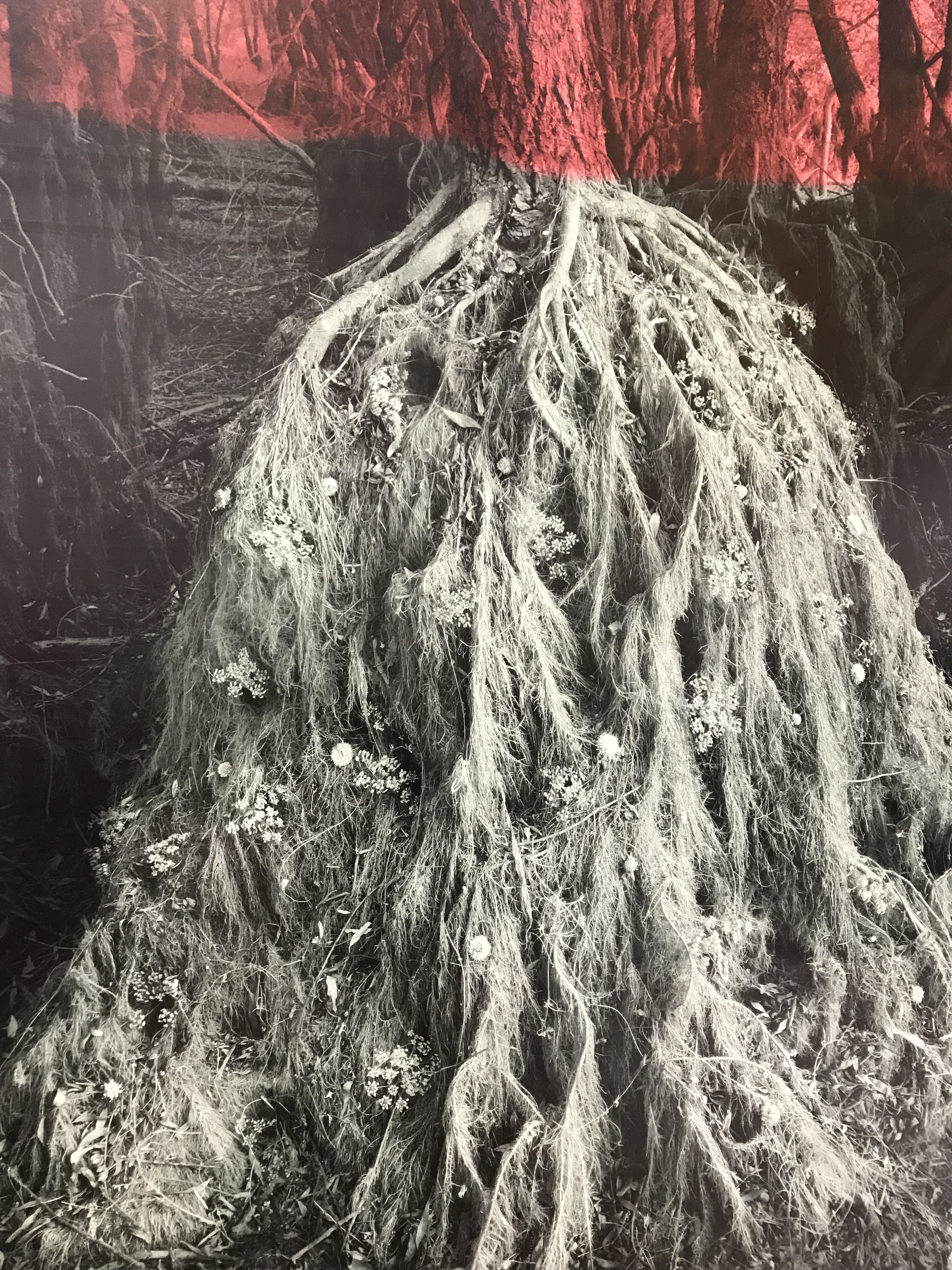
There were a couple of these pictures, with all sorts of flowers and textures growing in the roots of a tree. I couldn’t decide if the artist had created the image and then photographed it, or if they had merged several photos together. Either way, it was clever, and very pleasing to look at. I have no idea who the artist was (because I was too mean to buy a brochure) but I feel the artist was female, and young.

This polar bear on a hoop was in miniature in the entrance hall, and enlarged in another gallery. I think it was made with straw (and an old tyre) but it reminded me of shredded wheat. It had a rather friendly feel to it.

This was a painting, and was simply clever.

This was clever too. White blobs, which are somehow very pleasing to look at.

I love paintings which tell a story, and this one sort of entices you into it.

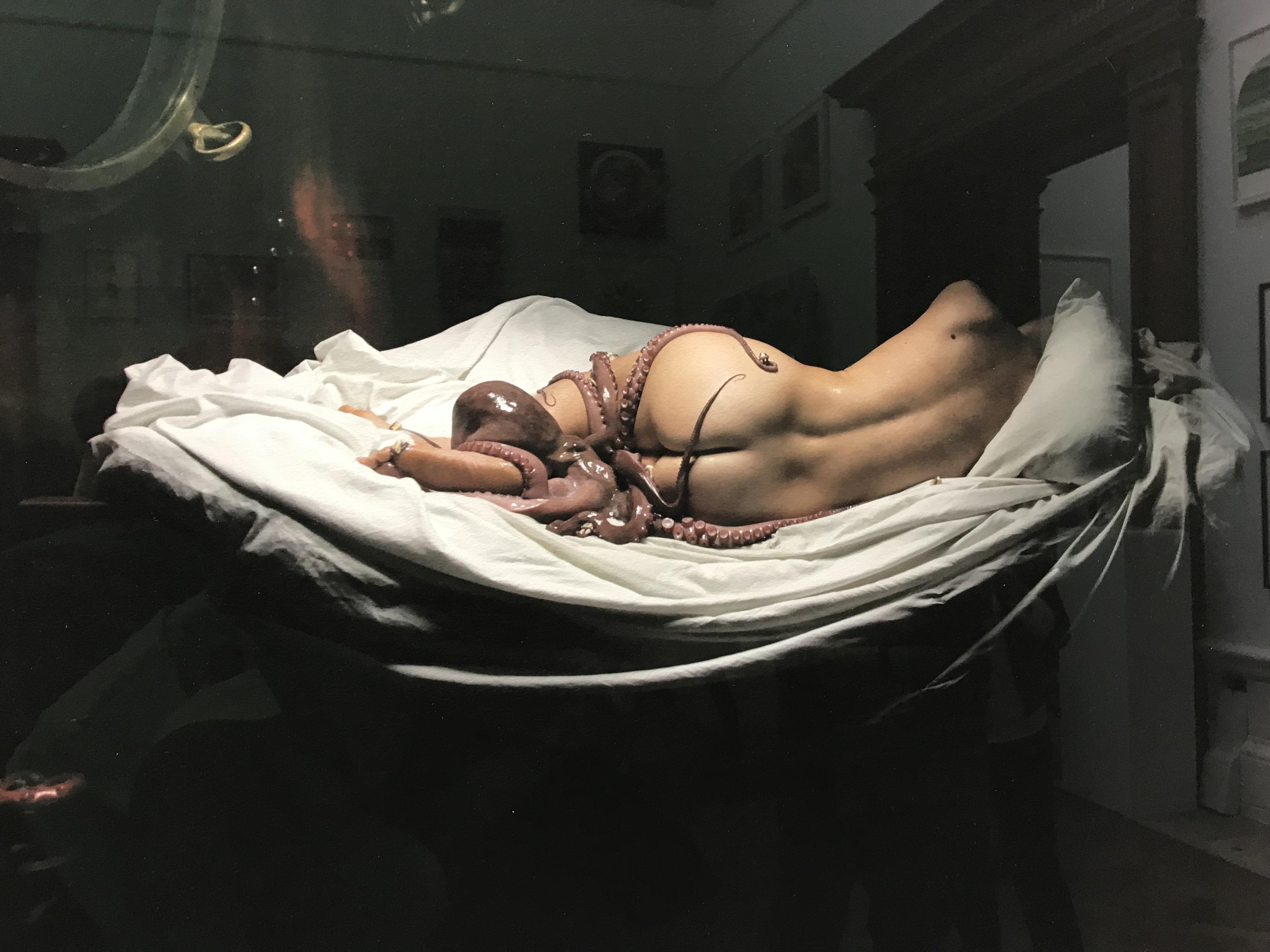
This photograph I love simply because I can imagine the conversation between the artist and the model. Did she know, when asked to strip off and lie down, that the artist was going to drape an octopus over her? Or did the artist pretend it was jewellery, or damp fabric, and it wasn’t until she saw the picture that she realised what the cold slimy thing was? (Made me chuckle, anyway!)

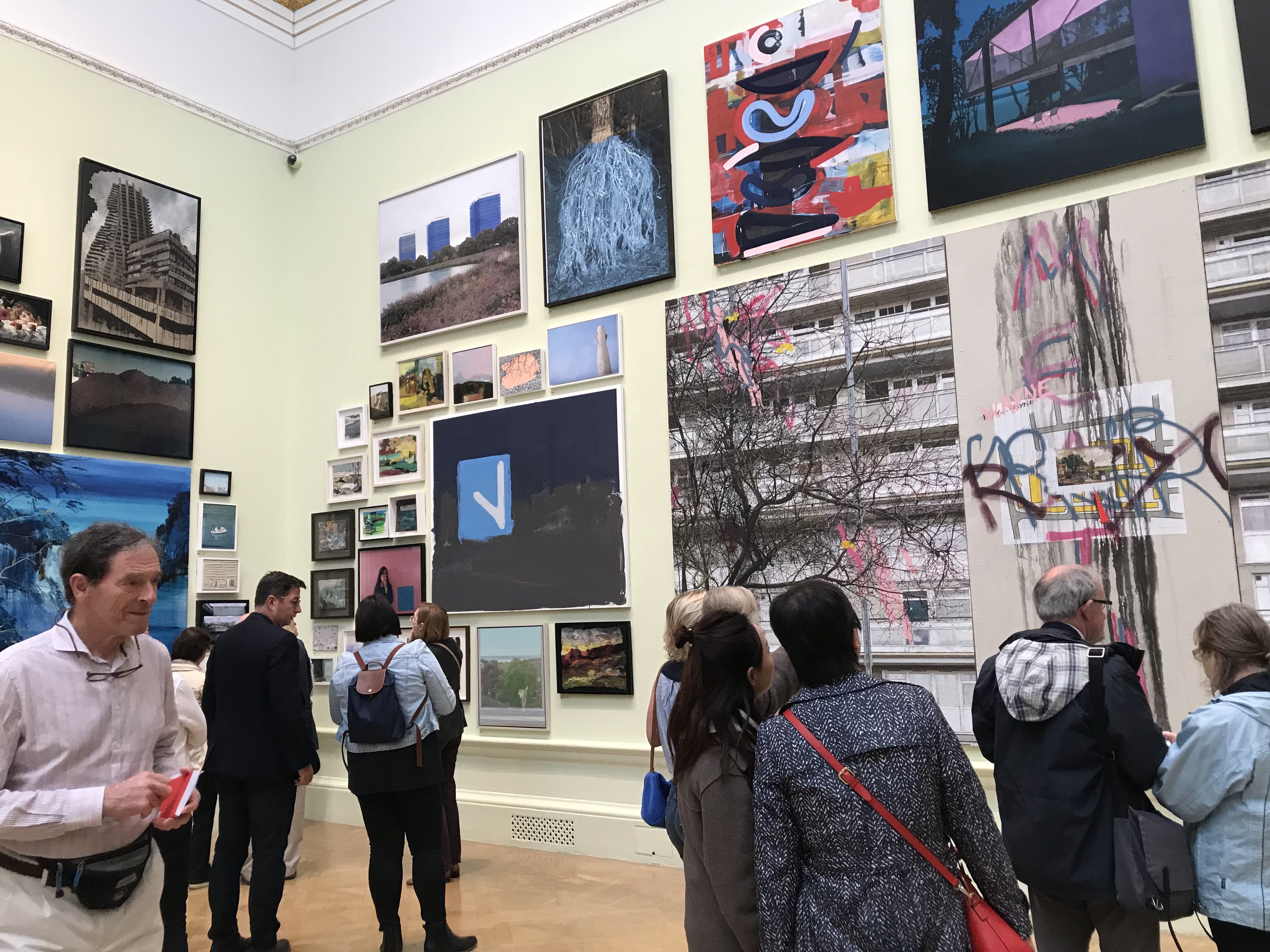
Of course, part of the fun of the summer exhibition is all the other people who go to see it. There are all sorts of people viewing the paintings, and you overhear all kinds of conversations (which are a great source of characters for your next novel!) As ever, I do have a few feedback points for the organisers, especially with regard to their lighting decisions, where they display some of the smaller works, and, most importantly, who they employ to write their signs. Should they ever decide to write information signs which actually impart information rather than confuse people (gosh, there’s a thought!) then I would be happy to help.

Thanks for reading.
Take care.

Love, Anne x

anneethompson.com
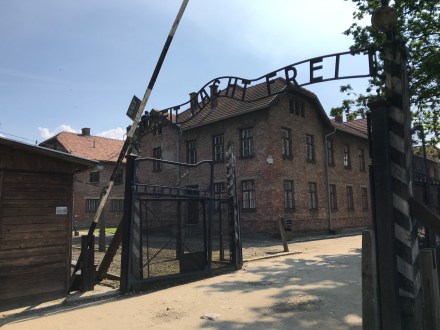
Diary of a Hatch


When I wrote yesterday, I only had one chick, so I’ll let you know how things are going.

To recap: I bought some eggs from Ebay, and put most of them in the incubator, and left 3 outside, with a whole lot of infertile eggs, in the hope that a hen would go broody. For a very long time, the hen simply added to the nest, but was completely disinterested in sitting. This was a shame, as chicks are quite a lot of hassle to raise, and if the hen was broody she would do a lot of the work for me. I decided that perhaps the hen also remembered how much hassle it all was, and so was deciding to not risk it a second time. I left the eggs where they were, and went to Hong Kong for two weeks.

When I returned, one egg had gone bad, which might have killed all the others in the incubator, but there was no way of knowing. I left the eggs in the incubator, which stopped turning them for 3 days, and I resisted the urge to open the lid and investigate (though I did shine a torch in, to search for signs of life). I saw a couple of eggs trembling, so I knew some had survived. When I wrote yesterday, one chick, a Speckled Sussex, had hatched, and I put her under a warm red light, with a mirror for company. Then, before I went to bed, a second Speckled Sussex hatched, so that too went into the brooder. Another egg had a crack.

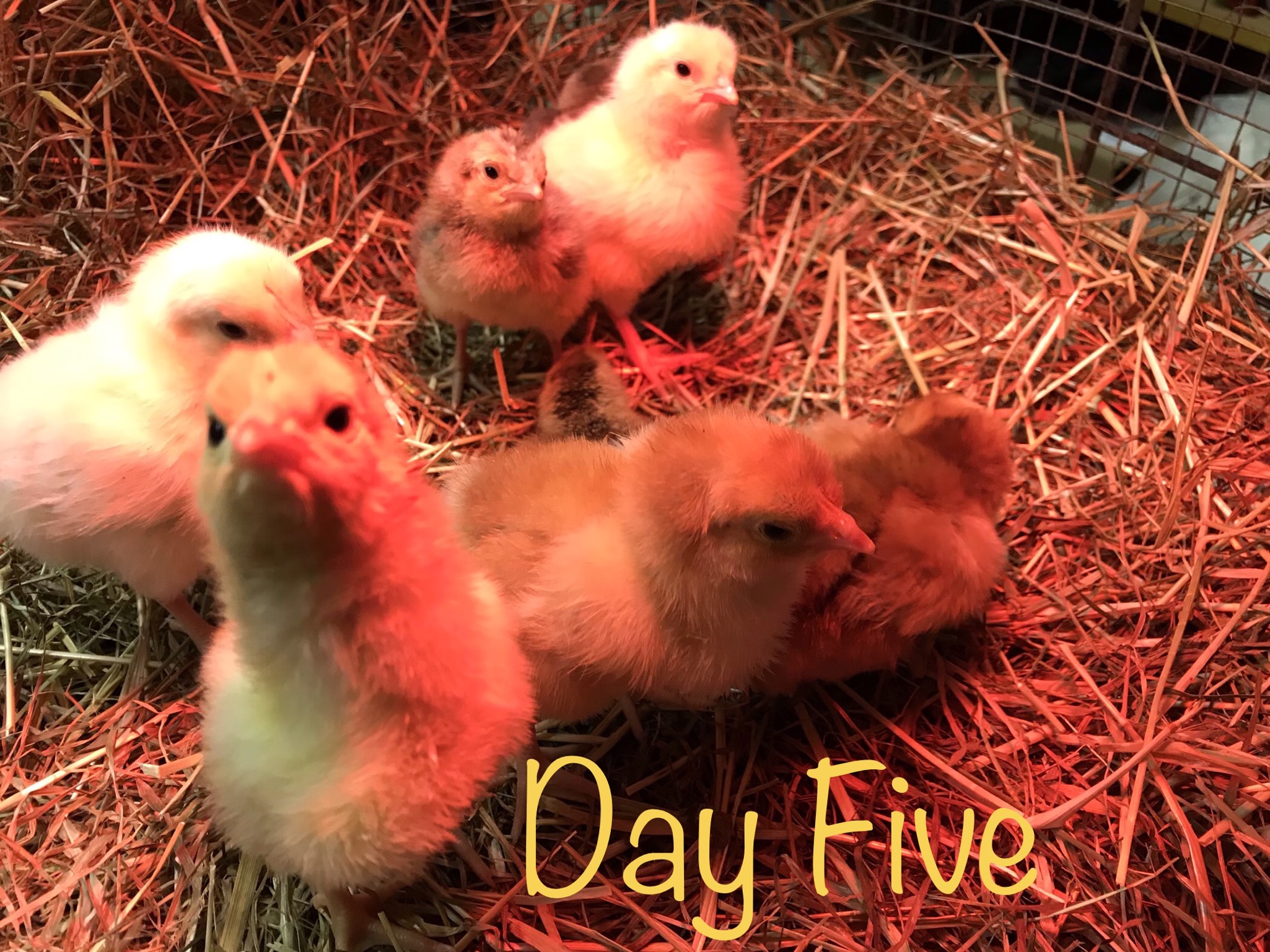
The following morning, there were two more chicks in the incubator, both White Leghorns (my Italian birds). They are completely beautiful, though not especially clever. When I added them to the brooder, the second hatchling from yesterday was much the more intelligent, and was running around, and drinking unaided, and pecking all the other birds. I gave them water on a saucer, and sprinkled some chick-crumb into it. I do have a proper water pot, but chicks tend to be stupid, and will drown themselves if given the opportunity. Every hour, I went in, and dipped their beaks into the water, so they learn how to drink. They weren’t at all interested (apart from the one, clever chick) and struggled to return to under the red lamp, where they could sleep.

I had to leave at 8am, to cook for Lunch Club. One more chick was almost out of the shell, but I didn’t have time to stay and move it, I just had to hope it would be okay. When I arrived home at 2pm, there were two chicks in the incubator: another Speckled Sussex, and a Cream Legbar (from one of the beautiful blue eggs). The Legbar was in a bad way, very floppy — it didn’t seem able to hold up its head. I put them both into the brooder, and mixed some egg yolk with water from the kettle, to feed to the weak chick. Sometimes they don’t absorb the yolk properly when hatching, so eating more might help. It isn’t very keen though, and every time I feed it, it poops on me.

Actually, pooping is good. Sometimes chicks can’t poop, and a very healthy-looking chick will die without warning. I put a few drops of apple cider vinegar into their water, as this seems to help. Most of the other eggs look dead, though 2 more have cracks. Usually, if chicks don’t hatch after exactly 3 weeks, then they never will, but I’ll leave the incubator going, just in case they make it. They’re both Legbars, and I would love to have a female that survives, so I’m really, really hoping that at least one of them does.

In the garden, there is no noise from the nest. I will keep my hatchlings under the lamp for now, and if the hen manages to hatch the ones in the nest, I will then add mine to her brood. I’m pretty sure that hens can’t count — she won’t notice the extras.

Thanks for reading. Have a nice day.

Take care,
Love, Anne x

Thanks for reading.
You can follow my blog at:
anneethompson.com

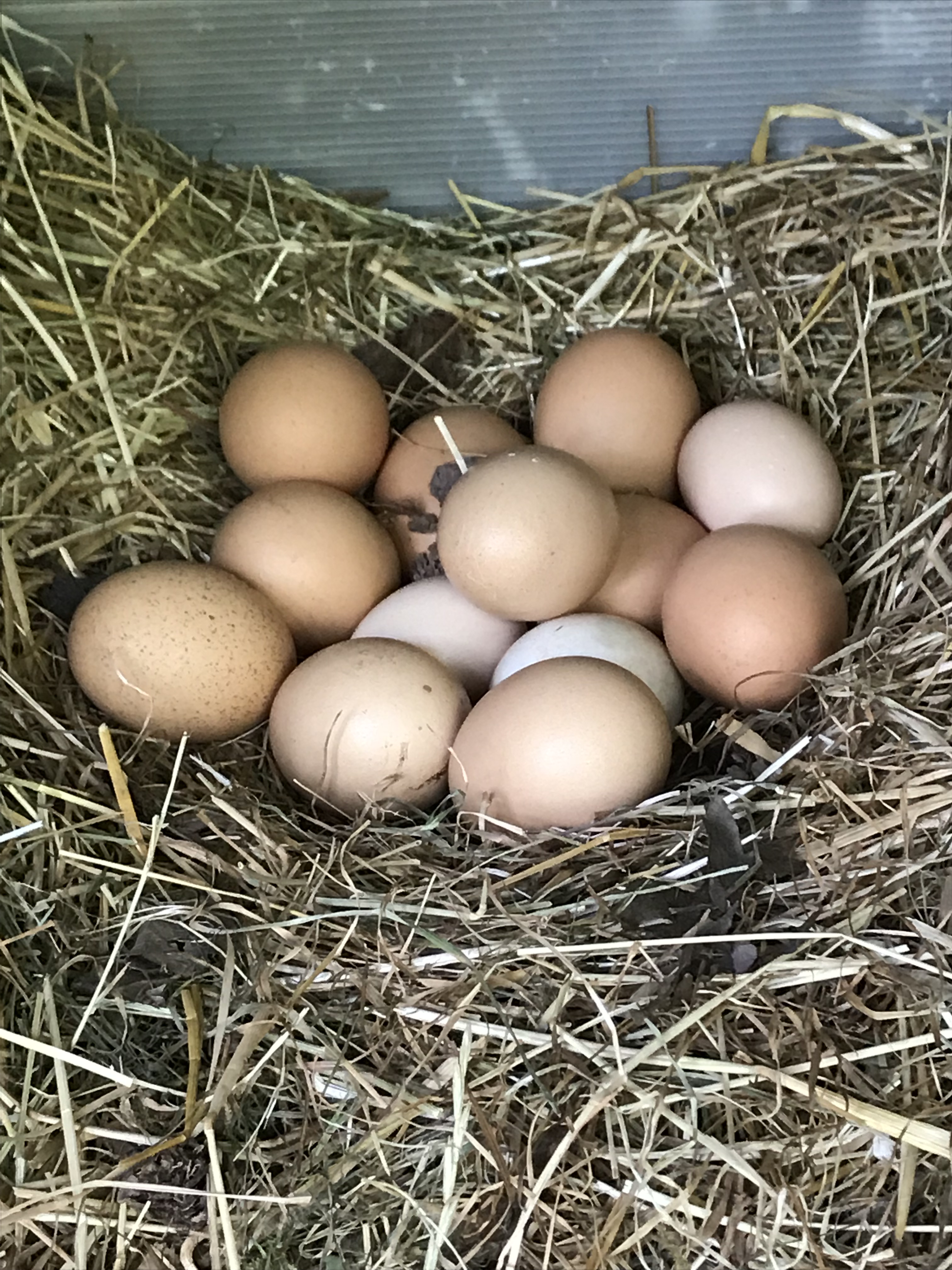
In the end, 9 chicks managed to hatch. I have 3 of each type, though the female legbar looks very weak, so might not survive. I will keep feeding her, and hope that she makes it.


Arriving Home from Hong Kong


Arriving Home From Hong Kong

We had a night flight—taking off at midnight(ish). I thought this would be okay, as I had kept my clock behind HK time, but it wasn’t, it was ghastly. I was travelling back economy class, and I don’t know how anyone manages to sleep sitting up—I certainly can’t, even with one of those clever curly neck-support pillows. I did try, but it was useless. Watched the entire boxset of The Little Drummer Girl and slept for about 10 minutes the entire 12-hour flight—and those 10 minutes were after they’d served breakfast and cleared away, and I was woken from my lovely deep sleep by the pilot saying we were landing. A bit of a shame that he couldn’t circle for a bit, seeing as I’d just got to sleep, but that’s life…

We arrived home about 7am, so the rest of the family was rushing to get ready for work. Nice to see them briefly before they left. The dog, of course, was ecstatic to see us, and bounced around the house shedding hair by the handful.

The hen has at last gone broody, and is sitting on the eggs outside. This means if the eggs in the incubator hatch, she should raise the chicks for me. However, the incubator was emitting a nasty smell (to be honest, I thought at first it was Husband’s socks! The incubator is in the utility room, and there was a pile of washing on the floor, and I thought that was where the horrid smell was coming from. Luckily I didn’t say anything…) The family have been keeping the water topped up for me while I was away, but that’s all I asked them to do (they are all very tolerant of my animal hobbies, but they don’t necessarily want to share them fully).

The only way to check the eggs was to take each one out of the incubator and sniff it. As I arrived home during the last 3 days, when the eggs are no longer turned and you’re supposed to keep the lid shut so the temperature and humidity stay constant, this was bad timing. But a bad egg could kill all the others, so there was no choice. I sniffed one egg that was very pongy, and another which was suspect, so removed them. No way of telling if the other eggs had been killed by the nasty fumes—or by my opening the incubator at a crucial time—just a matter of waiting until the end of the 3 days and seeing whether they hatch. Such is the precariousness of life.

I had pretty much decided that all the eggs had died, when I noticed two were trembling. When I listened, I could hear them, cheeping away inside the eggs. This is always so exciting, knowing that there is a chick inside an egg, and having to wait until it hatches before you can see it—a wrapped gift, hidden from sight. Forced myself to not open incubator again, and to just wait.

One day later, and a third egg was trembling. A tiny chip had appeared in one of the eggs – one of the Speckled Sussex eggs (which I am now pretty sure are bantams). I usually place a piece of muslin underneath, to soften the hard plastic incubator a little and so the chicks don’t waste energy by moving the eggs rather than cracking them (they would be held still in a nest). I didn’t have any muslin, so used a blue dishcloth – seemed to work.

By the third day, one chick had completely hatched and was loudly trying to persuade the others from their eggs. I took it out of the incubator a few times, so it could drink, but worried that every time I opened the lid, I was decreasing the chances of the other eggs surviving. I set up a box in the garage, under a red heat lamp, and filled it with straw. I was really hoping a second chick would have hatched, but in the end I had to put one little chick by itself into the big lonely garage. I gave it a mirror for company (it’s a chicken, they’re not known for their intelligence).

I’ll let you know if any more hatch. I hope you have some nice surprises this week.

Take care,
Love, Anne x

Anne E. Thompson has written several novels and non-fiction books. You can find her work in bookshops and Amazon.
Why not sign up to follow her blog today?
anneethompson.com

Hong Kong New Territories (and a little politics)


Here’s another blog from Hong Kong. If you enjoy it, why not read The Sarcastic Mother’s Holiday Diary? It will make you laugh, and you can read it for free if you have a Kindle…

UK link here

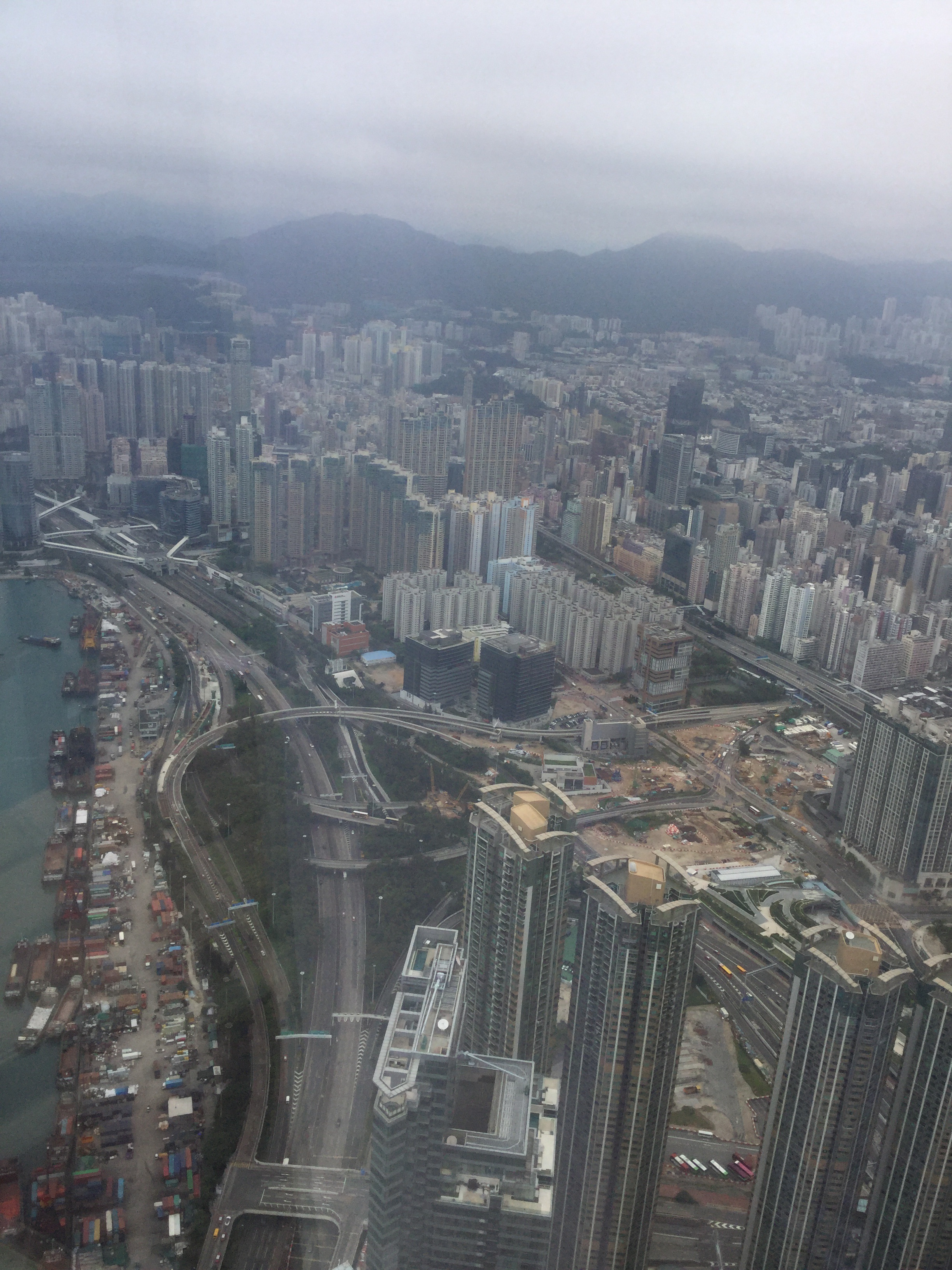
From our hotel room, we can see across the city to the mountains. I wanted to visit those mountains, simply to see what was there, so we hired a car (not a hotel car, as that was about £100 an hour, but a car recommended by the concierge). The driver was very chatty, which was fun, as sometimes you learn more from the driver than from what you see. As we drove from the city, he said that lots of the apartments in Hong Kong were being bought as an investment by businessmen in mainland China. They don’t live there, or rent them out, they simply own them as an investment. He said that at night, whole floors of luxury apartment blocks are dark and unoccupied.

We approached the mountains, which are vast areas of wild, covered in trees. We asked if there are still wild animals—mountain lions and deer—which roam the forests. The driver laughed and informed us that Chinese people, “Eat anything with 4 legs except the table!” No animals left then… The mountains are wildlife parks, and people from the city hike in them. Previously, there had been some areas of farming, but all food is now imported.

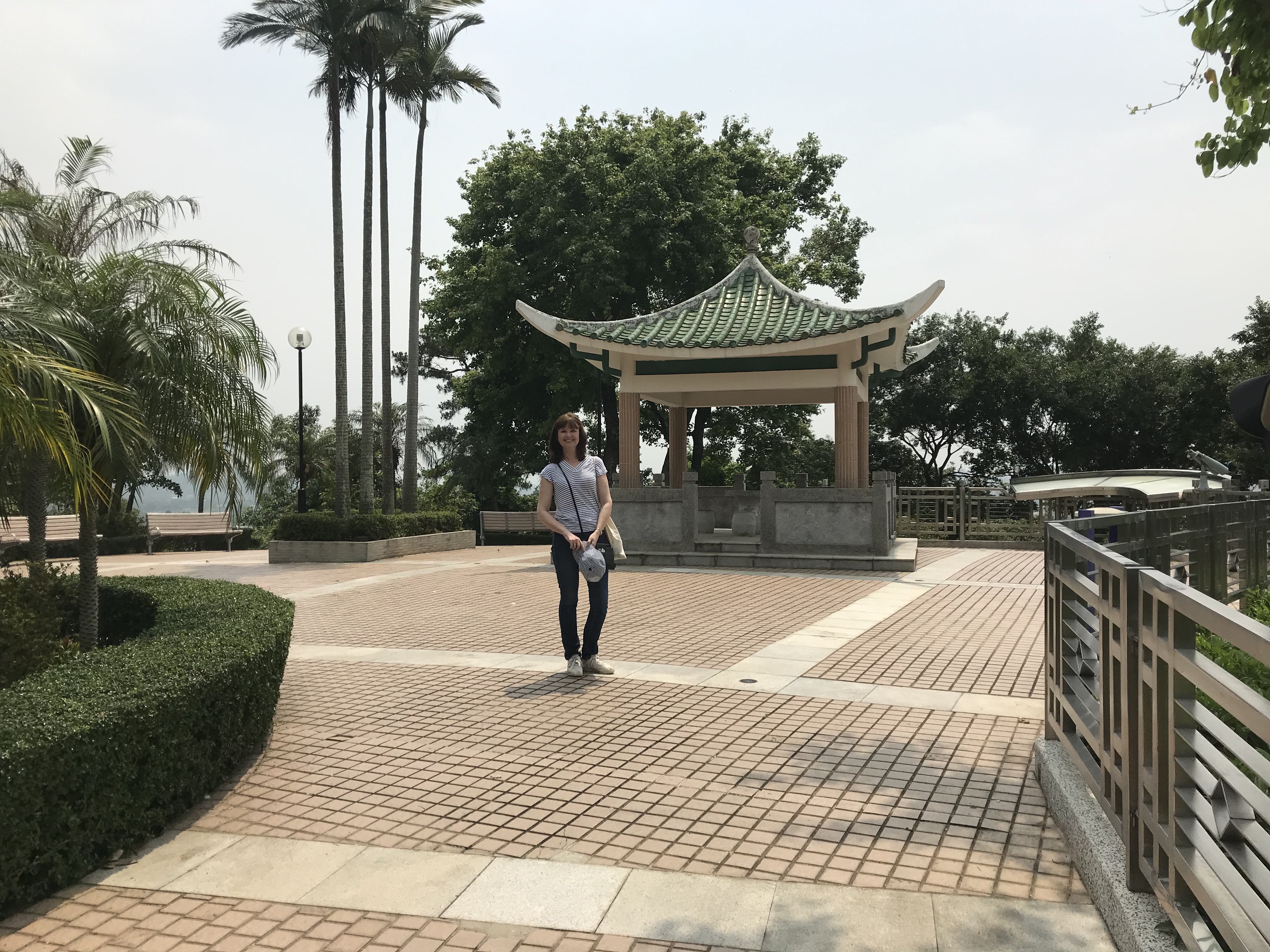
We drove to Lok Ma Chau Garden. This is a small, peaceful garden full of butterflies (and a weird man who was doing something strange). It has wonderful views, across a marsh, to the tower-blocks in China. It’s very close to the border, and the main road actually crosses the border, so we had to drive a clever route (as we don’t have Chinese visas).

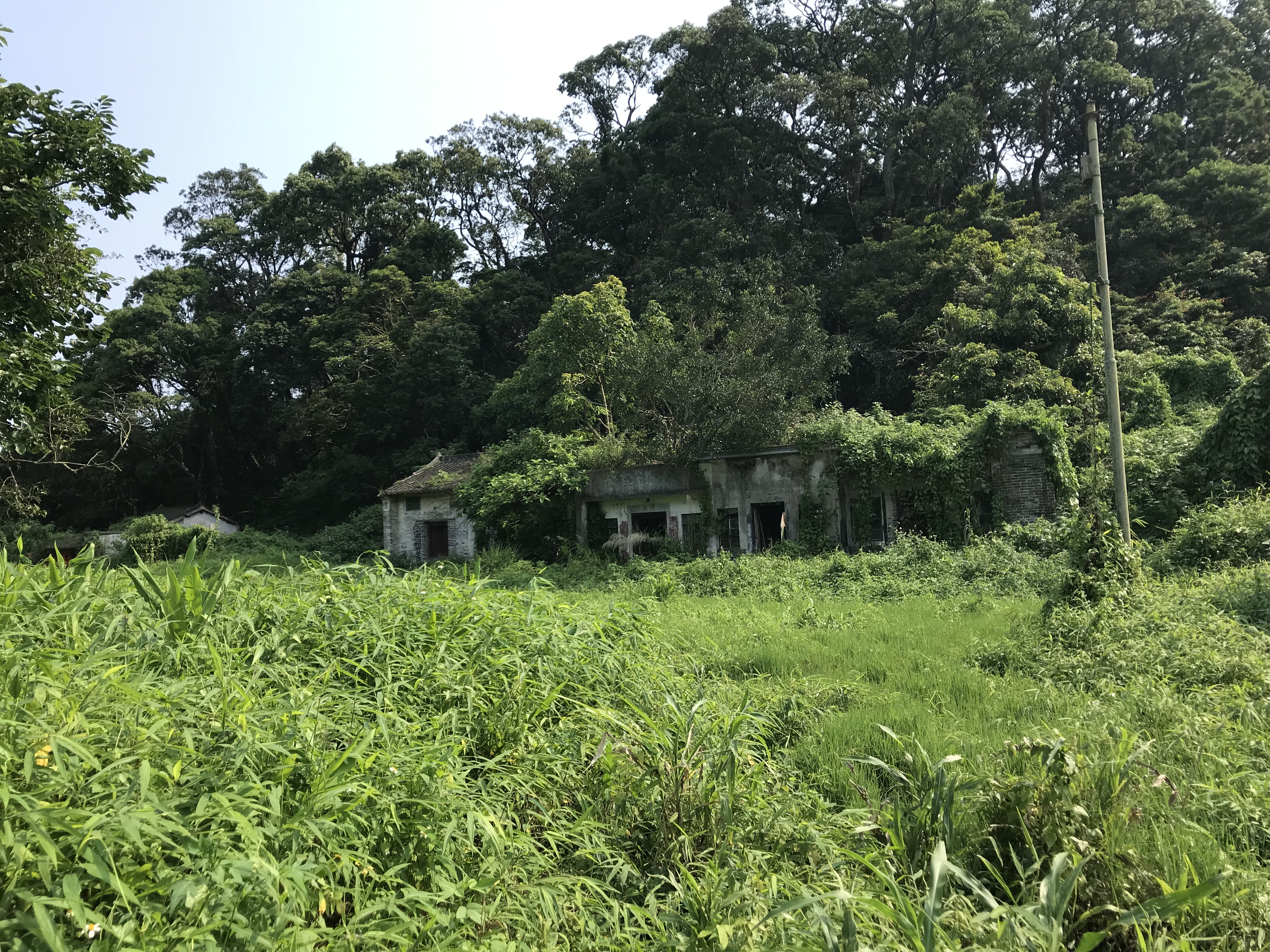
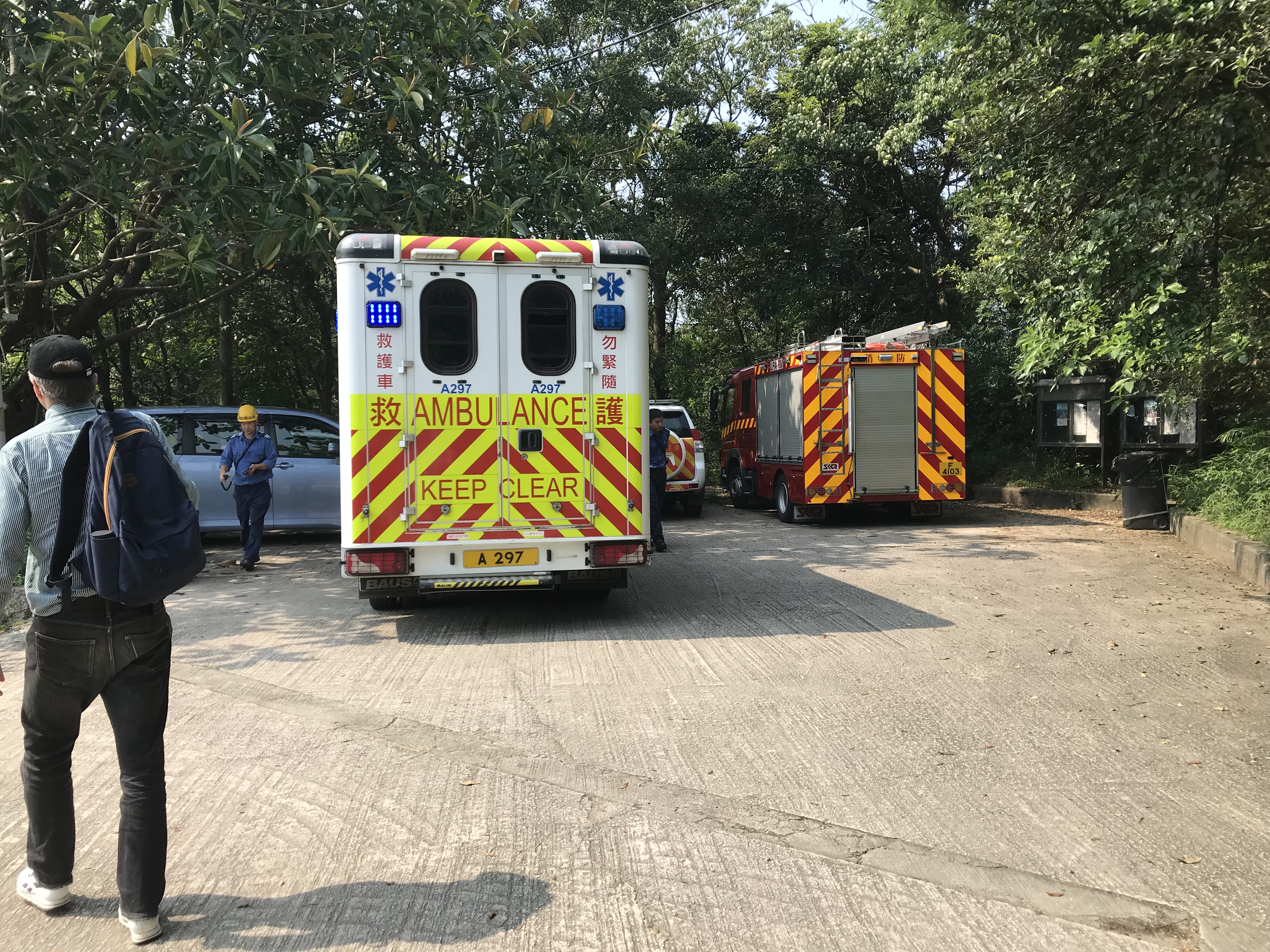
We then tried to visit Sha Lo Tung, which is described in our guidebook as a beautiful abandoned village in the mountains. I think our guidebook is out of date. The roads there have pretty much disappeared, and we ended up driving along narrow tracks, up the side of the mountain, with huge potholes, and sheer drops on one side. I worried the car would be damaged, or that we’d get stuck. It was more exciting than we’d planned. Eventually, we found the village, which was more of a ghost town than described. It was wonderfully isolated, and you could see the remains of paddy fields, and tumbled down buildings, and overgrown shrubs. There were lots of hikers (the roads were better designed for hikers than cars) and a whole array of emergency services arrived because someone had become dehydrated and was unable to walk back. (At least, that’s what they told us—but we’re foreign, and they’re Chinese—they wouldn’t have told us if there had been an accident or crime; I admit to being sceptical that a dehydrated hiker would merit a fire-engine, an ambulance, and 2 police cars, but perhaps I have a suspicious mind.)

Our driver told us that people in Hong Kong love Donald Trump (he might not have been speaking for everyone, of course). He explained that: “My enemy’s enemy is my friend.” The politics of Hong Kong are complicated—brace yourself for a lesson:

The British were ‘given’ Hong Kong Island during the Opium Wars (see previous blog—the British behaved appallingly). Under British rule, it became a thriving trading centre, and the British asked for extra land to support the infrastructure, and so were given Kowloon (up to Boundary Road). As the city developed, so more resources were needed, so China leased the New Territories to the British for 99 years, ending in 1997. As the end of the lease grew near, the British tried to renegotiate, but the Chinese government refused to discuss (according to our driver). The islands of Hong Kong, and Kowloon, were unable to function without the resources on the New Territories—for example, the dam that provided all the electricity was there. Therefore, when 1997 arrived, China took control of both the New Territories and Hong Kong, promising that nothing would change for a set period of time (50 years). They operate a ‘one country, two systems’ policy, which will end in 2047. The people who live in Hong Kong are very bitter about this (at least, our driver was, despite being Chinese ethnicity, he does not want to be part of mainland China). At the moment, there is little discernible difference in the present Hong Kong with the pre-1997 one, but people are worried that this will change, and free trade and free movement and free speech will start to be restricted.

Politics aside, Hong Kong is a wonderful place to visit. We arrived home to hatching eggs—I’ll tell you about that next week.

Thanks for reading.

Take care.

Love, Anne x

Thanks for reading.
You can follow my blog at:
anneethompson.com
Look in Amazon for The Sarcastic Mother’s Holiday Diary. It makes a great gift.

The Bun Festival


We caught a ferry to Chuang Chau from Pier 5 on Hong Kong Island. We had a choice—a slow ferry which takes an hour, or a fast ferry which takes 40 minutes. We went with the slow boat, and sat on hard seats next to an open window, enjoying the view as we rattled our way through the water (it’s not a new boat). The seats were comfy, and clean enough, though it’s important to choose your neighbours carefully, as an hour in front of a screaming toddler or a loud old man or a group of noisy teenagers, is a very long hour. The ferry has several signs – signs telling you not to smoke, and to remain seated, and that gambling is forbidden. I have seen the last sign several times since we’ve been in Hong Kong, gambling is clearly a thing here.

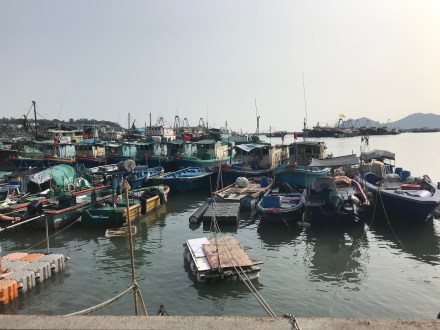
Hong Kong is a busy port, and we passed huge container ships, and tugs, and fishing boats of all sizes. It was a cloudy day, and many of the islands were hidden in the mist.

Cheung Chau greeted us with colour and bustle and noise, there was something exciting in the air as we approached.

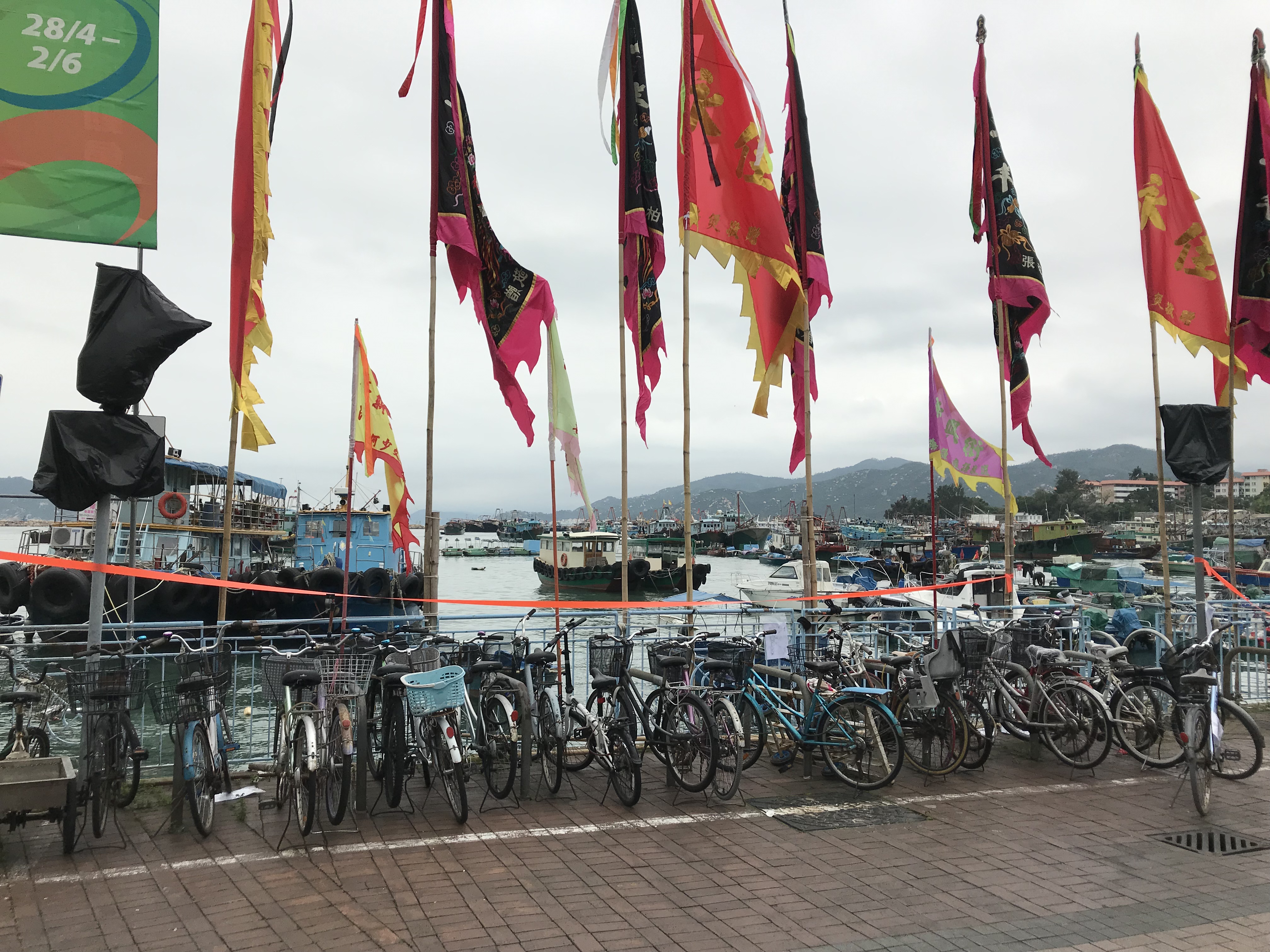
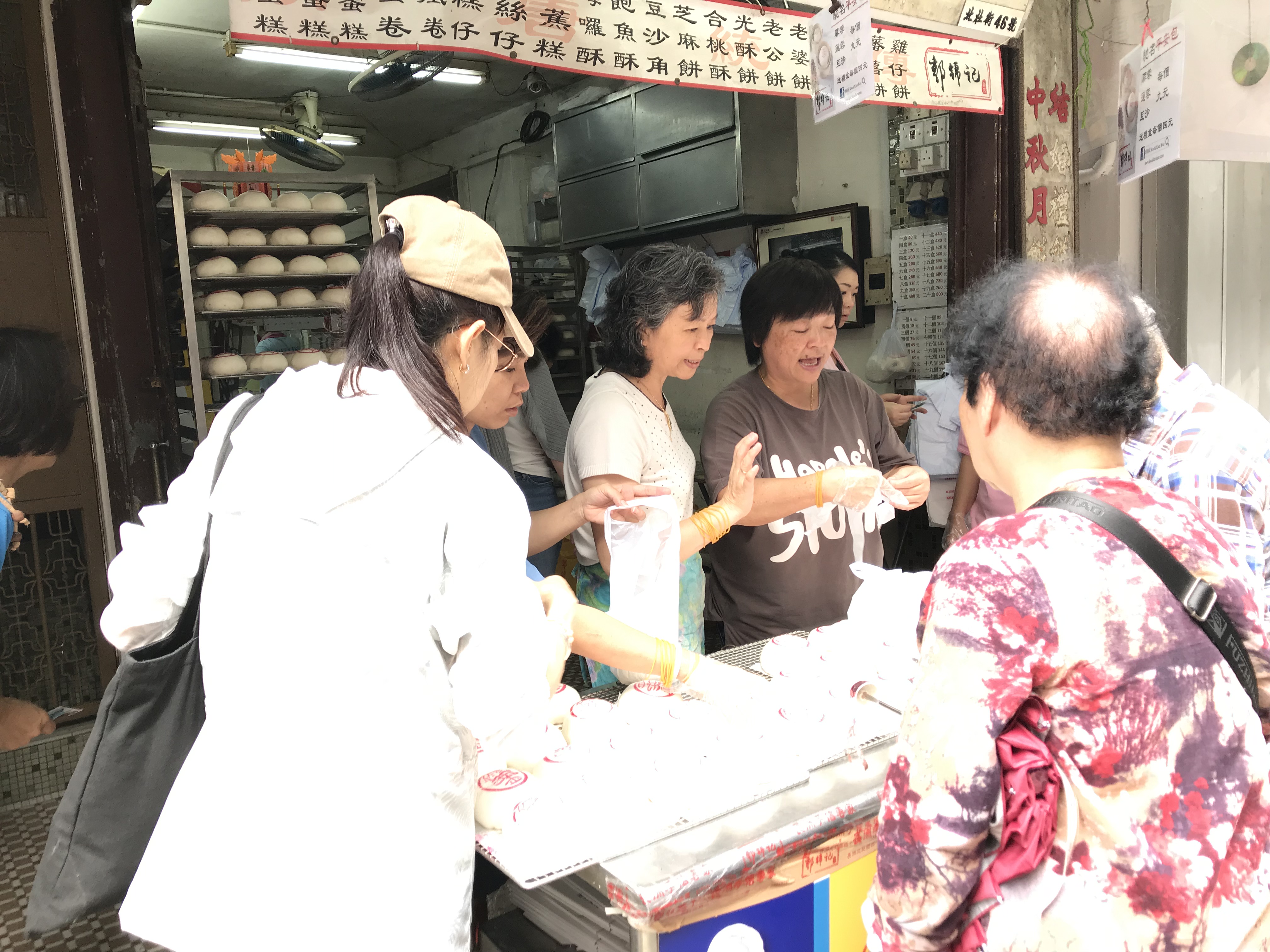
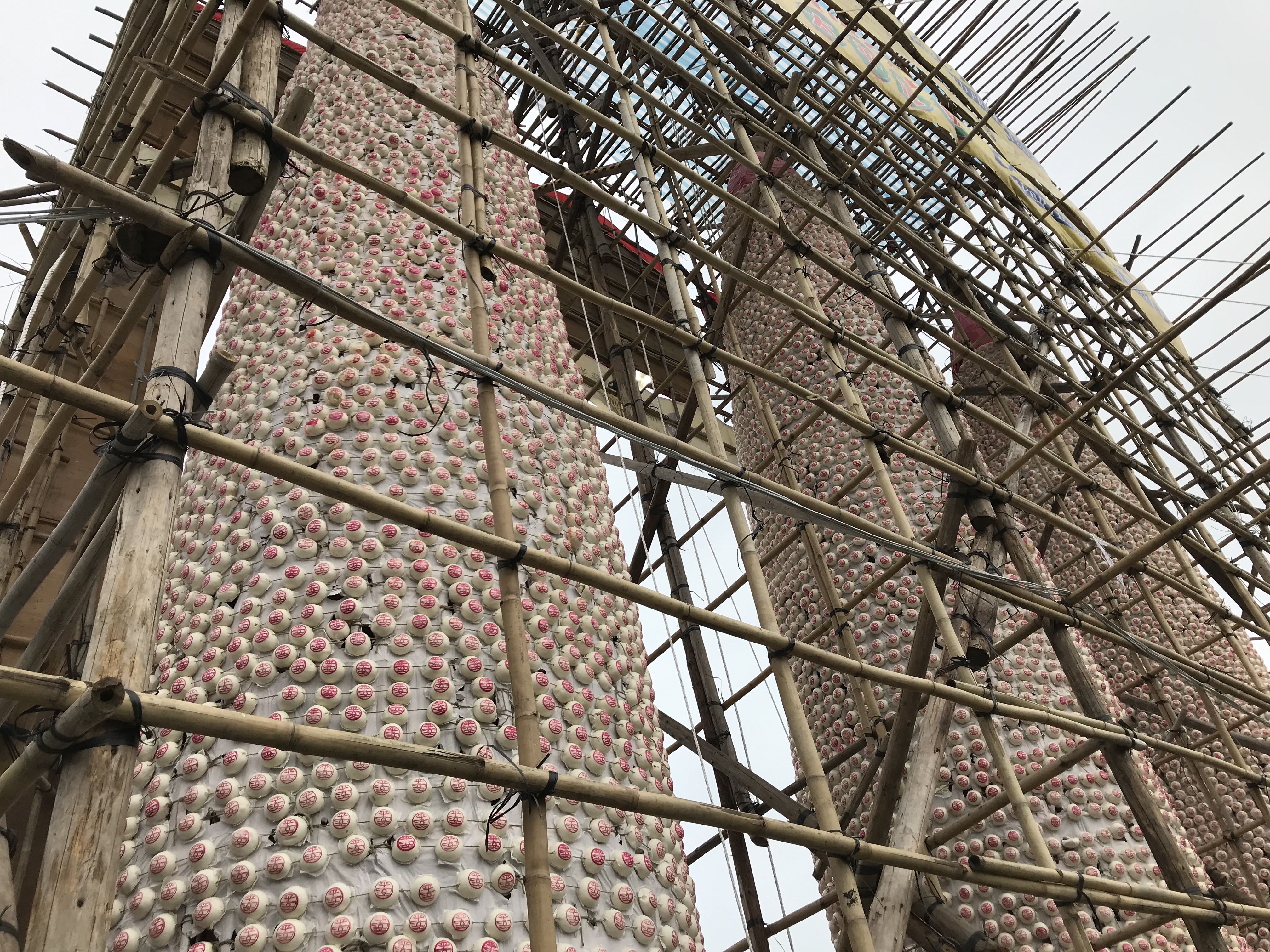
May is the bun festival, and as we left the pier we could see stall after stall selling buns, and the quay was lined with bright flags, and everyone was in party mood. The buns are white, and round, and stamped with various characters (Chinese script)—they said things like ‘wealth’ or ‘peace’ or ‘good luck’. If you looked behind the stalls, you could watch people making the buns, tray after tray being put into ovens, or stamped with the character, or put into boxes ready to be sold. People were buying them to take home, or to eat straight away, and there were several flavours: sesame, or red bean paste, or lotus bean. People walked along the street eating them, browsing the stalls and shops crowded with trinkets and gifts. There were also bun-shaped mementoes, we bought a bun-shaped cushion and a fridge magnet.

Now, you might be wondering, why buns? I’m not entirely sure, but the festival is related to one of the island’s gods, Pak Tai. In the early 1800’s, there was a plague, and the people believed that Pak Tai saved the island from this plague. In return, they offered mountains of buns to the resident ghosts. (To be honest, I’m not sure why they offered buns—it’s a fishing island, so offering fish would have made more sense—perhaps they thought the ghosts liked buns. I’m also not sure why they offered them to the ghosts, and not to Pak Tai. But anyway, that’s the only explanation that I found.) Every year, the island holds a bun festival to remember that they were saved from the plague. They make huge towers of buns, and the children climb them. Except, fairly recently, there have been some horrid accidents, so now some health and safety regs have been put in place, so the bun towers are built on a solid structure, and the climbers wear harnesses.

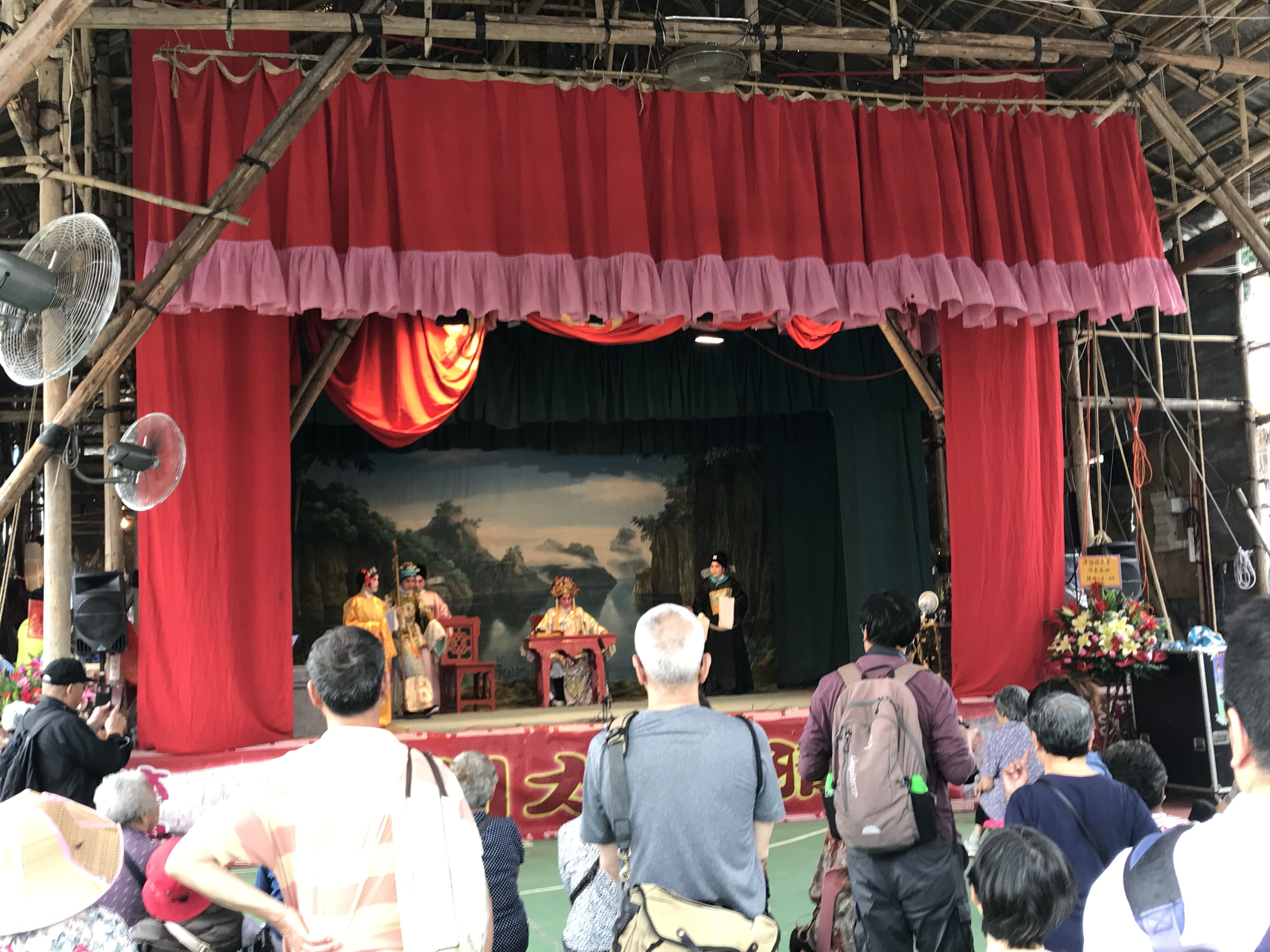
We wandered up to the Pak Tai temple. There were bun towers being constructed. There was also a stage, with a Chinese opera, which we watched for a few minutes. If I’m honest, a few minutes of Chinese opera is long enough for me—I don’t really enjoy it. There were also washrooms. (Note, when travelling in China, the Buddhist temples always have the nicest, cleanest, toilets…Christians should take note of this and try to keep up.)

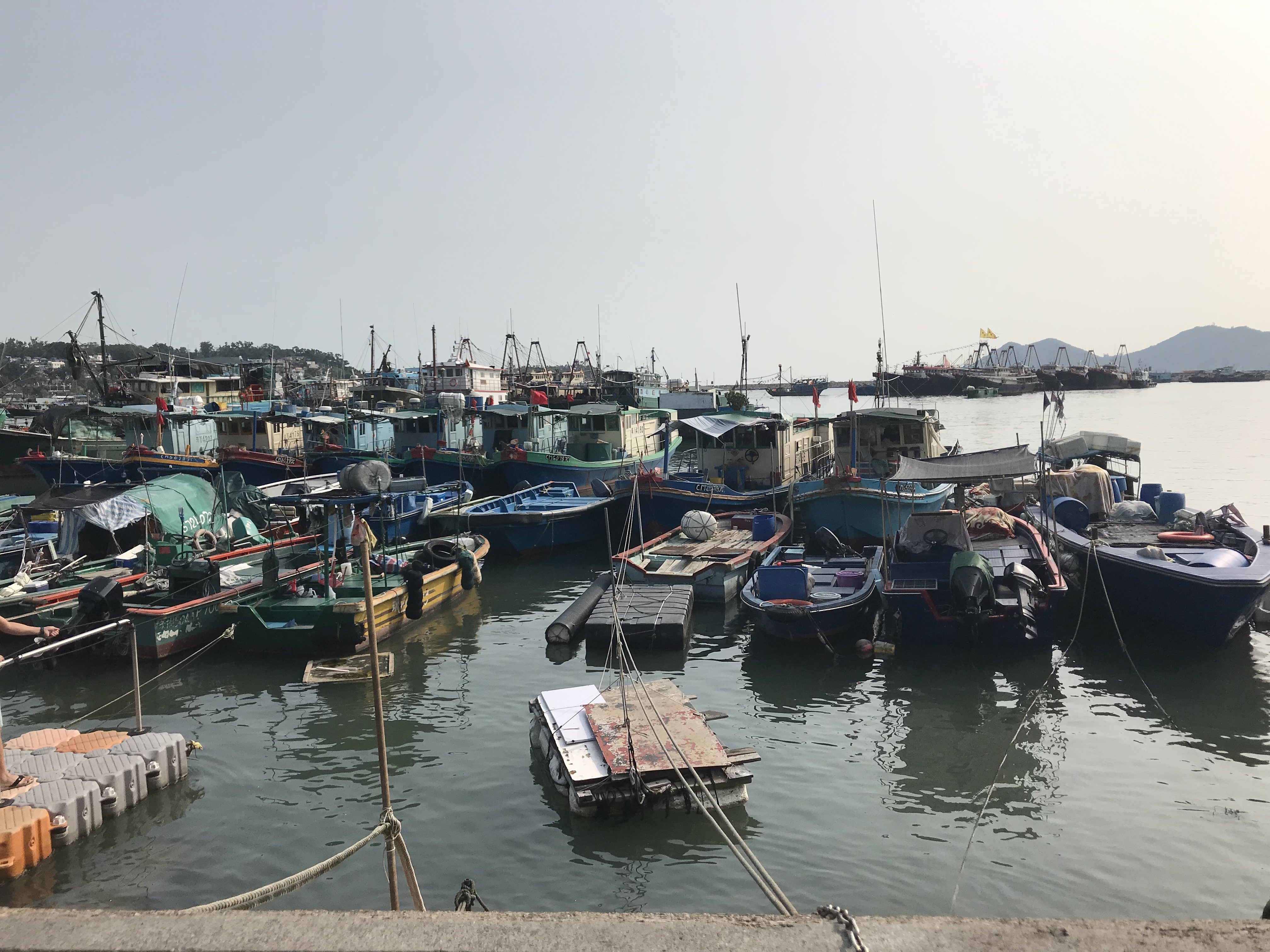
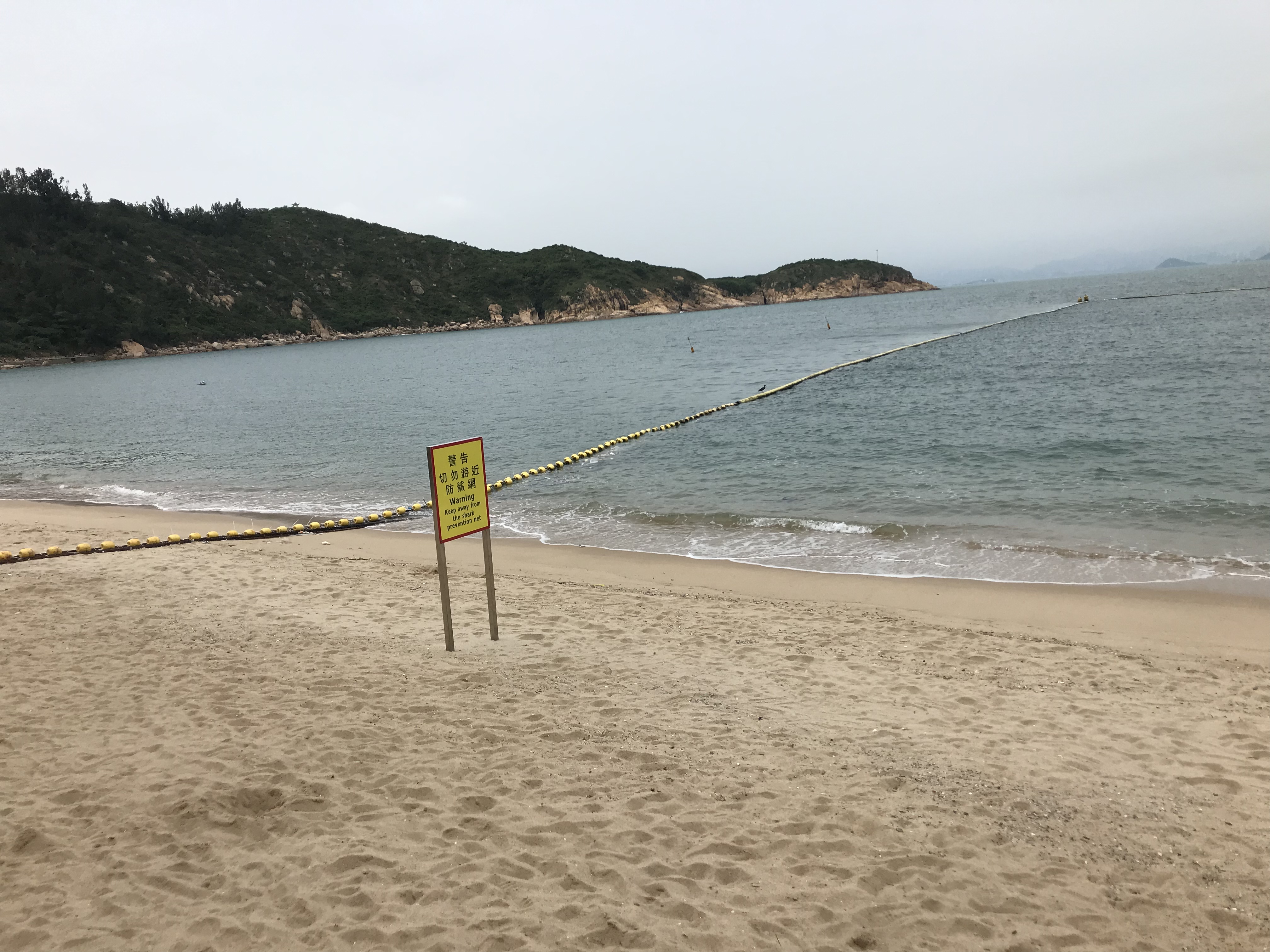
We bought ice-creams, and wandered back to the quay to watch the fishing boats. Then we crossed the island again, and looked at the beach. There’s a net, to stop the sharks eating the swimmers. (When I was in Hong Kong a few years ago, with a friend who lives here, I asked her if shark attacks were common. “Oh no,” she said, “Only about 3 swimmers a year are eaten.” I think the net is a good idea.)

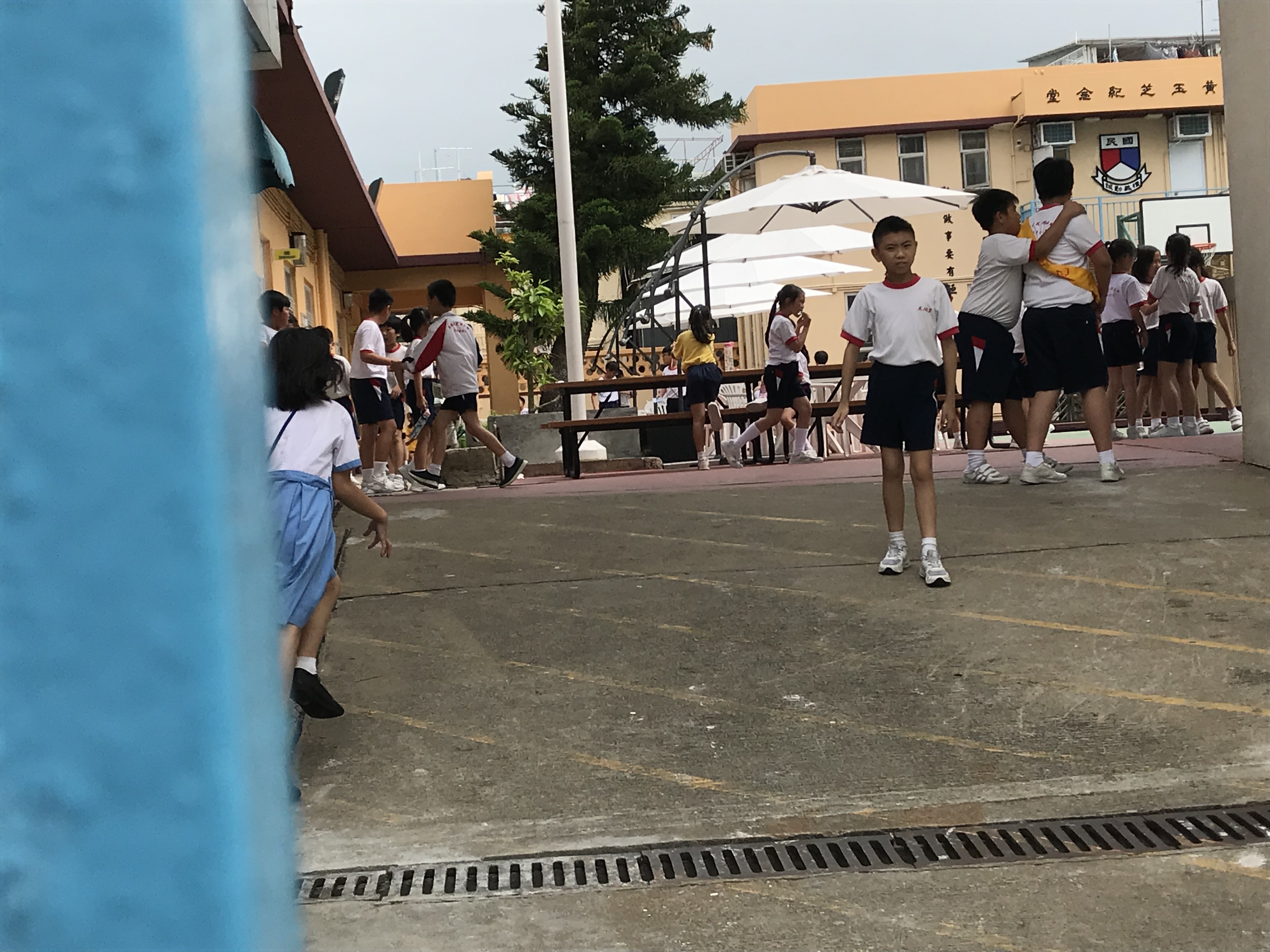
We passed a school, with cute children in uniform running to meet their friends. Cheung Chau is a very normal place, you can see lots of ‘real life’ as well as all the touristy bits.

It was a lovely day, and there were plenty of ferries, so when we’d seen enough we went back to Kowloon (taking care not to gamble on the ferry).

Afterwards, I worried about the cushion we had bought – is it ‘wrong’ to have things from other religions in the house? Is it rude to God? I don’t think I would want a Buddha, or a Hindu statue in my home, but did a bun-shaped cushion matter? If I believe that God is the only God (which I do) then I should be careful not to ‘hedge my bets’ by also having lucky talisman. I decided that it was fine. For me, it represents a happy day out, and an interesting tourist sight, it has no ‘religious’ or ‘lucky’ connotations for me. Perhaps it worries me because it’s unfamiliar. There are symbols from other religions that are familiar, and I never worry about those—for example, every year I have a Christmas tree in my house, yet those came from the sun god Balder (for me, they are simply part of the Christmas tradition). I also will give and receive Easter eggs, but I never think they will increase fertility, nor do I worry that they originated from Eastex, the pagan goddess. My bun cushion has the Chinese character for ‘peace’ on it, which is not a bad thing to have written on a cushion, and it is a cushion, nothing else.

Thanks for reading, remember not to gamble on your way to work. Take care.

Love, Anne x

Thanks for reading.
You can follow my blog at:
anneethompson.com

If you enjoyed this, why not read my travel book? It makes a nice gift too… (you can read it for free if you have a Kindle.)


The Star Ferry to Central


The Star Ferry to Central

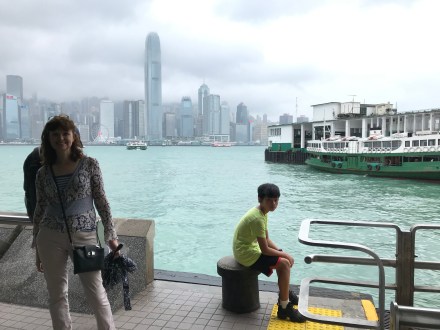
One of the iconic images of Hong Kong is the Star Ferry, going backwards and forwards between Central (the main Hong Kong Island district) and Kowloon (the part of Hong Kong that joins mainland China if you cross the mountains). When you come to Hong Kong, you sort of have to go on the Star Ferry, even though the islands are actually linked by a very efficient underground train service.

We bought our tickets using the ticket machines on the pier. It costs the equivalent of 27p, and the ticket is a round plastic token, which you then use to open the turnstile. When the ferry is ready to board, there are signs and traffic lights, and you walk along walkways that rise and fall with the tide, and onto the boat. The crossing only takes a few minutes, and gives good photo opportunities of both sides of the water.

When you arrive at Central you are greeted with palm trees and Peruvian buskers. (I am guessing that the Peruvian buskers are not always there, but they were on this trip, and they were on my last visit about 6 years ago, so I am going to include them as a fixture.)

You leave the ferry terminal via walkways that cross the roads. These go through posh hotels and shopping malls full of designer shops, so you can walk a long way without leaving the walkways, through perfumed cool air. It’s not very real, but it’s more comfortable than the air outside.

We popped into the Mandarin Oriental while we were there—just because we’ve stayed there on previous visits and I love the smell of place, and the fancy chocolate shop and the comfy sofas in reception. It has an atmosphere of luxury (though again, not very real). Previously, I have always stayed in hotels in Central. However, I now much prefer staying on Kowloon, as it’s easier to find real life, and to glimpse real people bustling in real markets.

We saw old trams, which seem more high and more narrow than trams in other cities, and the old colonial buildings that cluster near to the where the water used to be (but they have now reclaimed so much land, that it has all shuffled back a bit from the water’s edge). We passed HSBC, which is guarded by two lions—they have very shiny paws because people rub them for luck.
The weather was dry, but humid and very hot—not at all comfortable; I don’t know how people managed to be wearing suits.

We returned to Kowloon, and paid 5p extra to sit on the top deck (can’t accuse my husband of being mean). It was dusk when we returned, and the junks had their big red sails illuminated, which was very pretty—they looked like giant red butterflies gliding over the water. The Star Ferry is slightly more prosaic, with hard seats and men who shout, but I prefer it.

We ate at The Night Market restaurant in Elements mall again. We’ve eaten here every evening so far, and the staff all laugh when they see us. But the food is really good, especially for me (am a very anxious eater when abroad because am so often ill)—it’s freshly cooked, comes quickly to the table so is piping hot, and everything is very clean and efficient. We are gradually working our way through the menu, and today I chose noodles, which were basically long spaghetti (no idea how you’re meant to eat that with chopsticks, I made a mess). The dim sum is my absolute favourite, you can’t beat a soup-filled dumpling!

Hope you eat well today. Tomorrow I’ll tell you about the bun festival.
Take care.
Love, Anne x

Thanks for reading.
You can follow my blog at:
anneethompson.com