Girl Trip to Valencia


Caught the early morning flight to Valencia (very early). I only had a hand-luggage allowance, so was worried I would have to wear several layers and arrive looking like The Michelin Man, but everything fitted in my pull-along.

Met Cousins at Valencia airport. We were meeting to celebrate Cousin C’s big birthday, and were visiting Cousin N and family, who have moved to Valencia. Drove to their apartment in the city, and met their extremely cute labrador puppy. (Their children are also very cute, but I rather fell in love with the puppy.)

I was staying in an airbnb with Cousins C and L. New experience for me, so wasn’t quite sure what to expect (my sons stay in air bnb, so I wasn’t expecting ‘posh’).

We dumped our bags, and had a late lunch in Bar Pascualin. All lunches in Spain are late. Walked to Dolche de Leche cake shop, and spent several hours trying to decide which cake to buy. (Mouth is watering as I write this.) Chose a lemon meringue pie. It didn’t disappoint.

Drove to Lake Albufera and went on a boat. The sun was setting behind the mountains, the birds were wading amongst the reeds, and it was pretty perfect. There was some discussion about the origins of the lake – I think it’s a natural sea-water lake, which the Moors desalinated, so now it’s the largest fresh water lake in Spain…possibly in Europe…or even in the whole world…anyway, it’s big.

After tea, we went to our air bnb. Arrived at a large metal gate (very Spanish), and used our key to enter the lobby.

In the lobby was a lift, which closely resembled an upturned coffin (was certainly no bigger). We squashed inside, and Cousin C extracted her arm from rather aggressive sliding door which shut automatically, and we began to ascend. I hoped the coffin analogy wouldn’t be accurate – I certainly didn’t trust that the ‘emergency telephone’ would work if we got stuck. Arrived at the top floor, but still needed to go up a further flight of stairs. The stairwell was very dark, so Cousin C (the practical one amongst us) helpfully pressed the light switch. It didn’t seem to work, so she pressed it several more times. We then realised that actually, it wasn’t a light switch – it was a doorbell. (Spanish people disguise doorbells as light switches, I’m not sure why.) Being mature women, as soon as we realised we ran giggling up the stairs and locked ourselves into our apartment. Am hoping no one heard.

Spanish doorbell disguised as a light switch
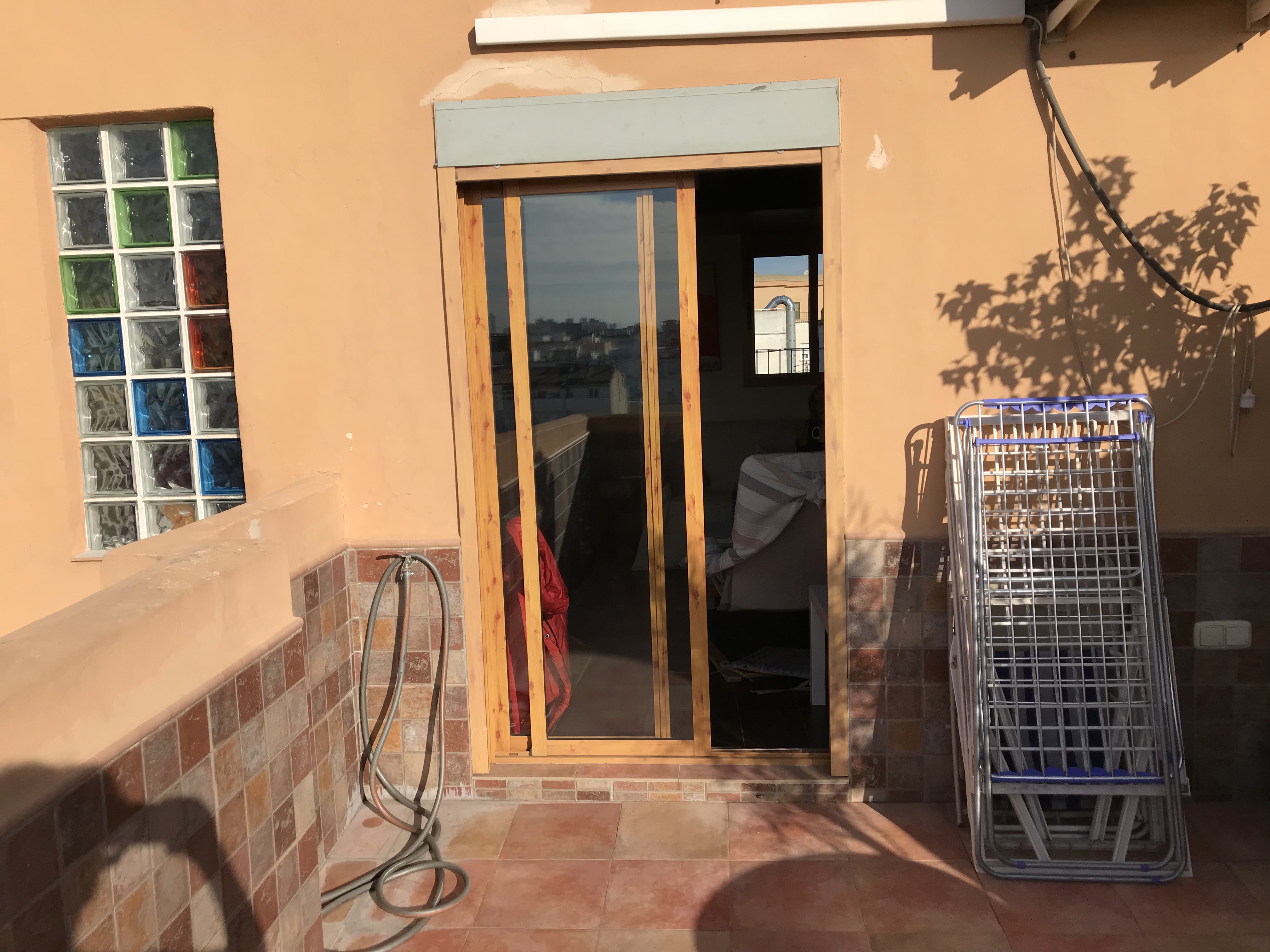
The apartment is small, but has everything we need (except for curtains and blinds – I am rather partial to curtains and blinds). There was a blind over the door to the balcony, which took us longer than you might think to work out (practial Cousin C sussed it for us). The balcony is wonderful, and overlooks the whole of Valencia (well, a bit of it). I slept on the mezzanine with Cousin L. It was cosy, and rather lacking in a curtain/blind, so we woke when the sun rose.


I will continue this tomorrow, because I want to tell you about Fallas.
Thank you for reading.

Bye for now. Take care.
Love, Anne x

***
anneethompson.com

A laugh-out-loud book about travelling the world with a family. Taken from diaries written at the time, this book has been described as “The Durrells meet Bill Bryson”!

If you enjoyed this, why not read The Sarcastic Mother’s Travel Diary? It will make you laugh, and you can read it for free if you have a Kindle…available from an Amazon near you.

Being Loved


I was reading Matthew 22 today, and there is a parable in the first 14 verses which seemed a bit odd. Jesus is talking to the leaders of the day, the Pharisees, and he tells them a story about a king throwing a party, and all the invited guests refusing to come. I understood that analogy – the invited guests were the Jews, and many of them were messing up their gift of a relationship with God.

So, in the story, the king sends his servants out into the streets, and they invite everyone who they meet to come to the party. I understand that bit too – after the Jews (well, some of them) messed up the whole ‘people having a relationship with God’ gift, Jesus made the gift available to other people (the ‘dirty gentiles’ – that’s most of us!)

But then there’s something which seemed very odd. In the story, the king arrives at the banquet, where all those people who have accepted the invitation are sitting, enjoying the party, and he sees someone who is inappropriately dressed. The king is so angry, he throws out (in effect, banishes him to hell). Now, what does that mean? Surely, if you invite people who live on the streets to a party, you have to expect them to be inappropriately dressed? This seems a little unfair.

I did some research, and this is what I think it means: God invites everyone to come to him. Like in the parable of the prodigal son, he is a loving father, he will do everything possible to meet us where we are, he wants to save us. (Remember, in an earlier blog, I explained how when the son says: “I have sinned before man and before God,” he is actually quoting what Pharaoh said when he wanted the plagues to stop – he wasn’t sorry, he just wanted things to get better. But the father met him anyway, and that love, that willingness of the father to save the son even when he was continuing to behave badly, was enough for the son to realise that he couldn’t earn his way back, he simply had to accept what the father/God was offering.) So what does the bit about the clothes mean?

Well, I think, that yes, God wants everyone to come to him, and he has done everything necessary for us to know him. However, we also have to accept that. Now, apparently, in the days of Jesus, a king would have provided appropriate clothing for a guest (a bit like when you turn up at a posh restaurant, and they have ties for you to borrow because you didn’t realise there was a dress-code). I guess the clothes would signify the willingness to change, to become what God wants us to be, to let him alter us. Therefore, although we can all come, unless we let God change us through his love, then that is not enough. If we truly are responding to God’s love, rather than using it as a sort of ‘get out of jail free’ card, then we will let that love change us. We will be pleased to wear the garments appropriate for a party. If we don’t, we have missed the point. Which would be worse than never acknowledging that great love in the first place.

I think that’s what it means anyway. Makes you think, doesn’t it?
Thank you for reading.
Take care this week.

Love, Anne x

Anne E. Thompson has written several novels, which are available in bookshops and Amazon.
Anne writes a weekly blog – why not sign up to follow?
anneethompson.com

Hearing What Is Meant


When I was teaching at Limpsfield Infant School, I would very often look up from taking the morning register, to find a child standing next to me. “What’s the matter Tommy?” I would ask (though it might be Jane or Christopher or Matthew). “I’ve got a tummy ache,” they would reply. And I would guess that whatever the first subject of the day was, they found it difficult. Usually I would assure them that maths gave me a tummy ache too, and we would sit down together and try to sort it out.

(Of course, sometimes they really did have a tummy ache, and I will never forget the day that a girl – whose name I remember clearly – vomited all over me. This was not helped when her mother – who I also remember – came to collect her and seemed to find it terribly funny, even though the child was ill because she’d just been taken to have vaccinations for a holiday. There is so much I could say here, but hey, I’m over it. Sort of.)

Anyway, my point is, children don’t always say what they mean, and part of being a good teacher is hearing what they’re trying to say. Grown-ups also don’t always say what they mean, and sometimes this is good. So when, driving home after an event, my husband turns to me and says, “You were the prettiest one there,” I am pleased. Even though I know that it’s not true. But he’s telling me that in his eyes, I am still pretty, and he’s glad I was there. It made me smile recently, to watch a film on Netflix, when all the wives were told by their husbands that they were ‘the prettiest one there’, because I had thought it was only my husband who said that!

However, sometimes people don’t say nice things, they say horrid things, and part of being an adult—I think—is trying to hear what they’re really saying.

I find it much easier with children, perhaps because I want to give them the benefit of the doubt. Or perhaps because they’re not so good at pretending, so it’s easier to see what they’re really saying. My mother always says she likes teenagers, because “they are completely selfish, and they don’t pretend not to be.” Adults are harder, because generally we are also completely selfish, but we try to hide it.

I hope you agree that sometimes, what people say, is not completely what they want you to hear. And usually, they simply need some reassurance, to know that no one else is perfect either, and that’s okay. Sometimes we need other people to hear that we’re vulnerable, and we’re not quite managing to keep up. Because all of us are falling behind with something. And sometimes, we all need someone to say to us: “You were the prettiest one there.”

*****

Thank you for reading.

Why not sign up to follow my blog?
anneethompson.com


Which book would you like to read next? Available from bookshops and Amazon.

Reading…Not reading…


We did a flying visit to Reading – have you been there? It’s rather pretty (at least, the part we were in was pretty). It reminded me a little of Bristol, with a river and lots of shops and places to eat.

I personally dislike it, because I feel it should be pronounced “reeding” and not “redding”. I tend to misread all the signs, and find it a very confusing place to be.

Reading is not a city, which surprised me. I thought that every place with a cathedral was a city, but this is not true. Apparently the monarch has to grant city status to a town, and our current monarch clearly thinks Reading should remain a town. I expect she also dislikes the name.

We had lunch in Browns, next to the river.

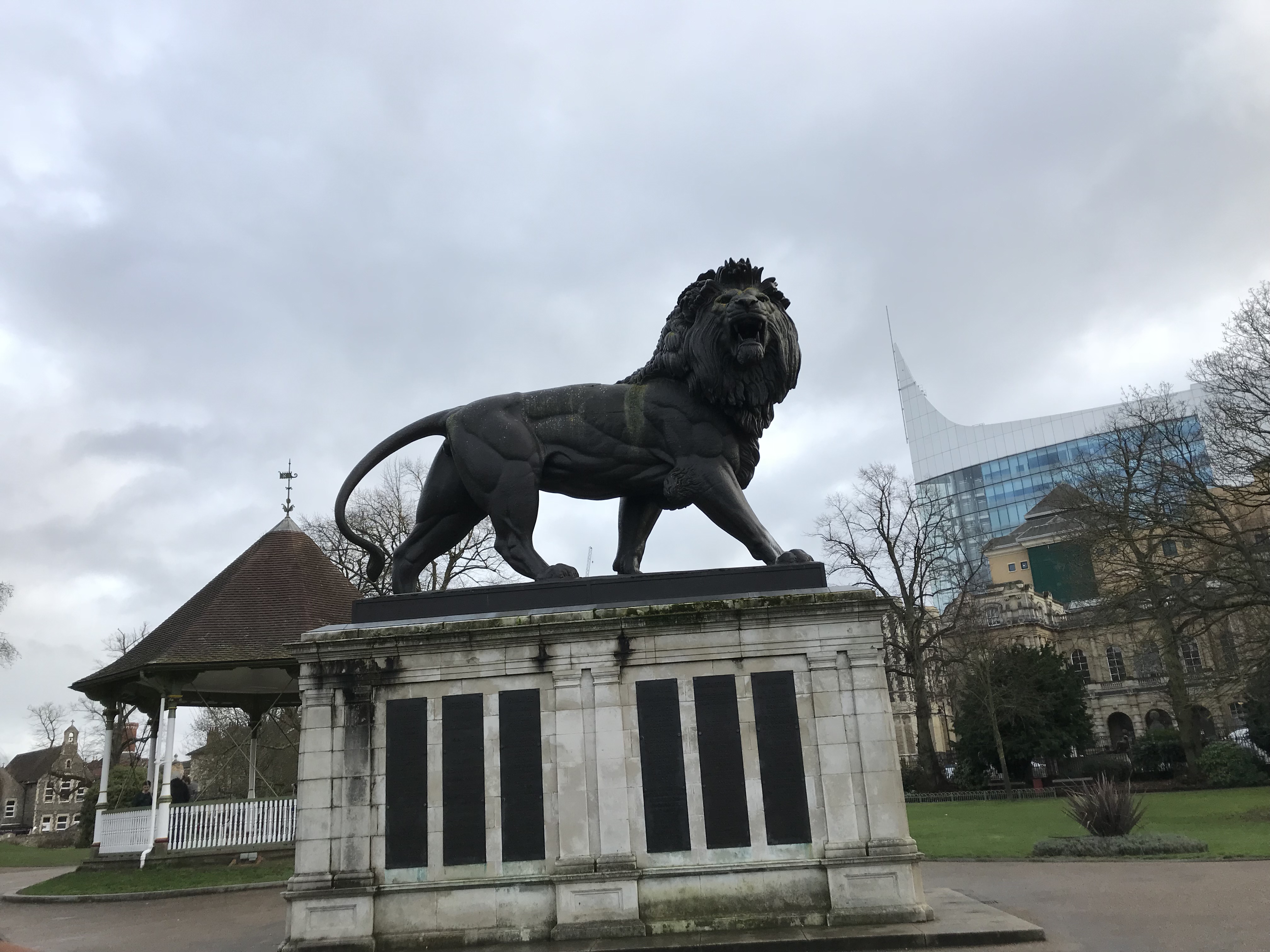
We walked towards the ancient abbey ruins. There was a huge statue – the Maiwand Lion – which commemorates the soldiers lost during a war in Afghanistan (not the most recent one). Russia were beginning to infiltrate Afghanistan, so we sent troops to stop them, and loads of them were killed. It sounds so very like recent wars. History tends to repeat, doesn’t it? Afghanistan seems to be one of those places which is continually being overrun by other countries, they have a sadly unsettled past; it must be very hard for the generations who live there.

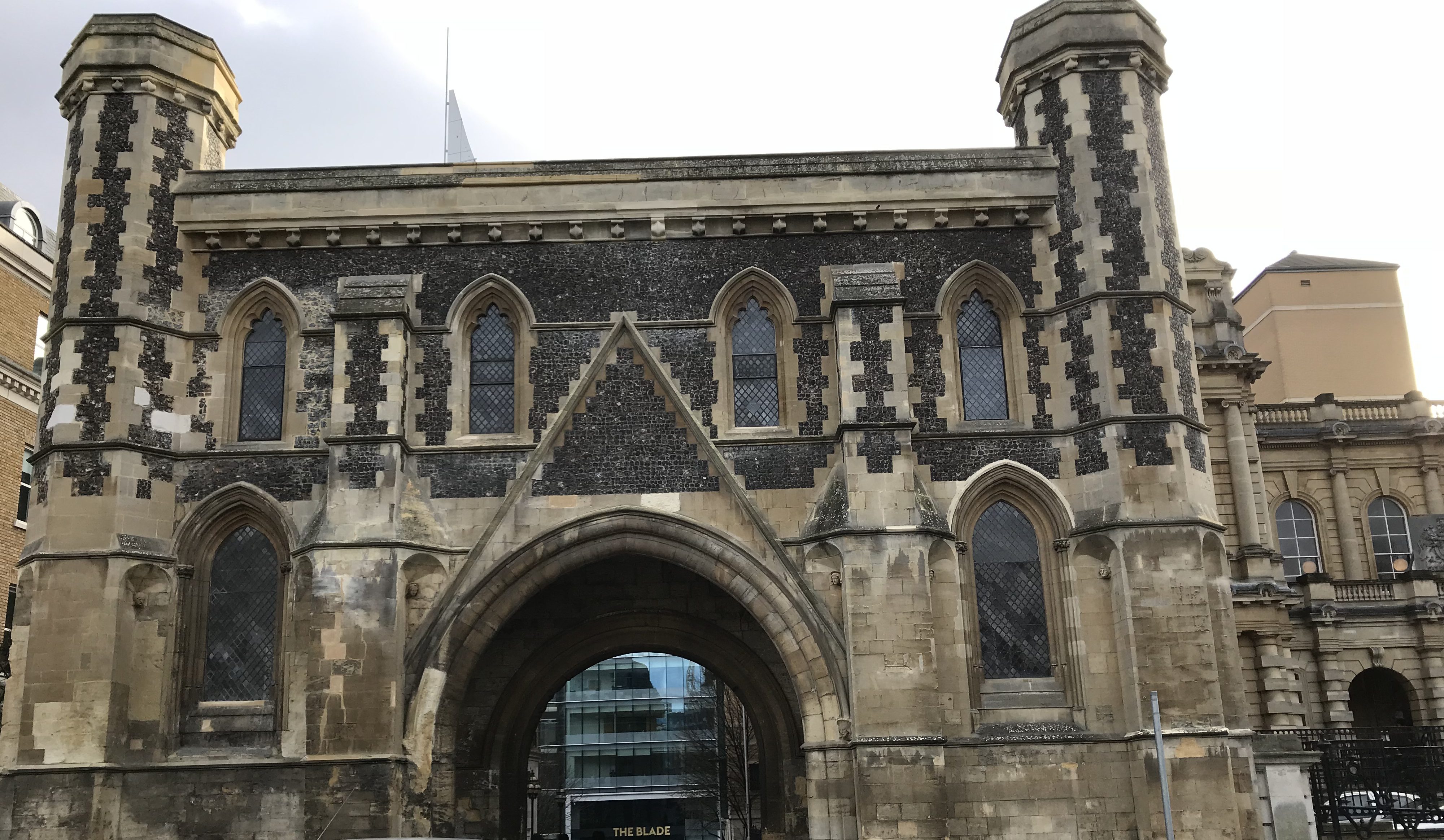
Walked past the old gateway. They executed the abbot near here during Henry III times, and there is an old hotel, which I’m pretty sure must be haunted.

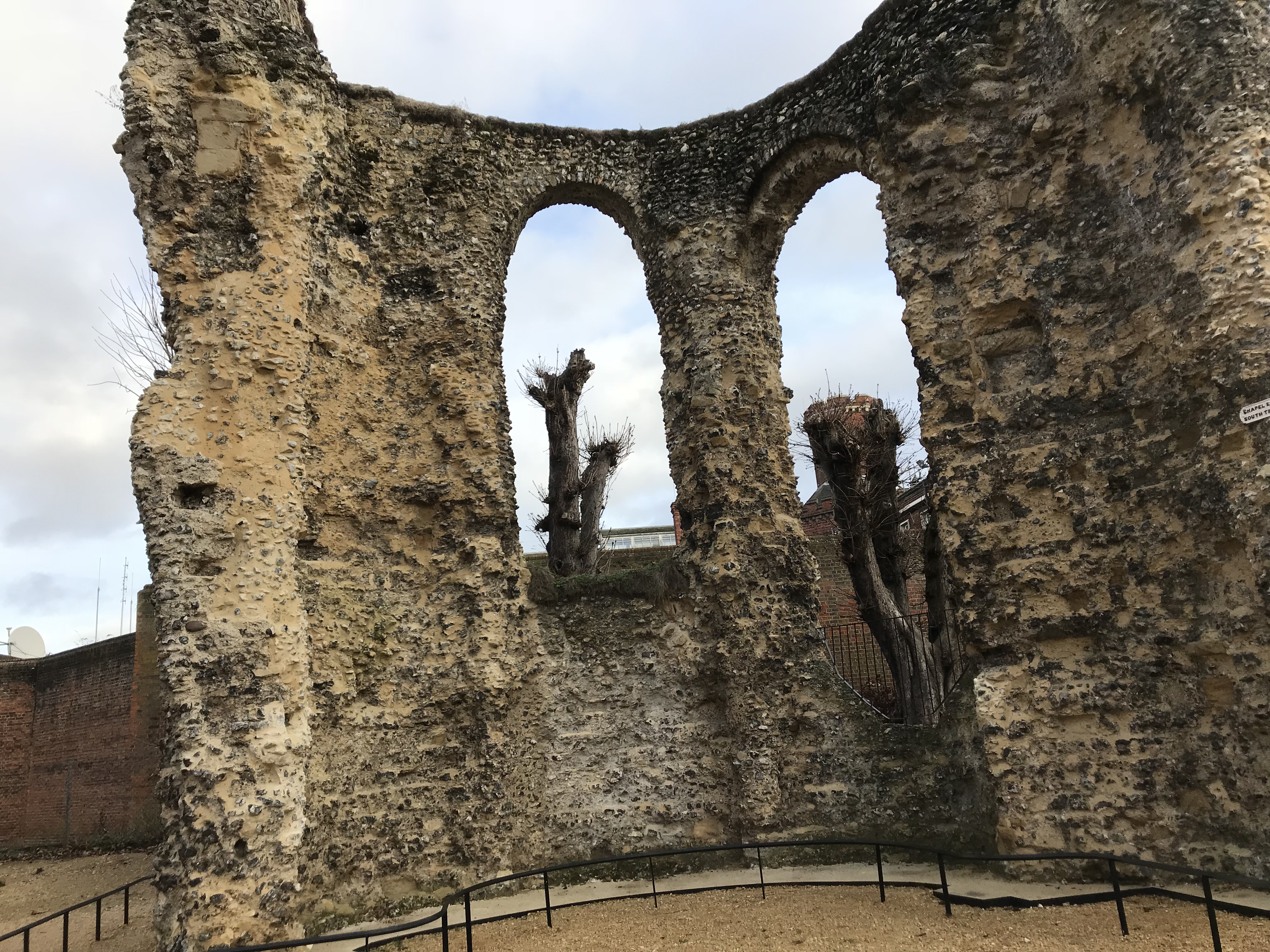
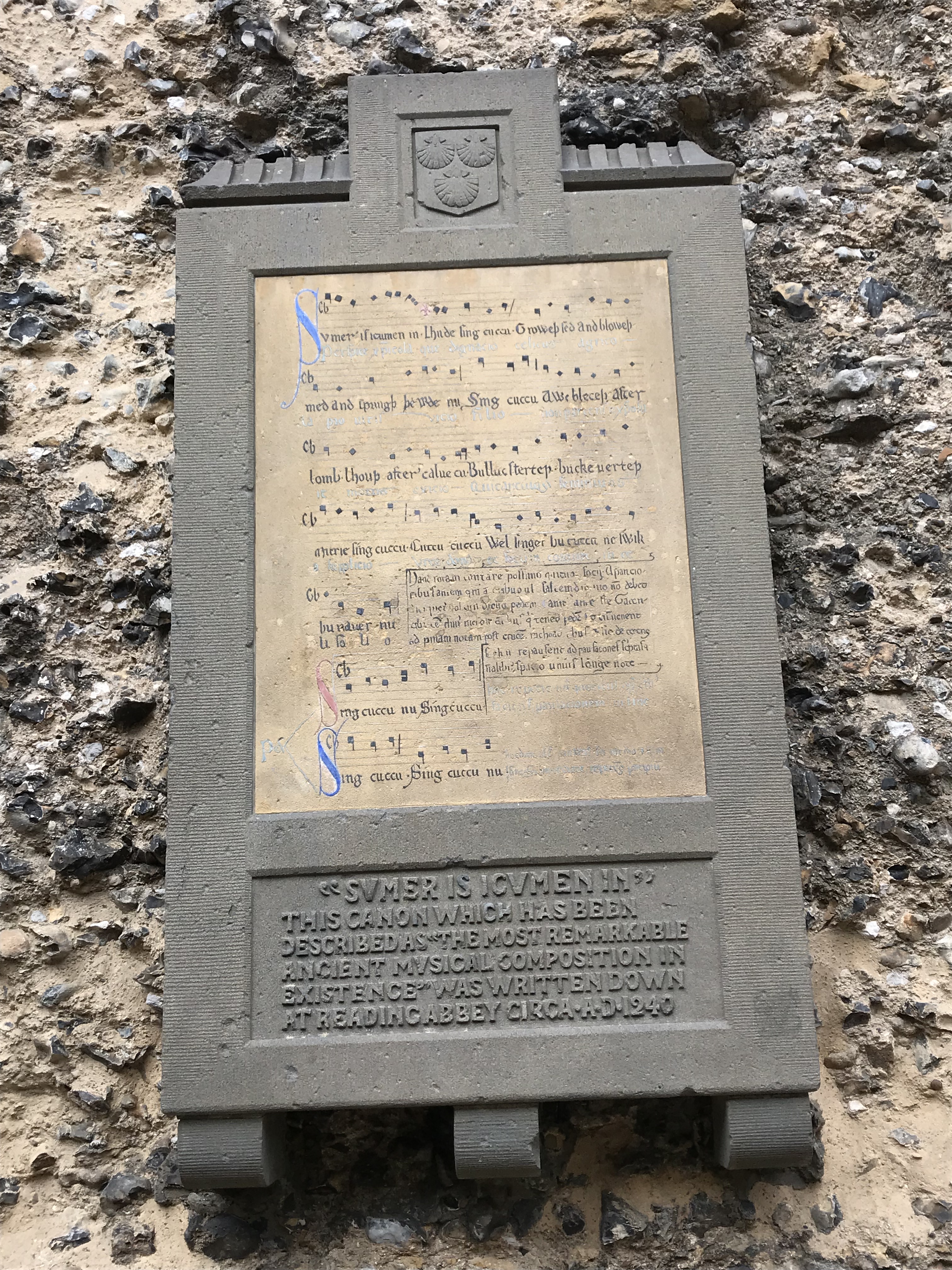
We found the ruins of the ancient abbey, and wandered around. Husband was keen to walk by the river, but we made him wait while we explored. Luckily some of the signs were aimed at children, including one with a wheel to turn that played an old song – so that kept him busy for a few minutes. The song was “Summer is i-comin’ in” which I remember singing (and disliking) at school. Apparently it contains the word “fart” but I don’t think we sang that version at my junior school.

We saw the remains of the chapter house – which was where all the business meetings of the abbey were held. Each meeting began with a reading of a chapter from the Bible, which is why it’s named that.

If I’m honest, the ruins only needed a few minutes to explore – unless you’re a historian and appreciate these things, or a primary school teacher and determined to use the whole day on a school outing…I have been that person.

We then followed Husband back to the river, looked at the boats, before driving back to Kent.

Hope you have a good week.
Take care,
Love, Anne x

Anne E. Thompson has written several novels and non-fiction books. You can find her work in bookshops and Amazon.
Why not sign up to follow her blog today?
anneethompson.com

Thanks for reading.

If you enjoyed this, you will love my new book: The Sarcastic Mother’s Holiday Diary.
I have always written a diary on holiday, so last Christmas, I decided to find all my old diaries and blogs, and make a book for my children. However, several other people also asked for a copy, so I have written a public version – it’s available on Amazon and has been described as “The Durrells meet Bill Bryson”!

The paperback version is currently available for £9.99, but as I will need to buy copies for book fairs, I will need to cover my postage costs, so this price is for a very limited time (I think it will be around £12 in the future, but I wanted to let you, my blog readers, know that they can buy it for the cheaper price, until March). It is also available as a Kindle book.(You can read it for free if you have Kindle Unlimited.)

Why not buy a copy today? I think it will make you laugh.

The US link is here:

https://www.amazon.com/Sarcastic-Mothers-Holiday-Diary-ebook/dp/B07N95281F/ref=sr_1_1?ie=UTF8&qid=1549015525&sr=8-1&keywords=the+sarcastic+mothers+holiday+diary

The India link is here:

https://www.amazon.in/Sarcastic-Mothers-Holiday-Diary-ebook/dp/B07N95281F/ref=sr_1_1?ie=UTF8&qid=1549015429&sr=8-1&keywords=the+sarcastic+mothers+holiday+diary

The UK link is here:

https://www.amazon.co.uk/Sarcastic-Mothers-Holiday-Diary-ebook/dp/B07N95281F/ref=sr_1_2?ie=UTF8&qid=1549014970&sr=8-2&keywords=the+sarcastic+mothers+holiday+diary


A Facebook Scam?


Does Facebook limit which friends’ posts we see? Have they recently changed their algorithm so that now you only see posts from a tiny section of your friends? And will pasting the below statement on your Facebook account change who can see your posts?

Well…no. Recently, several of my Facebook friends have copied the following statement onto their page:

“Thank you for telling me how to do the bypass. This is good to know: It’s ridiculous to have over 400 friends and only some are allowed to see my post.
I ignored this post earlier, but It WORKS!! I have a whole new news feed. I’m seeing posts from people I haven’t seen in years. Here’s how to bypass the system FB now has in place that limits posts on your news feed.
Their new algorithm chooses the same few people – about 25 – who will read your posts. Therefore, hold down your finger down anywhere in this post and “copy” will pop up. Click “copy”. Then go your page, start a new post and put your finger anywhere in the blank field. “Paste” will pop up and click paste.
This will bypass the system.”

So, I asked Son-who-understands-IT if this was true. He assured me that yes, Facebook DO use an algorithm to decide how individual posts are shared – so even if I put a post (like this one) on my Fb page, the number of people who will see it varies, it is not automatically sent to all my Fb friends. Depending on how often my posts are shared/liked/read, will determine how widely they are shared. Which doesn’t seem a bad system. However, posting the above message will make no difference at all – apart from the fact that other people might like or share it, which means they are interacting with it, which means that Fb will then share it more widely. But the contents of the message makes no difference at all. A photo of a cute kitten would have the same result.

Now, I was disappointed to learn that there are not Evil Facebook Elves, who read all the posts and who decide which ones should be shared. Therefore all those messages about “Facebook have decided that this photo is inappropriate, so let’s all share it so everyone sees it” are, in fact, just cleverly marketed spam. It isn’t the Evil Facebook Elves who are deciding that there should be no photos of the Nativity shared at Christmas, for example, it’s a simple (well, okay, a complicated) algorithm, set by the computer, and it has no personal views at all.

Now, I ask, does this matter? Well, I have no idea who wrote the original “Share This” post, but they must, I assume, have a reason. Maybe they are lonely and they get a kick out of seeing it a million times on Facebook. Or perhaps they simply enjoy deceiving people. But it matters because it is becoming increasingly hard to know who to trust. Can we trust politicians, when we discover they will lie to win campaigns? Can we trust the newspapers, when the headlines are often destructive and bear no resemblance to truth? Can we trust the BBC? Social media? Our mothers? (Actually, I think we probably can trust our mothers.)
You get my point? There has been a horrible rise in misinformation recently (I am refusing to use the fashionable phrase for this, as I rather mistrust the person who has made it fashionable – you will know who I mean.)

So please, let’s stand up for things that are true. Let’s find people/reporters/leaders who are trustworthy – and let’s fight to stop this horrible tide of misinformation that seems to be growing.
If you like this post – please share it!

Anne E. Thompson has written several novels. They are available from bookshops and Amazon.
You can follow her blog at:
anneethompson.com
Why not sign up to follow today?

Spoons and Art


I had another rather nice treat (another of my: “you’re too difficult to buy for so we’re giving you vouchers for Christmas”).
I had a voucher for ‘Lunch in a Spoons followed by a trip to a gallery’, a gift from one of my sons.

Off we set. The travel was somewhat more exciting than anticipated, as neither myself nor the son who gave me the voucher are great at time-keeping, so catching the train involved a rather panicked abandoning of the house, a fast drive to the station, and a run onto the platform. But we made it. I then sat on the train worrying whether I’d remembered to get the dog in from the garden, and son checked his phone for directions to the gallery.

We arrived at Victoria, and walked to the pub for lunch. I was expecting the pub to be called ‘Spoons’ because that is what my son talks about (rather more often than you might expect) but it’s actually called ‘Wetherspoons’ – which I suspect you and the rest of the world, already knew. I was also expecting a rather greasy, uncomfortable lunch, but the pub was not dissimilar to a Beefeater, and the lunch was very nice. (Of course, I am a mother, so the nicest part was simply that I was having lunch with one of my children!)

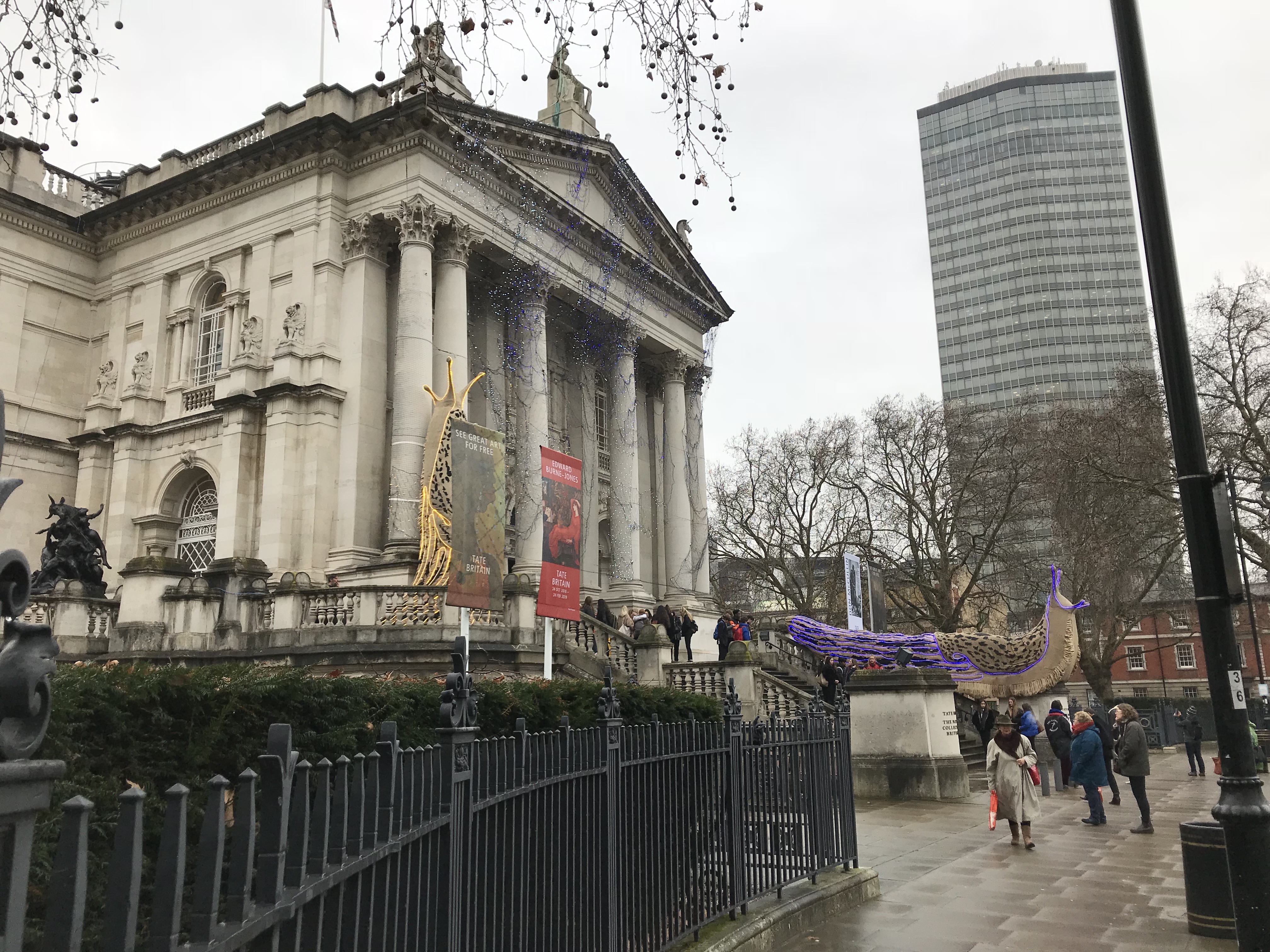
The Tate Britain – complete with giant slugs outside!

We then walked down to the river, and along to the Tate Britain. I’ve never been before, and wasn’t sure what to expect. As we approached, and I saw giant slugs outside, with slime-trails of fairy lights, I knew I was going to like it.

We wandered round for a couple of hours, and still didn’t see everything. I’m not keen on some modern art (I like things that are better than something I could produce) so any halls that at a glance could have been either building works or art installations, we avoided.

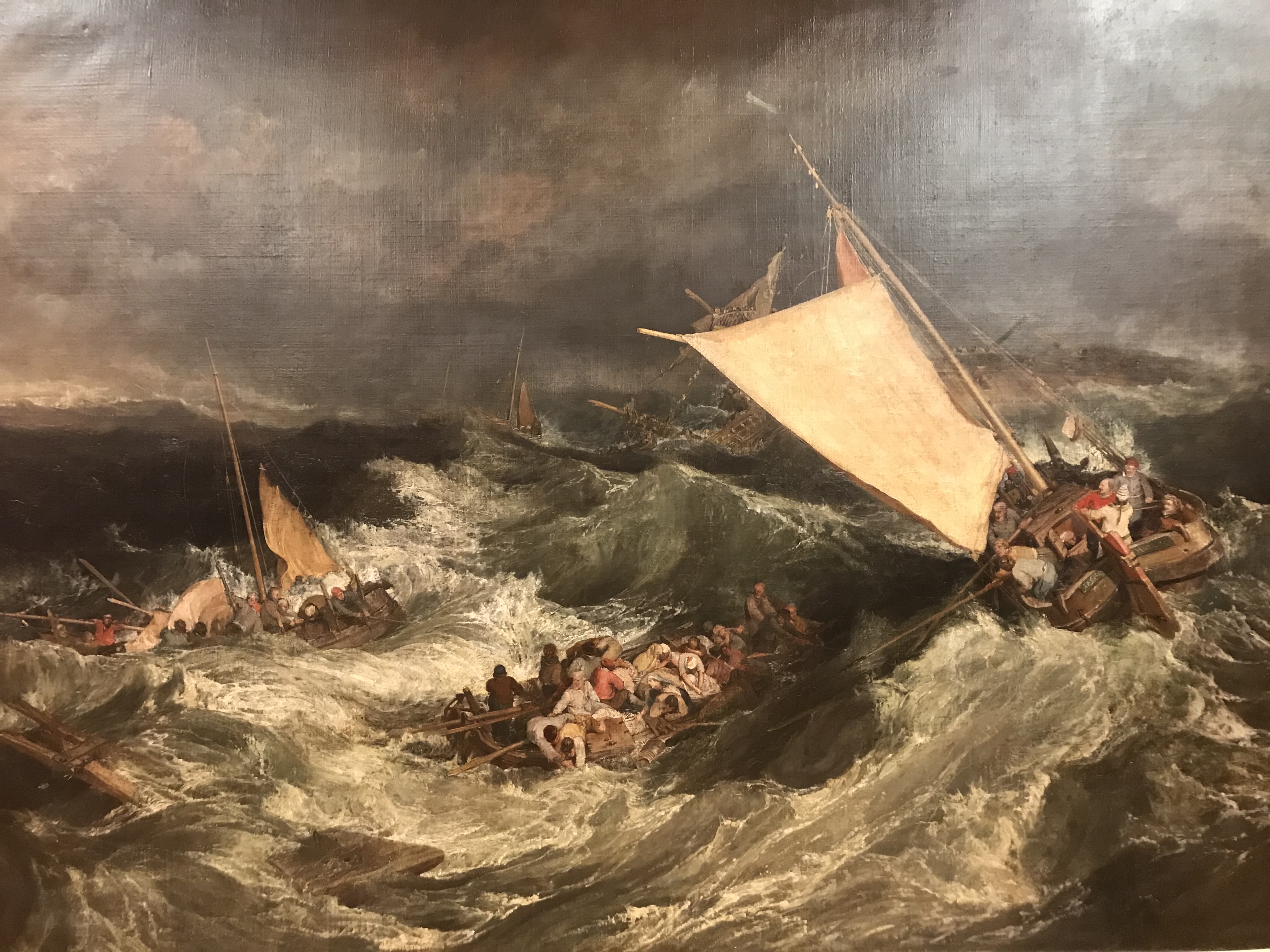
The Shipwreck
By Joseph Turner
(One of my favourite paintings.)

Painting by Lowry


There was an excellent exhibition of Turner’s work, and a Lowry (who I am rather fond of due to the song that was popular in the 70’s about ‘matchstick men and matchstick cats and dogs’).

We briefly popped into a room displaying work by William Blake – who I thought was the chap who did flower etchings that are often used for wallpaper – but I was wrong! He did etchings, but of characters from Chaucer and things that don’t much appeal to me.

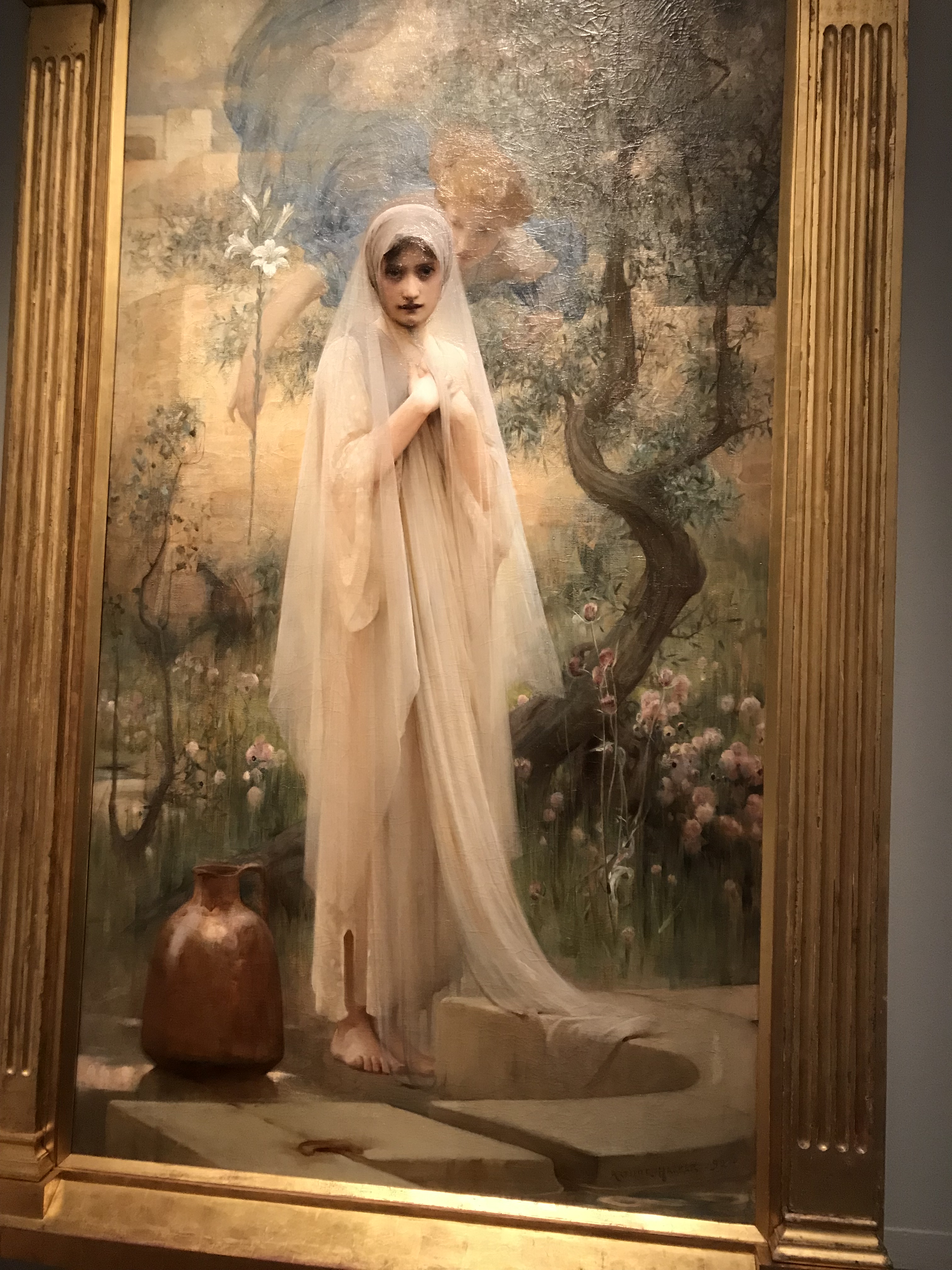
There was a rather spooky painting of a girl, whose eyes followed us round the hall, and an excellent painting of a boat in a storm.

I found it was better to enjoy the paintings without reading the explanations: there was one of a graveyard, and people climbing out of the graves. There was a man, trying to push his wife back, and a family of children all struggling to get out first, and an unmarked grave with lots of black people (who I guessed were slaves). But when we read the card next to it, the painting was meant to be symbolic, and all about the resurrection when Jesus returns – which was much less fun!

After a couple of hours, we’d both seen enough art. We walked out, past the Star Wars sculpture, and back into the wintery sunshine. It was a lovely treat, and we got home tired and happy – and yes, the dog was safely in the kitchen.

Hope you see some good things this week. Take care.
Love,
Anne x

A spooky girl – her eyes follow you when you move…

If you enjoyed this, you will love my new book: The Sarcastic Mother’s Holiday Diary.
I have always written a diary on holiday, so last Christmas, I decided to find all my old diaries and blogs, and make a book for my children. However, several other people also asked for a copy, so I have written a public version – it’s available on Amazon and has been described as “The Durrells meet Bill Bryson”!

The paperback version is currently available for £9.99, but as I will need to buy copies for book fairs, I will need to cover my postage costs, so this price is for a very limited time (I think it will be around £12 in the future, but I wanted to let you, my blog readers, know that they can buy it for the cheaper price, until March). It is also available as a Kindle book.

Why not buy a copy today? I think it will make you laugh.

The US link is here:

https://www.amazon.com/Sarcastic-Mothers-Holiday-Diary-ebook/dp/B07N95281F/ref=sr_1_1?ie=UTF8&qid=1549015525&sr=8-1&keywords=the+sarcastic+mothers+holiday+diary

The India link is here:

https://www.amazon.in/Sarcastic-Mothers-Holiday-Diary-ebook/dp/B07N95281F/ref=sr_1_1?ie=UTF8&qid=1549015429&sr=8-1&keywords=the+sarcastic+mothers+holiday+diary

The UK link is here:

https://www.amazon.co.uk/Sarcastic-Mothers-Holiday-Diary-ebook/dp/B07N95281F/ref=sr_1_2?ie=UTF8&qid=1549014970&sr=8-2&keywords=the+sarcastic+mothers+holiday+diary

Nahum


Nahum is one of those little books which you sort of know is in the Bible, but can never find when you want to, and always end up looking in the Contents page. It comes between Micah and Habakkuk – not that this represents when the books were written. It is all about the fall of Nineveh (which you will have heard of from the story of Jonah).

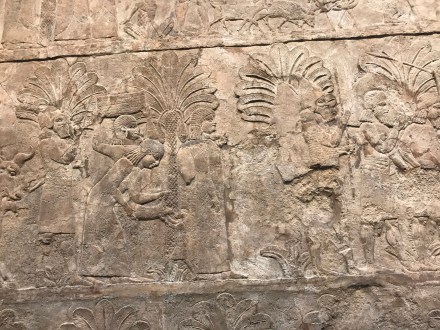
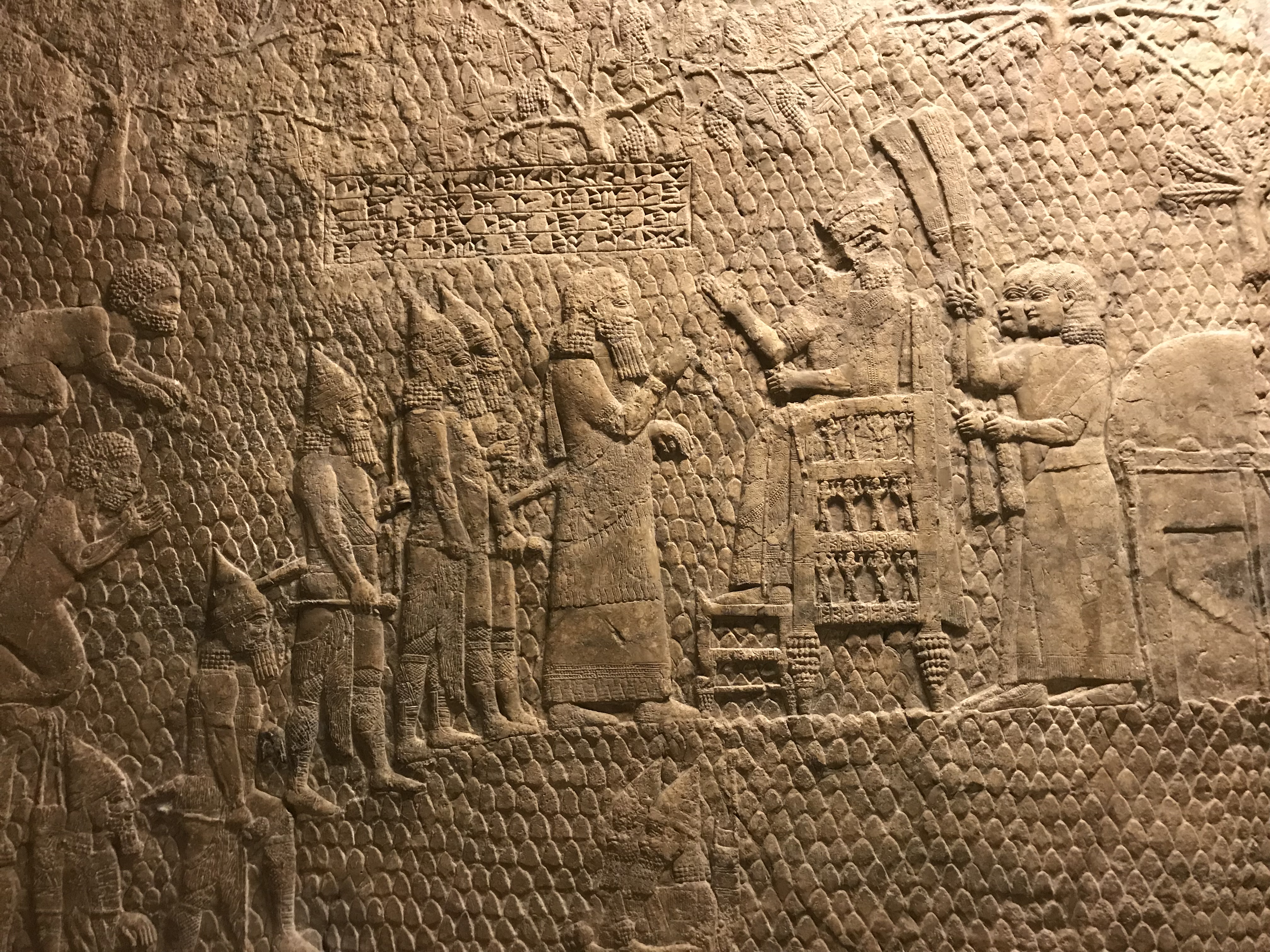
Scenes on walls, in the city of Nineveh – found when the ruins of the city were discovered.

Nahum was apparently originally written as a poem – possible as an acrostic poem (each line beginning with the next letter of the Hebrew alphabet). This has been somewhat lost in our modern translations, though some of the descriptions do read more like poetry than history. It is thought to have been written either just before the downfall of Assyria (making it a prophetic book) or just after (making it a history book) – so dated about 615/612 BC. Most people seem to think it was written after the fall of Thebes (which was 663 BC) and before the fall of Nineveh, and it certainly sounds like a warning to me, rather than a poem about what has already happened.

It seems that although the people of Nineveh had listened to Jonah and changed their ways, about 100 years later, they were back where they started, ignoring God and oppressing people and generally being bad. Nahum says they are going to be destroyed, and sometimes the descriptions are shockingly graphic (again, not something we ever studied in Sunday School – I would have remembered!)

The basic message, for today as much as then, is that God is holy, and will not tolerate evil forever. He is slow to anger, and he wants people to change and return to him, but he is a just God, and if people continue to ignore him, he will destroy them. God loves justice, and everyone will be judged. Sometimes, when we watch the news, it feels like God has gone to sleep, that awful things are happening and there is no justice. I especially felt this when I saw photographs of the children in Syria being torn apart by the war. However, this book reassures us, that God will act, when the time is right.

Art from Nineveh.
The art was discovered in the remains of the destroyed city, and are now in the British Museum.

Next week I’ll tell you all about a trip to ‘Spoons and the Tate. Why not sign up to follow my blog, so you don’t miss it?

anneethompson.com

Carved in Stone, Thrown to the Lions, and Defaced…


I told you in my last last blog all about how the ancient Egyptians thought that if something was carved in stone, it was true forever, and how therefore if they didn’t like part of history, they simply never recorded it – because then it never happened. They also applied this to statues, so if they didn’t like someone they chipped the face off (hence ‘defaced’).

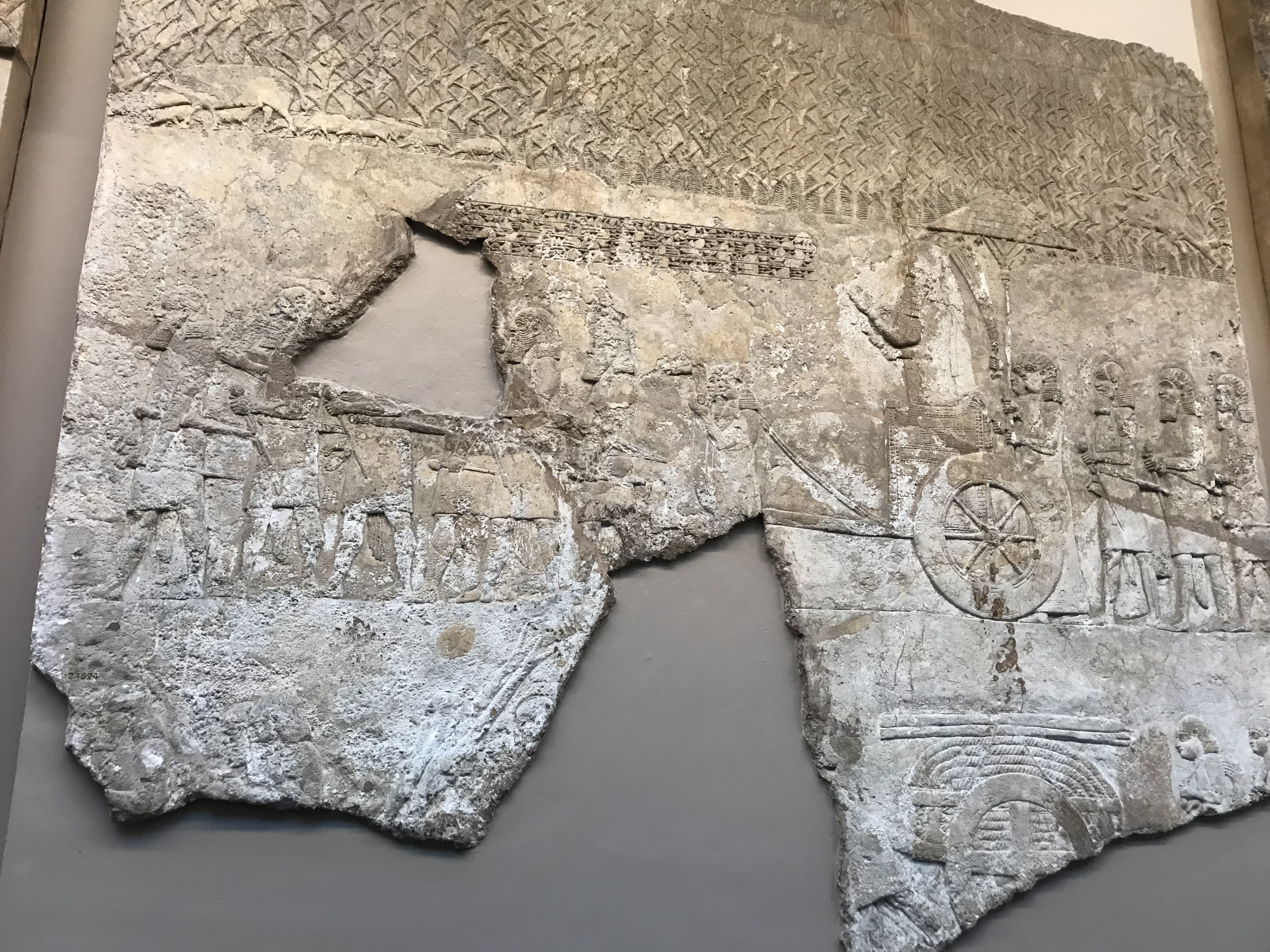
Scenes on walls, in the city of Nineveh – found when the ruins of the city were discovered.

There was lots of stuff in the British Museum which at first glance (to me) looked completely boring, but when I listened to the explanation of what I was looking at, was very interesting. We saw things like the wall tiles from the city of Nineveh (of Jonah in the whale fame).

An interesting story was the defeat of Lachish, by a chap called Sennacharib. Sennacharib was a great warrier, and there were walls of carved stone, showing the triumphal defeat of Lachish, people being taken as slaves, the king bowing down to Sennacharib – a huge ego stroke, in other words. Except, Lachish was a small, weak, city. Conquering it was not such a big deal for someone as powerful as Sennacharib – so what wasn’t he saying? What was missing from the engarvings on the palace walls? Well, this is the time that Sennacharib was holding the city of Jerusalem in seige, and in fact, one panel lists all the plunder taken from the temple. After the defeat of Lachish, the plan was to return to Jerusalem, finish the job, and lead away King Hezekiah in chains.

But in the Old Testament, we read that God sent an angel, who went to where the army was camped outside of Jerusalem, and killed 185,000 men. When the people of Jerusalem woke up and looked out, there were thousands of dead bodies. However, although we have the Assyrian records – which show that Sennacharib sent an army of 200,000 men as the advance army to Jerusalem – there is nothing else recorded. Nothing. He simply reminded everyone of his triumph at Lachish, and had it carved in stone. Because if nothing was ever carved about Jerusalem, it never happened…(You can read the story in Isaiah 37.)

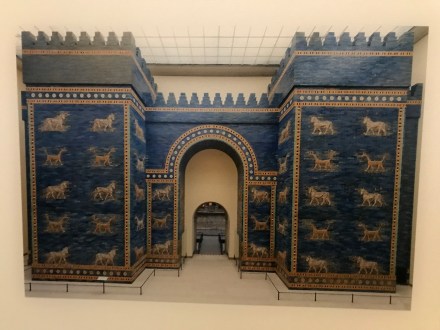
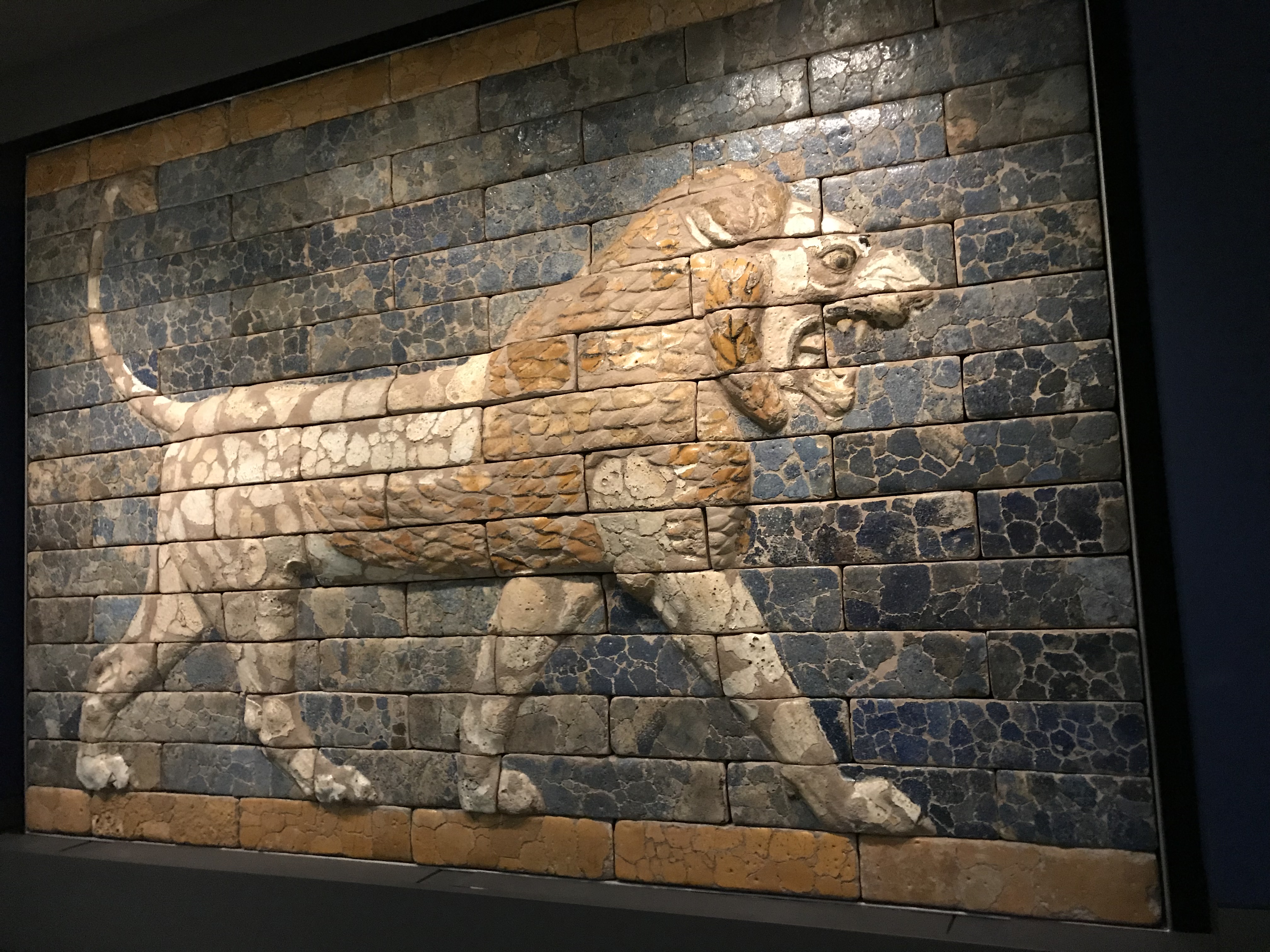
Lions were a symbol of strength in Babylon.
The tiles would be baked in furnaces, so the colour remains even today.

My favourite part of the tour was the stuff relating to Daniel and King Nebuchadnezzar. Now, in the early part of Daniel, we read that his friends were put into a fiery furnace, as a punishment. When we looked at the artefacts from the time, this made perfect sense, because Nebuchadnezzar was keen on coloured clay wall tiles – and these would all need to be fired in furnaces – so they would be readily available for the odd execution when needed! Many of those tiles depicted lions, and we learned that lions were a big deal to those Babylonians, and represented great strength. They would certainly have captured them, and kept them for viewing, so again, Daniel being thrown into a den of lions makes perfect sense!

There was lots more that we saw and heard, too much really to take in. I need to do a second tour – or buy the book from the museum bookshop and walk round by myself. It really was, hugely interesting.

Thank you for reading. Hope you have an interesting week.
Take care.
Love, Anne

anneethompson.com

PS. I have always written a diary on holiday, so last Christmas, I decided to find all my old diaries and blogs, and make a book for my children. However, several other people also asked for a copy, so I have written a public version – it’s available on Amazon and has been described as “The Durrells meet Bill Bryson!”

The paperback version is currently available for £9.99, but as I will need to buy copies for book fairs, I will need to cover my postage costs, so this price is for a very limited time (I think it will be around £12 in the future, but I wanted to let you, my blog readers, know that they can buy it for the cheaper price, until March). It is also available as a Kindle book.

Why not buy a copy today? I think it will make you laugh.

The US link is here:

https://www.amazon.com/Sarcastic-Mothers-Holiday-Diary-ebook/dp/B07N95281F/ref=sr_1_1?ie=UTF8&qid=1549015525&sr=8-1&keywords=the+sarcastic+mothers+holiday+diary

The India link is here:

https://www.amazon.in/Sarcastic-Mothers-Holiday-Diary-ebook/dp/B07N95281F/ref=sr_1_1?ie=UTF8&qid=1549015429&sr=8-1&keywords=the+sarcastic+mothers+holiday+diary

The UK link is here:

https://www.amazon.co.uk/Sarcastic-Mothers-Holiday-Diary-ebook/dp/B07N95281F/ref=sr_1_2?ie=UTF8&qid=1549014970&sr=8-2&keywords=the+sarcastic+mothers+holiday+diary

Deleting the Family Tree…


A Tour of The British Museum

Is there evidence that Joseph was a real person?

Who is the Pharaoh of the Plagues?

We began our tour in a large room full of Egyptian stuff. I didn’t know much about the Egyptians, and wasn’t sure how much I wanted to know about the Egyptians – but actually it turned out to be very interesting.

We were on a Bible Tour at the British Museum, and although I wasn’t completely sure what that meant, I figured I might learn something useful. We met our guide next to the stairs, picked up a folding chair (which I was later very grateful for, as the tour involved a lot of standing for those people who didn’t have chairs) and off we set – to the Egyptian room.

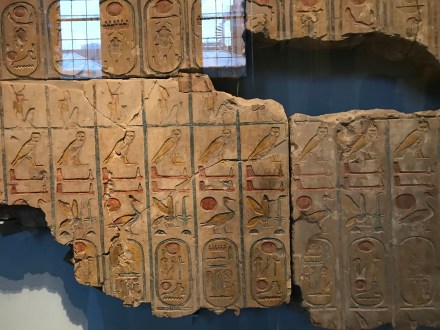
The ‘Family Tree’ of Ramesses – with all embarrassing relations deleted!

Before we could begin our tour, we needed to learn a fundamental truth about Egyptian psychology, which was that “If it isn’t carved in stone, it didn’t happen” and therefore anything unpleasant or embarrassing about their history, they simply deleted. So, when we looked at the Egyptian equivalent of a family tree for Ramesses (that well-known Pharaoh) there were lots of names missing. They weren’t missing because he didn’t know who his ancestors were, they were missing because those ancestors were embarrassing. (Now, wouldn’t we all like to do that!) As I said, anything ‘carved in stone’ was thought to be eternal, therefore anything not there, could be ignored, as if it never happened.

Having learnt this snippet of Egyptian psychology, we then began the tour proper – which was to look for evidence, beyond the writing in the Bible, that would support the events described. So, as the whole ‘Israelite slaves being saved by a God who sent plagues so that Pharaoh is defeated and those slaves can leave’ would be somewhat embarrassing to the Egypyians of the day, we were never going to find evidence, carved in stone, that would remind them of that piece of history. However, there were other clues, circumstantial evidence, that supported the Bible claims.

Senwosret was probably the Pharaoh who put Joseph in charge of all the agriculture.

In about 1875BC, Joseph was sold as a slave to Egypt, and while he was there, he told the pharaoh what his dreams meant, and was then put in charge of all the food. So, when there were 7years of plenty, they saved food, and when this was followed by 7years of famine, they could eat the stored grain. Now, we know that the pharaoh of the day was deemed to be responsible for everything, he was almost a god, and therefore a famine, of any length, would be his fault. This would make the pharaoh of the dreams very worried when Joseph told him the meaning of his dreams, and he would want to act.

Egyptian records, show that Senwosret took complete control of all the agriculture during his reign as pharaoh, which was a strange and significant thing to do. We also know that when he was buried, he shared his tomb with his vizier (the ancient Egyptian equivalent of a prime minister). There is a carving, which states this vizier was “ruler of all the world” – which is exactly what Pharaoh described Joseph as, in the Bible account. Pretty interesting, huh? You can see statues of Senwosret in the British Museum today (he wasn’t a looker).

The oppression of the Israelites, when they were treated as slaves, probably began during the reign of Ahmose. After him, came Thutmose, and he had a very powerful daughter (very unusual in those days) who even ruled for a while and had statues made in her image, in the form of a pharaoh. It would make sense if she was the “daughter of Pharaoh” who fished the baby Moses out of the river, and then raised him in the palace.

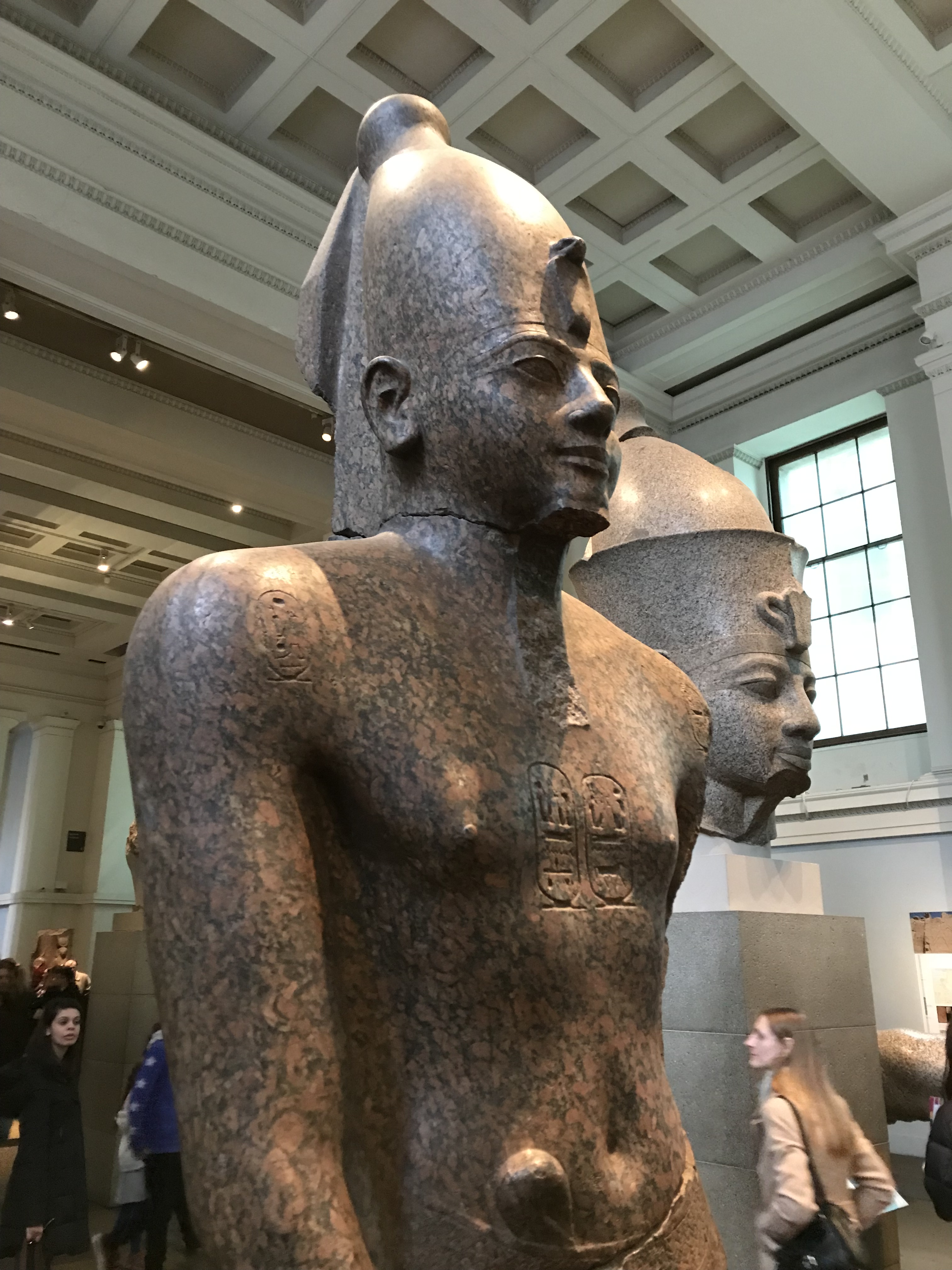
Thutmose III
Who was probably the Pharaoh during the Exodus, when all the Israelites left Egypt.


Later, there was a very powerful pharaoh, called Thutmose III. He ruled during the high point of Egyptian history, was well known for his building projects and so on. We know that Moses was over 80 when he started negotiating with Pharaoh to let the Israelites leave, so the timing fits. Then, half way through Thutmose III’s reign, everything begins to go wrong. We don’t know why (because there is nothing ‘carved in stone’ about it) but we do know that the next pharaoh was not his son, that all his power seemed to stop half way through his reign, and, even more significant, the pharaoh after him made it a priority to go and conquer other nations so they could capture new slaves. Sounds convincing to me, I reckon Thutmose III was probably the Pharaoh from Exodus (even if Hollywood thinks it was Ramesses!) You can see his statue in the museum, but someone has bashed away his belt (which was how the statue of a pharaoh was identified) and added the cartouche (the oval that contains the pharaoh’s symbols) of Ramesses on his chest. Because if it’s ‘carved in stone’, it must be true…

There is loads more to tell you about the museum, especially the ‘evidence’ for angels killing whole armies – but I’m out of space. I’ll tell you next week.

Bye for now,
Anne x


Anne E. Thompson

Thank you for reading
anneethompson.com
Why not sign up to follow my blog?

Look on your device for this icon (it’s probably right at the bottom of the screen if you scroll down). Follow the link to follow my blog!

****

All Quiet On The Chicken Front…


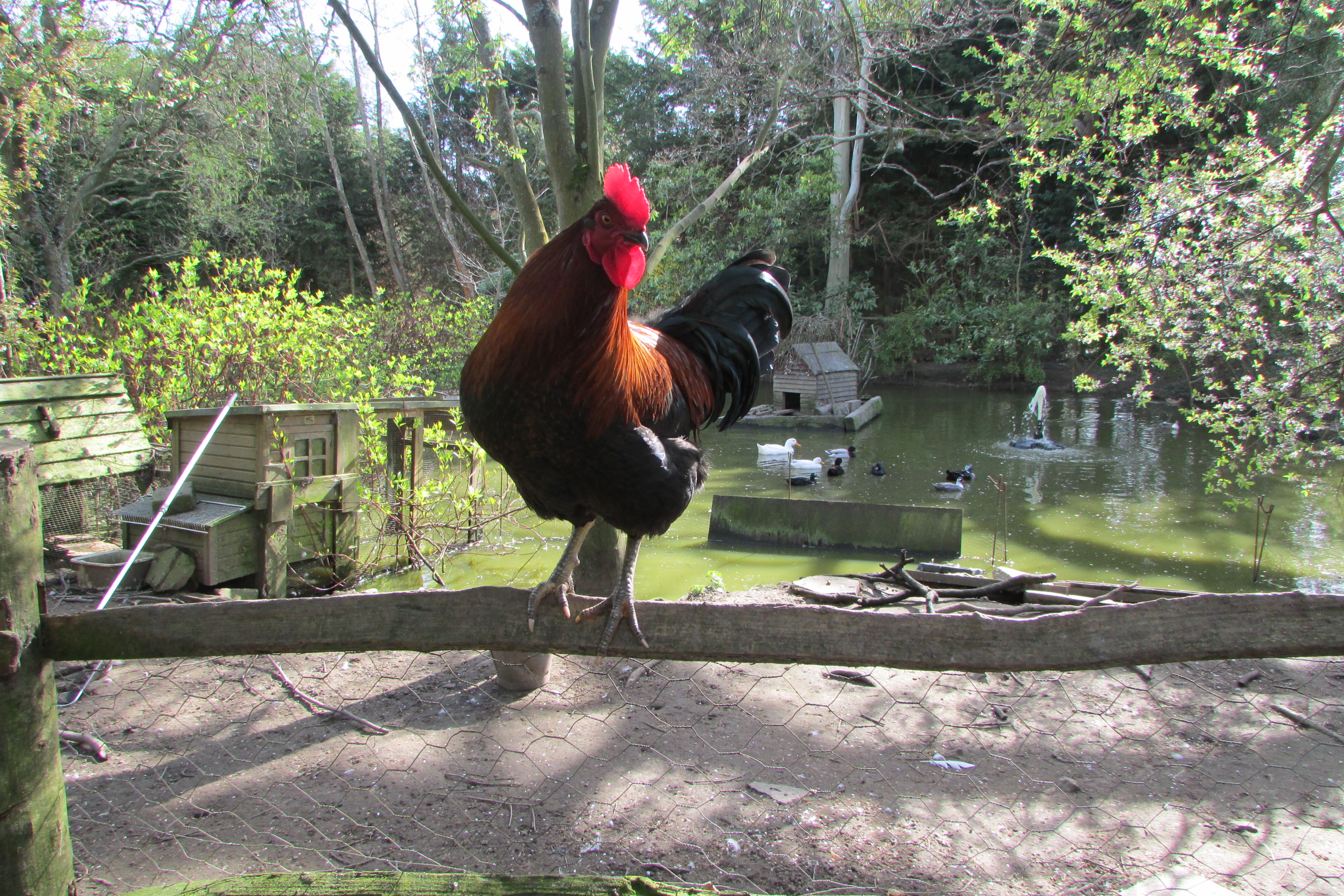
I thought I would give you a quick update on my news. First, the family of cockerels. As you may remember, I was fortunate (!) enough for five of the six hatchlings to be male. Now, contrary to popular belief, it IS possible to have a flock with more than one cockerel and not have open warfare. I know this because I had two cockerels who lived very peacefully alongside each other for a couple of years (until a fox ate them). However, five young cockerels, plus their father, seems like a lot.

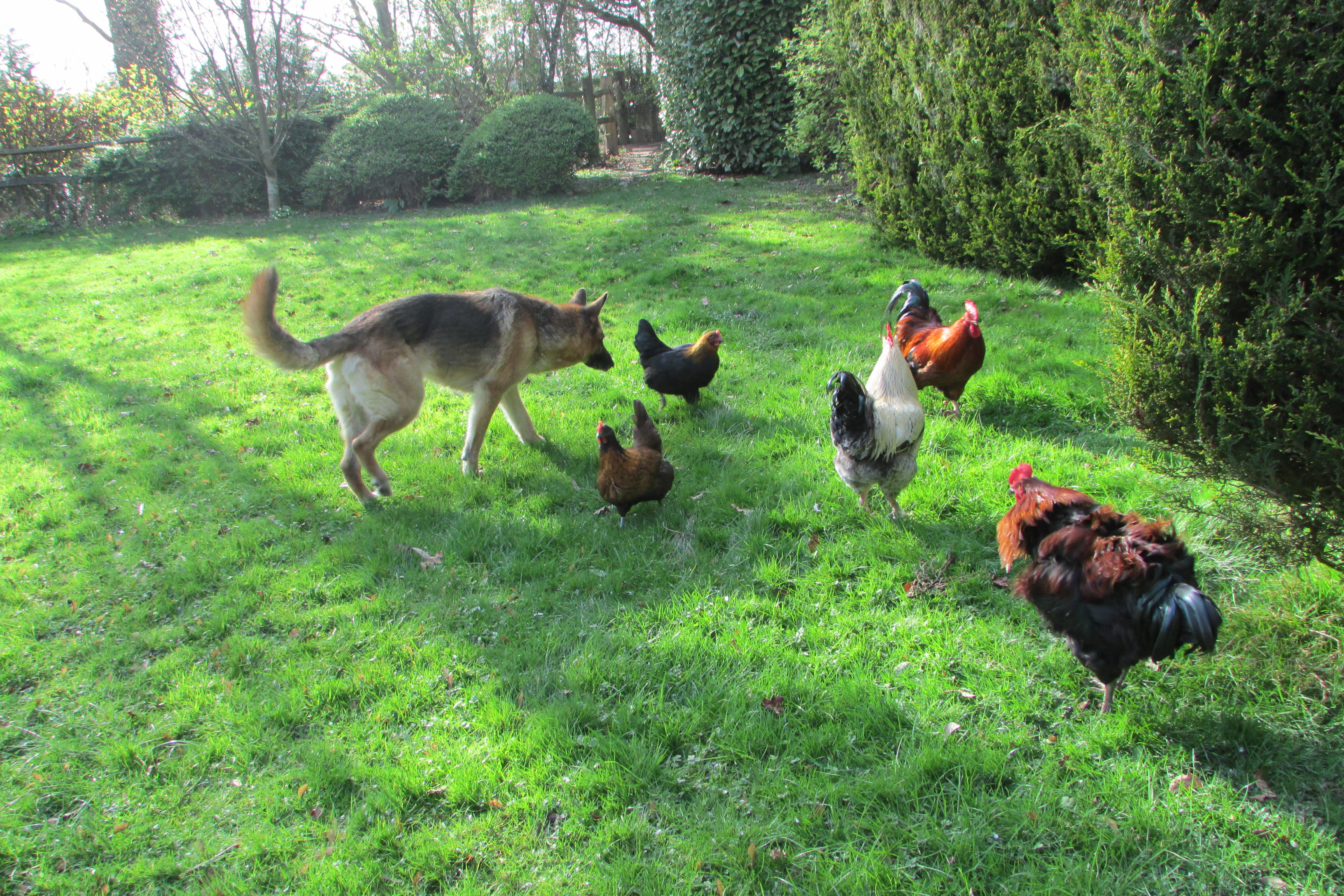
As the hatchlings grew, and were allowed to roam freely around the garden, the flock separated. The parents and the female wander around the garden together, and the young cockerels form a separate flock. A few weeks ago, they started ‘facing off’ to each other. None of them has spurs yet (the deadly sharp talons on the back of their legs) so I figured they were unlikely to kill each other, and were probably simply sorting out the pecking order. I left them to it. The dog takes a keen interest in this, and has taken upon herself the role of peace-keeper. If they start to fight, she stamps on them – which is remarkably effective.

When we went to Devon for a week, I was worried about leaving them all in the same cage, so I split them up. I waited until evening, when they were all roosting on the perch, and then went to move the young cocks into a separate cage. I have to say, it takes an amount of courage to approach a cockerel, which is staring you in the eye, at head-height, with an elongated neck and fluffed up feathers. But I managed to pick them all up, ignored all the squawking, and carried them, one by one, to a new cage; and I survived without getting my eyes pecked out (which would have made Husband cross).

When I returned home after Devon, I opened both cages, to see what would happen. For a couple of days, the father and both hens roosted in one cage, the five young cockerels in the other. Gradually, as they have established a pecking order, two of the weaker cockerels have started to join the parents. I now have ‘the elite team’ of cockerels in one cage, and the rest in the other. For now, we are at an uneasy truce. If any of them become very aggressive, they will have to go (don’t ask me how – but I am not vegetarian, and neither is the local fox, so I figure I have a couple of options…unless you would like a pet cockerel? Do let me know.)

My other news, which is sort of vaguely related, is my new book, which is set on a farm. The first draft is finished, and I began to send it out to publishers. One publisher sent back a detailed editorial report, saying they didn’t want to publish it as it was, but would reconsider if I rewrote it. I am therefore in the process of rewriting it. This is taking much longer than I expected – longer in fact than writing the first draft, because as I change things, I lose the rhythm of the story, so have to rewrite increasingly large sections. It feels like work, and is not much fun. But I do feel the book is improving, so it’s worth the effort. When finished, I will resubmit to the publisher, and see what happens. I would like it to be released in the summer, but it may take longer than that. I will let you know.

A late Christmas gift was a trip to the British Museum and having a tour of the artefacts that relate to various stories in the Bible. Do you know why it was historically appropriate for Daniel to be put in a lions den? Or the name of the Pharaoh who put Joseph (of the coloured coat) in charge of all the agriculture? Or the Pharaoh who suffered the plagues at the time of the Exodus (because it probably wasn’t Ramesses!) I’ll tell you all about it in next week’s blog.

That’s all for now. I hope you have a good week.

Take care,
Love, Anne x

Anne E. Thompson has written several novels. They are available from bookshops and Amazon.
You can follow her blog at:
anneethompson.com
Why not sign up to follow today?